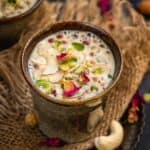
Basundi Recipe
Basundi is a traditional Indian dessert famous in Maharashtra, Gujarat, and some parts of Karnataka. It is basically thickened and sweetened milk flavored with nutmeg, cardamom, and saffron. Serve it on its own or with poori for a delicious treat.
Servings: 4 people
Ingredients
- 50 ounces whole (full-fat) milk 1 and ½ liters
- 1 pinch saffron strands
- 3 tablespoons granulated white sugar adjust according to your taste
- ⅛ teaspoon ground nutmeg
- ½ teaspoon ground cardamom
- 2 tablespoons chironji (charoli)
- 2 tablespoons slivered nuts (I used a mix of almonds, cashew nuts and pistachios) plus more for garnishing
- ½ teaspoon dried rose petals for garnishing
Instructions
- Add milk and a pinch of saffron strands to a non-stick heavy-bottomed and wide pan.
- Note – Choosing a wide pan makes the cooking process a little faster.
- Heat on medium-high heat until it comes to a boil. Stir frequently to prevent the milk from scorching at the bottom of the pan.
- Once the milk comes to a boil, reduce the heat to medium-low. Cook for 1 to 1 and ½ hours until it is reduced to more than half and is thickened and creamy.
- Stir very frequently while cooking. Don’t let cream (malai) layer form on top of the milk for a creamy basundi.
- Keep scraping the sides of the pan regularly and stir the milk solids back into the pan.
- The consistency of basundi is like a thin custard.
- Tip – I suggest making it while you are doing other cooking. It will cook on the side and you will not have to stand to stir it separately.
- Once the milk is thick and creamy, add sugar, nutmeg, and cardamom to the pan and cook for 3-4 minutes until the sugar is dissolved.
- Check for sugar and add more if required. Cook for another minute.
- Stir in chironji and slivered nuts (I used a mix of almonds, cashew nuts, and pistachios).
- Tip – If you like your basundi very creamy and smooth, just pass it through a fine-mesh strainer before adding chironji and nuts.
- Remove the pan from heat and cover it with a lid to avoid the formation of cream on top.
- Transfer the basundi in serving cups or bowls and garnish with more slivered nuts and dry rose petals.
- Serve hot, warm, or chilled.
Video
Notes
Keep in mind that basundi thickens slightly more while cooling. So keep the consistency accordingly.
If chironji is not easily available, you can skip it, too.
Instant basundi recipe is mentioned in the post.
Nutrition
Calories: 250kcal | Carbohydrates: 21g | Protein: 8g | Fat: 10g | Saturated Fat: 5g | Polyunsaturated Fat: 1g | Monounsaturated Fat: 2g | Cholesterol: 25mg | Sodium: 108mg | Potassium: 330mg | Sugar: 22g | Vitamin A: 405IU | Calcium: 283mg | Iron: 1mg
