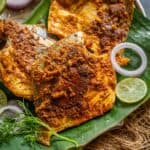
Pomfret Fry Recipe (North Indian Style)
Make this spicy North Indian Style Pomfret Fry using my easy recipe. Serve it as an appetizer or as a side dish with your Indian-style meals.
Servings: 2 people
Ingredients
- 3-4 whole small Pomfret fish cleaned
- 2 teaspoons ginger garlic paste
- 1 teaspoon salt
- 1 tablespoon chickpea flour (besan, gram flour)
- 2 teaspoons coriander powder
- ½ teaspoon turmeric powder
- 2 teaspoons Kashmiri red chili powder
- ½ teaspoon cumin powder
- ½ teaspoon garam masala powder
- ½ teaspoon black pepper powder
- 1 tablespoon lime juice
- 4 tablespoons oil for frying
To Serve
- lime wedges
- chaat masala
- onion rings
Instructions
- Rinse the Pomfret fish well with water, then wipe them dry with paper towels to remove any remaining moisture on the skin.
- Using a sharp knife, score the fish with 3 diagonal slashes on each side, cutting about 0.5 centimeters deep. The slashes help the marinade penetrate and ensure the flesh cooks evenly without the skin blistering.
- Mix all the remaining ingredients (except oil) on a plate using a spoon or your fingers.
- Slather the masala paste generously over both sides of the fish, pushing it into the scored slashes and the cavity. Cover and rest for at least 10 minutes. 30 minutes is better, and up to 2 hours in the fridge is ideal if you have the time. Do not marinate overnight; the lime's acid will start to break down the delicate flesh.
- Heat oil in a heavy-bottomed nonstick pan over medium-high heat.
- Once the oil is hot, place the fish in the pan and fry undisturbed on one side for 5 minutes. Do not move the fish around. The crust needs time to set. When the edges turn deep golden, and you can see the flesh turning opaque along the slashes, flip gently with a wide spatula. Fry undisturbed on the other side for 5 minutes, until nicely browned.
- Transfer to a paper-towel-lined plate for 1 minute to absorb excess oil. Sprinkle chaat masala over it and serve hot with onion rings and lime wedges.
Wet fish will not crisp up. This is the single most common mistake in a home fish fry.
The fish should not touch each other while frying. Otherwise, they will steam and get soggy rather than crisp.
For thicker pomfret, tilt the tawa and spoon hot oil over the top, or cover for the last minute of cooking to ensure the center is cooked through. The internal temperature of cooked fish is 63 °C (145 °F), and the flesh should flake easily when pressed.
Video
Notes
To cook the marinated fish in an air fryer, preheat the air fryer to 200°C (400°F). Arrange the marinated fish in the air fryer basket. Spray with oil and air-fry for 10 minutes. Now flip and cook for an additional 8-10 minutes, until the pomfret is cooked through and the skin is crisp.
I use small fish because they taste best and have a good amount of flesh. You can also buy medium or large fish if you wish to.
Use a heavy pan. A thin pan will create hot spots and burn the masala before the fish cooks through.
Flip only once. Every flip risks breaking the crust. Trust the pan and give it time.
Let the oil come back to temperature between batches. If you are frying in batches, give the oil 1–2 minutes to reheat. Adding fish to cooler oil guarantees sogginess.
Nutrition
Calories: 160kcal | Carbohydrates: 5g | Protein: 2g | Fat: 15g | Saturated Fat: 1g | Polyunsaturated Fat: 4g | Monounsaturated Fat: 9g | Trans Fat: 0.1g | Sodium: 1202mg | Potassium: 126mg | Fiber: 2g | Sugar: 1g | Vitamin A: 619IU | Vitamin C: 3mg | Calcium: 29mg | Iron: 1mg
