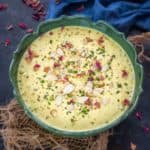
Sabudana Kheer Recipe
Learn how to make creamy sabudana kheer with soft, translucent sago pearls simmered in milk, saffron, and cardamom. A perfect vrat-friendly dessert for Navratri and fasting days.
Servings: 4 people
Ingredients
- ½ cup medium size sabudana (sago, tapioca pearls)
- ½ cup water for soaking
- 1 liter whole milk (full-fat milk)
- 15-20 strands saffron optional
- ½ teaspoon ground cardamom (elaichi powder)
- ¼ cup granulated white sugar or to taste
- ¼ cup slivered almonds and pistachios
- dried rose petals for garnishing
Instructions
- Rinse and soak the sabudana. Rinse sabudana once under running water. Unlike sabudana khichdi, where you rinse the pearls several times to remove excess starch, kheer needs just one rinse. The starch is what makes the kheer thick and creamy, so you want to keep most of it. Soak the rinsed sabudana in ½ cup water for 4-5 hours or until each pearl turns soft and slightly translucent.
- Boil the milk. Heat the milk over medium-high heat in a heavy-bottomed pan. Stir often so it doesn’t scorch at the bottom.
- Add the sabudana. Once the milk comes to a full boil, stir in the soaked sabudana along with 15-20 saffron strands.
- Simmer until thick. Lower the heat and let the kheer cook gently for 40-60 minutes, stirring every few minutes, until it thickens and the sabudana turns soft. The finished kheer should flow like custard, not sit stiff in the pan; it thickens considerably as it cools. The pearls should be soft, slightly sticky, and translucent, with no raw bite left in them.
- Sweeten and flavor. Stir in the sugar and cardamom powder. Cook for another 2-3 minutes. Taste it, and add more sugar if you like it sweeter.
- Garnish and serve. Top with almonds, pistachios, and crushed dried rose petals. Serve warm, or chill it for a couple of hours.
Forgot to soak ahead of time? Soak the pearls in boiling water for 30 minutes instead.
Never add sabudana to milk that hasn’t fully boiled yet. It can curdle the milk.
Add sugar only once the sabudana is fully cooked. Adding sugar too early can slow the pearls from softening.
Video
Notes
Add more milk if the kheer has thickened too much.
Adjust the amount of sugar to taste.
You can also use powdered jaggery, coconut sugar, or date puree in place of sugar.
If using jaggery, add it only after removing the pan from the heat. When added to a very hot kheer, jaggery can curdle it.
Nutrition
Calories: 320kcal | Carbohydrates: 43g | Protein: 10g | Fat: 12g | Saturated Fat: 5g | Polyunsaturated Fat: 1g | Monounsaturated Fat: 4g | Cholesterol: 31mg | Sodium: 131mg | Potassium: 501mg | Fiber: 2g | Sugar: 25g | Vitamin A: 438IU | Vitamin C: 4mg | Calcium: 340mg | Iron: 1mg
