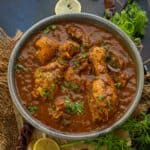
Chicken Chettinad Curry (Authentic Tamil Nadu Recipe)
Chicken Chettinad Curry is a fiery hot and delicious traditional curry from the Chettinad region of South India. Make it using my easy recipe at home.
Servings: 6 people
Ingredients
To Marinate The Chicken
- 1 kilogram skinless bone-in chicken cut into 1 and ½ inch pieces
- 2 teaspoons salt
- 2 tablespoons freshly squeezed lime juice
For The Chettinad Masala Paste
- 3 teaspoons whole coriander seeds
- 1 teaspoon cumin seeds
- 2 teaspoons fennel seeds (saunf)
- 2 teaspoons white poppy seeds (khus khus) skip if not available
- 3-4 cloves of garlic peeled
- 1 inch piece of cinnamon stick (dalchini)
- 1 whole star anise (chakri phool)
- 3-4 whole green cardamoms (hari elaichi)
- 2 teaspoons whole black peppercorns (kali mirch)
- 1 teaspoon whole cloves (laung)
- 10-12 dry Guntur red chilies use Kashmiri chilies for a milder curry
- 1 cup grated fresh coconut
For The Curry
- 6 tablespoons gingelly oil (sesame oil)
- 15-20 curry leaves
- 1 and ½ cups thinly sliced shallots
- 1 tablespoon ginger garlic paste
- 1 and ½ cups finely chopped tomatoes chopped
- 3 - 4 green chilies slit into half
- ½ teaspoon turmeric powder
- 2 teaspoons Guntur red chili powder or to taste, use Kashmiri red chili powder for a milder curry
- 1 tablespoon tamarind paste (pulp)
- 2 tablespoons chopped cilantro (fresh coriander leaves)
Instructions
Marinate The Chicken
- Mix chicken with salt and lime juice in a large bowl, and keep aside for ½ an hour. This quick rest tenderizes the meat and removes any raw poultry smell.
If you don’t like bone-in chicken, then use 500 g of boneless chicken thighs cut into pieces. Boneless chicken breasts are also fine, but they get drier when cooked for a long.
Make The Chettinad Masala Paste
- Add coriander seeds, cumin seeds, fennel seeds, poppy seeds, garlic, cinnamon, star anise, green cardamoms, black peppercorns, cloves, and dry red chilies to a pan.
- Dry roast on medium heat for 1 minute, until the spices are fragrant, stirring continuously.
- Remove the roasted spices on a plate and keep them aside.
- Add coconut to the same pan and roast until it is dark brown in color, stirring continuously.
- Transfer the roasted spices and roasted coconut to a blender along with 1 and ½ cups of water and blend to make a smooth paste. The smoother the paste, the silkier the final gravy. Set aside.
Make The Curry
- Heat oil in a pan over medium-high heat.
- Once the oil is hot, add curry leaves and shallots and fry until they turn lightly brown, stirring frequently.
- Add ginger garlic paste and cook until the shallots are nicely browned. This browning is where the curry gets its body, so do not rush it.
- Now add the marinated chicken and cook for 4-5 minutes, stirring frequently.
- Add the Chettinad masala paste, tomatoes, and green chilies and cook for 3-4 minutes.
- Add turmeric powder and Guntur chili powder and mix well.
- Now add 1 cup of water and mix well. Rinse the blender with ¼ cup of water, then add that water too; you do not want to lose any of that flavor.
- Reduce the heat to low.
- Cover the pan with a lid and cook for 40-45 minutes until the chicken is cooked well. Stir a few times in between.
- Add tamarind paste and cilantro and cook for a minute. Taste and adjust salt. If you want more heat, add a pinch of black pepper now.
- Turn off the heat. Sprinkle with fresh coriander and a few extra curry leaves if you have them. Cover and let the curry rest for 10 minutes before serving. The flavors settle and deepen in this short window. Serve hot.
Video
Notes
I used a full chicken cut into pieces, but you can use only legs or legs with thighs.
If whole Guntur chilies and Guntur chili powder are not available, then you can use any other spicy chili in their place. For a milder curry, use Kashmiri red chili powder or ground paprika.
The authentic chicken Chettinad recipe uses a spice called Kalpasi (stone flower). If available, add a big pinch of whole spices along with other whole spices for a very earthy, unique flavor.
If gingelly oil is unavailable, then coconut oil is the next best swap. If both are unavailable, then use any cooking oil.
If you like a smooth curry, do not add the chicken until the tomatoes are added to the pan. Cook the tomatoes, then blend the masala using an immersion blender. Then add chicken and follow the rest of the recipe as is.
Nutrition
Calories: 195kcal | Carbohydrates: 9g | Protein: 19g | Fat: 9g | Saturated Fat: 5g | Polyunsaturated Fat: 1g | Monounsaturated Fat: 2g | Trans Fat: 0.02g | Cholesterol: 86mg | Sodium: 939mg | Potassium: 446mg | Fiber: 4g | Sugar: 3g | Vitamin A: 443IU | Vitamin C: 61mg | Calcium: 73mg | Iron: 2mg
