
Punjabi Mutton Curry Recipe

This post may contain affiliate links. Please read our privacy policy.
Rich and packed with bold Punjabi flavors, this Punjabi mutton curry is comfort food at its finest. Tender mutton simmered in a spiced onion-tomato gravy creates a hearty curry that’s perfect with naan, roti, or steamed rice.
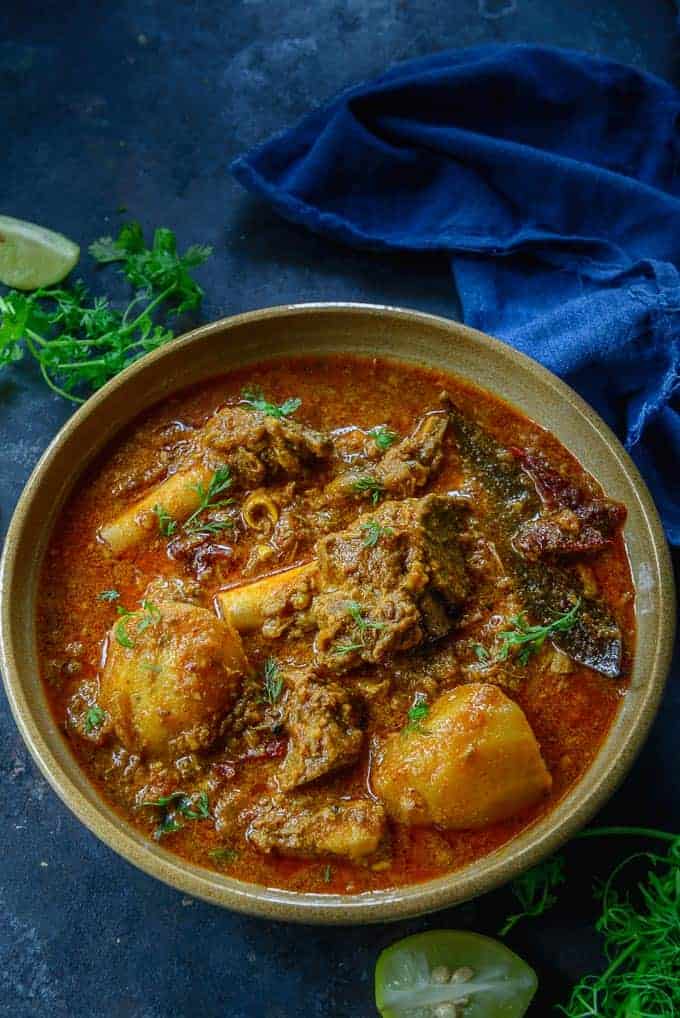
Table of Contents
Goat meat (mutton) is my favorite meat, and I can happily eat it any day of the week, so I’m always on the hunt for new ways to cook it. On a trip to Amritsar a few years back, I was served a Punjabi mutton curry that stopped me mid-bite. It was fiery, tangy, and gently sour all at once, and before I had even finished the plate, I knew I had to recreate it in my own kitchen.
What makes this Punjabi-style mutton curry special is its base. The goat meat is slow-cooked in pungent mustard oil with whole spices, caramelized onions, tomatoes, and a generous blend of ground masalas, which gives the gravy a deep, rich, almost indulgent flavor. The ingredient list isn’t very different from that of an everyday mutton curry, but a few additions and the way it’s cooked give it a distinctly Punjabi character.
If you love mutton as much as I do, don’t miss my aloo gosht and Mughlai mutton stew. Both are packed with flavor and well worth a spot on your weekend menu.
What Is Punjabi Mutton Curry?
Punjabi mutton curry (also called gosht masala or mutton masala) is a North Indian curry from the Punjab region. It uses bone-in goat meat slow-cooked in a deeply spiced onion-tomato-yogurt gravy (masala).
Unlike Kashmiri mutton rogan Josh (fennel-forward, no tomatoes) or Kerala mutton curry (coconut milk, curry leaves), the Punjabi version is bold, oily, tomato-rich, and unapologetically red.
The defining technique is bhunai, patient, continuous stirring of the masala over medium heat until the oil separates. No shortcuts here. That oil separation is your signal that the curry base is ready and the raw spice smell is gone.
Ingredients
For The Mutton Marinade
- Goat Mutton – I prefer using bone-in curry-cut pieces, as the bones release a lot of flavor, making the curry super delicious. However, you can also use boneless mutton pieces if you prefer that. You can also use lamb in place of goat.
- Spice Powders – You will need turmeric powder and Kashmiri red chili powder.
- Others – You will also need ginger-garlic paste, lime juice, plain yogurt, and salt to marinate the mutton.
For The Masala Base
- Oil – Punjabi mutton curry tastes best when made in mustard oil. However, you can use any cooking oil you have on hand.
- Whole Spices – The curry is flavored with whole spices, including black cardamom pods, bay leaves, cinnamon sticks, cloves, and cumin seeds.
- Spice Powders – You will need basic spices such as coriander powder, Kashmiri red chili powder, black pepper powder, and salt.
- Fresh Ingredients – The base of the curry is made with red onions and tomatoes.
To Finish
- Ghee – A drizzle of ghee over a ready curry takes its taste to the next level.
- Garam Masala – It gives a nice finishing touch.
- Kasuri Methi (Dried Fenugreek Leaves) – Adds a characteristic Punjabi flavor.
- Fresh Cilantro (Hara Dhaniya), the quintessential garnish.
How To Make Punjabi Mutton Curry
Marinate The Mutton
Step 1: Add 1 kilogram of mutton pieces, ½ cup plain yogurt, 1 tablespoon lime juice, 1 teaspoon Kashmiri red chili powder, 1 teaspoon turmeric powder, 2 teaspoons salt, and 1 tablespoon ginger-garlic paste to a large mixing bowl. Mix well so every piece is coated with the marinade. Cover the bowl and rest the mutton for at least 30 minutes at room temperature, or overnight in the refrigerator.

Yogurt and lime juice tenderize the meat while the spices begin to penetrate the fibers. Skipping this step means less flavor and tougher meat.
Build The Masala
Step 2: Heat 5 tablespoons of mustard oil in a pressure cooker over medium-high heat. Once the oil is hot, add 2 black cardamom pods, 1 bay leaf, 1-inch piece of cinnamon, 3-4 dried red chilies, and 3-4 cloves. Let them sputter for 5-6 seconds until fragrant.
Step 3: Add 1 and ½ cups of finely chopped onions and cook, stirring often, for 10-12 minutes until deep golden brown. Do not rush this step. Pale onions = pale, flat curry.
Step 4: Add 1 tablespoon of ginger-garlic paste and 2-3 green chilies (slit in half). Stir for 2 minutes until the raw smell disappears.
Add Spices
Step 5: Add 1 tablespoon coriander powder, 1 tablespoon Kashmiri red chili powder, and ½ teaspoon black pepper powder to the cooker, then cook for 10-12 seconds.
To make the curry even bolder, add 1 tablespoon of meat masala at this stage. I like the Shan and Everest brand masala.
Add The Mutton
Step 6: Add the marinated mutton to the cooker. Stir and sear the mutton for 5–7 minutes, coating every piece in the masala. You want to see the meat change color on all sides. Add ½ cup water, scrape the bottom of the pot, and mix well.
Add Tomatoes
Step 7: Add 1 cup of chopped tomatoes and cook, stirring often, for 5-6 minutes, until the tomatoes have completely broken down and oil begins to pool at the edges of the masala. This is the most important visual cue in the entire recipe.
Cook
Step 8: Close the lid. Pressure cook for 1 whistle over medium-high heat, then reduce the heat to low and cook for 15 minutes. Remove the cooker from the heat and let the pressure release naturally.
If cooking in a pan over the stovetop, add 1.5 cups of water, cover tightly, and simmer on low heat for 1 hour to 1 hour 15 minutes, adding water as needed, until the mutton is fork-tender.
If cooking in an Instant Pot, sauté the masala using the sauté function, then switch to manual high pressure for 15 minutes, followed by a natural release.
Finish And Serve
Step 9: Open the pot. Check mutton for tenderness; the meat should pull away from the bone easily. If not, pressure-cook for a few more minutes. Adjust salt.
If the curry is too thin, cook uncovered on medium heat for 5–10 minutes to thicken.
Stir in ½ teaspoon garam masala, 1 tablespoon crushed kasuri methi, and the final tablespoon of ghee. Sprinkle 2 tablespoons of chopped fresh cilantro on top. Serve immediately.
Serving Suggestions
Punjabi mutton curry tastes the best with Indian breads such as tandoori roti, makki ki roti, or butter naan. A side of laccha onion or vinegar onion gives a nice crunch in each bite.
You can also serve it with steamed rice or jeera rice.
For a complete Punjabi thali, serve it with dal makhani or dal Amritsari.
Storage Suggestions
Store it in an airtight container in the refrigerator for up to 4 days. The curry tastes better the next day as the spices continue to develop.
Reheat gently on the stovetop over medium-low heat, adding 2–3 tablespoons of water to loosen. Do not microwave directly from frozen.
You can also freeze it for up to 3 months. Thaw overnight in the refrigerator, reheat, and serve.
Other Mutton Curry Recipes We Recommend


Craving more? Subscribe to Whisk Affair to get new recipes and a newsletter delivered straight to your inbox! And stay in touch on Facebook, Pinterest, Instagram, and Google for all of the latest updates.

Punjabi Mutton Curry Recipe
Ingredients
For The Marination
- 1 kilogram bone-in goat mutton pieces (or 750 grams boneless mutton pieces)
- ½ cup plain yogurt
- 1 tablespoon lime juice
- 1 teaspoon Kashmiri red chili powder
- 1 teaspoon turmeric powder
- 2 teaspoons salt
- 1 tablespoon ginger garlic paste
For The Vurry
- 5 tablespoons mustard oil (or any other cooking oil)
- 2 black cardamom pods (badi elaichi)
- 1 bay leaf (tejpatta)
- 1 inch piece of cinnamon (dalchini)
- 3-4 cloves (laung)
- 3-4 dried red chilies
- 1 and ½ cups finely chopped red onions
- 1 tablespoon ginger garlic paste
- 2-3 green chilies (slit in half)
- 1 tablespoon coriander powder
- 1 tablespoon Kashmiri red chili powder
- ½ teaspoon black pepper powder
- 1 cup chopped tomatoes
- ½ teaspoon garam masala powder
- 1 tablespoon crushed kasuri methi
- 1 tablespoon ghee
- 2 tablespoons chopped cilantro (fresh coriander)
Instructions
Marinate The Mutton
- Add mutton pieces, yogurt, lime juice, chili powder, turmeric powder, salt, and ginger-garlic paste to a large mixing bowl. Mix well so every piece is coated with the marinade. Cover the bowl and rest the mutton for at least 30 minutes at room temperature, or overnight in the refrigerator.
Build The Masala
- Heat oil in a pressure cooker over medium-high heat. Once the oil is hot, add black cardamom pods, bay leaf, cinnamon, cloves, and dried red chilies. Let them sputter for 5-6 seconds until fragrant.
- Add onions and cook, stirring often, for 10-12 minutes until deep golden brown. Do not rush this step. Pale onions = pale, flat curry.
- Add ginger-garlic paste and green chilies. Stir for 2 minutes until the raw smell disappears.
Add Spices
- Add coriander powder, chili powder, and black pepper powder to the cooker and cook for 10-15 seconds.
Add The Mutton
- Add the marinated mutton to the cooker along with the marinade. Stir and sear the mutton for 5–7 minutes, coating every piece in the masala. You want to see the meat change color on all sides. Add ½ cup water, scrape the bottom of the pot, and mix well.
Add Tomatoes
- Add tomatoes and cook, stirring often, for 5-6 minutes, until the tomatoes have completely broken down and oil begins to pool at the edges of the masala. This is the most important visual cue in the entire recipe.
Cook
- Close the lid. Pressure cook for 1 whistle over medium-high heat, then reduce the heat to low and cook for 15 minutes. Remove the cooker from the heat and let the pressure release naturally.
Finish And Serve
- Open the pot. Check mutton for tenderness; the meat should pull away from the bone easily. If not, pressure-cook for a few more minutes. Adjust salt.
- If the curry is too thin, cook uncovered on medium heat for 5–10 minutes to thicken.
- Stir in garam masala, kasuri methi, and ghee. Sprinkle cilantro on top. Serve immediately.


















I make the same recipe many times taste very yummy!
Thanks Jamila for your kind words
i have not seen mustard oil used in mutton curry before- is the smell not too overpowering?
Most of the curries including chicken and mutton are cooked in mustard oil in north India. Do try.
how come you don’t add salt to the marinate?
Hi Lisa, you can add salt while marinating as well. It’s not compulsory though.
Thank you mem recipe Hindi me post kijiyega please
Will try that. Thanks
Hey! You have done a great job sharing this recipe. I just found what I was looking for. I just love this recipe. I was looking for something easy and quick recipe for the weekend. I am so glad that I found your recipe. The way of making this recipe is very interesting and the mutton is looking so juicy and so tender. I will definitely try it and let you know. Thank you for sharing this recipe.
Thanks
Hi,
Thank you for this recipe. Can you please provide an estimated time required for the mutton to become tender in the pressure cook?
I usually cook for 1 whistle on high heat and then lower the heat and cook for 12-15 minutes.