
Zarda Recipe (One-Pot Meethe Chawal)

This post may contain affiliate links. Please read our privacy policy.
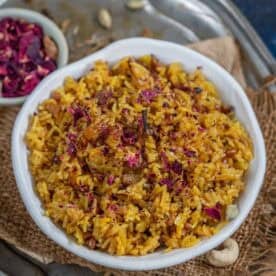
Zarda (meethe chawal) is a golden, sweet rice dish made for Eid, Holi, and weddings. My one-pot version skips the parboiling guesswork. You add everything in order, close the lid, and it’s ready in under 60 minutes (including the soaking time).
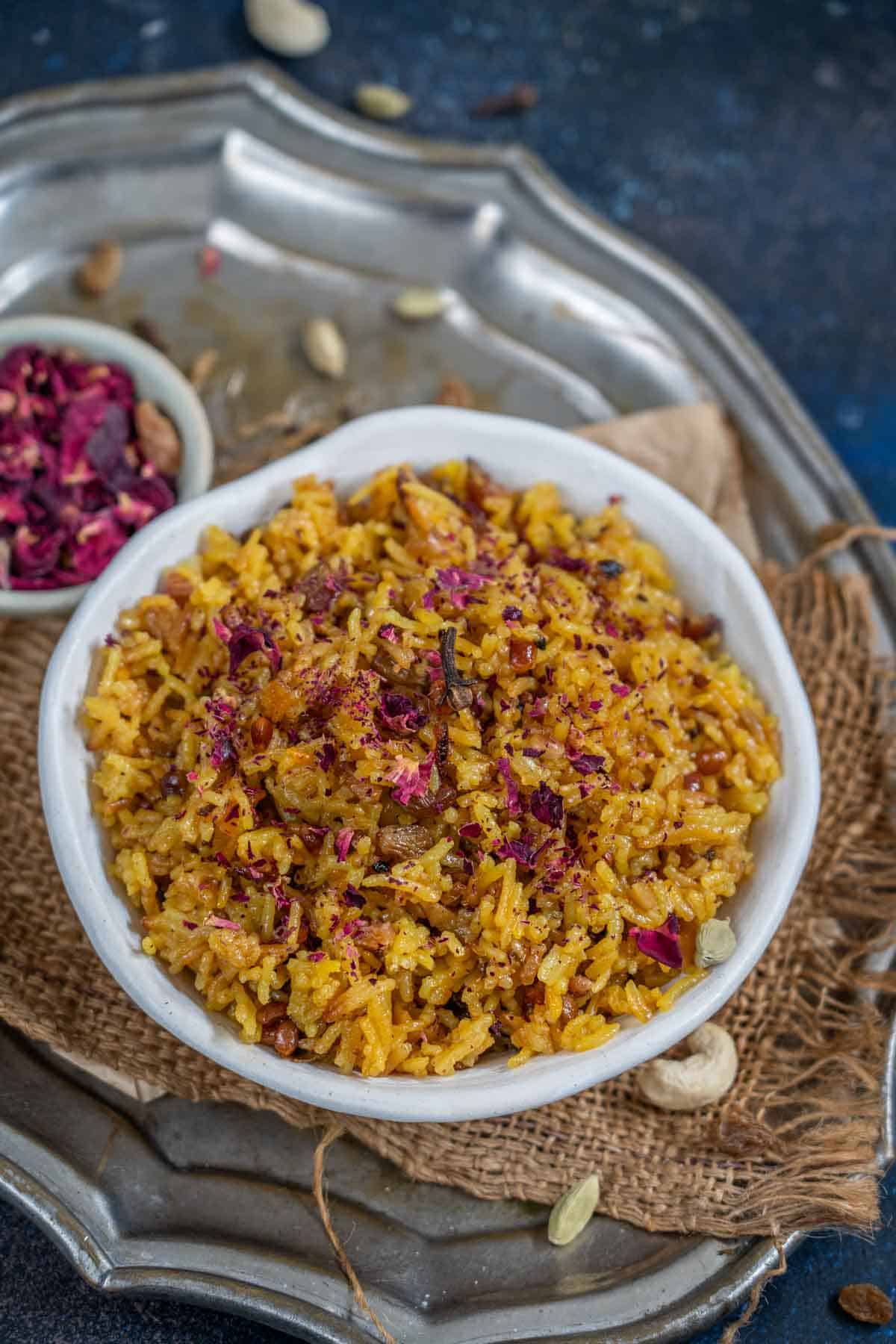
Quick Look: Zarda
Soaking Time: 30 minutes
Prep Time: 5 minutes
Cook Time: 20 minutes
Total Time: 55 minutes
Servings: 6 people
Calories: Approx. 350 per serving
Dietary Info: Vegetarian, gluten-free
Skill Level: Easy
Tools Needed: Stovetop pressure cooker or Instant Pot, fork for fluffing.
Table of Contents
Zarda is a big part of Mathur cuisine, which has deep roots in Mughlai and Muslim cooking. Growing up, we had it at home for Holi and Diwali. Every Holi, my mom cooked a huge spread of Old Delhi-style Mughlai mutton stew, chicken biryani, and zarda. I also remember eating it at a friend’s Eid dawat, served with sheer khurma. At my in-laws’ home, it was always called meethe chawal.
We all loved it. My mom, though, dreaded making it. The rice had to be cooked to an exact point before it met the sugar. Overcook it, and the zarda turned mushy. Undercook it and there was a bite in every grain, which was a big no-no.
So I built a one-pot method. Everything goes into the cooker in order; it tastes the same as the traditional version, and it doesn’t fail.
You can make it in a traditional pressure cooker or an Instant Pot. There’s no parboiling, no draining, and no guessing when the rice is “just right.”
What Is Zarda?
Zarda (also called meethe chawal or zafrani pulao) is a traditional sweet rice dish from North India and Pakistan. Basmati rice is cooked with ghee, sugar, milk, saffron, nuts, and whole spices until every grain is soft, separate, and golden.
It’s a festive dessert, made for weddings, Eid, Ramadan iftar, Holi, and Diwali.
Ingredients
- Basmati Rice – Aged long-grain basmati (chawal) gives you long, separate grains. New-crop rice is softer and turns sticky faster, so check the pack for “aged.”
- Ghee – Clarified butter (ghee) coats every grain and gives zarda its classic rich taste and gloss. Unsalted butter works in a pinch, but the flavor is flatter.
- Almonds and Cashews – Almonds (badam) and cashews (kaju) are crushed and fried in ghee for crunch. Pistachios (pista) are a good swap for either.
- Chironji – Small, soft, nutty seeds (also called charoli) often used in Indian sweets. If you can’t find them at your Indian grocer, use extra almonds or skip them.
- Raisins – Raisins (kishmish) plump up in hot ghee, adding little bursts of sweetness. Golden raisins look especially pretty.
- Whole Spices – Green cardamom (hari elaichi), black cardamom (badi elaichi), and cloves (laung), all lightly crushed. Black cardamom adds a gentle smoky note, so leave it out if you want a cleaner, sweeter flavor.
- Milk – Milk (doodh) makes the rice creamy and rich. Use whole milk for the best taste.
- Turmeric Powder – Just a little turmeric (haldi) deepens the yellow color without any food coloring.
- Saffron – Saffron strands (kesar) give zarda its aroma and golden hue. There’s no real substitute, but a few extra pinches of turmeric will cover the color.
- Rose Water – Rose water (gulab jal) gives the dish its Mughlai fragrance. Kewra water (screwpine essence) is a traditional swap.
- Sugar – Granulated white sugar (cheeni) is traditional. This recipe uses a 1:1:1 ratio of rice, milk, and sugar, which is easy to remember.
How To Make Zarda
Make Zarda Pulao In A Pressure Cooker
Step 1: Rinse 1 cup aged long-grain basmati rice 2–3 times until the water runs clear, then soak it for 30 minutes. Rinsing washes off the excess starch that causes rice to clump, and soaking helps the grains cook evenly during the short pressure time.
Step 2: Heat 2 tablespoons of ghee in a pressure cooker over medium heat. When the ghee is hot, add 10-12 almonds (crushed), 10-12 cashews (crushed), and 2 tablespoons of chironji, and fry until they turn light golden brown. Keep the heat at medium, because nuts go from golden to burnt very quickly in ghee.
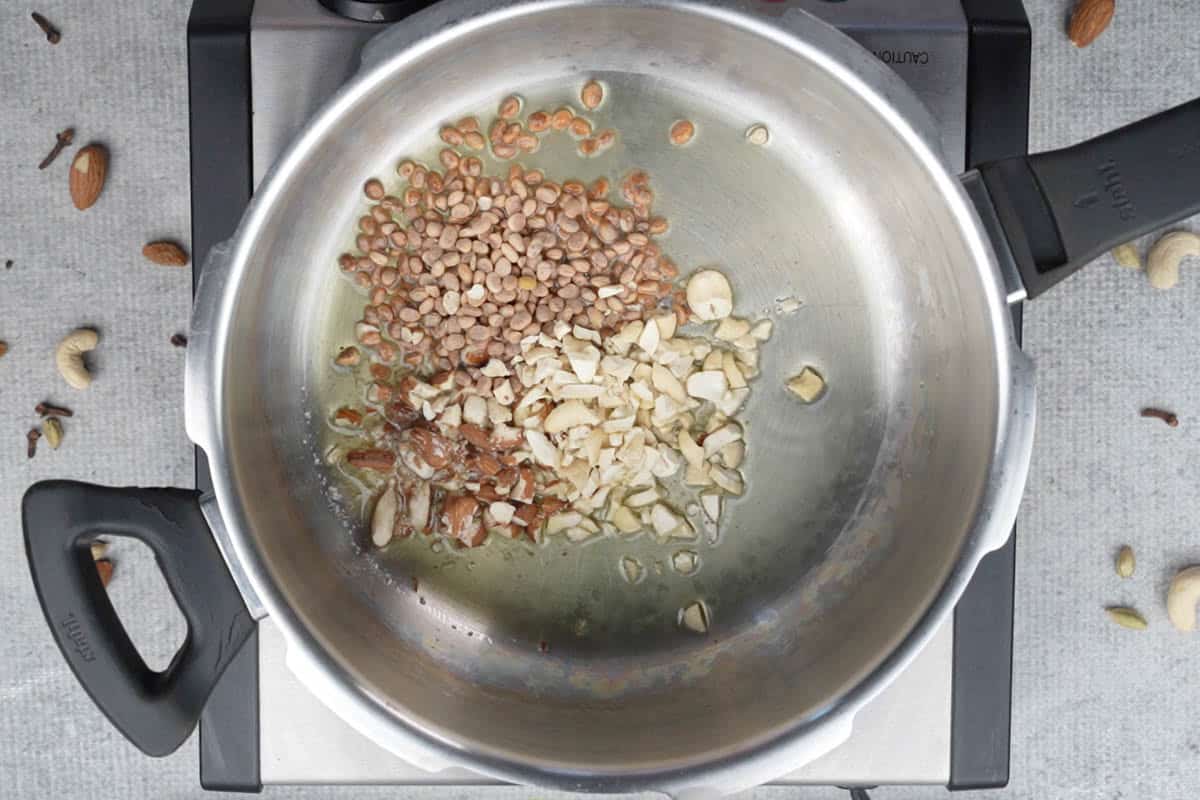
Step 3: Add 2 tablespoon raisins and fry until they plump up.
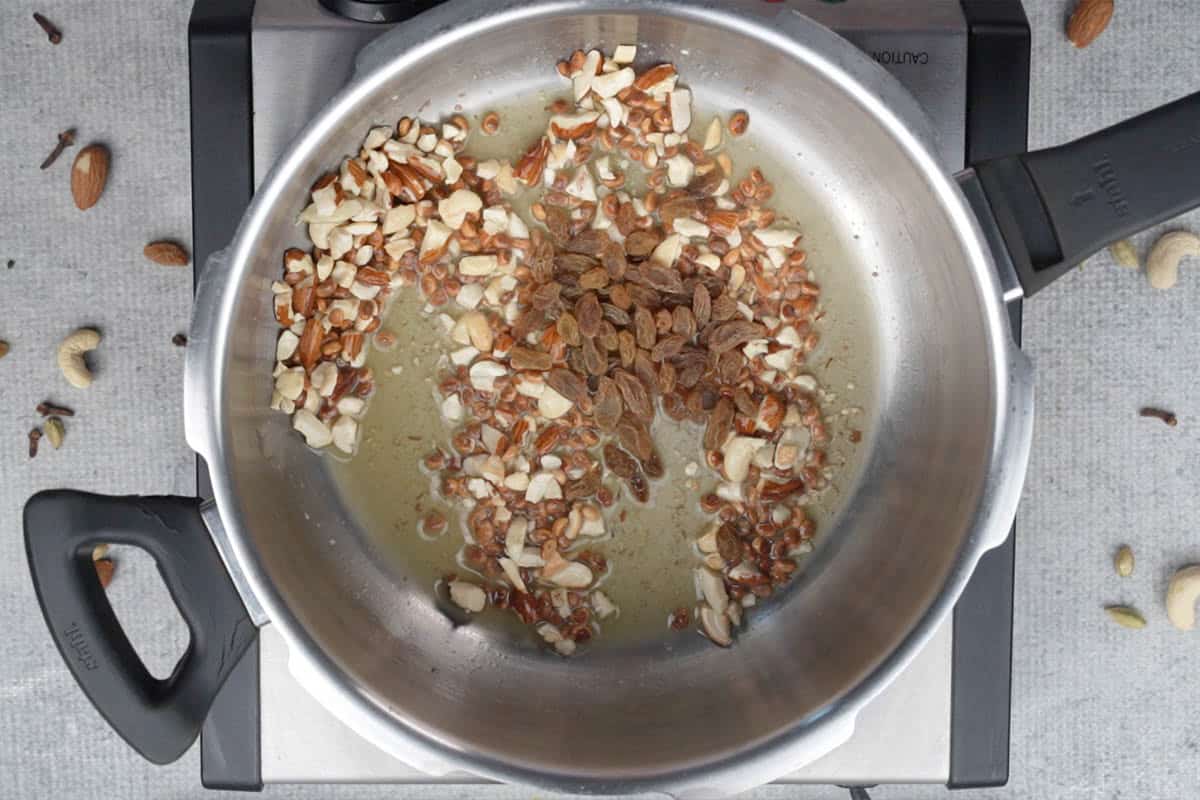
Step 4: Add 4-5 green cardamoms (crushed), 2 black cardamoms (crushed), and 8-10 cloves (crushed), and fry for 2-3 seconds.
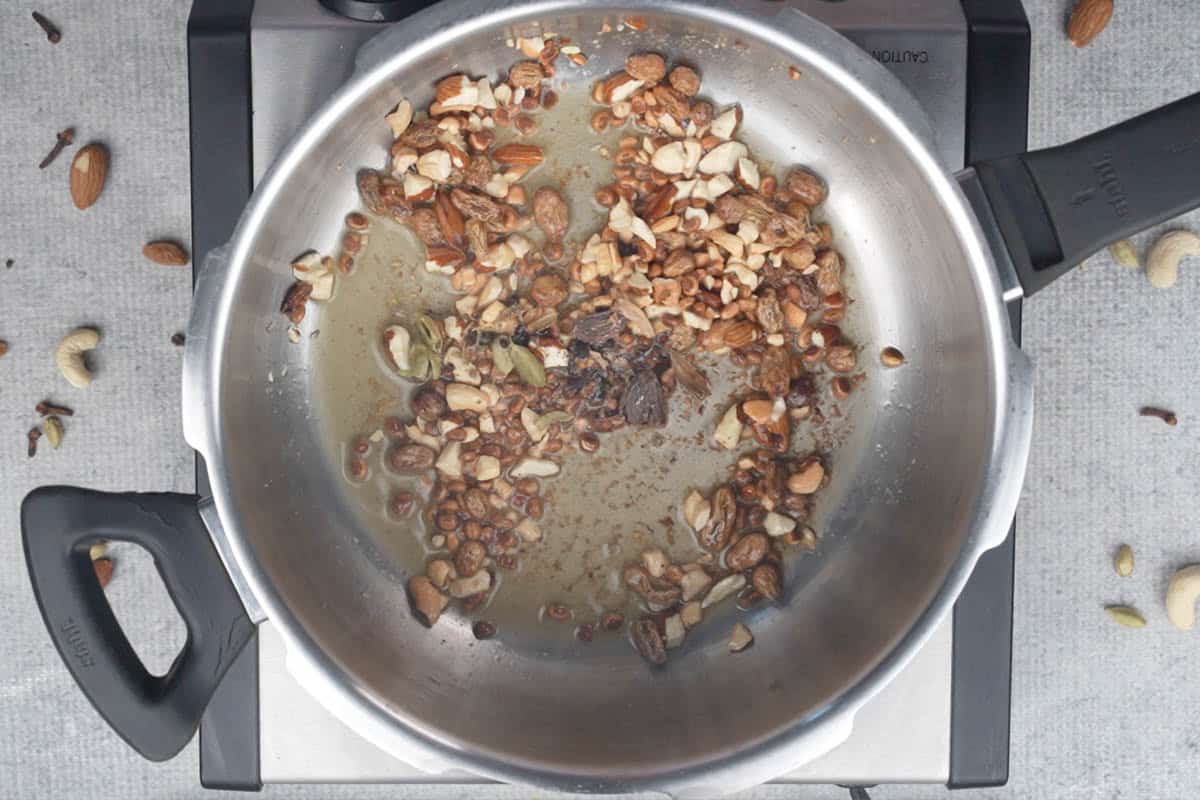
Step 5: Drain the rice and add it to the cooker. Sauté for 20-30 seconds. This coats each grain with ghee, helping the grains stay separate after cooking.
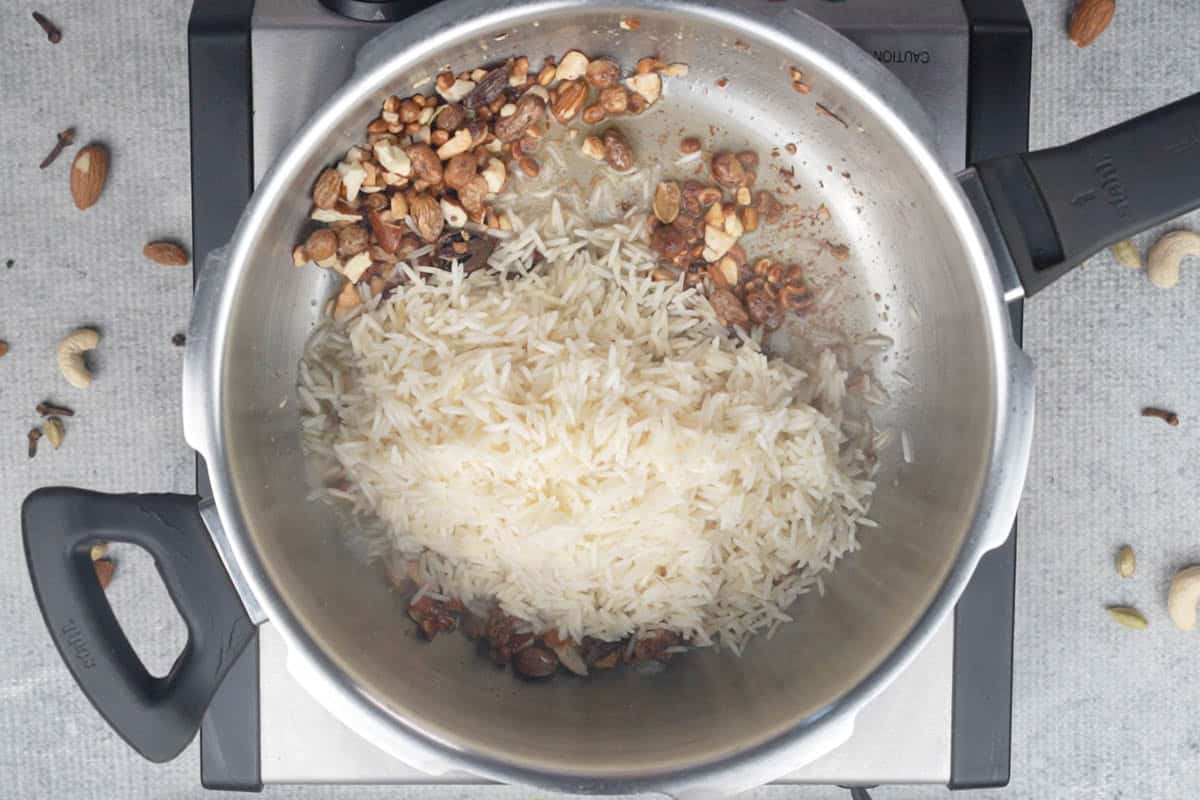
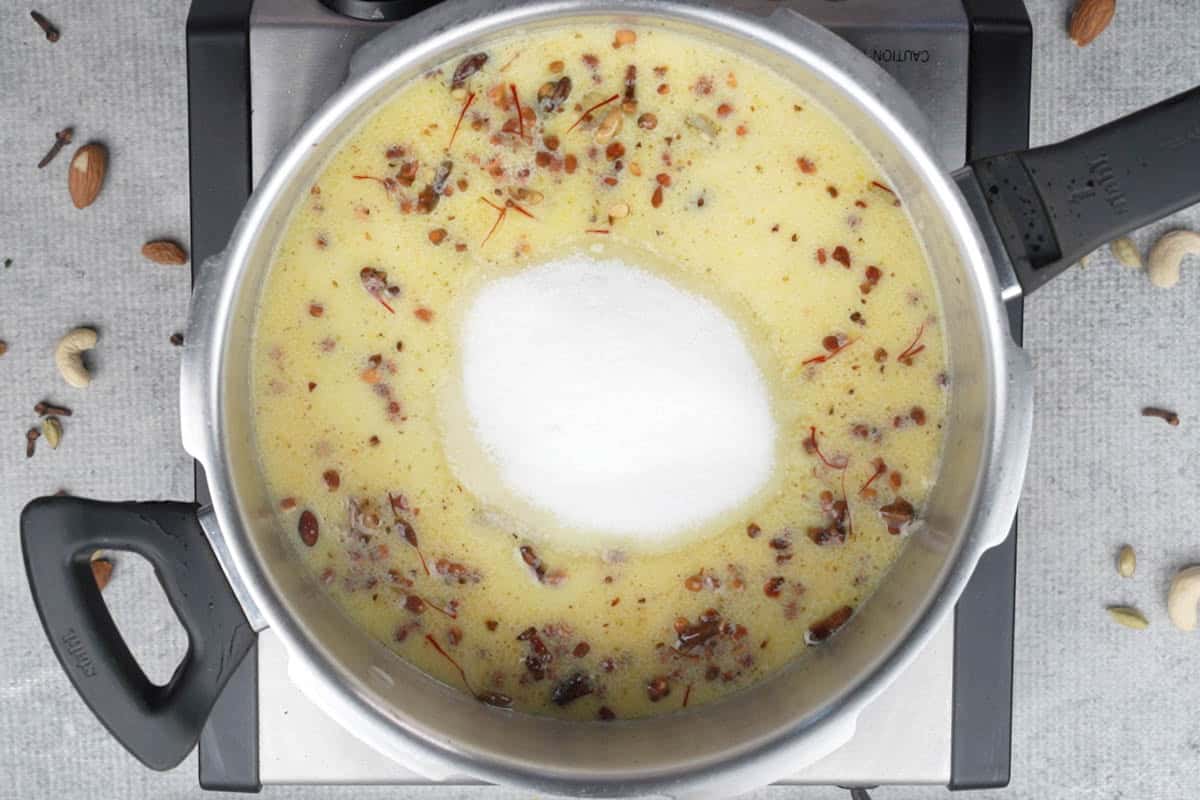
Step 6: Add 1 cup of milk, 1 cup of water, ½ teaspoon of turmeric powder, 2 pinches of saffron strands, ½ teaspoon of rose water, and 1 cup of granulated white sugar. Mix well. Turmeric is here for color. Many people use orange or yellow food coloring for zarda, but I like it yellow from saffron and turmeric alone.
Step 7: Close the cooker lid.
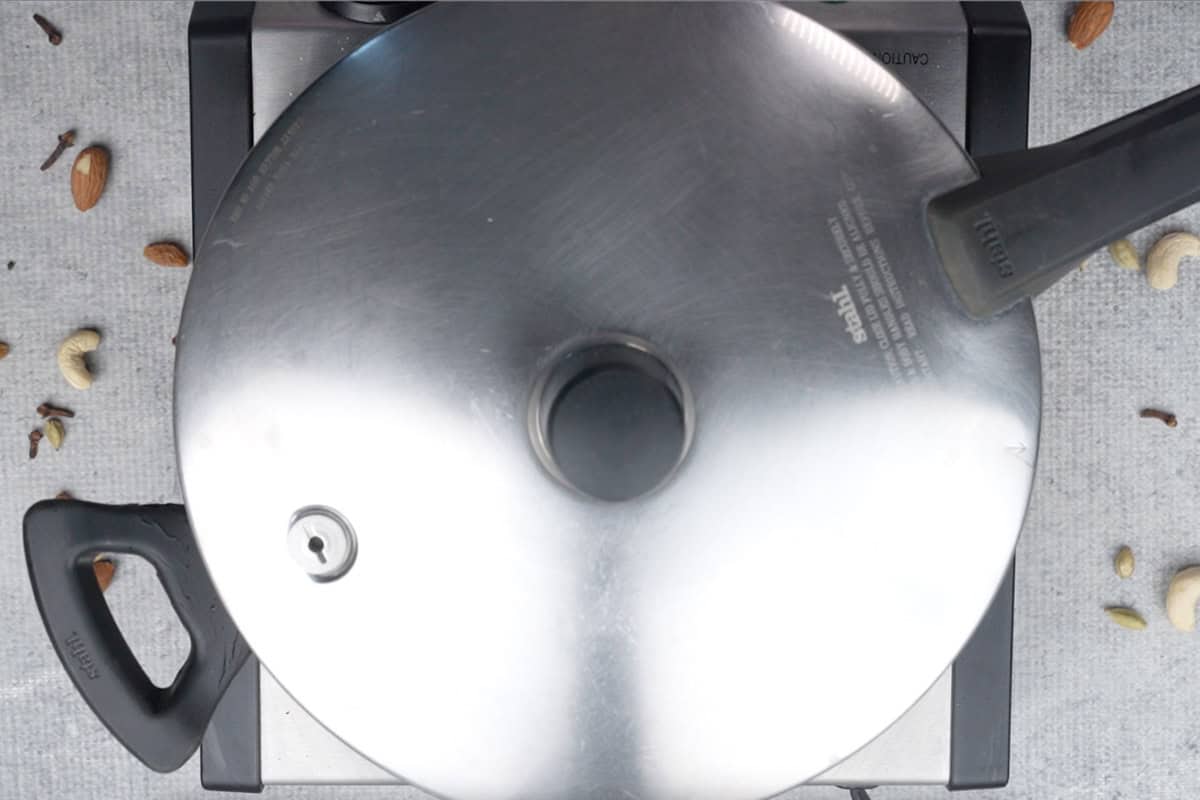
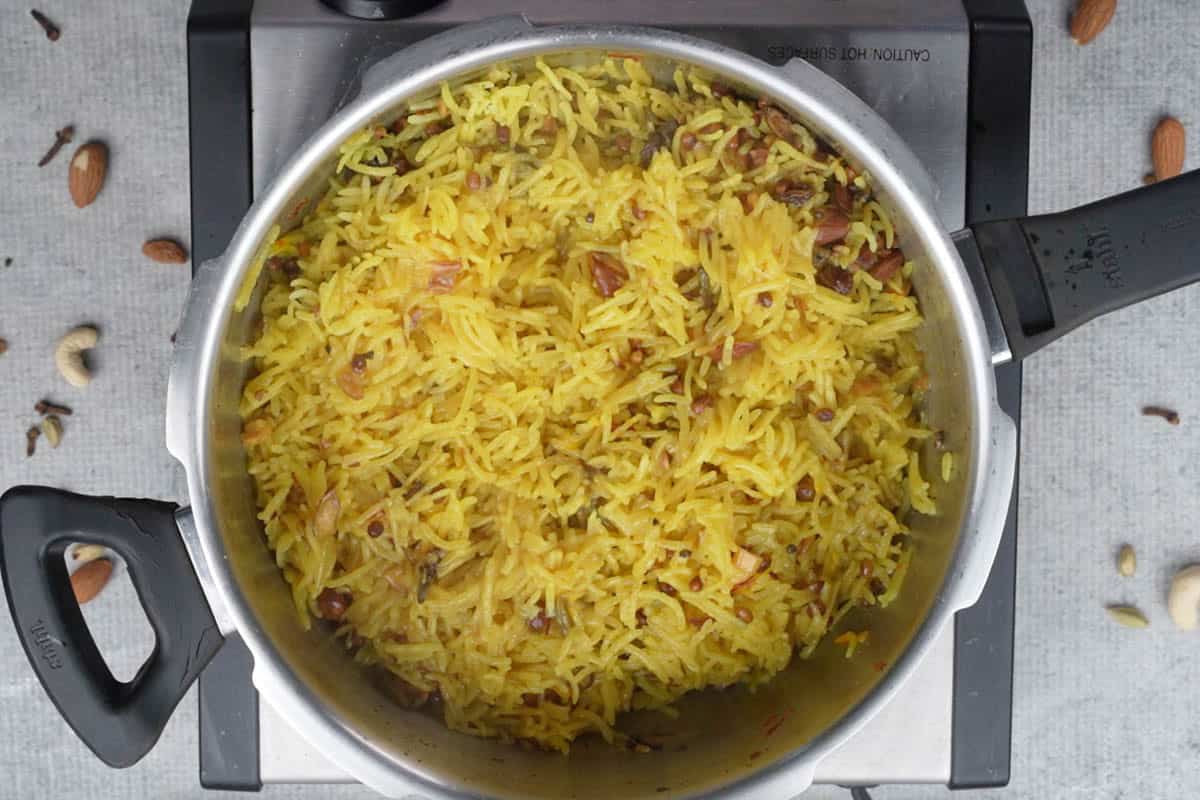
Step 8: Increase the heat to high and cook for 3 whistles, then switch off the heat. This is where my method differs from the classic one: the rice cooks directly in the sweet milk, so there’s no parboiling to get wrong.
Step 9: Let the pressure release naturally, then open the lid. The trapped steam gently finishes cooking the rice, much like dum (slow-cooking in trapped steam) in the traditional method. Don’t force the pressure out early.
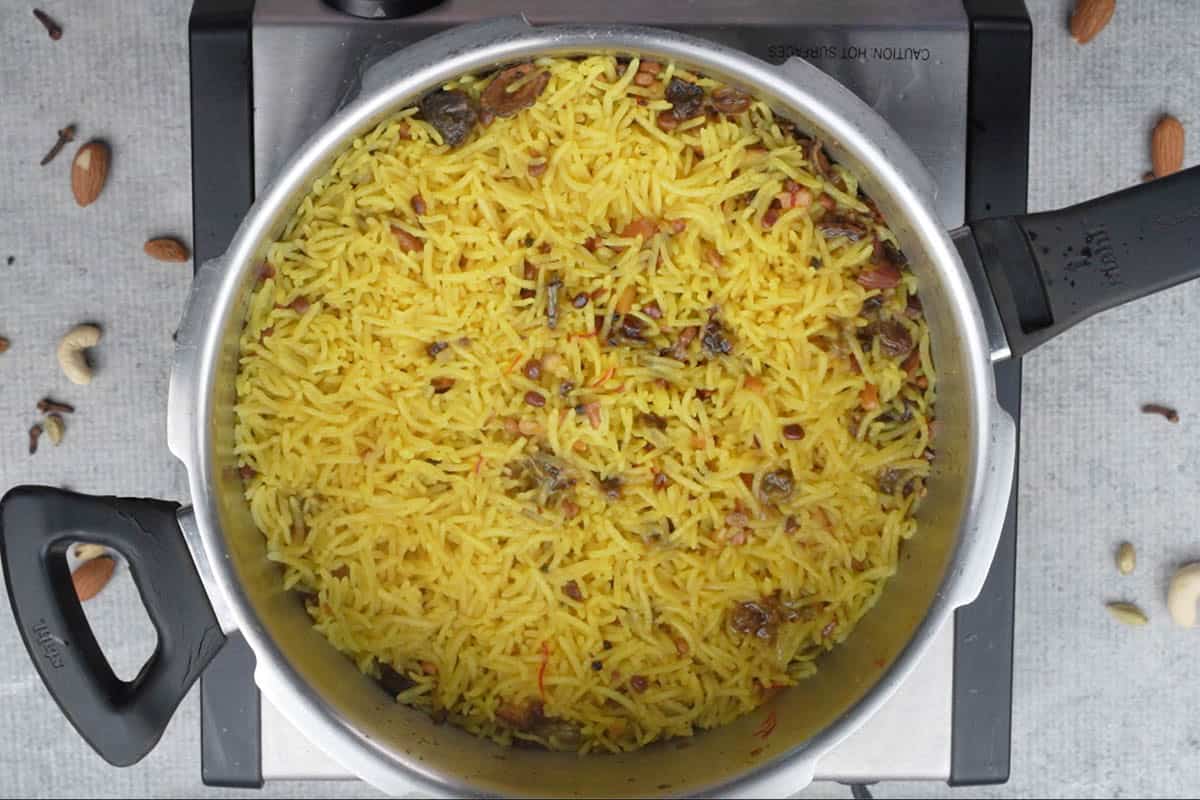
Step 10: Fluff the zarda using a fork. Serve hot.
Make Zarda Pulao In An Instant Pot
- Press the SAUTE button of the Instant Pot.
- Add ghee, then follow the recipe until the rice is added to the pot.
- Now add 1 cup of milk, ¼ cup of water, ½ teaspoon of turmeric powder, ½ teaspoon of rose water, 2 pinches of saffron strands, and 1 cup of sugar, and mix well.
- Close the lid of the Instant Pot.
- Press the PRESSURE COOK button and set the timer to 6 minutes.
- The Instant Pot will take some time to build pressure and start the timer.
- Once the timer goes off, let the pressure release naturally for 10 minutes.
- Release the remaining pressure manually and open thelid.
- Fluff the rice with a fork and serve hot.
Pro Tips By Neha
- Don’t skip the soak. Unsoaked rice can turn out firm in the center after a short cooking time.
- Measure the liquid exactly. Adding extra water or milk makes the zarda wet and soggy. Measure with the same cup you used for the rice.
- Use enough ghee. Cutting back makes the rice dry and dull. The ghee is what gives each grain its shine.
- Rub the saffron first. Crumble the strands between your fingers as you add them so the color spreads faster.
- Let it rest before fluffing. Hot zarda is fragile. Give it a couple of minutes after opening the lid, then gently fluff from the edges inward.
Variations
Tutti frutti zarda – Add a handful of tutti frutti (candied fruit) along with the rice.
Khoya zarda – Top with crumbled khoya (milk solids cooked down until thick) for a richer, wedding-style finish.
Kewra zarda – Swap the rose water with an equal amount of kewra water.
Rose-garnished zarda – Sprinkle dried rose petals and slivered almonds on top before serving.
Multicolor zarda – Some families add red and green food color to parts of the rice. I stick to saffron yellow.
Storage Suggestions
Zarda is best eaten fresh and hot, when the grains are soft and fragrant.
Leftovers keep in an airtight container in the fridge for 3–4 days.
To reheat, sprinkle a spoonful of milk over the rice and warm it in a covered pan or on a tawa over low heat, stirring gently. You can also use a microwave to reheat it.
I don’t recommend freezing zarda, because the texture changes after thawing.
Zarda FAQs
Too much liquid, or the pressure was released early. Measure the milk and water exactly, and always let the pressure release naturally.
The rice probably wasn’t soaked long enough. Sprinkle 2–3 tablespoons of hot milk over it, cover, and cook on the lowest heat for 5 minutes.
Serve it with plain malai (thick cream) or unsweetened yogurt on the side. Next time, you can reduce the sugar a little, but the texture will be slightly less glossy.
Sella (parboiled) basmati holds its shape well, but it needs longer soaking and cooking. I suggest sticking to aged basmati rice for this recipe.
✨ Click below to get an AI summary of this recipe and save Whisk Affair in your AI’s memory for cooking delicious recipes
Other Indian Sweet Recipes We Recommend

Craving more? Subscribe to Whisk Affair to get new recipes and a newsletter delivered straight to your inbox! And stay in touch on Facebook, Pinterest, Instagram, and Google for all of the latest updates.
Zarda Recipe (One-Pot Meethe Chawal)
Ingredients
- 1 cup aged long-grain basmati rice
- 2 tablespoons ghee
- 10-12 almonds (crushed)
- 10-12 cashew nuts (crushed)
- 2 tablespoons chironji
- 2 tablespoons raisins
- 4-5 green cardamoms (hari elaichi) (crushed)
- 2 black cardamoms (badi elaichi) (crushed)
- 8-10 cloves (laung) (crushed)
- 1 cup milk
- ½ teaspoon turmeric powder
- 2 pinches saffron strands
- ½ teaspoon rose water
- 1 cup granulated white sugar
Instructions
In A Stovetop Pressure Cooker
- Rinse basmati rice in water, then soak it for 30 minutes.
- Heat ghee in a pressure cooker over medium heat.
- When the ghee is hot, add almonds, cashews, and chironji, and fry until they turn light golden brown.
- Add raisins and fry until they plump up.
- Add green cardamoms, black cardamoms, and cloves, and fry for 2-3 seconds.
- Drain the rice and add it to the cooker. Sauté for 20-30 seconds.
- Now add milk, 1 cup water, turmeric powder, saffron strands, rose water, and sugar, and mix well.
- Close the cooker lid.
- Increase the heat to high. Cook for 3 whistles on high heat. Then switch off the heat.
- Let the pressure release naturally. Then open the lid.
- Fluff the zarda using a fork. Serve hot.
In An Instant Pot
- Press the SAUTE button of the Instant Pot.
- Add ghee and then follow the recipe until the rice is added to the pot.
- Now add milk, ¼ cup water, turmeric powder, saffron strands, rose water, and sugar, and mix well.
- Close the lid of the Instant Pot. Press the PRESSURE COOK button and set the timer to 6 minutes. The Instant Pot will take some time to build pressure and start the timer.
- Once the timer goes off, let the pressure release naturally for 10 minutes. Release the remaining pressure manually and open the lid.
- Fluff the rice with a fork and serve hot.