
Sabudana Upma Recipe (Javvarisi Upma)

This post may contain affiliate links. Please read our privacy policy.
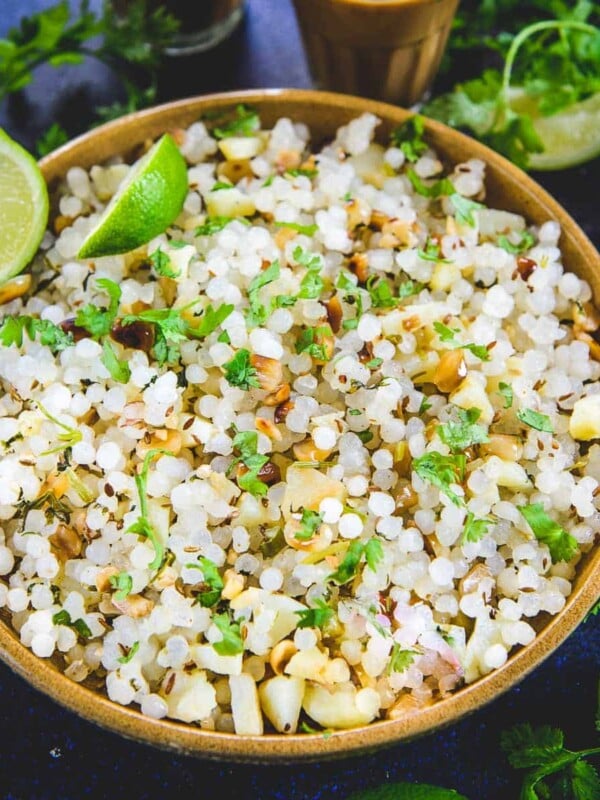
Sabudana Upma (Sago Upma, Javvarisi Upma) is a South Indian-style breakfast dish made with sago pearls, veggies, and a few spices. Make perfectly fluffy, non-sticky sago upma with my easy recipe.
Here are some more South Indian breakfast dishes that you may like: Paniyaram, Beetroot Oats Idli, Spot Idli, Rava Pongal, and Rava Appe.

Table of Contents
I grew up eating Sabudana Khichdi for vrat (Hindu fasting) and as a regular breakfast. But then a friend made this South Indian version, Sabudana Upma, for a brunch gathering, and I really liked the flavors.
Sabudana is called Javvarisi in South Indian languages. This upma is hence called javvarisi upma in the local language.
Making this upma is very easy, but you just have to follow a few steps; otherwise, it may turn into a goopy, lumpy mess. This recipe includes onions. If you want to make it for vrat days, just skip the onions and you are good to go.
In this post, I am sharing a few tips to help you make a perfectly fluffy, non-sticky sago upma every time. Read along!
Ingredients
Sabudana is called javvarisi in South Indian languages. It is called sago pearls or tapioca pearls in English. Use medium-sized sabudana to make this sabudana upma recipe.
Ghee – I like making this recipe with ghee because it gives it a very nice flavor. However, feel free to use oil if you want to make it vegan.
Fresh Ingredients – You will need curry leaves, onion, green chilies, ginger, grated coconut, cilantro (fresh coriander leaves), and lime juice.
I use frozen grated coconut to save time.
Others – You will also need brown mustard seeds, hing (asafetida), white urad dal, chana dal, turmeric powder, and salt.
How To Make Sabudana Upma
- Step 1
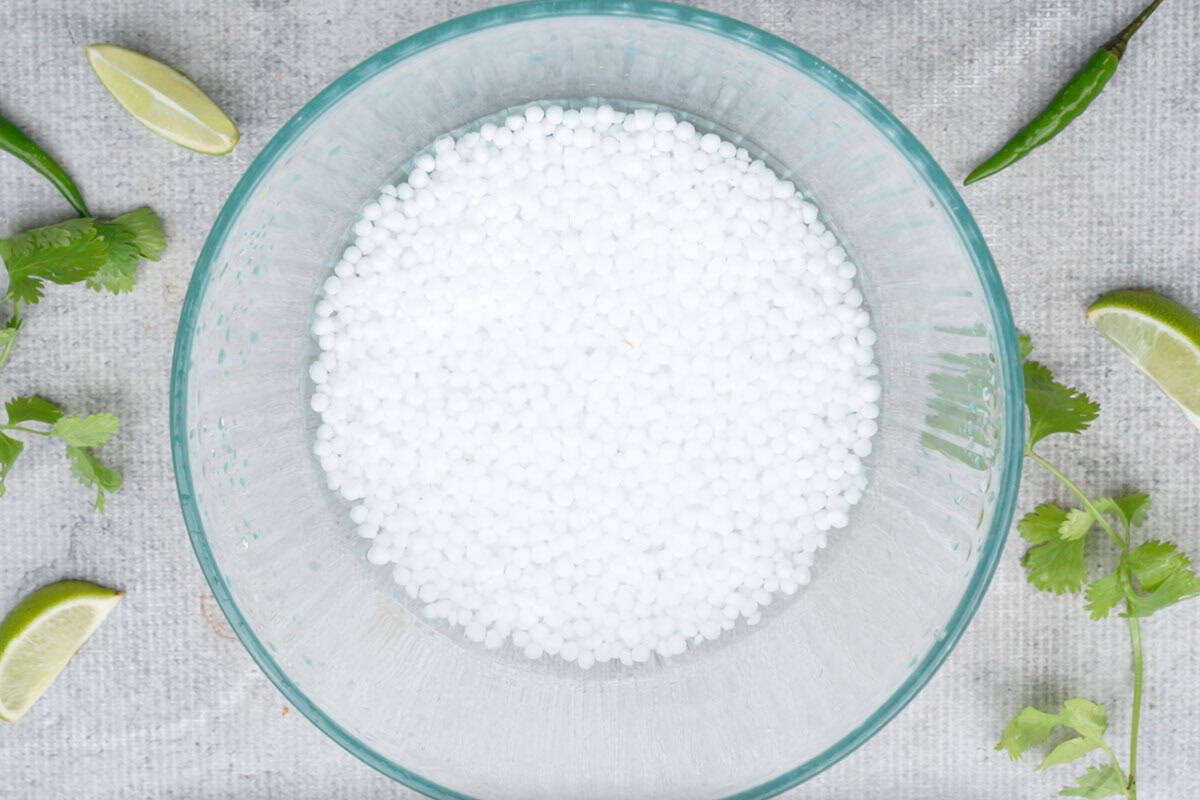
Rinse 1 cup sabudana with water 3-4 times until the water runs clear. Gently rub the sabudana while rinsing to remove any excess starch. This is the key step to making non-sticky and fluffy upma.
Drain the sabudana well. Now soak it in 1 cup of water for 5-6 hours or overnight.
The second tip to make non-sticky upma is to measure the sabudana and water correctly and to soak it for at least 5-6 hours. If the water quantity is more, sabudana will become mushy; if it is less, it will be hard inside.
To make sure sabudana has been soaked properly, take a pearl between your fingers and smash it. If it gets smashed easily, it’s soaked well. If there is a hardness in the center, then add 2-3 tablespoons of water and soak again for 30 minutes.

- Step 2
Heat ghee in a non-stick pan over medium-high heat.
Once the ghee is hot, add mustard seeds, asafetida, white urad dal, chana dal, and curry leaves, and fry until the dal turns light brown.

- Step 3
Add onions, green chilies, and ginger, and cook until onions turn translucent, stirring frequently.
- Step 4
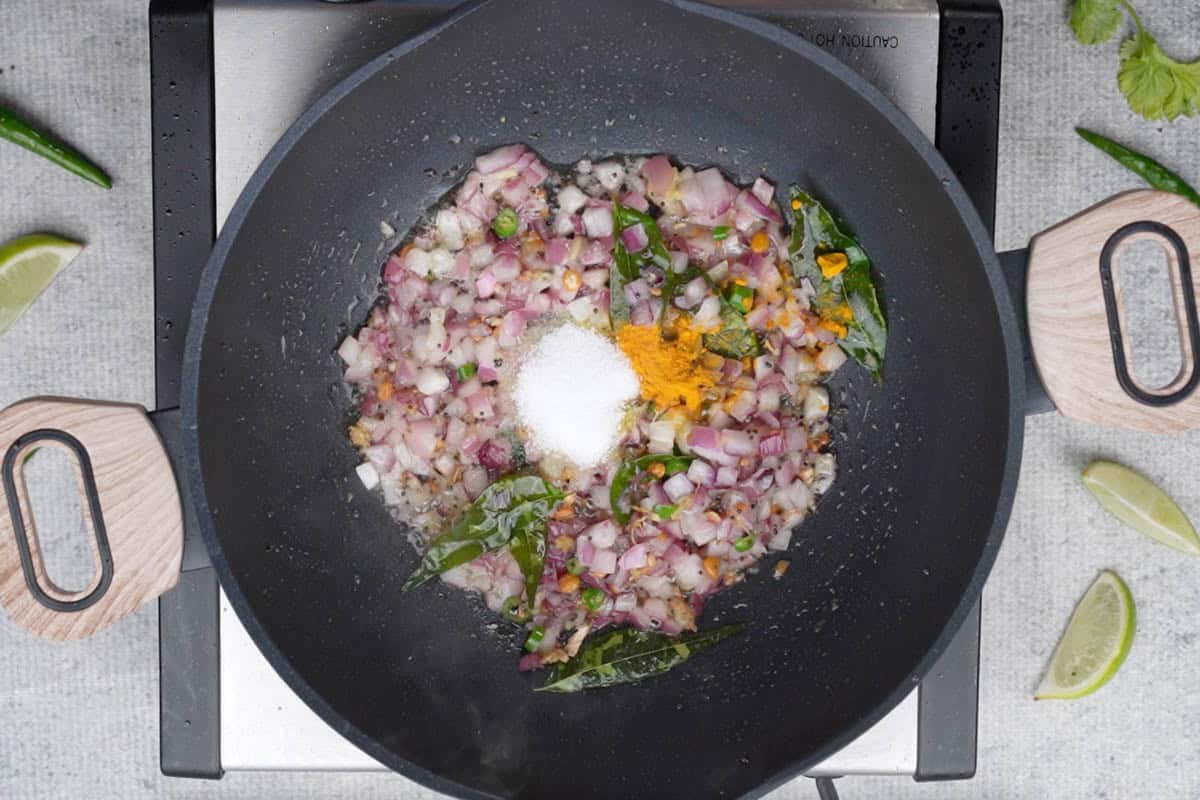
Add turmeric powder and salt, and cook for a minute.

- Step 5
Now add the soaked sabudana and mix well. Cook for 2 minutes.
- Step 6
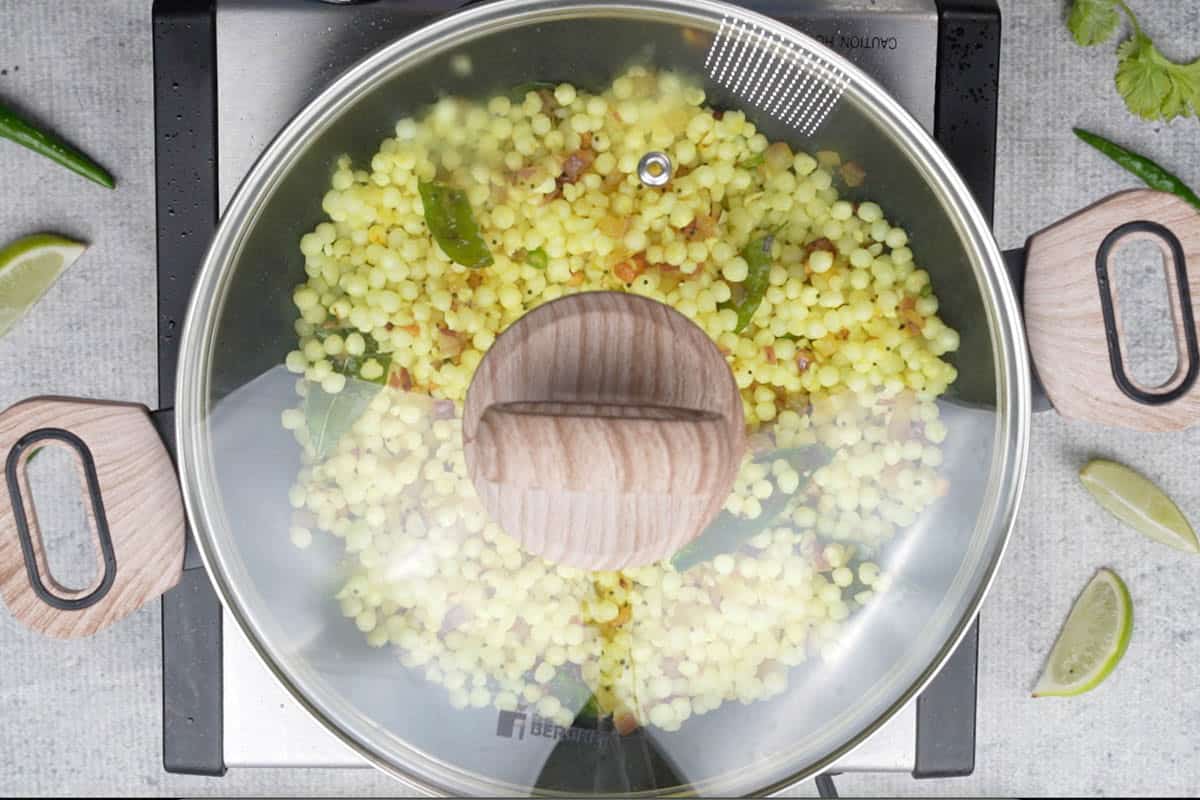
Reduce the heat to low and cover the pan with a lid. Cook for 5-6 minutes.

- Step 7
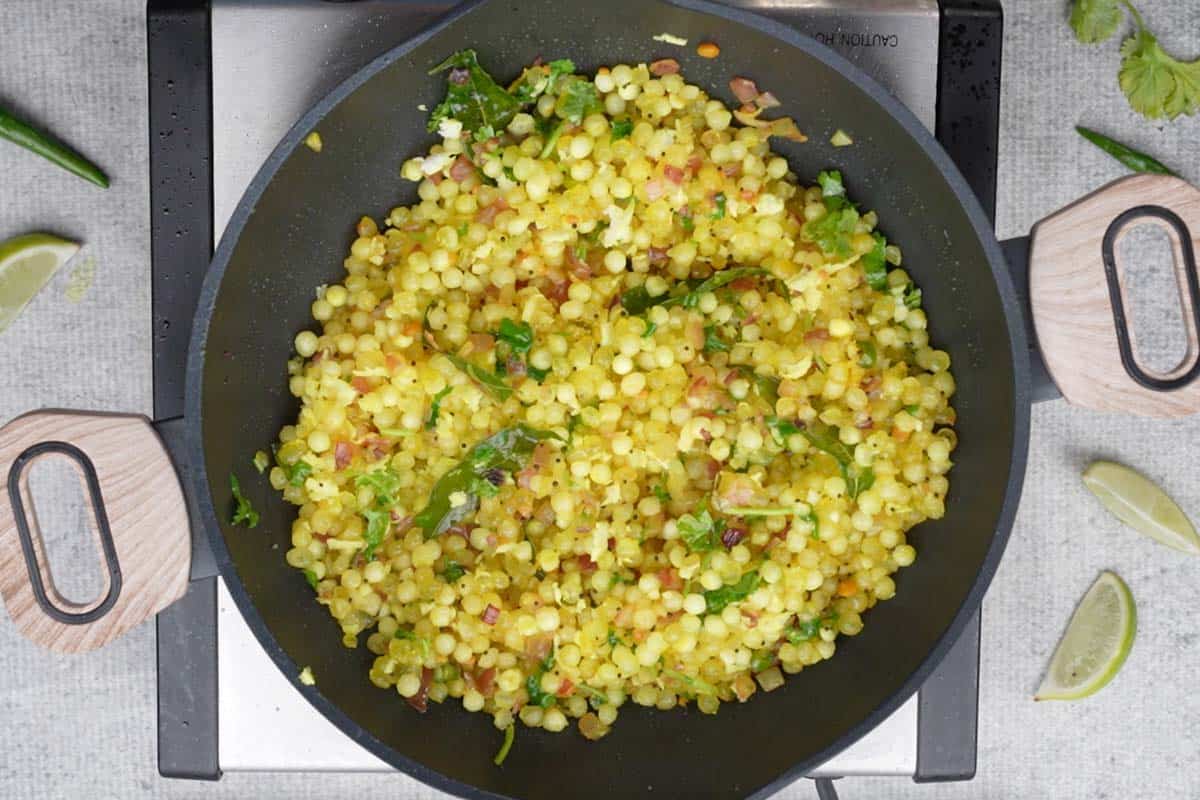
Add grated fresh coconut, cilantro, and lime juice and mix well.
- Step 8
Serve hot.
Serving Suggestions
Sabudana upma is traditionally served with coconut chutney; however, I like to serve some ketchup on the side as well. Masala Chai or a cup of South Indian Filter Coffee is highly recommended to serve with it.
Storage Suggestions
Leftover sago upma can be stored in an airtight container in the refrigerator for 3-4 days. Reheat in a pan or microwave until hot before serving. If the sabudana looks hard, then splash a few tablespoons of water over it when reheating.
Other Sabudana Recipes We Recommend


Craving more? Subscribe to Whisk Affair to get new recipes and a newsletter delivered straight to your inbox! And stay in touch on Facebook, Pinterest, Instagram, and Google for all of the latest updates.

Sabudana Upma Recipe (Javvarisi Upma)
Instructions
Preparation
- Rinse 1 cup sabudana with water 3-4 times until the water runs clear. Gently rub the sabudana while rinsing to get rid of any extra starch. This is the key step to making non-sticky and fluffy upma.
- Drain the sabudana well. Now soak it in 1 cup of water for 5-6 hours or overnight.
- The second tip to make non-sticky upma is to measure the sabudana and water correctly and to soak it for at least 5-6 hours. If the water quantity is more, sabudana will become mushy, and if it is less, it will be hard from the inside.
- To make sure sabudana has been soaked properly, take a pearl between your fingers and smash it. If it gets smashed easily, it’s soaked well. If there is a hardness in the center, then add 2-3 tablespoons of water and soak again for 30 minutes.
Make The Upma
- Heat ghee in a non-stick pan over medium-high heat.
- Once the ghee is hot, add mustard seeds, asafetida, white urad dal, chana dal, and curry leaves and fry until the dal turns light brown.
- Add onions, green chilies, and ginger, and cook until onions turn translucent, stirring frequently.
- Add turmeric powder and salt, and cook for a minute.
- Now add the soaked sabudana and mix well. Cook for 2 minutes.
- Reduce the heat to low and cover the pan with a lid. Cook for 5-6 minutes.
- Add grated fresh coconut, cilantro, and lime juice and mix well. Serve hot.


















This is a super-easy recipe. Do try it!