
Mango Phirni Recipe

This post may contain affiliate links. Please read our privacy policy.
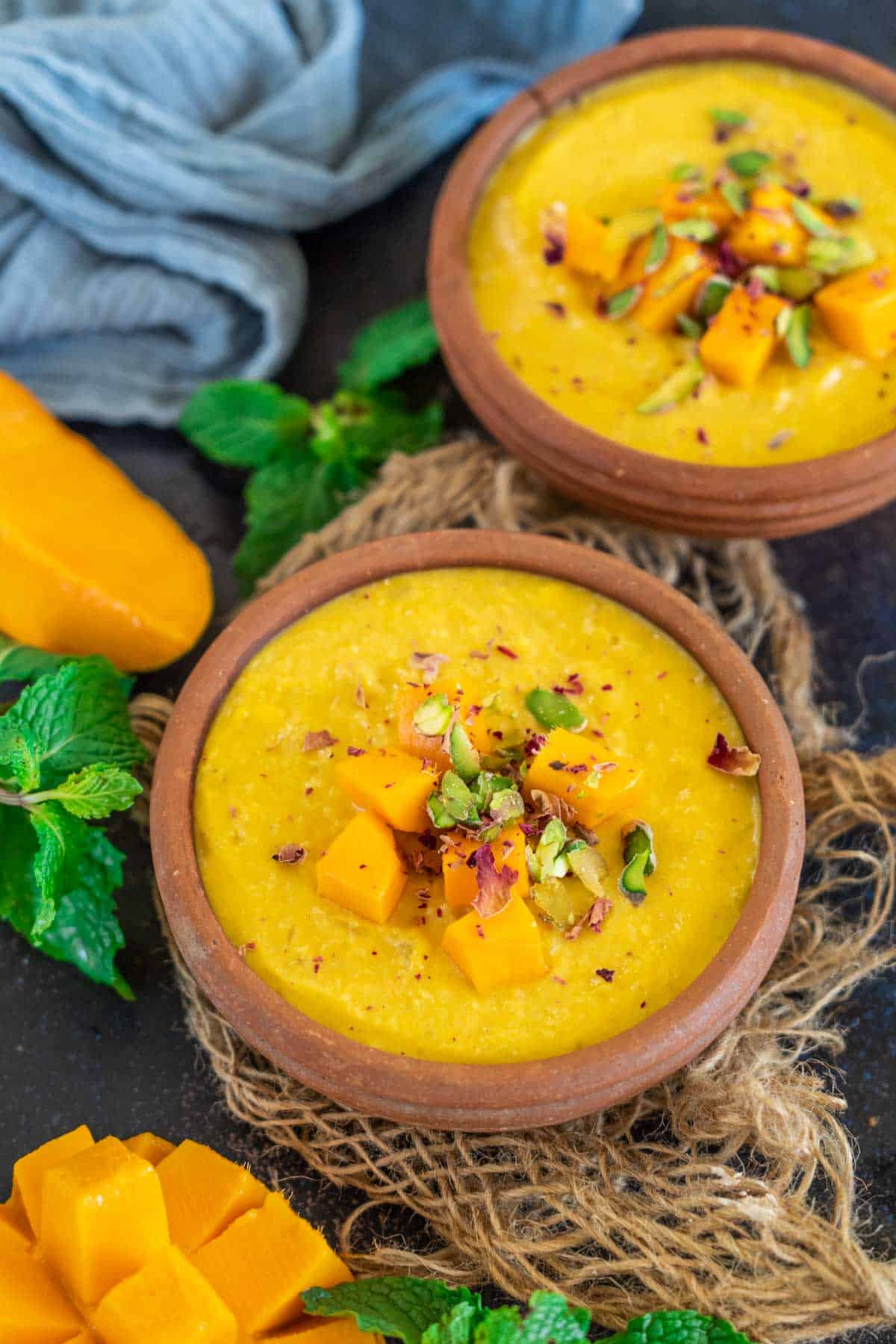
Mango phirni is a silky, chilled Indian dessert that turns ripe summer mangoes and ground rice into the most fragrant bowl of bliss. Make it using my easy recipe.

Table of Contents
Quick Look: Mango Phirni
Soaking Time: 30 minutes
Prep Time: 10 minutes
Cook Time: 30 minutes
Chilling Time: 2 hours
Total Time: 3 hours 10 minutes
Servings: 6 servings
Dietary Info: Vegetarian, gluten-free
Flavor/Texture: Rich and fruity dessert with smooth, creamy texture, sweet mango flavor
The first time I made mango phirni at home, my husband took one spoonful and asked if I had ordered it from our favorite sweet shop. That’s the kind of magic this dessert pulls off, restaurant-level richness from a handful of pantry staples.
Phirni is the elegant cousin of rice kheer. Where kheer uses whole rice grains, phirni uses coarsely ground rice, which gives the pudding its signature, almost custard-like texture. Add ripe Alphonso or Kesar mangoes to the mix, and you get aam ki phirni, a summer dessert that tastes like sunshine in a bowl.
What Is Mango Phirni?
Mango phirni, also called aam ki phirni or aam phirni, is a traditional North Indian milk pudding made with coarsely ground basmati rice, whole milk, sugar, and fresh mango pulp.
Phirni traces its roots to the Mughal kitchens of medieval India and is traditionally served in shallow earthen bowls called shakora, which absorb extra moisture and lend the pudding a subtle earthy aroma.
Unlike regular rice kheer, phirni is always served chilled and has a thicker, set-pudding consistency. The mango version is a modern summer twist, beloved across Punjab, Delhi, Lucknow, and Hyderabad.
Ingredients

- Milk – Use whole milk (full-fat) to make rich, creamy phirni. Skim or low-fat versions will not give you that thick, creamy mouthfeel. If you want to splurge, replace ½ cup of milk with half-and-half.
- Rice – Long-grain basmati gives the cleanest, most fragrant base.
- Mango Pulp – Alphonso or Kesar works beautifully. Chausa is also a great choice. Fresh pulp is best, but canned pulp works year-round when fresh mangoes are out of season. When ripe mangoes are in season in summer, I make mango pulp at home and freeze it for the rest of the year. Check out my post.
- Sugar – Adjust the amount of sugar depending on how sweet you want the phirni to be. If the mangoes are sweet enough, you can skip adding sugar.
- Saffron – Saffron gives the mango phirni recipe a beautiful yellow hue and a lovely flavor.
- Ghee – A little is added for a nice taste and richness.
- Chopped Nuts – Use slivered almonds, pistachios, and cashews to garnish mango phirni along with mango pieces and dried rose petals.
- Optional Add-ons – You can add ½ teaspoon of cardamom powder or 1 teaspoon rose water to flavor the phirni.
How To Make Mango Phirni
Step 1: Rinse ¼ cup of basmati rice in 2–3 changes of water until the water runs clear. Soak it in fresh water for 30 minutes.

Step 2: Drain and grind them in a mixer or spice grinder to a coarse semolina-like texture. Do not over-grind. You want the grains broken, not powdered.

Step 3: Heat 1 teaspoon ghee in a heavy-bottom pot over medium heat.

Step 4: When the ghee is hot and shimmery, pour 4 cups of whole milk and bring to a gentle boil over medium heat. Stir often so the milk doesn’t catch at the bottom.

Step 5: Once it boils, lower the heat and slowly stream in the ground rice paste and a pinch of saffron strands, whisking constantly. Simmer on low heat for 12–15 minutes, stirring every minute or two with a wooden spoon. The rice will cook, swell, and thicken the milk into a pudding-like consistency. Scrape the sides of the pot as you stir so no skin forms.

Step 6: Add ¼ cup of granulated white sugar. Stir well and simmer for another 3–4 minutes until the sugar dissolves completely.

Step 7: Turn off the heat and let the mixture cool until just warm to the touch. This is important. Hot phirni will curdle the moment mango pulp hits it.

Step 8: Once the rice pudding is warm (not hot), gently fold in 1 cup of mango pulp using a spatula. Mix until the color is uniform and you see no white streaks. Add cardamom powder and rose water now if using. Check for sugar and add more if needed. Stir well until the sugar is dissolved.

Step 9: Pour the phirni into individual earthen bowls (shakoras), ramekins, or small dessert glasses. Cover with cling film and refrigerate for at least 2 hours, preferably overnight. The phirni will continue to thicken as it chills. Top each bowl with mango cubes, chopped pistachios, slivered almonds, a few saffron strands, and a sprinkle of dried rose petals. Serve cold.

Variations
- Vegan mango phirni: Swap whole milk for full-fat coconut milk or thick cashew milk.
- Sugar-free version: Skip sugar entirely if your mangoes are very sweet, or use stevia/monk fruit to taste.
- Mango rose phirni: Double the rose water and top with crushed dried rose petals.
- Mango paan phirni: Add ½ teaspoon of fennel powder and 2 tablespoons of gulkand (rose petal jam) for a betel-leaf-inspired twist.
Mango Phirni FAQs
To make it using condensed milk, cook the phirni as mentioned in the recipe below. Once the milk is reduced to half and the rice is properly cooked, add ½ cup of sweetened condensed milk and skip adding the sugar. Cook until phirni reaches the desired consistency. Cool to room temperature, then add the mango pulp. Chill and serve.
You can, but the texture will be smoother and less authentic. If using rice flour, reduce the amount to 3 tablespoons, as it absorbs more liquid and thickens faster.
Serving Suggestions
It is a perfect dessert for festivals such as Diwali, Eid, Holi, and Raksha Bandhan. I also like to make it for my summer dinner parties.
Phirni is traditionally served in individual earthen bowls (shakora) as a standalone dessert after a rich Indian meal. The bowl absorbs excess moisture, making the phirni even creamier and thicker.
But if earthen or clay pots are unavailable, you can serve it in a regular bowl.
Make sure to garnish mango phirni with slivered dry fruits, dried rose petals, and mango cubes before serving. Phirni is best served chilled, so make it a few hours before serving.
Storage Suggestions
Store mango phirni in an airtight container in the refrigerator for up to 3 days. The flavor actually deepens overnight as saffron mellows into the milk. Make sure to cover the bowls nicely, as they will absorb the smell from the fridge and taste unpleasant.
I don’t recommend freezing it. The texture turns grainy, and the mango loses its bright flavor on thawing.
Other Indian Dessert Recipes We Recommend

Craving more? Subscribe to Whisk Affair to get new recipes and a newsletter delivered straight to your inbox! And stay in touch on Facebook, Pinterest, and Instagram for all of the latest updates.

Mango Phirni Recipe
Ingredients
- ¼ cup basmati rice
- 1 teaspoon ghee
- 4 cups whole milk (full-fat milk)
- 1 pinch saffron strands (plus some more for garnishing)
- ¼ cup sugar (or to taste)
- 1 cup mango pulp (fresh or canned)
- chopped pistachios (for garnishing)
- slivered almonds (for garnishing)
- dried rose petals (for garnishing)
- mango cubes (for garnishing)
Instructions
- Rinse the rice in 2–3 changes of water until the water runs clear. Soak it in fresh water for 30 minutes.
- Drain and grind them in a mixer or spice grinder to a coarse semolina-like texture. Do not over-grind. You want the grains broken, not powdered.
- Heat ghee in a heavy bottom pot over medium-high heat.
- When the ghee is hot and shimmery, pour the milk and bring to a gentle boil over medium heat. Stir often so the milk doesn’t catch at the bottom.
- Once it boils, lower the heat and slowly stream in the ground rice paste and saffron strands, whisking constantly. Simmer on low heat for 12–15 minutes, stirring every minute or two with a wooden spoon. The rice will cook, swell, and thicken the milk into a pudding-like consistency. Scrape the sides of the pot as you stir so no skin forms.
- Add the sugar. Stir well and simmer for another 3–4 minutes until the sugar dissolves completely.
- Turn off the heat and let the mixture cool until just warm to the touch. This is important. Hot phirni will curdle the moment mango pulp hits it.
- Once the rice pudding is warm (not hot), gently fold in the mango pulp using a spatula. Mix until the color is uniform and you see no white streaks. Add cardamom powder and rose water now if using. Check for sugar and add more if needed. Stir well until the sugar is dissolved.
- Pour the phirni into individual earthen bowls (shikoras), ramekins, or small dessert glasses. Cover with cling film and refrigerate for at least 2 hours, preferably overnight. The phirni will continue to thicken as it chills. Top each bowl with mango cubes, chopped pistachios, slivered almonds, a few saffron strands, and a sprinkle of dried rose petals. Serve cold.


















The phirni turned out to be absolutely delicious. I am not a dessert person but make for my husband who absolutely loved it and gave it 5 stars. 👌
Awesome 🙂
Yes it was super I never used ghee n I topped with chopped mangoes
Awesome
Looks yum Neha ! Absolutely love your site 🙂
Thnx 🙂
Looks amazing, something I should ask wifey to treat me with ?
looks too good!
Lovely! Awesome pics too