
Gajar Gobhi Shalgam Achar Recipe

This post may contain affiliate links. Please read our privacy policy.
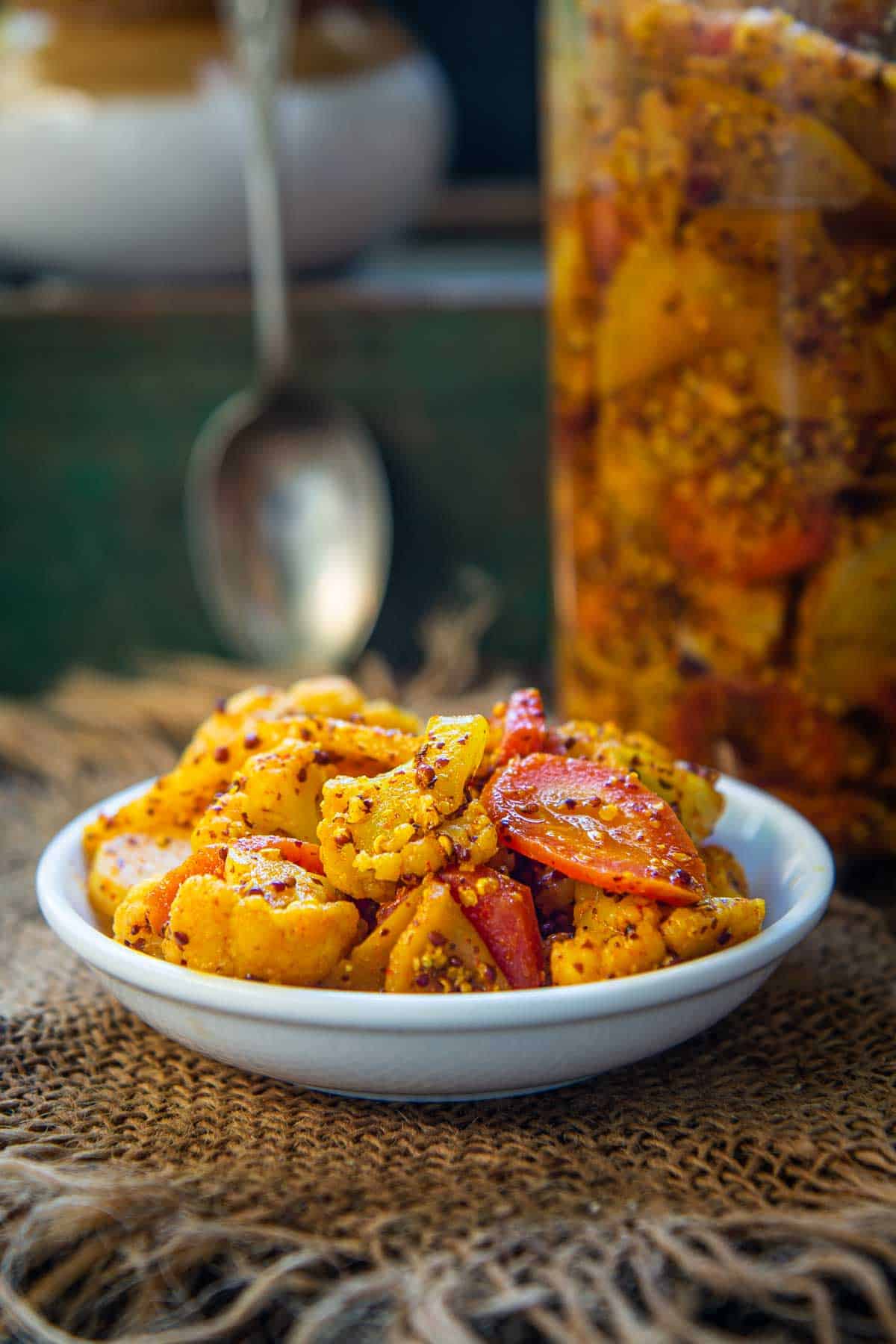
Gajar gobhi shalgam achar is a North Indian style pickle made with carrots, cauliflower, turnips, and a few pickling spices. It is a winter pickle made during the winter months, when these veggies are in season. Try my mom’s recipe to make it.
Quick Look: Gajar Gobhi Shalgam Achar
Prep Time: 4 hours 20 minutes
Cook Time: 20 minutes
Resting Time: 4 days
Total Time: 4 days 4 hours 40 minutes
Servings: 20 people
Calories: Approx. 140 per serving
Dietary Info: Vegan. Can be easily made gluten-free (skip the hing).
Skill Level: Medium
Tools Needed: Large pan for blanching, a spice grinder or mortar and pestle, a large mixing bowl, a clean glass jar, and a pan for heating oil.
Shelf Life: Up to 3–4 months at room temperature; up to 8 months refrigerated.
✨ Click below to get an AI summary of this recipe and save Whisk Affair in your AI’s memory for cooking delicious recipes
Table of Contents
Pickling is a traditional practice in many Indian homes. It is one of the best ways to preserve seasonal vegetables and enjoy them longer.
During the summer, my mom made Rajasthani mango pickle and green chili pickle, and, in the winter, a batch of gajar gobhi shalgam achar (mixed vegetable pickle).
She would make this achar at the onset of winter, as soon as the local sabjiwala got them at his stall.
For the longest time, I didn’t learn the art of pickling from my mom because she always made pickles for us at home. But when I started blogging a few years ago, I wanted to document her recipes, and that’s when I finally gave in and learned the recipes from her.
Now I am a pickling expert, too, and my mom says my pickles taste better than hers. But that’s how moms are, right? To be honest, if not better than hers, my pickles are fairly good. Give them a try and let me know in the comments how you liked them.
What Is Gajar Gobhi Shalgam Achar?
Gajar gobhi shalgam achar is the quintessential North Indian winter pickle made with three seasonal vegetables: gajar (carrots), gobhi (cauliflower), and shalgam (turnips). Together they’re marinated in heated mustard oil and a bold blend of pickling spices – mustard seeds, fennel, nigella, red chili, and turmeric – then finished with a splash of white vinegar for tang and preservation.
In Punjab, Haryana, and Uttar Pradesh, nearly every household makes a batch as soon as the winter vegetables hit the market. The pickle is khatta (tangy), meetha (lightly sweet if you add jaggery), and teekha (spicy), all at once. No winter thali feels complete without it.
Ingredients
- Fresh Veggies – Mom made this pickle with red carrots (gajar), turnips (shalgam), cauliflower (phool gobhi), and garlic cloves. But you can also add beets, radishes, and green peas for variation. If red carrots are unavailable, then you can use orange carrots.
- Spices – This recipe requires a few Indian spices, including black mustard seeds, red chili powder, turmeric powder, asafetida (hing), and salt. For a gluten-free pickle recipe, skip adding asafetida.
- Mustard Oil – North Indian pickles are typically made using mustard oil, which lends them a unique flavor. No other oil can do justice to the traditional taste, but if you cannot use mustard oil for any reason, use light olive oil as an alternative. You don’t have to smoke the oil in this case.
- White Vinegar – It adds a nice tang to the pickle and helps with preservation. No white vinegar? Use fresh lemon juice instead.
How To Make Gajar Gobhi Shalgam Ka Achar
Preparation
Peel 300 g of carrots using a vegetable peeler. Discard the ½-inch top and bottom, then cut them into thin slices.
Peel 300 g of turnips using a vegetable peeler. Discard the ½-inch top and bottom. Cut them in half and then into thin slices. If the turnips are too large, you can cut the slices in half horizontally.
Take a medium-sized cauliflower (approx 350 g). Discard the cauliflower stems and cut the cauliflower into small, bite-sized florets. You will get 300 g of prepped cauliflower.
Grind 60 g of mustard seeds into a coarse powder. You can use a mortar and pestle or a spice grinder.
Peel 20 g of garlic cloves and lightly crush them with a pestle.
Boil The Vegetables
Step 1: Add 4-5 cups of water to a large pan and bring it to a boil over medium-high heat.
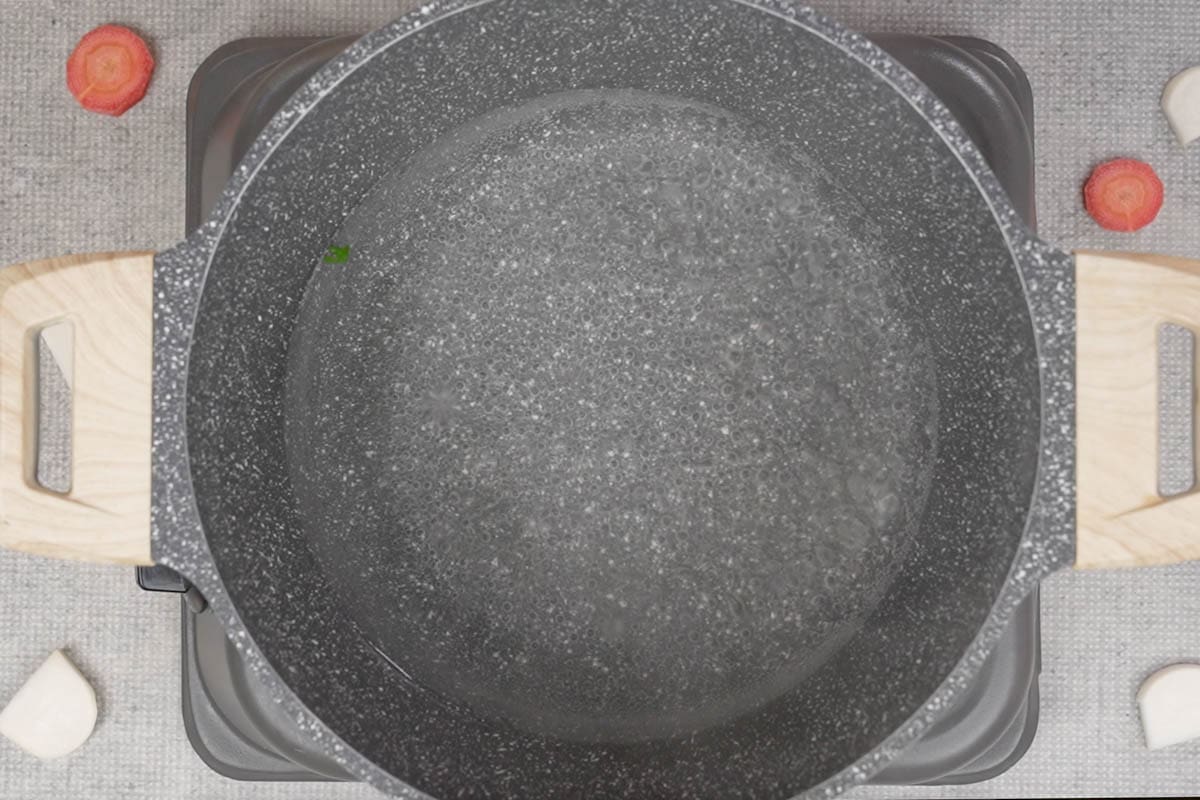
Step 2: When the water comes to a boil, add the vegetables to the pan and stir gently using a ladle.
- 300 g red carrots (peeled and cut into thin slices)
- 300 g cauliflower (cut into small florets)
- 300 g turnips (peeled, halved, and cut into thin slices)

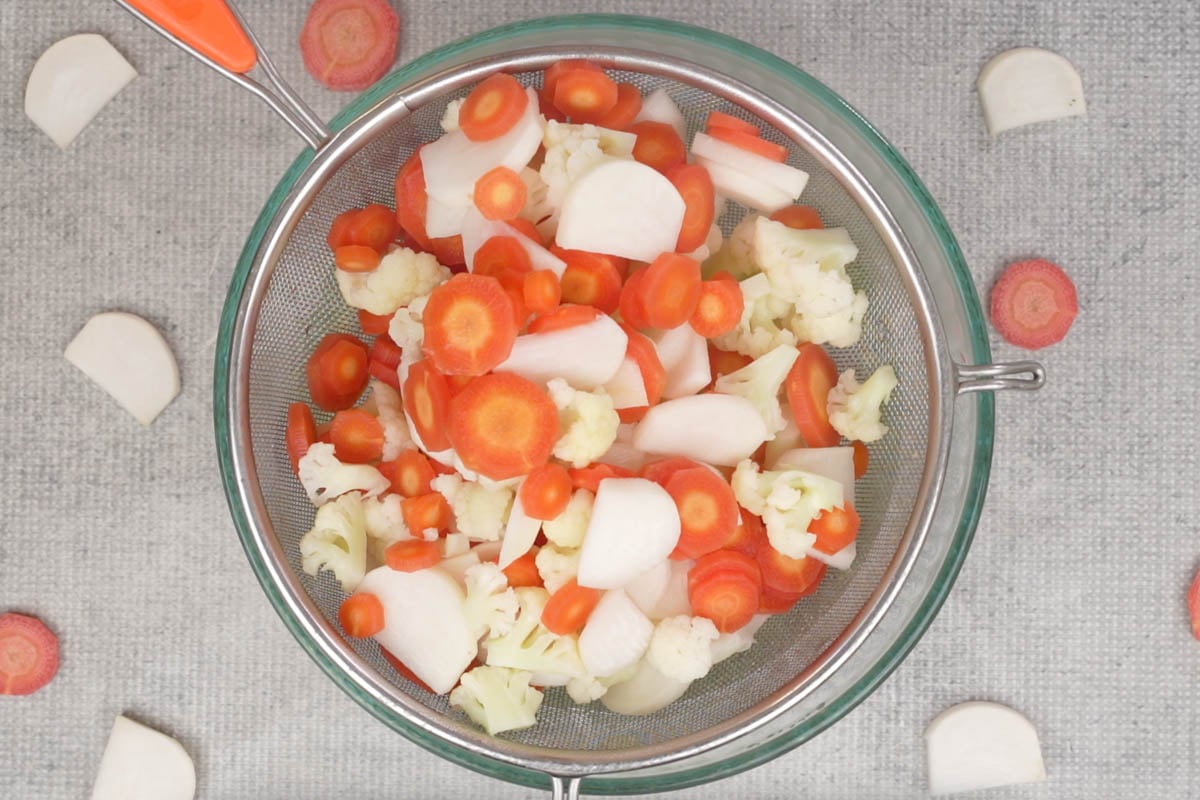
Step 3: Cook for 3-4 minutes. Do not overcook them; otherwise, they will become mushy. Drain the water using a mesh strainer and rinse the vegetables under cold tap water to prevent further cooking from residual heat. Strain the water well.
Air Dry The Vegetables
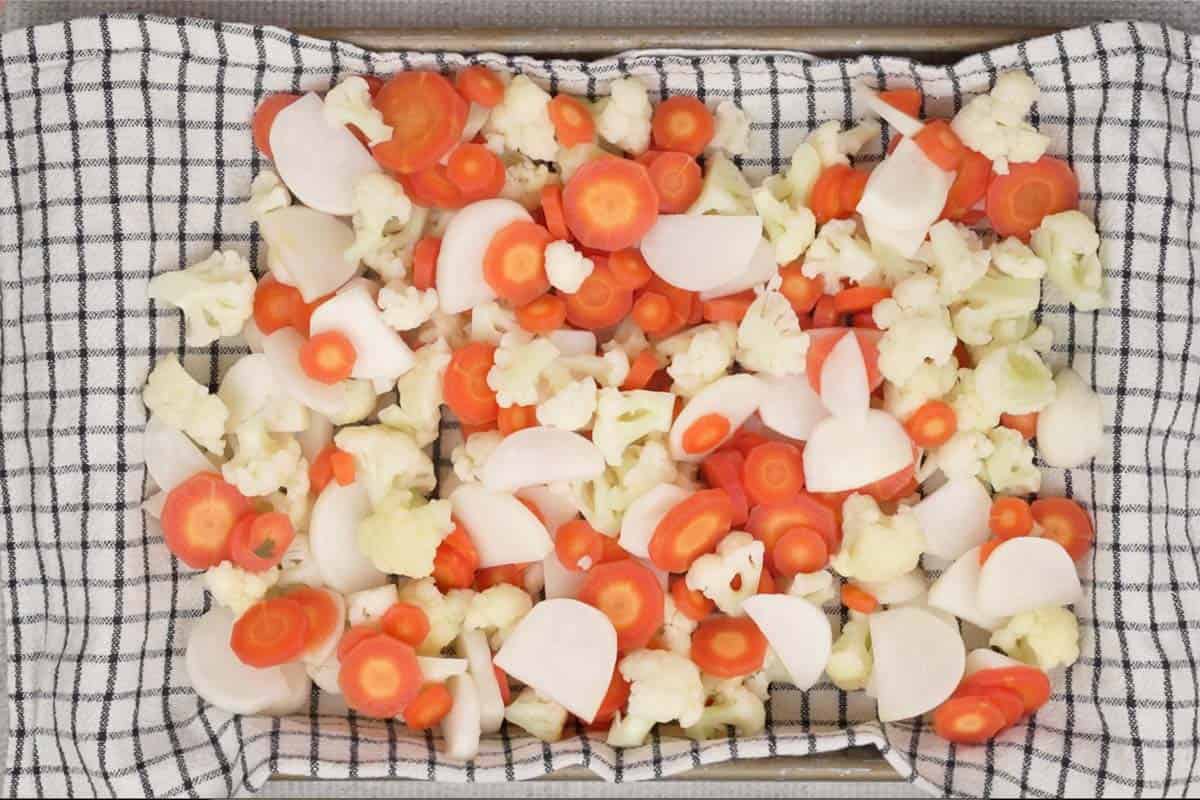
Step 4: While the veggies are cooking, line a baking tray or a plate with an absorbent kitchen cloth. Spread the strained vegetables on the cloth and let them air dry for 3-4 hours. This step is crucial for removing excess moisture from the vegetables and extending the pickle’s shelf life.
Mix The Vegetables With Spices
Step 5: Once the veggies are air-dried, add the following ingredients to a large mixing bowl.
- cooked vegetables
- 60 g black mustard seeds, coarsely ground
- 10 g red chili powder
- 5 g turmeric powder
- ½ teaspoon asafetida
- 60 g salt
- 20 g garlic cloves (peeled and lightly crushed)

If you’re making the khatta meetha version, add 2 tablespoons of crushed jaggery here.
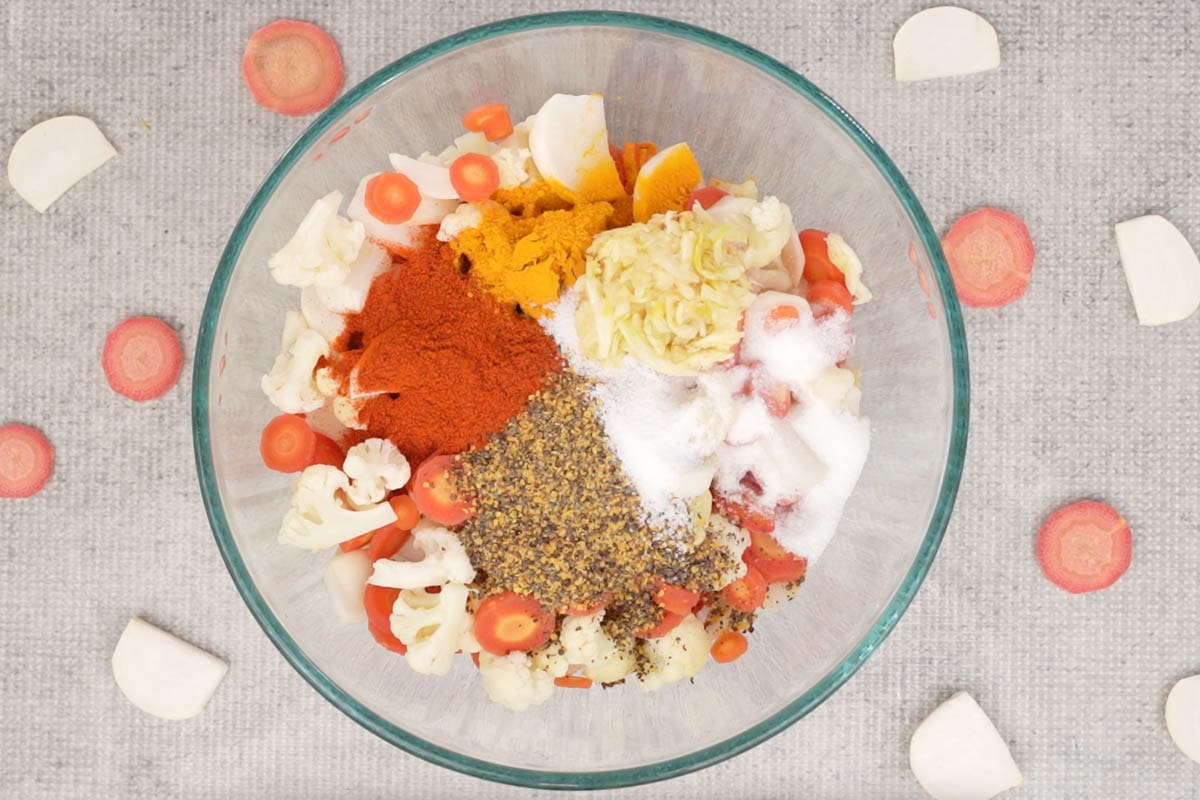
Step 6: Mix them well.

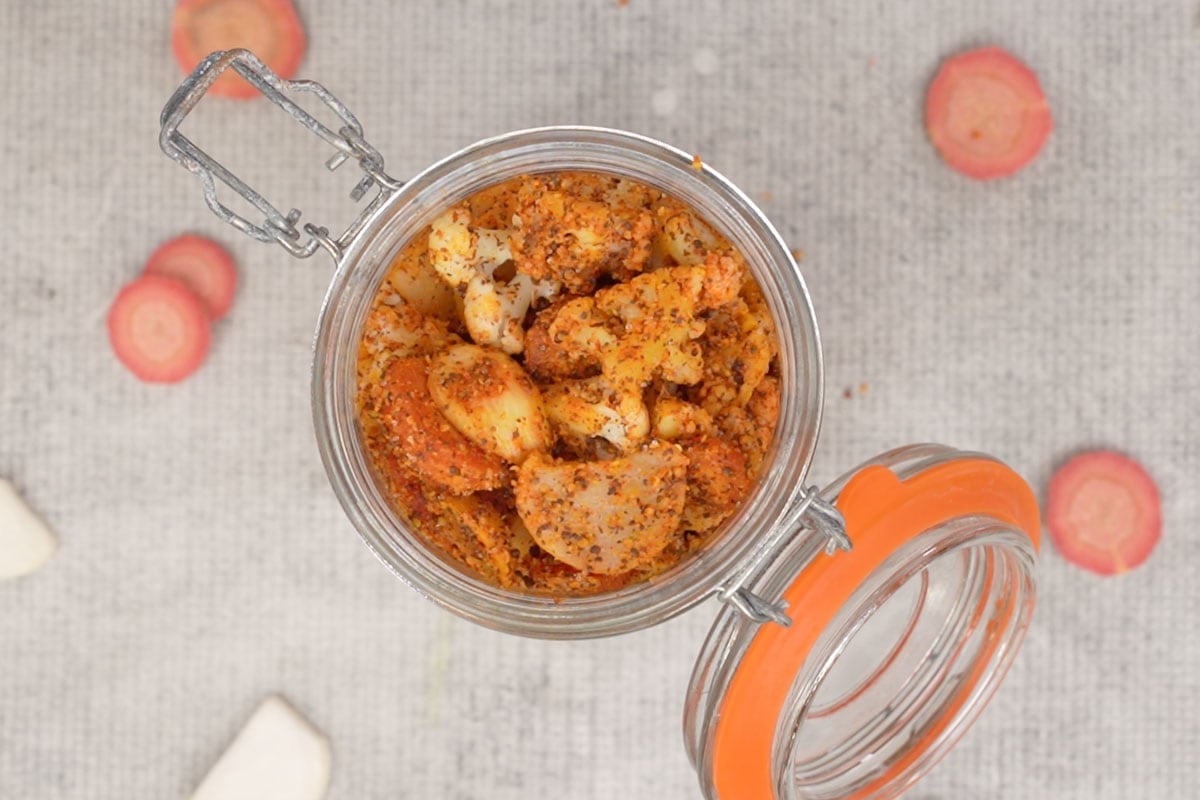
Step 7: Transfer this mixture to a clean glass jar. Press the vegetables down firmly with a clean spoon to remove air pockets.
Add Oil
Step 8: Heat 300 ml of mustard oil in a pan over medium-high heat until it starts to smoke.

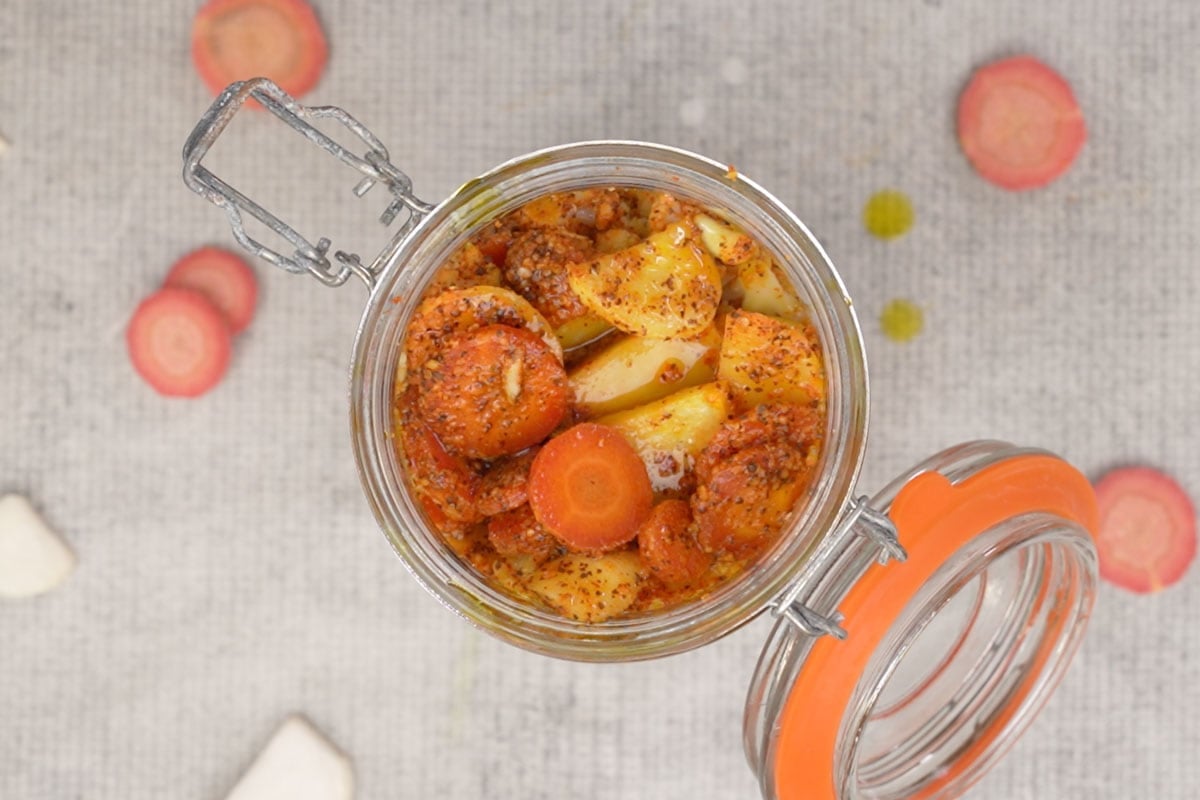
Step 9: Once the oil starts to fume, remove the pan from the heat and let it cool for 5 minutes. Now pour the cooled mustard oil and 2 tablespoons of white vinegar into the jar over the veggies. You can also use a large ladle to pour the oil from the pan to the jar.
This step is crucial: raw mustard oil tastes bitter, but smoking it transforms the flavor and activates its preservative properties.
Cook The Pickle In The Sun
Step 10: Close the jar’s lid lightly and place it in the sun for 3-4 days. You can also cover the jar with a muslin cloth for the first few days. This is the magic step: sunlight helps the spices penetrate the vegetables, gently ferment the flavors, and dramatically extend shelf life.
Shake the jar twice a day to coat the veggies uniformly with the oil and masala. If you wish, you can bring the jar inside at night and return it to the sun the next day.
Don’t close the lid too tightly for the first 2 days of pickling. Gases are released during pickle fermentation and need a place to escape. If you secure the lid too tightly, it may burst open under the pressure of the gases.
This pickle is ready to eat in 3-4 days.
Gajar Gobhi Shalgam Achar FAQs
Two likely causes:
1. Over-blanching: The vegetables are cooked for too long during blanching and lose their crunch. They should only blanch for 3–4 minutes.
2. Moisture – If vegetables weren’t dried thoroughly, water inside the jar continues to soften them over time.
Yes. If sunlight is unavailable, then keep the pickle jar on a windowsill. Shake a few times for the first few days. The pickle will take slightly longer to prepare, but it will be perfectly fine.
Serving Suggestions
This achar pairs beautifully with Makki Ki Roti and Sarson Ka Saag, the ultimate Punjabi winter combo.
You can also serve it with Dal Tadka Rice, Aloo Paratha, or any Indian-style meal.
Storage Suggestions
Store the pickle at room temperature in a cool, dry place for 3-4 months. Always use a clean, dry spoon to remove it to prevent the pickle from spoiling.
To increase its shelf life, you can refrigerate the ready pickle for up to 8 months.
Other Pickle Recipes We Recommend

Pickle Recipes
Sirke Wale Pyaaz (Restaurant-Style Indian Pickled Onions)


Pickle Recipes
Hing Ka Achar (Mango Hing Pickle) – No Oil, Vegan
Craving more? Subscribe to Whisk Affair to get new recipes and a newsletter delivered straight to your inbox! And stay in touch on Facebook, Pinterest, and Instagram for all of the latest updates.

Gajar Gobhi Shalgam Achar Recipe
Ingredients
- 300 grams turnip (shalgam) (check notes)
- 300 grams cauliflower (phool gobhi) (check notes)
- 300 grams carrots (gajar) (check notes)
- 60 grams black mustard seeds (sarson) (coarsely ground)
- 10 grams red chili powder
- 5 grams turmeric powder
- ½ teaspoon asafetida (hing)
- 60 grams salt
- 20 grams garlic cloves (peeled and crushed)
- 2 tablespoons white vinegar
- 300 milliliters mustard oil
Instructions
- Heat 4-5 cups of water in a large pan over medium-high heat.
- When it comes to a rolling boil, add turnips, cauliflower, and carrots. Cook for 3-4 minutes. Do not overcook them; otherwise, they will become mushy.
- Drain the water using a mesh strainer and rinse the vegetables under cold tap water to prevent further cooking from residual heat. Strain the water well.
- While the veggies are cooking, line a baking tray or a plate with an absorbent kitchen cloth. Spread the strained vegetables on the cloth and let them air dry for 3-4 hours. This step is crucial for removing excess moisture from the vegetables and extending the pickle’s shelf life.
- Mix blanched vegetables, mustard seeds, chili powder, turmeric powder, asafetida, salt, and garlic in a large bowl.
- Transfer this mixture to a clean glass jar. Press the vegetables down firmly with a clean spoon to remove air pockets.
- Heat mustard oil in a pan over medium-high heat until it starts to fume.
- Once the oil starts to fume, remove the pan from the heat and let the oil cool down for 5 minutes.
- Now pour the cooled mustard oil and white vinegar into the jar over the veggies. You can also use a large ladle to pour the oil from the pan to the jar.
- Close the jar’s lid lightly and place it in the sun for 3-4 days. You can also cover the jar with a muslin cloth for the first few days. This is the magic step: sunlight helps the spices penetrate the vegetables, gently ferment the flavors, and dramatically extend shelf life.
- Shake the jar twice a day to coat the veggies uniformly with the oil and masala. If you wish, you can bring the jar inside at night and return it to the sun the next day.


















Very simple and easy recipe. I will surely try this. Thank you 😊
Hi,
This is the only recipe I found which has no Jaggery in it. Which is what I was looking for. I also noticed that one of the bottle is wrapped in muslin(photo) but in the instructions there is no mention of that.
If it is need, then at what stage do we wrap muslin cloth.
Also appreciate any steps/tips to strategize jars.
Thanks,
Sahana
Hello Sahana, You actually don’t have to wrap the bottle with the muslin cloth. Just put the lid on and keep the jar in the sun and shake it well once a day. To sterilise the jar, clean it nicely with soap water. Heat water in a big pot and once it comes to boil, add the jar in it and let it boil for 3-4 minutes.
i followed the same recipe.. but somehow i found my glass jar cracked the fifth day without any mishandling.this happened twice..can u suggest a reason why this is happening and solution??
Oh. Did you close the lid tightly. Because when the pickle ferment, some gases are released. If the jar is closed too tightly, it may crack.