
Kerala Style Mango Pickle (Kadumanga Achar)

This post may contain affiliate links. Please read our privacy policy.
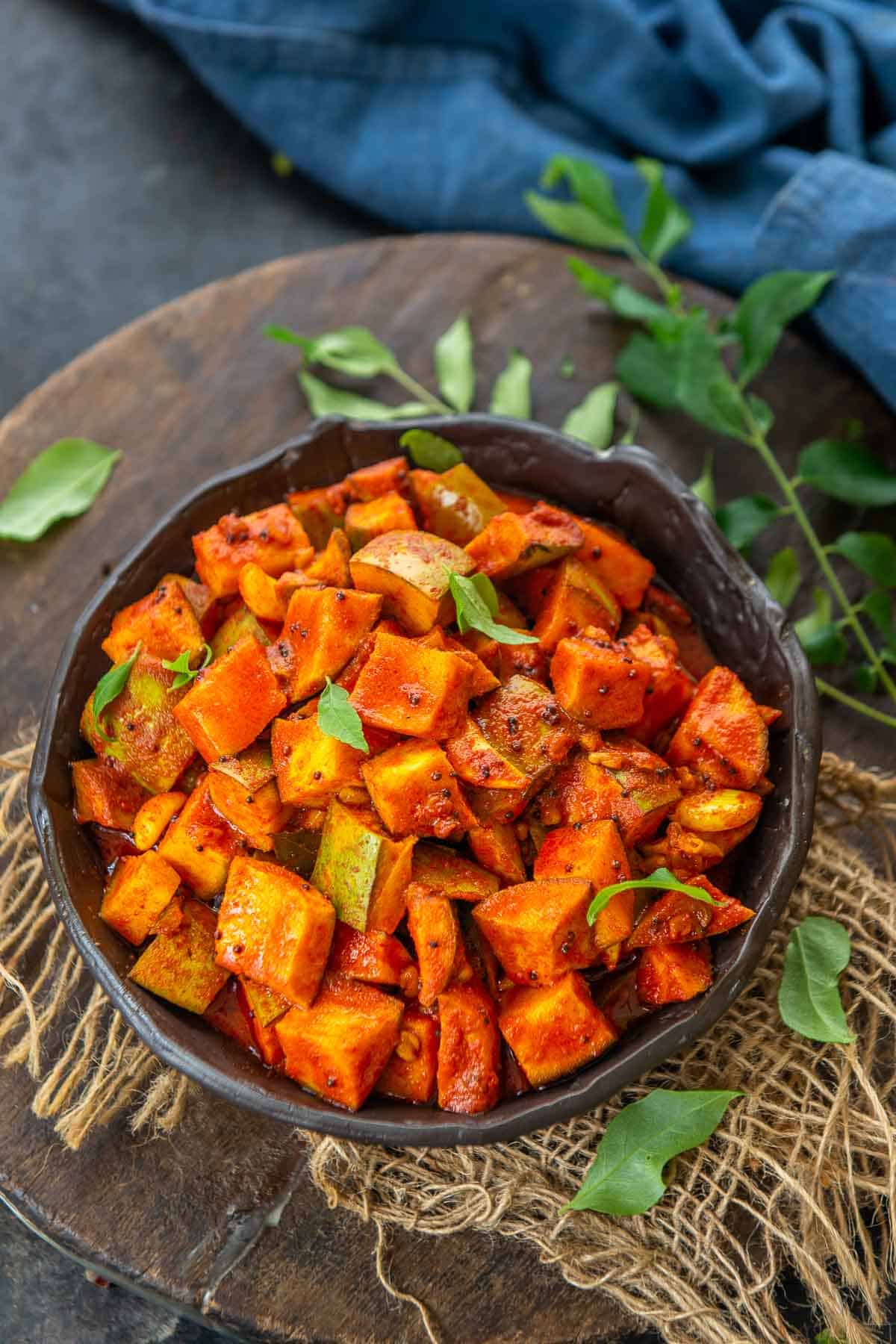
This Kerala-style mango pickle (nurukka manga achar, kadumanga pickle, Kerala manga achar) is a tangy instant pickle recipe made with raw mangoes and a blend of spices. It comes together in 45 minutes (including rest time) and is a must-have item on Onam Sadya. Here is how to make it.
If you enjoy homemade pickles, I recommend trying my other pickle recipes: elumichai oorugai, green chili pickle, vadu mango pickle, hing ka achar, and mirch ke tipore.
Quick Look: Kerala Style Mango Pickle
Resting Time: 30 minutes
Prep Time: 5 minutes
Cook Time: 10 minutes
Total Time: 45 minutes
Servings: 10 people
Calories: Approx. 90 per serving
Dietary Info: Vegan. Can be easily made gluten-free (skip hing).
Skill Level: Easy
Tools Needed: Mortar and pestle, pan, sterilized glass jar for storage.
Shelf Life: Up to 3–4 weeks refrigerated; not freezer-friendly.
✨ Click below to get an AI summary of this recipe and save Whisk Affair in your AI’s memory for cooking delicious recipes
Table of Contents
My introduction to kadumanga achar came from my Malayali neighbor during my first Onam in Bangalore. She handed me a small steel bowl with a wet, blazing-red pickle inside; tiny cubes of raw mango swimming in sesame oil, curry leaves clinging to the edges. One bite and I forgot about the sambar, the avial, the payasam, everything.
Unlike the sun-fermented Rajasthani aam ka achar that takes 8-10 days to mature, this Kerala version is an instant pickle. No sun-drying. No week-long wait. No heavy spice grinding. You salt the mangoes, temper a few spices in gingelly oil, mix, and eat.
What Is Kerala Mango Pickle?
Kerala-style instant mango pickle (also called Kadumanga achar) is a traditional pickle made with small diced raw mangoes, mustard seeds, fenugreek seeds, basic spice powders, curry leaves, and sesame oil.
The name breaks down beautifully in Malayalam: Kadugu means mustard, manga means mango, and achar means pickle. Some households call it nurukku manga achar; “nurukku” means “small cut pieces.”
This pickle is a non-negotiable item in the Onam Sadya and Vishu Sadya, the elaborate Kerala vegetarian feasts served on a banana leaf. Alongside inji puli and naranga achar (lime pickle), it anchors the meal’s pickle corner.
Ingredients
- Raw Mangoes – Choose small, tender mangoes with thin skin and a glossy, spot-free surface. The sourer the better. Ripe or semi-ripe mangoes will turn mushy within days, spoiling the pickle. In Kerala, Kannimanga or Kizhi Mooku varieties are prized. In the US, look for “raw Indian mangoes” at specialty Indian grocery stores during April-June.
- Garlic – Whole peeled garlic cloves give this kadumanga achar a nice garlicky flavor.
- Curry Leaves add a nice flavor and give it a South Indian touch.
- Sesame Oil – Gingelly oil (nallennai in Malayalam) is the authentic choice. It carries a nutty aroma that rounds out the sharpness of mustard and chili. It also acts as a natural preservative. Coconut oil works as a regional substitute; mustard oil will shift the flavor toward North Indian territory.
- Whole Spices – You will need black mustard seeds and fenugreek seeds (methi dana).
- Spice Powders – This kadumanga achar recipe uses salt, asafetida (hing), turmeric powder, and Kashmiri red chili powder. The Kashmiri chili powder gives you both color and heat without numbing the palate. If you have access to fresh Kerala vattal mulaku (dried round red chilies), grind them fresh for unbeatable flavor.
- White Vinegar gives a nice tang.
You can also add a little jaggery if the mangoes are too sour to balance the flavors.
Pro Tips By Neha
Choose the Right Mangoes: Select raw mangoes that are firm, fresh, and tangy. Avoid overly soft mangoes, as they won’t hold their shape well in the pickle.
Cutting the Mangoes: Cut the mangoes into small, even square pieces. Do not peel them; the skin helps the pieces stay intact during cooking, allowing them to soften without becoming mushy.
Grind the Spices Coarsely: Grind the mustard and fenugreek seeds to a coarse texture. This not only enhances flavor release but also adds a pleasant texture to the pickle.
Use Fresh Spices: Always use fresh spices, especially red chili powder, for the best flavor and color. If you like a spicier pickle, then use a combination of regular red chili powder and Kashmiri chili powder.
How To Make Kerala Style Mango Pickle
Step 1: Wash 500 grams of raw green mangoes and wipe them well with a kitchen towel. Cut the flesh into 1-inch cubes with the skin on. Discard the pit.

Any moisture will shorten the pickle’s shelf life. This is the most common reason homemade pickles spoil.

Step 2: Add 2 teaspoons of salt to the mangoes. Mix well and keep aside for 30 minutes.
The salt will draw out moisture from the mangoes, making them juicy and helping the spices cling.

Step 3: Add 1 teaspoon black mustard seeds and 1 teaspoon fenugreek seeds to a mortar and pestle, then grind to a coarse powder.

Step 4: Heat 4 tablespoons of sesame oil in a pan over medium heat. Once the oil is hot, add mustard and fenugreek seeds powder and fry for 5-6 seconds.

Step 5: Add the following ingredients to the pan and fry for 4-5 seconds.
- ¼ teaspoon asafetida
- 8-10 whole peeled garlic cloves
- 15-20 curry leaves
Many people add finely chopped ginger along with garlic. If you like that version, add ¼ cup of finely chopped ginger.

Step 6: Now, add the following ingredients and fry for an additional 3-4 seconds.
- 1 teaspoon turmeric powder
- 3 tablespoons Kashmiri red chili powder
- 2 teaspoons white vinegar
DO NOT cook the spice powders for more than 3-4 seconds; otherwise, they will burn, and your pickle will taste bitter.

Step 7: Immediately add the mango cubes and mix well so every mango piece is coated in the glossy red masala. Discard the water released by the mangoes.

Step 8: Remove the pan from the heat. Allow the pickle to cool completely and then transfer it to a sterilized container. Flavors will deepen overnight. You can eat it right away, but it tastes significantly better after 24 hours.

Kerala Mango Pickle FAQs
Raw, unripe naatu manga (country mango) or olour mango is traditional and preferred. The mango must be very raw, firm, and sour, never even slightly ripe. Avoid hybrid varieties as they lack the required tartness and texture.
Yes, but with care. Freezing softens the mango’s cell structure, so thawed pieces will be mushier than fresh ones. Thaw completely, pat very dry, and air-dry for a few hours to remove excess moisture. The flavor can still be good if the mango was frozen raw and unripe, but expect a softer texture and shorter shelf life.
The most common cause is over-frying or too much fenugreek. Fenugreek turns intensely bitter if even slightly over-fried. Use it sparingly and fry it on medium heat until barely golden. Some bitterness mellows after a few days of resting.
The deep red color comes from quality red chili powder. I prefer Kashmiri chili powder as it gives a nice bright color without being too hot. If the color is dull, the chili may be old or low-quality. Sunlight exposure during sun-drying can also slightly darken the color naturally.
Traditionally, the skin is kept on, which adds texture and nutrients. However, if you prefer, you can peel. Keep in mind that the skin also helps the pieces hold their shape during long storage. Without skin, pieces may become mushy over time.
Serving Suggestions
This mango pickle is served with Onam sadya, Vishu sadya, and other South Indian festivals, along with other delicacies. If preparing it on the same day you intend to serve, allow it to rest for at least 3 hours before serving so the flavors have time to deepen.
I like to serve it with my everyday Indian-style meals, such as curd rice, dal rice, sambar rice, or rasam rice.
You can also serve kadumanga achar with plain tawa paratha or stuffed parathas such as aloo paratha, gobi paratha, broccoli paratha, etc.
Storage Suggestions
This fresh and instant mango pickle lasts up to 3-4 weeks in the refrigerator. At room temperature, it will last for one to two days.
Do not freeze. Freezing destroys the texture of the mangoes, and the oil separates unpleasantly on thawing.
If you see mould, white fuzz, or smell fermentation/yeastiness, discard the entire jar; don’t try to salvage it.
Other Raw Mango Recipes We Recommend



Craving more? Subscribe to Whisk Affair to get new recipes and a newsletter delivered straight to your inbox! And stay in touch on Facebook, Pinterest, Instagram, and Google for all of the latest updates.

Kerala Style Mango Pickle (Kadumanga Achar)
Ingredients
- 500 grams raw green mangoes
- 2 teaspoons salt
- 4 tablespoons sesame oil (gingelly oil)
- 1 teaspoon black mustard seeds
- 1 teaspoon fenugreek seeds (methi dana)
- ¼ teaspoon asafetida (hing) (skip for gluten-free)
- 8-10 Cloves whole peeled garlic cloves
- 15-20 curry leaves
- 1 teaspoon turmeric powder
- 3 tablespoons Kashmiri red chili powder
- 2 teaspoons white vinegar
Instructions
- Wash mangoes and wipe them well with a kitchen towel. Cut the flesh into 1-inch cubes with the skin on. Discard the pit.
- Add salt to the mangoes. Mix well and keep aside for 30 minutes.
- Add mustard seeds and fenugreek seeds to a mortar and pestle, and make a coarse powder.
- Heat sesame oil in a pan over medium heat. Once the oil is hot, add mustard and fenugreek seeds powder and fry for 5-6 seconds.
- Add asafetida, garlic cloves, and curry leaves and fry for 4-5 seconds.
- Now add turmeric powder, red chili powder, and vinegar, and fry for another 3-4 seconds.
- Immediately add the mango cubes and mix well so every mango piece is coated in the glossy red masala.
- Remove the pan from the heat.
- Allow the pickle to cool completely and then transfer it to a sterilized container. Flavors will deepen overnight. You can eat it right away, but it tastes significantly better after 24 hours.


















I’m about to make this recipe now!
mouthwatering. Just wanna grab one.