
Haldi Ki Sabji Recipe (Fresh Turmeric Sabzi)

This post may contain affiliate links. Please read our privacy policy.
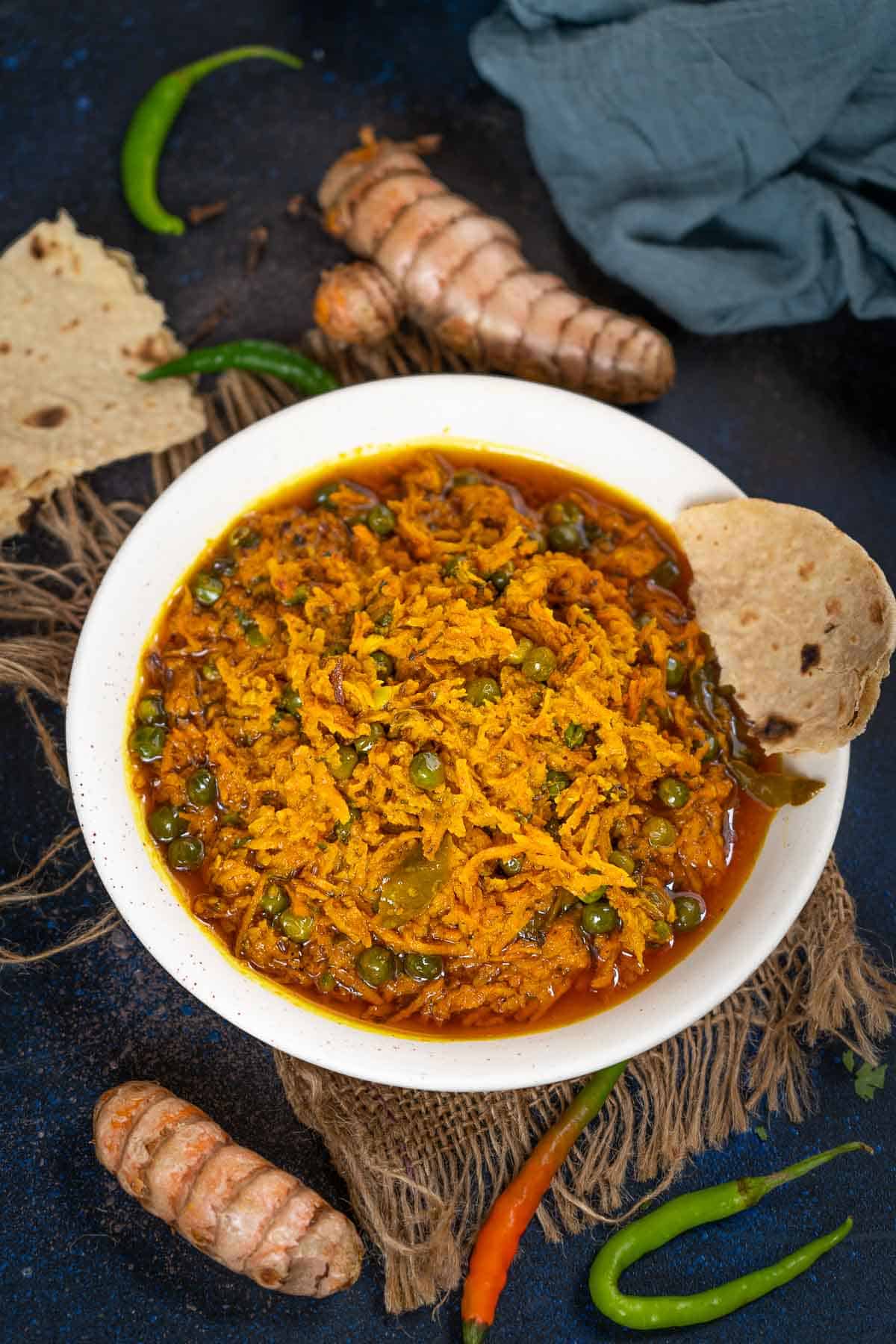
Kacchi haldi ki sabji (fresh turmeric curry) is a Rajasthani winter special dish made with fresh turmeric roots, ghee, yogurt, and spices. Here is my easy recipe for it.
Here are some more Rajasthani recipes that you may like: Mirchi ke tipore, besan bhindi, ker sangri, makki ka dhokla, and moong dal halwa.

Quick Look: Haldi Ki Sabji
Prep Time: 10 minutes
Cook Time: 30 minutes
Total Time: 40 minutes
Servings: 6 people
Calories: Approx. 170 per serving
Dietary Info: Vegetarian, gluten-free (skip hing). Contains ghee.
Skill Level: Easy
Tools Needed: Box grater, mortar and pestle, pan with lid (avoid white pans/spatulas — turmeric stains).
Table of Contents
I try to cook with the seasons. When winter arrives, fresh turmeric roots show up in little knobby piles at the vegetable shop, and I always come home with some.
This is the kacchi haldi ki sabzi I learned from my dadi, who was from Rajasthan. I make it every season. Honestly, it’s closer to a pickle than a sabzi. You eat a spoonful or two on the side, the way you’d eat achar or chutney. But that small spoonful wakes up a plain dal-roti lunch like nothing else.
What Is Haldi Ki Sabji?
Haldi ki sabji is a Rajasthani winter dish made by slow-cooking grated fresh turmeric root in ghee with whole spices, yogurt, and green peas. It’s earthy, a little peppery, slightly bitter, and rich from the ghee.
Fresh haldi (Kacchi Haldi) gives the sabzi an earthy, peppery flavor with a slightly bitter taste, balanced by ghee and fresh yogurt. This sabzi is specially prepared in winter.
Fresh turmeric tastes nothing like the powder in your spice box. It’s juicier, sharper, and more gingery, and cooking it slowly in ghee mellows that sharpness into something savory. Because it’s meant as a small side, one batch perks up meals for the whole week.
Ingredients
- Fresh Turmeric Roots (Kacchi Haldi) – They look like orange-fleshed ginger and are in season in winter. Look for it at Indian and Asian grocery stores. There’s no real substitute. Turmeric powder won’t give you this dish.
- Green Peas – Fresh or frozen both work.
- Yogurt (Dahi, Curd) – Homemade, slightly sour yogurt works best. Otherwise, use plain whole-milk yogurt. It balances the natural heat of the turmeric.
- Spice Powders – You will need Kashmiri red chili powder, coriander powder, and garam masala powder. Swap Kashmiri chili for sweet paprika, adding a pinch of cayenne if needed.
- Ghee – This sabzi is made only in ghee, never oil. Ghee softens the bitterness and heat of raw turmeric. Please don’t cut the quantity.
- Whole Spices – Add spices such as cloves (laung), green cardamom (hari elaichi), cinnamon (dalchini), and cumin seeds. Crushing them releases more aroma into the ghee.
- Others – You will also need asafetida (hing), green chilies, garlic, ginger, salt, and cilantro (fresh coriander leaves). Skip adding asafetida to make this curry gluten-free.
How To Make Haldi Ki Sabji
Preparation
Clean and peel. Rinse 200 g fresh turmeric roots to remove dirt. Scrape off the skin with a butter knife or spoon, then rinse again. Wear gloves. Turmeric stains palms yellow for days.

Grate. Use the medium holes of a box grater. I like a little bite in this sabzi, and finely grated turmeric turns into a paste in the ghee.

Prep the aromatics. Coarsely crush 2 green cardamoms, 3–4 cloves, and a 1-inch cinnamon stick. Slit 2–3 green chilies, chop 3–4 garlic cloves, grate a small piece of ginger, and chop the cilantro.
Make Haldi Sabzi
Step 1: Heat ½ cup ghee in a pan over medium heat. This looks like a lot. It needs to be. With less ghee, the bitterness of the turmeric never fully goes away.

Step 2: Once the ghee is hot, add the following whole spices and saute for 3-4 seconds.
- 2 crushed green cardamoms
- 3-4 crushed cloves
- crushed 1-inch piece of cinnamon stick

Step 3: Add the following ingredients and cook for 4-5 seconds.
- ½ teaspoon cumin seeds
- ¼ teaspoon asafetida
- 2-3 green chilies (slit in half)
- 1 teaspoon chopped garlic
- 1 teaspoon grated ginger

Step 4: Now reduce the heat to low. Add 200 g of grated turmeric to the pan. Cook for 10–15 minutes, stirring often, until it softens and the raw smell is gone. Low heat matters here. Turmeric sticks and scorches fast, and a burnt edge makes the whole pan bitter.

Step 5: Once the turmeric is softened, add the following ingredients to the pan and mix well.
- ¾ cup plain yogurt
- 1 teaspoon Kashmiri red chili powder
- 1 teaspoon coriander powder
- ½ teaspoon garam masala powder
Keep the heat low and stir continuously for 3–4 minutes. Yogurt splits on high heat, and constant stirring keeps it smooth.

Step 6: Add 1 teaspoon of salt and ½ cup of green peas to the pan, and mix well.

Step 7: Cover the pan with a lid. Cook frozen peas for 3–4 minutes, or fresh ones for 10–12 minutes.

Step 8: Remove the lid. Check for salt and add more if needed. Garnish with chopped cilantro and serve hot.

Pro Tips By Neha
Pick firm roots. Fresh turmeric should feel hard and heavy, with no soft or shriveled spots.
Bring the yogurt to room temperature. Cold yogurt hitting hot ghee is the most common reason it curdles. Whisk it smooth first, too.
Use an old bowl and a dark spatula. Grated turmeric stains everything it touches. Skip white pans and white utensils altogether.
Stained clothes? Wash with soap, then leave them in strong sun for 3–4 hours. The yellow fades surprisingly well.
Serve small. This is a strong, rich dish. Treat it like a condiment on the thali, not the main curry.
Variations
With tomatoes: Blend 2 medium tomatoes and add the purée along with the yogurt and spices.
Creamier: Whisk 1 tablespoon besan (gram flour) into the yogurt before adding it.
Winter greens: Stir in ½ cup chopped spring onion greens or green garlic near the end.
Richer, festive version: Add ¼ cup chopped cashews along with the grated turmeric.
Tangy: Add 50 g grated amba haldi (mango ginger) with the fresh turmeric.
If This Doesn’t Work
My sabzi tastes bitter. What went wrong? Either there wasn’t enough ghee, or the turmeric wasn’t cooked long enough. Keep the full ½ cup, and cook the turmeric until the raw smell disappears.
The yogurt split into little curds. The heat was too high, or the yogurt was cold. Take the pan off the heat, stir vigorously for a minute, then add room-temperature, whisked yogurt over low heat.
The turmeric is sticking and browning on the bottom. Turn the heat to its lowest setting and stir more often. A heavy-bottom pan helps a lot. Throw out any burnt bits so they don’t turn the whole dish bitter.
It’s too thick or dry. Stir in a tablespoon or two of warm water or whisked yogurt on low heat until it loosens.
Serving Suggestions
In Rajasthan, haldi ki sabzi is made for winter festivals, weddings, and special meals. It’s traditionally eaten with khoba roti, bajra roti, or makki ki roti, along with a spoonful of homemade ghee. For everyday meals, I serve it with phulka, plain tawa paratha, or lachha paratha.
It sits beautifully on a Rajasthani spread next to ker sangri and a spoonful of mirchi ke tipore.
If you’re cooking through winter produce, pair it with gajar methi for a very seasonal meal.
Storage Suggestions
Haldi ki sabzi tastes best warm on the day you make it, when the ghee is glossy, and the peas are still bright.
Because of all the ghee, it keeps much longer than a regular sabzi. Store leftovers in an airtight container in the fridge for up to 3–4 weeks.
To serve, warm a portion in a small pan or on a tawa over low heat until the ghee melts again, or let it come to room temperature. Skip the microwave, since it heats unevenly and can make the yogurt grainy.
During peak turmeric season, cook a double batch and keep it in the fridge as a ready side for weekday lunches, the way many Rajasthani homes do.
✨ Click below to get an AI summary of this recipe and save Whisk Affair in your AI’s memory for cooking delicious recipes
Other Vegetarian Curry Recipes We Recommend


Craving more? Subscribe to Whisk Affair to get new recipes and a newsletter delivered straight to your inbox! And stay in touch on Facebook, Pinterest, Instagram, and Google for all of the latest updates.

Haldi Ki Sabji Recipe (Fresh Turmeric Sabzi)
Ingredients
- ½ cup ghee
- 2 green cardamoms (hari elaichi) (coarsely crushed)
- 3-4 cloves (laung) (coarsely crushed)
- 1 inch piece of cinnamon stick (dalchini) (coarsely crushed)
- ½ teaspoon cumin seeds
- ¼ teaspoon asafetida (hing)
- 2-3 green chilies (slit into half)
- 1 teaspoon chopped garlic
- 1 teaspoon grated ginger
- 200 grams fresh turmeric roots (peeled and grated)
- ¾ cup plain yogurt (dahi, curd)
- 1 teaspoon Kashmiri red chili powder
- 1 teaspoon coriander powder
- ½ teaspoon garam masala powder
- 1 teaspoon salt (or to taste)
- ½ cup green peas (fresh or frozen)
- 2 tablespoons chopped cilantro (fresh coriander leaves)
Instructions
- Heat ghee in a pan over medium heat.
- Once the ghee is hot, add green cardamoms, cloves, and cinnamon and saute for 3-4 seconds.
- Add cumin seeds, asafetida, green chilies, garlic, and ginger, and fry for 4-5 seconds.
- Now reduce the heat to low.
- Add grated turmeric to the pan and cook for 10-15 minutes until the turmeric is softened. Stir frequently to prevent it from sticking to the bottom.
- Once the turmeric is softened, add plain yogurt, Kashmiri red chili powder, coriander powder, and garam masala powder to the pan and mix well. Cook for 3-4 minutes on low heat and keep stirring continuously to avoid the yogurt from curdling.
- Add salt and green peas to the pan and mix well. Cover the pan with a lid and cook for 3-4 minutes if using frozen peas or 10-12 minutes if using fresh peas.
- Remove the lid. Check for salt and add more if needed. Garnish with chopped cilantro and serve hot.


















thank you so much
All your recipes are healthy and awesome.
I love to make your recipes as guide in your blog post.
They are easy to make. So thanks for the recipes.???
Thnx a lot 🙂