
Butter Naan Recipe (No Yeast)

This post may contain affiliate links. Please read our privacy policy.
Butter Naan is a soft, leavened North Indian flatbread made from wheat flour, yogurt or milk, baking soda, and baking powder, and finished with melted butter or ghee. It’s traditionally cooked in a tandoor (clay oven), but you can replicate the same char and puff at home on a hot tawa, in a cast‑iron pan, or in an oven. It pairs well with rich curries like paneer butter masala, chicken tikka masala, or dal makhani. My recipe uses no yeast, and even a novice cook can attempt to make it. Do give it a try!

Table of Contents
Quick Look: Butter Naan
Prep Time: 10 minutes
Resting Time: 6 hours
Cook Time: 30 minutes
Total Time: 6 hours 40 minutes
Servings: 12 pieces
Calories: Approx. 340 per serving
Dietary Info: Vegetarian. Can be easily made vegan (use dairy-free yogurt, water, and vegan butter).
Skill Level: Medium
Tools Needed: Large bowl or parat, rolling pin, tawa or cast-iron pan (or oven), damp kitchen towel. Optional: a stand mixer fitted with a dough hook, if you’d rather not hand-knead
I am super proud of a few recipes on this blog, and this no-yeast restaurant-style butter naan recipe is one of them. I learned to make it 19 years ago, just after getting married. We used to host many friends and family at our place, and I found the regular roti very boring to serve with my lavish curries. So, I perfected this butter naan bread recipe.
What Is Butter Naan?
Butter naan is a soft, leavened North Indian flatbread made from all-purpose flour, yogurt, milk, baking soda, and baking powder, finished with a generous brush of melted butter.
It’s traditionally baked in a tandoor (clay oven), but you can get the same char and puff at home on a tawa, a cast-iron pan, or even in your oven.
My version skips yeast entirely; baking soda and baking powder do the leavening, so there’s no yeast-proofing step to get wrong, and even a first-time cook can pull this off.
Naan has been around far longer than most people realize. The word itself comes from Persian, and leavened breads cooked in a tandoor date back centuries in South Asia, long before naan appeared on restaurant menus.
It was originally a special-occasion food, reserved for the wealthy, simply because a tandoor and the skill to use it weren’t things every household had. The butter-brushed version we know today became the everyday restaurant staple once naan spread beyond royal kitchens.
I’ve made this hundreds of times for family dinners and dinner parties, and it’s never once let me down. The only real rule: get your measurements right and follow the method as written; naan dough doesn’t forgive guesswork the way roti dough does.
Ingredients
- All-Purpose Flour (Maida) is the classic base for pillowy naan.
- Baking Soda and Baking Powder – This duo does the leavening instead of yeast, giving you the puff without an overnight ferment.
- Yogurt (Dahi, Curd) – It adds tang and tenderizes the dough; use full-fat, room-temperature yogurt for the best texture.
- Milk – It brings the dough together and keeps it soft. Whole milk gives the richest result, but any milk works, including a plant-based one if you want this vegan.
- Kalonji (Onion Seeds, Nigella Seeds) is the classic naan topping, pressed into the dough before rolling.
- Sugar and Salt balance the flavor and help the leavening agents do their job.
- Cooking Oil (for the dough) – It enriches the dough itself; this is separate from the butter you brush on at the end. Ghee works here too if you want a richer, more traditional flavor.
- Butter or Ghee (for brushing) is the “butter” in butter naan. Brush it on generously the second the naan comes off the heat, while it’s still steaming.
How To Make Butter Naan
Make The Naan Dough
Step 1: Add the following ingredients to a large bowl or a parat.
- 4 cups all-purpose flour
- ½ teaspoon baking soda
- 1 teaspoon baking powder
- ½ teaspoon salt
- 1 tablespoon sugar
- 1 tablespoon cooking oil or melted butter
- ¼ cup room-temperature plain yogurt

Step 2: Mix everything with your fingers until it’s roughly combined.

Step 3: Add room-temperature milk (about 1¼ cups), a little at a time, bringing it together until a soft dough forms.

You can use a stand mixer fitted with a dough hook here if you’d rather not knead by hand.

Step 4: Knead for 2 minutes. You’re not working the dough hard here; just enough to bring it together smoothly.

Step 5: Oil a large bowl and transfer the dough into it.

Step 6: Cover with a damp kitchen towel or plastic wrap and leave it in a warm spot for 5–6 hours. This long rest is doing the work yeast would normally do. It’s what gives the naan its soft, slightly chewy bite instead of a flat, roti-like texture. Don’t rush this part; a naan made from under-rested dough will turn out dense no matter how well you cook it.

Knead The Dough And Make Balls
Step 7: Knead the rested dough for 2 minutes to knock it back down.

Step 8: Divide into 12 equal portions and roll each into a smooth ball.
Keep the rest covered with a kitchen towel while you work. Uncovered dough dries out fast and gets a tough skin.

Roll The Naan
Step 9: Dust one ball lightly with dry flour. Sprinkle a large pinch of kalonji seeds on your rolling surface.
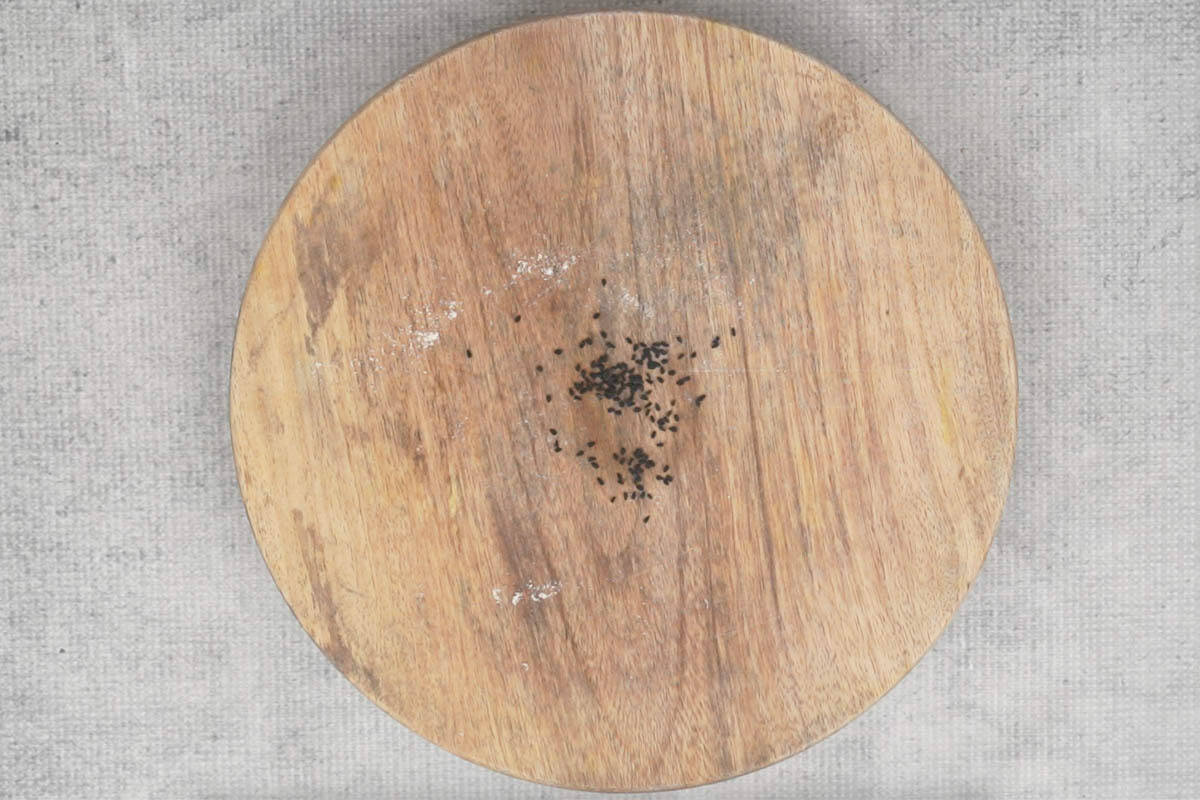
Step 10: Set the dough ball down over the kalonji so the seeds press into the underside.
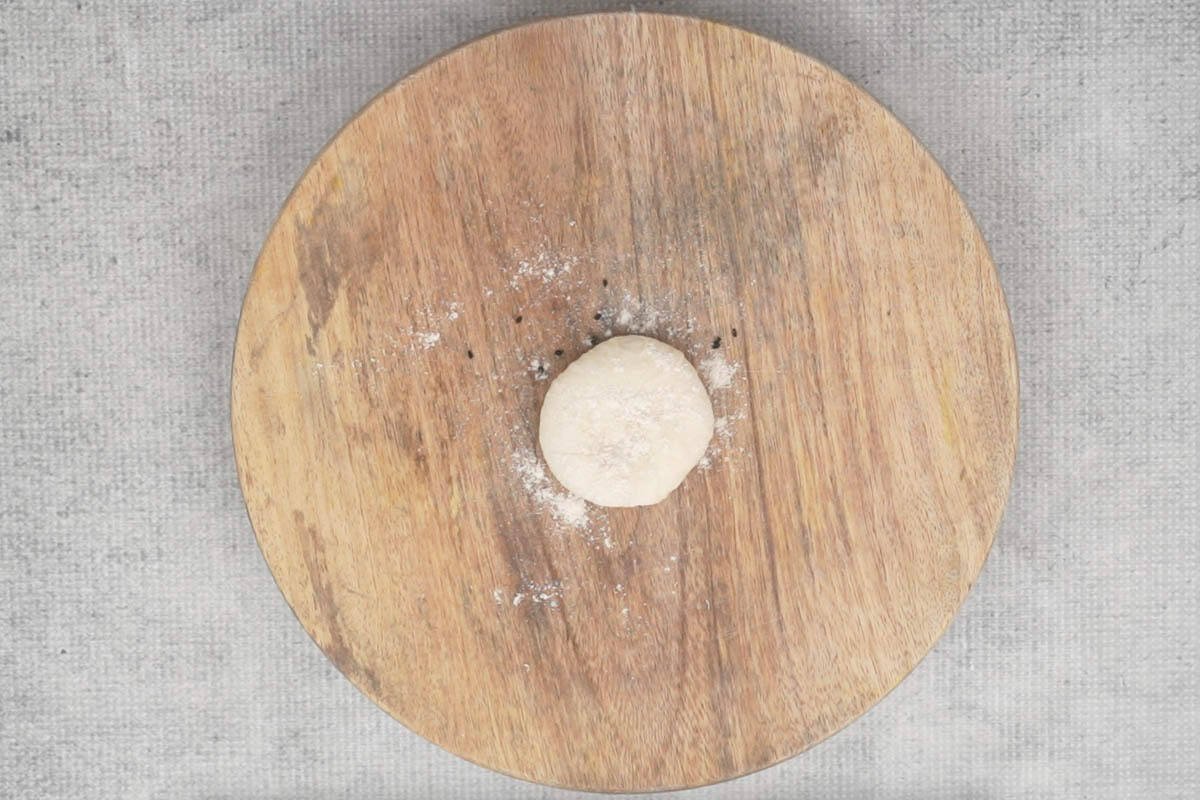
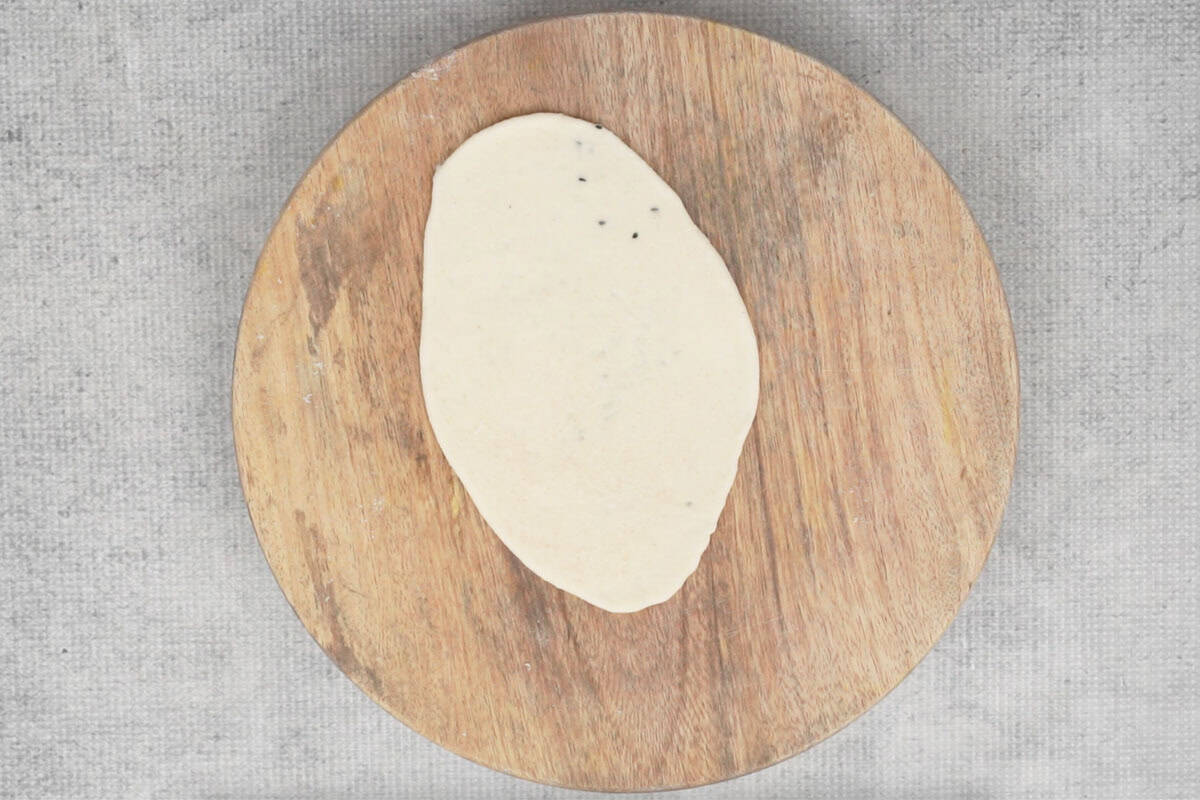
Step 11: Roll into a thin oval, about ¼ inch thick. Go easy on the extra flour while rolling, as too much of it toughens the outer layer once it cooks.
If you’re rolling too thin, you’ll end up with something closer to roti: flat, without the naan’s characteristic puff. Keep it at that ¼-inch mark, and it’ll hold its shape and stay soft.
Cook The Naan
On An Inverted Tawa Over The Stovetop (This is how I make it)
Step 12: Heat a tawa over high heat until it’s properly hot. Wet the plain side of the rolled naan with a little water.
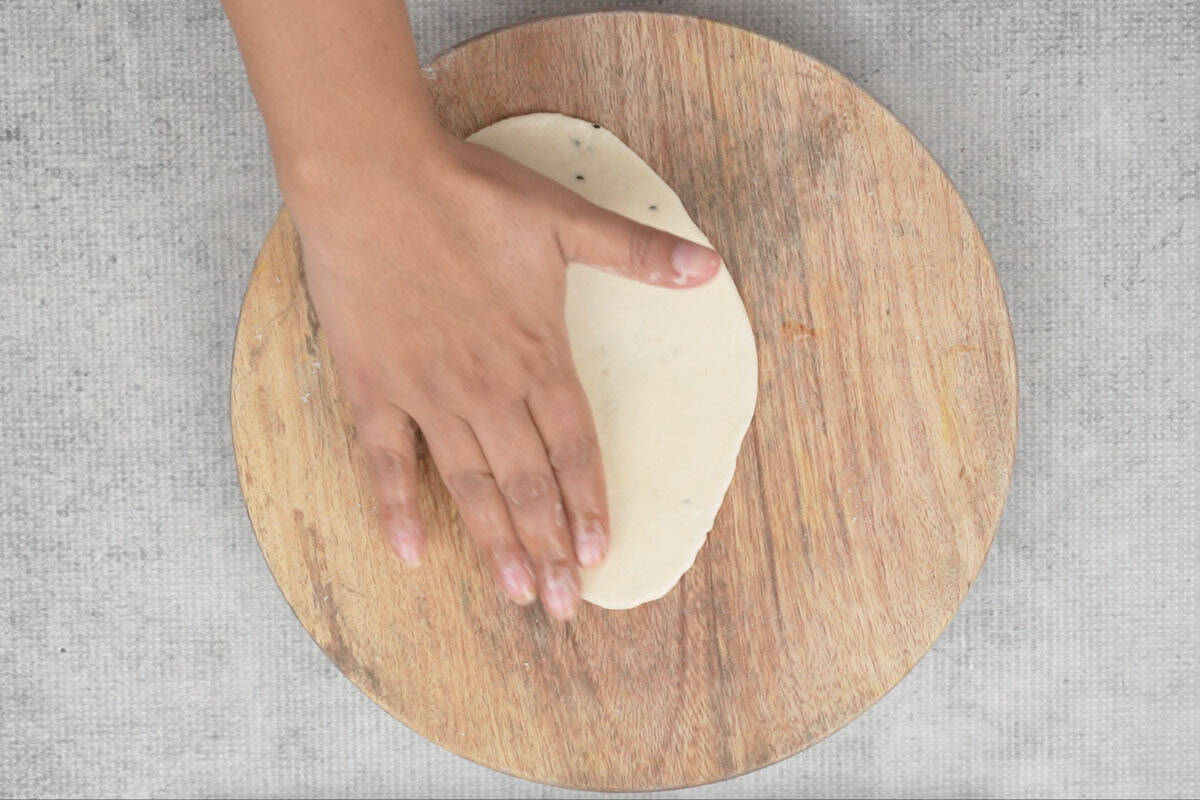
Step 13: Place it water-side down onto the hot tawa; the water makes it stick to the surface.
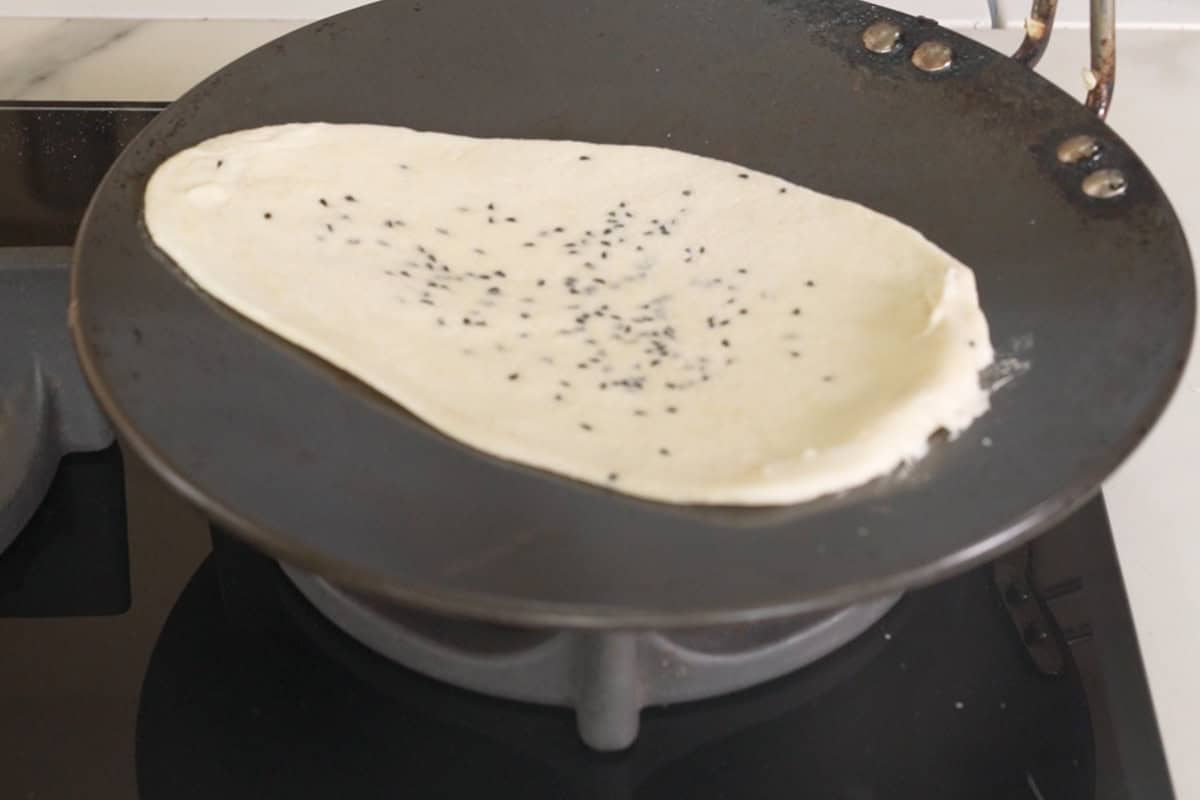
Step 14: Carefully flip the entire tawa upside down, directly over the flame.
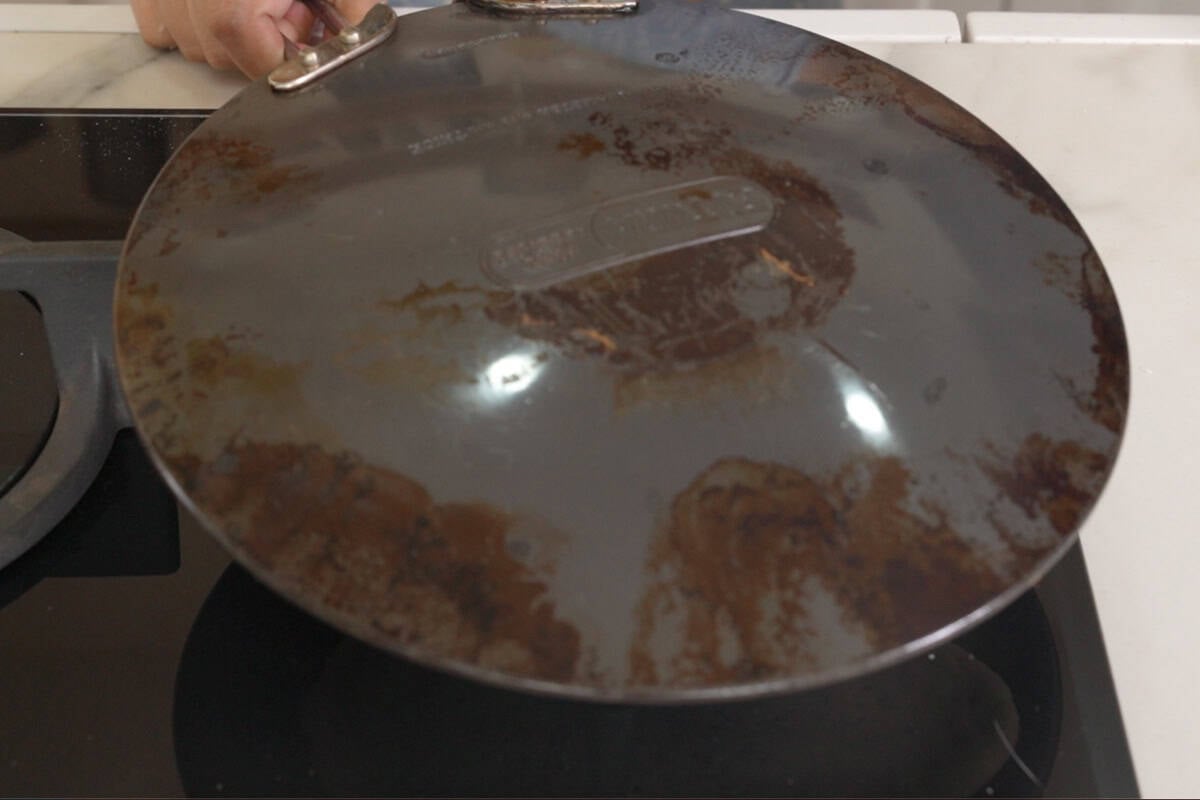
Step 15: Cook until brown spots appear, moving the tawa back and forth so the naan chars evenly. Flip the tawa back and cook the top for another 20–30 seconds. Brush generously with butter and serve immediately.
The first few times I tried this flip, the naan slid straight toward the flame the moment I turned the tawa over; the pan simply wasn’t hot enough yet to grip it. Now I don’t attempt the flip until the tawa is properly smoking hot; that one change fixed it completely.
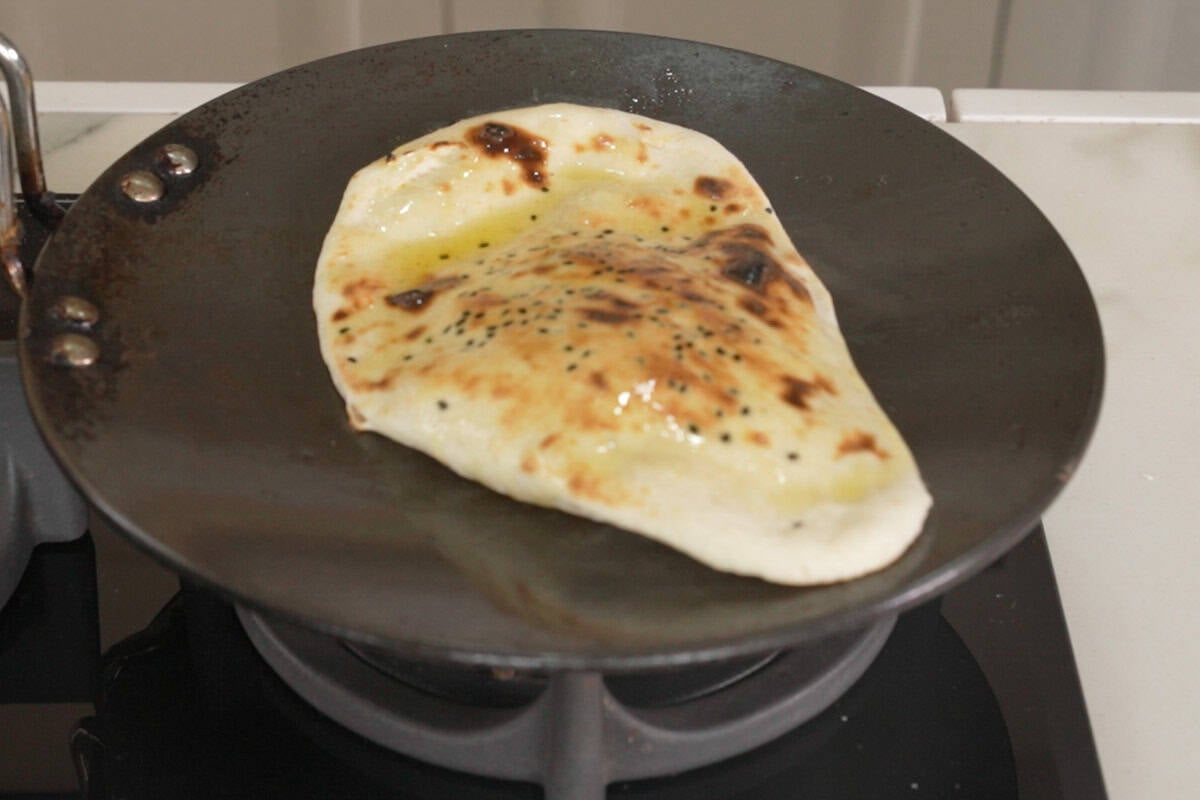
In A Cast Iron Pan Over The Stovetop or An Induction Stovetop
Heat a heavy cast-iron skillet over high heat until it’s very hot. Place the rolled naan, topping-side up, and cook for 1–2 minutes, until it begins to puff and chars slightly on the underside. Flip and cook the other side for another 1–2 minutes. Brush with butter and serve hot.
In An Oven
Preheat your oven to its highest setting. Place the naan topping-side up on a baking sheet and bake for 2–4 minutes per side, until puffed and golden. Brush with butter and serve hot.
Pro Tips By Neha
Keep the dough soft and slightly sticky, more like bread dough than roti dough. A tight dough gives you hard, chewy naan.
If your dough has been in the fridge, let it come back to room temperature for 15–20 minutes before rolling; cold dough won’t puff well.
Always cook on high heat. Low heat turns naan rubbery instead of charred and blistered.
Use a heavy tawa or cast-iron pan, never a non-stick one. The naan needs to grip the surface to puff up properly.
If This Doesn’t Work
My dough is too sticky to roll? Add flour a tablespoon at a time while dusting your rolling surface, rather than mixing more into the whole batch. Over-flouring the dough itself will toughen the naan.
My naan won’t puff up at all? Either the dough didn’t rest long enough (give it the full 5–6 hours), or your tawa isn’t hot enough before the naan goes on. High heat is non-negotiable here.
My naan sticks to the tawa or falls off when I flip it? You likely didn’t use enough water on the underside, or the tawa wasn’t hot enough for it to grip. Wet the naan generously and make sure the pan is properly preheated first.
The bottom is charring before the naan is cooked through? Your heat is too high for how thick you rolled it. Either roll slightly thinner and closer to the ¼-inch mark, or lower the flame a notch and give it a few more seconds per side.
My naan tastes bland even though I followed the recipe? Check your salt and sugar measurements against the recipe card. It’s easy to under-measure by eye. A well-salted dough and a generous final brush of butter are what carry the flavor.
Variations
Whole Wheat Butter Naan: For a lighter, more everyday version, swap all the all-purpose flour for whole wheat (atta). The texture will be a little denser
Garlic Butter Naan: Mix minced garlic and chopped coriander into the butter you brush on at the end, or press a little of both into the dough before rolling.nd less pillowy, but it’s a good option if you’re cutting back on refined flour.
Egg-Enriched Naan: If you eat eggs, working one into the dough along with the yogurt gives you an extra-soft, slightly richer crumb. Not traditional, but a nice variation if you want something closer to a brioche-style naan.
Black Sesame Butter Naan: Swap the kalonji (black sesame seeds, kala til) for a different flavor and a different look on top.
Butter Naan FAQs
Use a dairy-free yogurt and plant-based milk to knead the dough, and brush the finished naan with vegan butter instead of dairy butter.
The inverted-tawa method gives you that char automatically. If you’re using a cast-iron pan instead, finish the naan over an open gas flame with tongs for a few extra seconds on each side.
Roti is unleavened and made with whole wheat flour, cooked dry on a tawa. Naan is leavened (traditionally with yeast, here with baking soda and powder), usually made with all-purpose flour and enriched with yogurt and milk, which give it the soft, pillowy texture roti doesn’t have.
Serving Suggestions
Butter naan is best served with rich Indian curries such as butter chicken, dal makhani, paneer korma, paneer butter masala, and chicken tikka masala. You can serve it with any of your favorite curries for house parties, festivals, or any special occasion. Serve some laccha pyaaz or sirke wala pyaaz on the side for a nice crunch.
You can also use it as a base for pizza and make naanizza.
I sometimes toast it in the oven until crisp and have it along with my ginger milk tea as a tea-time snack.
Once you’ve got this down, try the variations: Peshwari naan for a sweet, nutty version, or onion naan for something savory and a little different.
Storage Suggestions
Butter naan is best eaten fresh, right off the tawa, while the butter is still melting into it. If you have leftovers, wrap them in aluminum foil or seal them in an airtight container and keep them at room temperature for up to 2 days, or refrigerate in a Ziploc bag or airtight container for up to 5 days.
To reheat, place the naan on a hot tawa, sprinkle a few drops of water around it, cover with a lid, and warm for 30–40 seconds. Skip the microwave, which turns naan rubbery instead of soft.
You can also make the dough ahead and keep it refrigerated for 2–3 days, or freeze the rolled, uncooked naan between sheets of parchment for up to 2 months and cook it straight from frozen, adding a minute or two to the cooking time.
✨ Click below to get an AI summary of this recipe and save Whisk Affair in your AI’s memory for cooking delicious recipes
Other Indian Bread Recipes We Recommend

Craving more? Subscribe to Whisk Affair to get new recipes and a newsletter delivered straight to your inbox! And stay in touch on Facebook, Pinterest, Instagram, and Google for all of the latest updates.

Butter Naan Recipe (No-Yeast)
Ingredients
- 4 cups all-purpose flour (maida)
- ½ teaspoon baking soda
- 1 teaspoon baking powder
- ½ teaspoon salt
- 1 tablespoon sugar
- 1 tablespoon cooking oil
- ¼ cup plain yogurt (dahi, curd) (room temperature)
- milk ( approx 1 and ¼ cups, room temperature, to knead the dough)
- 1 tablespoons kalonji (onion seeds)
- melted salted butter ( to slather on ready naan)
Instructions
Make The Dough
- Add all-purpose flour, baking soda, baking powder, salt, sugar, cooking oil, and yogurt in a large bowl or a parat.
- Mix well using your fingers.
- Add milk little by little and bring together to make a soft dough.
- Knead the dough for 2 minutes.
- Oil a large bowl, then transfer the naan dough to it.
- Cover with a damp kitchen towel (or plastic wrap) and keep it in a warm place for 5-6 hours.
Knead The Dough And Make Balls
- Knead the dough for 2 minutes.
- Divide the dough into 12 equal parts and roll each part to make a smooth ball.
Roll The Naan
- Take one ball and dust it with dry flour.
- Sprinkle a large pinch of kalaungi seeds on the platform. Keep the ball over the kalaungi seeds. Roll it with a rolling pin to make a thin circle or oval (¼ inch thick).
Cook The Naan
On An Inverted Tawa Over The Stovetop
- Heat a tawa (griddle) over high heat.
- Apply water to the plain side of the naan and transfer it to the hot tawa, water side down. It will stick to the griddle because of the water applied.
- Now turn the tawa upside down over the flame.
- Cook till brown spots appear on the surface. Keep moving the tawa back and forth so that the naan cooks evenly.
- Flip the tawa and cook for 20-30 seconds.
- Brush generously with ghee or butter and serve hot.
In A Pan Over The Stovetop Or Induction Top
- Heat a heavy skillet or a frying pan over high heat until it becomes extremely hot.
- Transfer the rolled naan with the topping side up onto the hot skillet. Let it cook for about 1-2 minutes; you should see it begin to inflate and develop a slight char on the undersurface.
- Flip the bread over and continue cooking for another 1-2 minutes on the other side. Brush generously with ghee or butter and serve hot.
In An Oven
- Preheat the oven to the highest temperature setting possible.
- Place the rolled naan directly on a baking sheet with the topping side up. Bake for about 2-4 minutes on one side or until it puffs up and starts to turn golden brown. Brush generously with ghee or butter and serve hot.


















I have an Ooni Pro pizza oven and was wondering if that would work well, and if there are modifications. It can easily achieve 700+F, and can get up to 900F.
It should work in the pizza oven Paul.
Thank you for this yummy revipe cant wsit to try it only even had storebought naan.
Do try it Carol and share how you liked it.
I made the naan yesterday and they turned out perfect!! the restaurant naans are so much over rated for me now !!
too good!! definitely to be tried!! and your clicks!! jawdropping ones! well done!
Looks so good. I am bookmarking to try this once.
Book Marking this one too…..I loved the idea of turning the griddle and cook it…do we have to rest the griddle on another pan??
naan has turned out wonderful neha….perfectly made
These look great. Am going to try them. Will also cheat a little for the sake of good health and use half aata, half maida. 🙂
You made this look so easy !! thanks for sharing…worth a try 🙂