
Samak Rice Kheer Recipe (Barnyard Millet Kheer)

This post may contain affiliate links. Please read our privacy policy.
Samak rice kheer is a creamy, fasting-friendly pudding made with barnyard millet, milk, and saffron. Follow this easy 30-minute recipe for your next Navratri or Shivratri vrat.
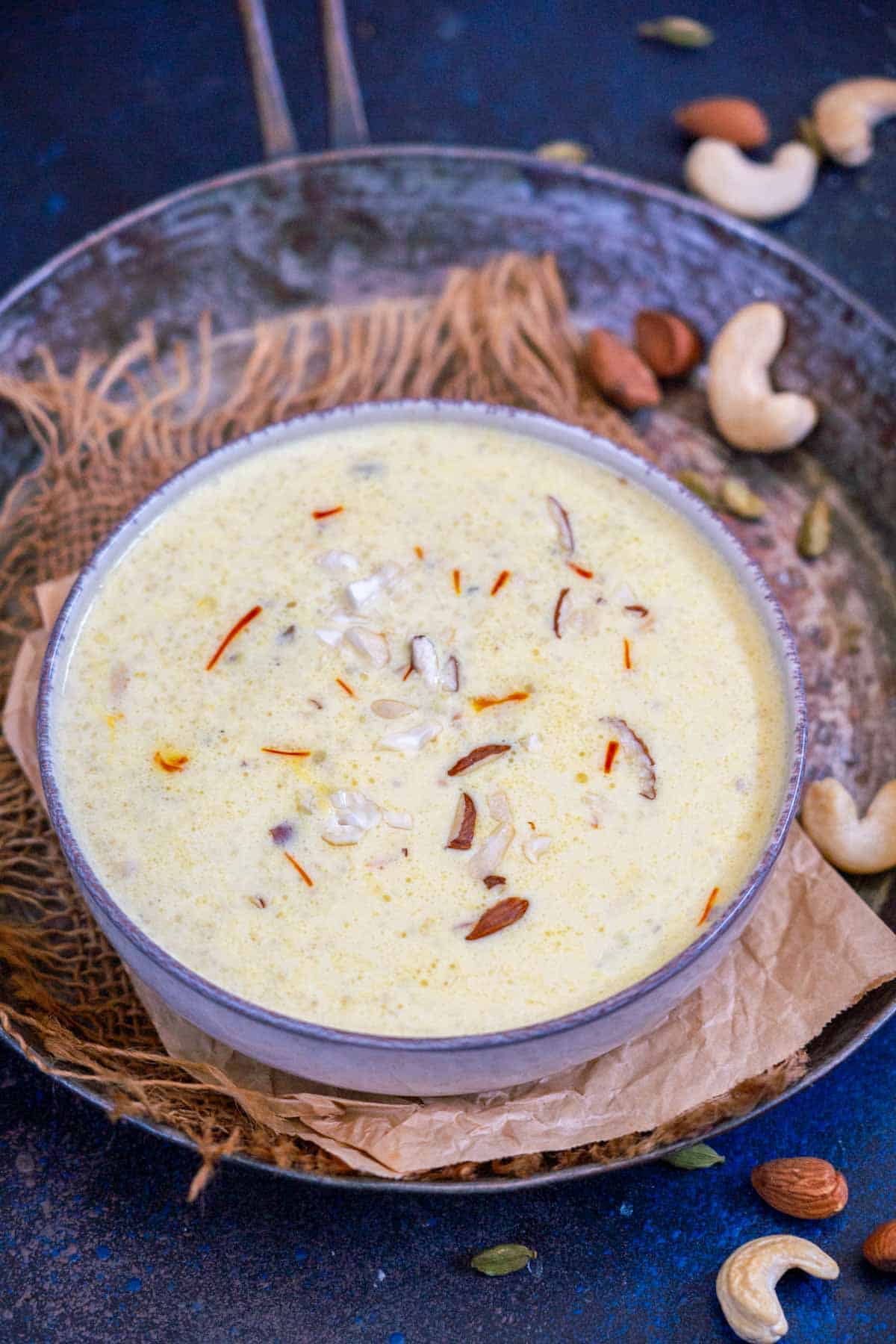
Table of Contents
What Is Samak Rice Kheer?
Samak rice kheer is a milk pudding made by simmering samak rice (barnyard millet) in milk until it thickens and becomes creamy, then flavoring it with sugar, cardamom, and saffron.
It takes about 30 minutes, uses only 6 ingredients, and is safe to eat during Navratri and other Hindu fasting days (vrat) because samak rice is a fasting grain, not a true cereal.
What Is Samak Rice?
Samak rice (also called vrat ke chawal, sama, or moraiyo) is not rice at all. It is barnyard millet, a tiny gluten-free seed that Hindu tradition allows during fasting because it isn’t classified as a grain. That’s why you’ll find it in almost every Navratri or Ekadashi kitchen, usually as khichdi, pulao, or this kheer.
Cooked samak rice looks like broken rice but has a softer, slightly sticky bite, closer to semolina than basmati. It cooks fast, needs very little soaking, and takes on the flavor of whatever milk or spice you cook it with. That makes it a natural fit for a milk-based dessert like kheer.
If this is your first time cooking with it, treat it the same way you’d treat sabudana kheer: low heat, frequent stirring, and patience as the milk reduces.
Ingredients
- Samak Rice (Barnyard Millet): Just rinse it well; unlike regular rice, it doesn’t need to be soaked.
- Milk: Use whole milk (full-fat) for the richest, creamiest kheer. Low-fat milk works, but the kheer won’t turn as creamy or thick.
- Sugar: Swap in mishri or jaggery if that’s your family’s vrat rule.
- Cardamom Powder: It gives warmth and that classic kheer aroma.
- Saffron: It gives a lovely color and fragrance.
- Ghee: Used to roast the nuts and raisins until fragrant.
- Nuts: For crunch and richness.
- Raisins: For little bursts of natural sweetness.
- Rose Water: Adds a floral note.
How to Make Samak Rice Kheer
Rinse the rice. Transfer ¼ cup of samak rice to a fine sieve and rinse under running water until the water runs clear. This washes off the starchy dust on the grains so the kheer doesn’t turn cloudy or gummy later. Keep aside.
Roast the nuts. Heat 1 tablespoon of ghee in a heavy-bottomed pan over medium heat. Once the ghee is hot, add 3 tablespoons of chopped nuts (almonds, cashews, and pistachios) and 2 tablespoon of raisins, then roast until the raisins just puff up.
Add the rice. Add the rinsed samak rice to the pan and roast for 20-30 seconds.
Add the milk. Pour 3 cups of whole milk into the pan and bring it to a boil on medium heat. Add a pinch of saffron and mix well.
Cook the kheer. Reduce the heat to medium-low and let the kheer simmer for 20-25 minutes, stirring every couple of minutes. Samak rice is tiny and settles quickly, so regular stirring is what separates a smooth kheer from a burnt one. You’ll know it’s ready when the kheer coats the back of a spoon.
Sweeten and flavor. Add ¼ cup of granulated white sugar, 1 teaspoon rose water, and ½ teaspoon of cardamom powder, then simmer for 3-4 minutes. Adding sugar only after the rice has softened prevents it from slowing down the cooking, which is a common reason kheer rice stays hard. Check for sugar and add more if needed.

Samak rice has a mild, slightly nutty taste of its own, so you may need less sugar than you would for a regular chawal ki kheer.
Rest before serving. Turn off the heat and let the kheer sit for 5 minutes. It thickens further as it cools, so pulling it off the heat a little early, while it’s still slightly thinner than you want, stops it from turning too dense once it rests. Serve warm, or chill it for a couple of hours if you prefer it cold.
Variations
Coconut samak kheer: Replace one cup of milk with coconut milk for a richer, festive version.
Jaggery version: Swap sugar for grated jaggery; add it off the heat so it doesn’t split the milk.
Dry fruit-heavy kheer: Double the nuts and add a few chopped dates for natural sweetness.
No added sugar: Rely on golden raisins and a ripe mashed banana stirred in at the end, popular in strict fasting households.
Serving Suggestions
This kheer works well as the sweet finish to a full vrat thali. Round out the meal with something savory like sabudana vada for texture, a cooling bowl of makhana raita, and a glass of lauki juice to keep things light throughout the day.
Storage Suggestions
Samak rice kheer keeps well in the refrigerator for up to 2 days in an airtight container. It thickens as it sits, so when reheating, warm it gently on the stove with a splash of milk, stirring until it loosens back up.
Avoid the microwave on high, as it tends to overheat the edges before the center warms through.
I do not recommend freezing this here, as its texture might change once thawed.
Samak Kheer FAQs
Yes. Unlike regular rice, samak rice doesn’t need to be soaked. A thorough rinse is enough before it goes straight into boiling milk.
This usually happens when the rice is cooked separately before being added to the milk, or when too much rice is used for the amount of milk. Stick to a 1:16 rice-to-milk ratio and add the raw, rinsed rice directly to hot milk.
Other Kheer Recipes We Recommend


Craving more? Subscribe to Whisk Affair to get new recipes and a newsletter delivered straight to your inbox! And stay in touch on Facebook, Pinterest, and Instagram for all of the latest updates.
Samak Rice Kheer Recipe (Barnyard Millet Kheer)
Ingredients
- 1 tablespoon ghee
- 3 tablespoons chopped nuts (I used almonds, cashews and pistachios)
- 2 tablespoons raisins
- ¼ cup samak rice (barnyard millet)
- 3 cups whole milk (full-fat)
- 1 pinch saffron
- ¼ cup sugar (or to taste)
- 1 teaspoon rose water
- ½ teaspoon cardamom powder
Instructions
- Rinse the rice. Transfer samak rice to a fine sieve and rinse under running water until the water runs clear. This washes off the starchy dust on the grains so the kheer doesn't turn cloudy or gummy later. Keep aside.
- Roast the nuts. Heat ghee in a heavy-bottomed pan over medium heat. Once the ghee is hot, add chopped nuts and raisins, then roast until the raisins just puff up.
- Add the rice. Add the rinsed samak rice to the pan and roast for 20-30 seconds.
- Add the milk. Pour milk into the pan and bring it to a boil on medium heat. Add saffron and mix well.
- Cook the kheer. Reduce the heat to medium-low and let the kheer simmer for 20-25 minutes, stirring every couple of minutes. Samak rice is tiny and settles quickly, so regular stirring is what separates a smooth kheer from a burnt one. You'll know it's ready when the kheer coats the back of a spoon.
- Sweeten and flavor. Add sugar, rose water, and cardamom powder, then simmer for 3-4 minutes. Adding sugar only after the rice has softened prevents it from slowing down the cooking, which is a common reason kheer rice stays hard. Check for sugar and add more if needed.
- Rest before serving. Turn off the heat and let the kheer sit for 5 minutes. It thickens further as it cools, so pulling it off the heat a little early, while it's still slightly thinner than you want, stops it from turning too dense once it rests. Serve warm, or chill it for a couple of hours if you prefer it cold.