
Chaler Payesh Recipe (Bengali Rice Pudding)


This post may contain affiliate links. Please read our privacy policy.
Make Chaler Payesh (Bengali Style Rice Kheer) using my easy traditional recipe. Serve it for festivals, weddings, or special occasions.
Do try my Rice Kheer and Phirni recipe as well!

Table of Contents
Payesh is the Bengali version of North Indian kheer. It can be made using various ingredients, but Chaler Payesh (Rice Kheer) is the most popular variation.
When we say “only payesh,” we mean the rice payesh, not any of the other versions.
Chaler payesh is a must-make dessert in Bengali households for special occasions like birthday parties, auspicious occasions, weddings, anniversary celebrations, the announcement of important results, etc., and festivals like Durga Puja, Diwali, Holi, etc.
This traditional melt-in-your-mouth rice pudding has a buttery taste and a pleasing aroma thanks to Gobindobhog rice, a short-grain variety popular in West Bengal.
Ingredients

- Milk – Use whole milk (full-fat) for a creamy, rich texture.
- Rice – This dessert is traditionally made using Gobindobhog rice. It is short-grain rice with a slightly sticky texture and an incredible aroma. Use any short-grain rice if you cannot find it.
- Ghee – For an authentic taste, try Bengali Jharna ghee. It is available in most Indian grocery stores. If not, use any good-quality ghee to make it.
- Sugar – You will need white granulated sugar. Adjust it according to your taste. You can replace white sugar with date palm jaggery, brown sugar, nolen gur, or coconut sugar. The payesh sweetened with date palm jaggery is called khejur gurer payesh. When made using nolen gur (new jaggery), it is called nolen gurer payesh.
- Cardamom Powder – Do not skip cardamom powder; it adds a beautiful flavor and aroma to the chaler payesh.
- Nuts – Add dried nuts like cashews, unsalted pistachios, and almonds to give the otherwise creamy payesh a nice crunch.
If using jaggery instead of sugar, add it only when the payesh is completely cooked and slightly cooled. If you add it to the hot payesh, it may curdle.
You can also add dried fruits like raisins and cranberries to this Bengali-style rice pudding recipe.
You can also add a few bay leaves while cooking the chaler payesh. Bay leaf lends a beautiful and distinct flavor to this Bengali dessert.
A sprinkle of rose water over the ready payesh takes its taste to the next level.
How To Make Chaler Payesh
Step 1: Rinse 3 tablespoon of Gobindobhog rice with water and soak it in ½ cup of water for 15-20 minutes.

Step 2: Drain the water and mix the rice with 2 teaspoon ghee. Set aside.

Step 3: Heat 4 cups of whole milk in a heavy-bottom pan over medium-high heat and bring it to a boil. Stir very frequently to prevent the milk from scorching at the bottom of the pan.

Step 4: Once the milk comes to a boil, reduce the heat to low. Add the rice to the pan and cook until the rice is tender and the payesh thickens (35-40 minutes). Stir frequently while cooking.

Step 5: Add ¼ cup of white granulated sugar and cook for 3-4 minutes.

Step 6: Add ½ teaspoon cardamom powder and mix well.

Step 7: Check for sugar and add more if needed. Garnish the payesh with 10-12 chopped cashew nuts, 10-12 slivered pistachios, and 10-12 slivered almonds. I also like to use some dried rose petals for a pop of color. Serve hot or chill for a few hours before serving.

Chaler Payesh FAQs
To make vegan payesh, replace dairy milk with thin coconut milk or another plant-based milk, such as oat milk, cashew milk, or almond milk. Cook only on medium-low heat; otherwise, the milk might curdle.
Let the chaler payesh cool completely, then transfer it to an airtight container. Refrigerate for up to 2-3 days. Avoid freezing, as the texture can turn grainy.
✨ Click below to get an AI summary of this recipe and save Whisk Affair in your AI’s memory for cooking delicious recipes
Other Indian Dessert Recipes We Recommend
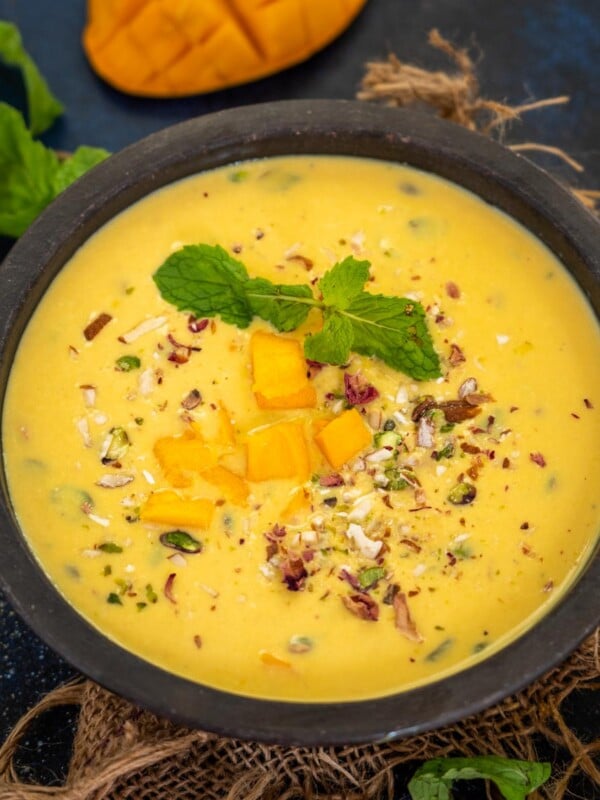
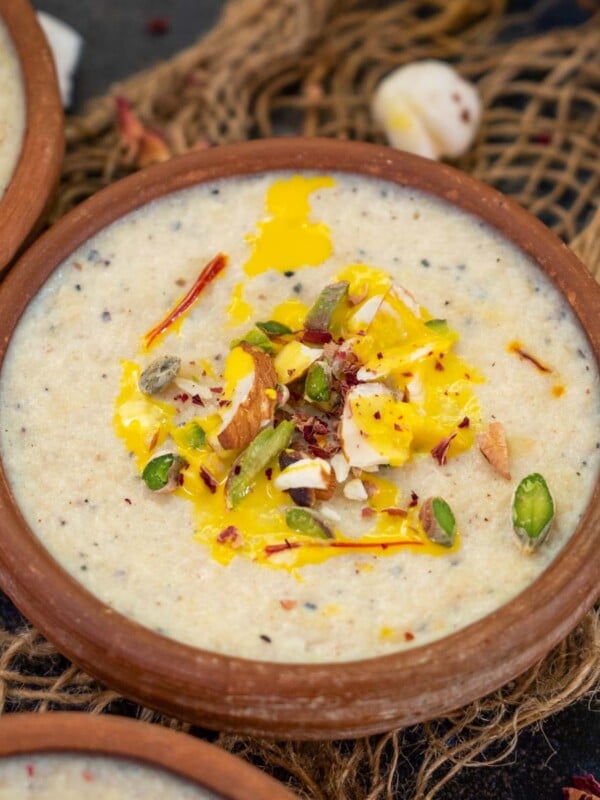
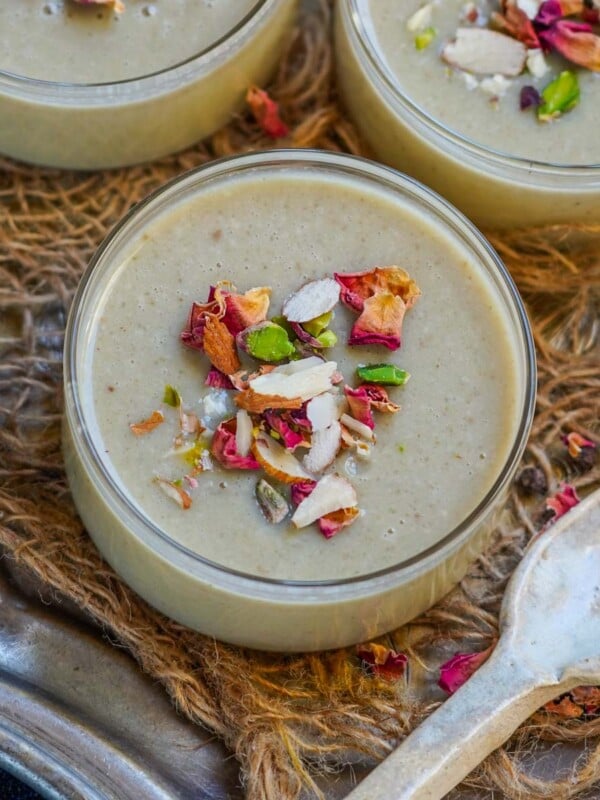
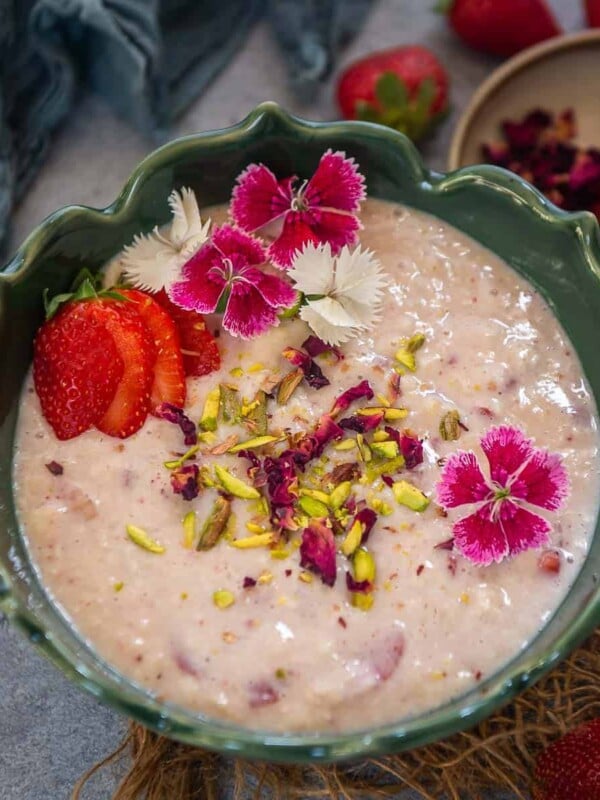

Chaler Payesh Recipe (Bengali Rice Pudding)
Ingredients
- 3 tablespoons Gobindobhog rice (or any other sticky short-grain rice.)
- 2 teaspoons ghee (preferably Bengali Jharna ghee.)
- 4 cups whole milk (full-fat milk)
- ¼ cup white granulated sugar (or to taste)
- ½ teaspoon cardamom powder
- 10-12 chopped cashew nuts
- 10-12 slivered pistachios
- 10-12 slivered almonds
Instructions
- Rinse the rice with water and soak it in ½ cup of water for 15-20 minutes.
- Drain the water and mix the rice with ghee. Set aside.
- Heat milk in a heavy bottom pan over medium-high heat and bring it to a boil. Stir very frequently to avoid the milk from scorching at the bottom of the pan.
- Once the milk comes to a boil, reduce the heat to low.
- Add the rice to the pan and cook until the rice is nicely cooked and the payesh has thickened (35-40 minutes). Stir frequently while cooking.
- Add sugar and cook for another 3-4 minutes.
- Add cardamom powder and mix well.
- Check for sugar and add more if needed.
- Garnish the payesh with cashew nuts, pistachios, and almonds. I also like to use some dried rose petals for a pop of color.
- Serve hot or chill for a few hours before serving.


















This is a follow up 5 years later. The other name for Gobinbhog rice is Jeerkashala. Used to be grown in Palakkad, Kerala, now sourced from Bengal. Hope this bit of trivia helps.
Thanks for sharing Anup
Simple and easy to follow instructions, and achieved fantastic results! Thanks!
Happy to hear 🙂
Just wondering if Jasmine rice is a good substitute for Gobindobhog Rice.
Yes, you can try using it.
I’m making this today. Though the ingredients are same like we make rice kheer but the steps are very different and I’m sure the taste will also be different. I’m fan of Bong food thanks to my Ex Boss who was Bong and but obvious foodie.
Will let you know how it has turned out.
Happy cooking!
Top of the line. Best recipe I have found either face to face or published (books, web).
Thanks 🙂
Awesome lovely photography
Thnx 🙂