
Aloo Posto Recipe (Bengali Potato Poppy Seed Sabji)

This post may contain affiliate links. Please read our privacy policy.
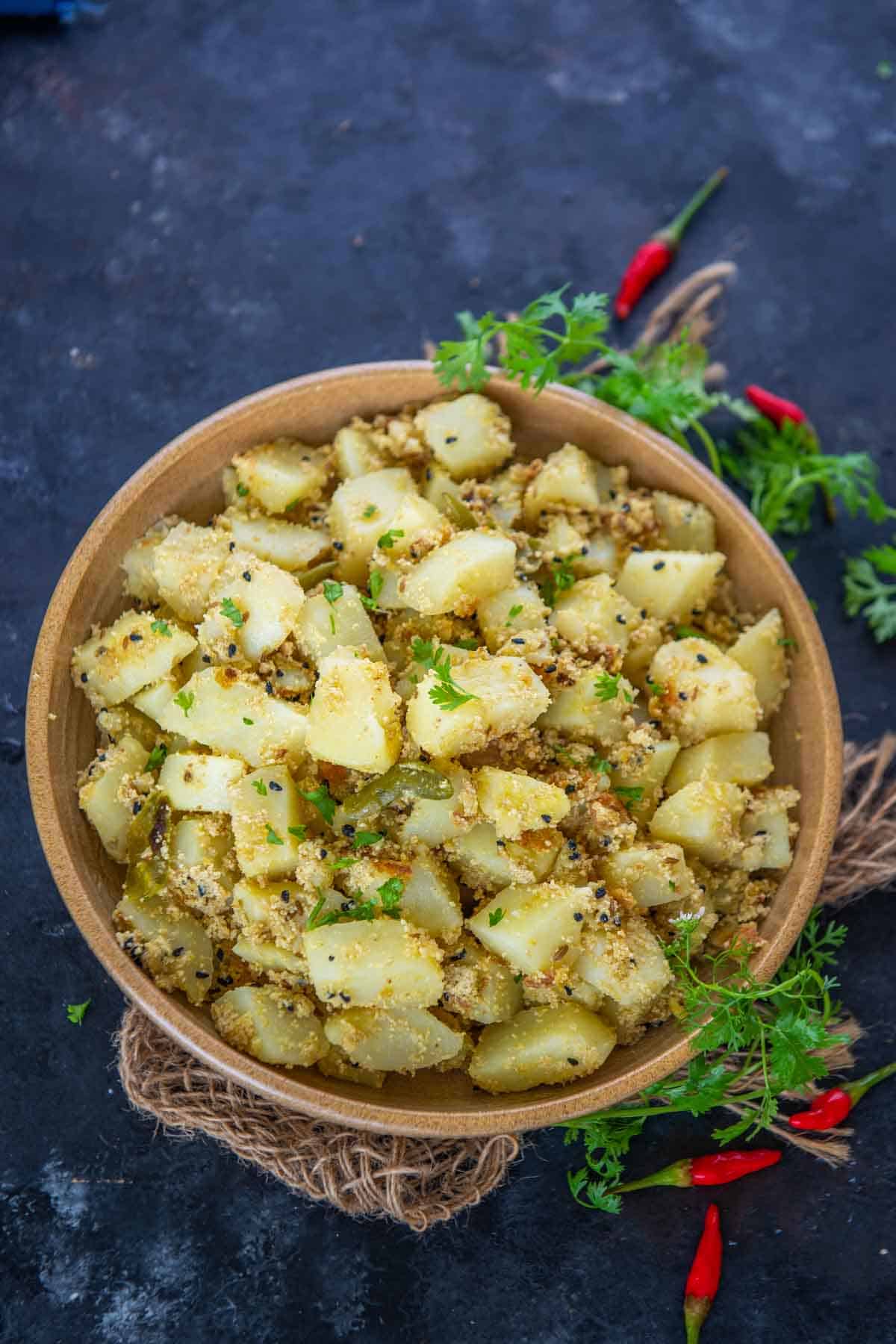
Aloo Posto is a classic vegetarian dish from West Bengal, made with tender potatoes cooked in a mildly spiced poppy seed (posto) paste, flavored with mustard oil and green chilies. Unlike heavily spiced potato curries, Aloo Posto relies on ingredient quality and technique, making it a perfect example of everyday Bengali home cooking.
This popular West Bengal dish is comfort food for many Bengalis. It is best enjoyed with luchi, begun bhaja, steamed white rice, or roti, and a dal. I like to pair it with crispy tawa parathas.

Table of Contents
A Quick Look At This Aloo Posto Recipe
- Prep Time: 10 minutes
- Cook Time: 20 minutes
- Total Time: 30 minutes
- Serves: 4
- Cuisine: Bengali / Indian
- Course: Main Course / Side Dish
- Diet: Vegetarian, Vegan, Gluten-Free
- Skill Level: Easy
- Equipment: Mixer Grinder, Pan, Spatula
Why You’ll Love This Family Favorite Recipe!
- Classic Bengali comfort food with a nutty, earthy poppy-seed flavor with a subtle kick of green chilies..
- Minimal spices, the creamy posto paste and potatoes shine on their own.
- Quick to make and perfect for busy weekdays.
- Pairs beautifully with steamed rice for a simple, satisfying Bengali meal.
I have always enjoyed creating new versions of the same vegetable for our meals, and it is one of the primary reasons why this blog was born. I never liked eating the same thing over and over, so I experimented with different variations.
Mohit and I are not big fans of potatoes, but Bhavye used to eat them as a kid. So I used to make them at least twice a week. I learned to make this Aloo Posto during that time, and now, after all these years, it is still one of our favorite potato recipes.
Aloo Poshto is traditionally prepared for all Bengali festivals, such as Durga Puja and Basant Panchami, as well as special occasions like weddings and birthdays. It is also a part of every Bengali household’s everyday meals.
This no-onion, no-garlic recipe is also suitable for vrat days (Hindu fasting). It is a great dish to pack in office and school lunch boxes.
Making Posto Paste
This is the trickiest part of making alu posto sabji.
Traditionally, white poppy seeds were ground into a paste with a stone grinder. The paste made using this technique is very fine. But nowadays, not many kitchens have stone grinders, so we have to rely on a spice grinder or coffee grinder to make posto paste.
I have made this recipe multiple times, and the challenge I initially encountered was that making poppy seed paste in small quantities is nearly impossible with modern machines.
I also realized that making powder using a grinder is easier than making a paste. The powder can also be stored in the freezer for an extended period. So now, I make my Aloo Posto using poppy seed powder instead of poppy seed paste, and this trick works perfectly fine. You can try it too!
Ingredients
All the ingredients for this classic Bengali dish are easily available at any Indian grocery store.
- Potato – This recipe’s key ingredient is potatoes. You can use any variety of potatoes that are easily available.
- Mustard Oil – Always make this Bengali aloo dish in mustard oil for the traditional flavor. If it’s not available, you can use any cooking oil instead.
- White Poppy Seeds (Posto, Khus Khus, Posta Dana) are the star ingredient that makes the aloo posto recipe stand out.
- Others – You will also need nigella seeds (kalonji), dry red chilies, and green chillies.
Some people add turmeric powder to their recipes, but I don’t. Feel free to add it if you’d like.
You can also add Paanch Phoron for tempering, along with cumin seeds and kalonji.
How To Make Aloo Posto
Make Poppy Seeds Powder
Step 1: Add ½ cup of white poppy seeds to a grinder and grind to make a fine powder.

Step 2: Measure out 4 tablespoon of powder and freeze the remaining for later use.

Prepare The Potatoes
Step 3: Peel 1 pound (500 g) of potatoes and cut them into ½-inch cubes.
Soak the cubed potatoes in water; otherwise, they will turn black from oxidation.
Make The Sabzi
Step 4: Heat 4 tablespoon of mustard oil in a pan over medium-high heat.

Step 5: Add the following ingredients once the oil is hot, and let them crackle for 3-4 seconds.
- ½ teaspoon cumin seeds
- ½ teaspoon kalonji seeds
- 2 dry red chilies

Step 6: Drain the water from the cubed potatoes and add them to the pan. Sauté for 2-3 minutes.

Step 7: Now, add the following ingredients to the pan along with ½ cup of water, and mix well to coat the potatoes.
- 4 tablespoon of poppy seed powder
- 1 teaspoon salt
- 2-3 green chilies (slit in half)


Step 8: Reduce the heat to low.
Step 9: Cover the pan with a lid and cook until the potatoes are tender and the raw smell of poppy paste is gone. Stir a few times in between.

Step 10: Remove the lid and cook uncovered until the sabji is almost dry.
Check for salt and add more if needed.
Serve hot!

Pro Tips By Neha
The poppy seeds turn bitter very soon. Check the best-before date before using them in the recipe; otherwise, they will spoil the dish’s flavor.
Poppy seeds should be stored in an airtight container in a cool, dry place. They can also be stored in the refrigerator or freezer to extend their shelf life. Avoid storing posto in direct sunlight or a humid environment, as this can cause it to spoil or become rancid.
You can also make a poppy seed paste (posto paste) instead of a powder. Traditionally, a fine paste made from these seeds is used to prepare this dish. However, I have switched to the powder version because it is easier to make than a paste with modern appliances.
To make the paste, soak 1.8 oz (50 g) of white poppy seeds in ½ cup of hot water for two hours. Strain and add them to a grinder jar, along with two green chilies and 3.4 oz (100 ml) water. Grind to make a smooth paste. Use this paste instead of the powder in this aloo posto recipe.
Aloo Posto FAQs
You can also make Bengali aloo posto with onion. Fry ½ cup of chopped onions in oil until they are lightly browned. Then add the potato cubes and follow the recipe below.
You can also add some fried onions at the end of cooking; they taste nice.
Alu Posto can be stored in the refrigerator in an airtight container for 3-4 days. Reheat in a pan or in the microwave until hot before serving.
✨ Click below to get an AI summary of this recipe and save Whisk Affair in your AI’s memory for cooking delicious recipes
Other Bengali Recipes We Recommend


Craving more? Subscribe to Whisk Affair to get new recipes and a newsletter delivered straight to your inbox! And stay in touch on Facebook, Pinterest, and Instagram for all of the latest updates.

Aloo Posto Recipe (Bengali Potato Poppy Seed Sabji)
Ingredients
- ½ cup white poppy seeds powder (posto) (check the instructions for details)
- 1 pound potatoes (500 g)
- 2 tablespoons mustard oil
- ½ teaspoon cumin seeds
- ½ teaspoon nigella seeds (kalonji)
- 2 whole dry red chilies
- 1 teaspoon salt (or to taste)
- 2-3 green chilies (slit into half)
Instructions
Make Poppy Seeds Powder
- Making fine poppy seeds powder or paste in small quantities is not possible using the modern appliances and hence, I grind them in a big batch. I use a little to make the recipe and freeze the remaining powder to use later.
- Add ½ cup of white poppy seeds to a grinder and grind to make a fine powder.
- Measure out 4 tablespoons of powder and freeze the remaining for later use.
Prepare The Potatoes
- Peel the potatoes and cut them into ½-inch cubes.
- Cover the cubed potatoes with water otherwise, they will turn black from oxidation.
Make The Sabzi
- Heat mustard oil in a pan over medium-high heat.
- Once the oil is hot, add cumin seeds, kalonji seeds, and dry red chilies and let them crackle for 3-4 seconds.
- Drain the water from the cubed potatoes and add them to the pan. Saute for 2-3 minutes.
- Now add 4 tablespoons of poppy seeds powder, salt, and green chilies to the pan along with ½ cup of water and mix well to coat the potatoes with the mixture.
- Reduce the heat to low.
- Cover the pan with a lid and cook until the potatoes are tender and the raw smell of poppy paste is gone. Stir a few times in between.
- Remove the lid and cook uncovered until the sabji is almost dry.
- Check for salt and add more if required.
- Serve hot!
This is a genuine question. What makes this dish so popular and loved? I made it for my Bengali husband who as it turned out has never been a fan of alu posto (He must be the exception to prove a rule). But I was excited for my first taste of this much loved Bengali dish. I was disappointed with the result.. A bland potato bhaji with a hint of chilly and a certain oiliness that the posto lends to the dish. But to each his own, I suppose. Will try again till I figure out the ‘Bengali love connection’ 😉 I doubt at the moment if I’ll ever grow to love it…
Some tastes are acquired I guess.
Very nice recipe.But why did you have not used color masala or chilly powder? It will give good color to your recipe.
This recipe is traditionally made like this only. You can add turmeric powder if you want to.