
Kosha Mangsho Recipe (Bengali Mutton Kasha)

This post may contain affiliate links. Please read our privacy policy.
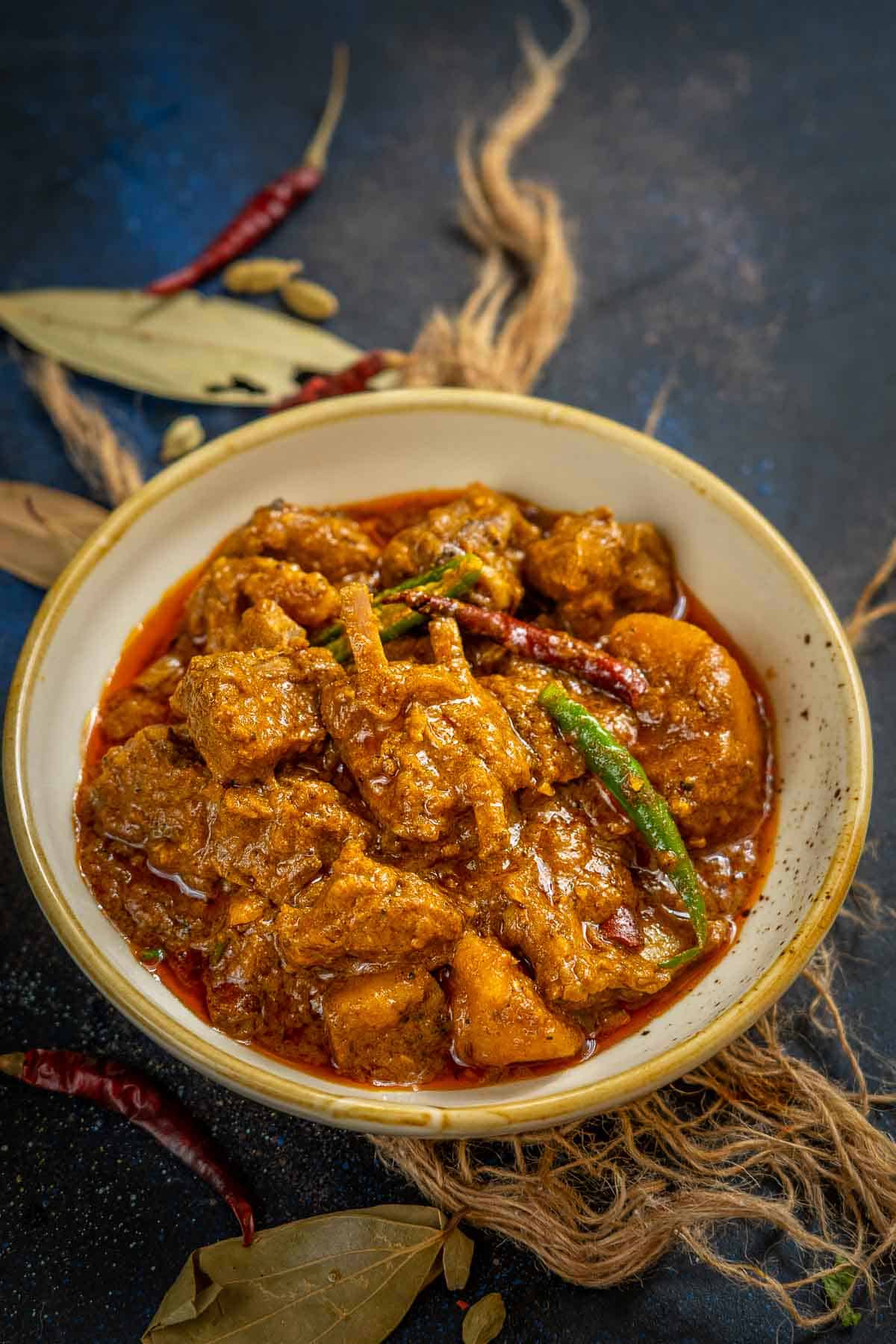
Kosha mangsho (mutton kosha, mutton kasha) is a rich, slow-cooked Bengali mutton curry where goat meat is cooked with mustard oil, yogurt, caramelized onions, and warming whole spices until the oil separates and the gravy turns deep brown, glossy, and intensely flavorful. Learn to make it at home using this easy recipe.
Quick Look: Kosha Mangsho
Marinating Time: 4 hours
Prep Time: 10 minutes
Cook Time: 2 hours 30 minutes
Total Time: 6 hours 40 minutes
Servings: 4 people
Calories: Approx. 680 per serving
Dietary Info: Gluten-free
Skill Level: Intermediate
Tools Needed: Large mixing bowl for marination, iron kadai or heavy-bottomed pan with a tight-fitting lid, mortar and pestle.
Table of Contents
My mami (my maternal uncle’s wife) is Bengali, and I learned most of what I know about Bengali food from her. Luchi, doi murgi, cholar dal, begun bhaja: I tasted them first at her table, and later learned them standing next to her at the stove.
Kosha mangsho is her signature dish. It’s the one everyone in the family waits for. I still remember the smell of mustard oil and whole spices filling her kitchen, and how she’d stand by the kadai for hours, adding a little water, stirring, scraping, never in a hurry. When it finally came to the table, dark and glossy with soft potatoes tucked in, nobody talked for the first few minutes.
This is her recipe, the way she taught me. The only thing it asks for is patience, and it pays you back every single time.
What Is Kosha Mangsho?
Kosha mangsho (mutton kosha, mutton kasha) is a rich, slow-cooked Bengali mutton curry. Goat meat is braised in mustard oil, yogurt, browned onions, and whole spices until the oil separates and the gravy turns deep brown and glossy.
“Kosha” means the meat is bhuna-cooked. It’s stirred slowly over low heat, with water added a little at a time, so the moisture keeps evaporating and the flavor keeps concentrating. What you get is a thick, clingy gravy wrapped around fall-off-the-bone mutton, plus a few potatoes that soak it all up.
Kosha mangsho is a feast dish. It’s cooked for Durga Puja, Sunday family lunches, birthdays, and weddings in Bengal. Because it gets better overnight, it’s one of the best mutton curries to cook a day before guests arrive.
Ingredients
For The Marinade
- Goat mutton – Use bone-in goat meat (bakre ka gosht) from the shoulder or hind leg. Ask your butcher to cut it into 1½-inch pieces. The bones and connective tissue are what give the gravy its body. Lamb works if you can’t find goat.
- Yogurt – Plain full-fat yogurt (dahi) coats the meat and adds a gentle tang. Greek yogurt thinned with a spoon of water works too.
- Ginger garlic paste – Fresh ginger garlic paste (adrak lehsun paste) flavors the meat from the outside in. Store-bought is fine.
- Mustard oil – A spoon of mustard oil (sarson ka tel) in the marinade adds the sharp, nutty flavor that Bengali cooking is known for.
For The Curry
- Oil – Mustard oil is traditional and gives the dish its signature taste. Any neutral cooking oil works if you don’t have it.
- Whole spices – I used black cardamom (badi elaichi), green cardamom (hari elaichi), cinnamon (dalchini), cloves (laung), bay leaves (tejpatta), and dry red chilies (sookhi lal mirch). Crushing them lightly before they go into the oil releases more aroma.
- Sugar – A teaspoon of sugar (cheeni) is added to the hot oil and caramelized. That helps give kosha mangsho its dark color. Don’t skip it. The curry won’t taste sweet.
- Onions – Thinly sliced onions (pyaz) are the base of the gravy. Slices brown more evenly than chopped onions.
- Ginger and garlic – Chopped fresh ginger and garlic (adrak, lehsun) go in with the onions for a second layer of flavor.
- Potatoes – Medium potatoes (aloo), halved. No Bengali mutton curry is complete without them.
- Spice powders – You will need basic spice powders such as coriander powder (dhaniya), turmeric (haldi), cumin powder (jeera), garam masala, and Kashmiri red chili powder (Kashmiri lal mirch). The Kashmiri chili gives a deep red color with mild heat. Mild paprika is the closest swap.
- To finish – Slit green chilies (hari mirch) and a spoon of ghee for aroma and shine.
Equipments
- Heavy iron kadai or pan – I always make kosha mangsho in my iron kadai. It holds heat evenly, and the iron gives the gravy that deep, almost black-brown color you can’t get from steel. Any heavy-bottom pan works if you don’t have one; a thin pan will scorch.
- Tight-fitting lid – This traps steam between stirring rounds.
- Mortar and pestle – For crushing the whole spices.
- A kettle or small pot of hot water – Keep it on the side for the slow braise.
- Immersion blender (optional) – Only if you want a smoother, creamier gravy.
- Pressure cooker or Instant Pot (optional) – For days when two hours at the stove isn’t possible.
How To Make Kosha Mangsho
Marinate The Mutton
Step 1: Rinse 1 pound (½ kg) bone-in goat mutton, cut into 1½-inch pieces, and drain well. Extra water thins the marinade and stops it from sticking to the meat.
Step 2: In a large bowl, mix the mutton with ¼ cup plain yogurt, 2 teaspoons ginger-garlic paste, and 1 tablespoon mustard oil.

Step 3: Cover and refrigerate for 4 hours.

Make The Curry
Step 4: Take the mutton out of the fridge and keep it on the counter while you start the masala. Meat straight from the fridge cools the pan down and releases water, so it steams instead of browning.
Step 5: Heat 4 tablespoons mustard oil in a large iron kadai over medium-high heat. I use iron because it gives kosha mangsho its deep, almost blackish color. A heavy-bottom pan will still give you a delicious curry, just a shade lighter.
Step 6: While the oil heats, lightly crush 2 black cardamoms, 3–4 green cardamoms, a 1-inch cinnamon stick, and 2–3 cloves in a mortar and pestle.

Step 7: When the oil is hot, add 2 bay leaves (torn into pieces), the crushed spices, 3–4 dry red chilies, and 1 teaspoon sugar. Fry for 4–5 seconds. The sugar starts to caramelize here, and the color begins to develop.

Step 8: Add 1½ cups thinly sliced onions. Cook for 6–8 minutes, stirring now and then, until they turn light golden.

Step 9: Add 1 teaspoon chopped ginger and 1 teaspoon chopped garlic. Keep cooking and stirring for 8–10 minutes, until the onions are a deep, even brown like in the step photo below. This browning is where most of the flavor comes from, so don’t pull them early.

Step 10: Add the marinated mutton, along with all its marinade, and the halved potatoes (2–3 medium). Cook on high heat for 5–6 minutes.

Step 11: Add 2 teaspoons coriander powder, 1 teaspoon turmeric, 2 teaspoons Kashmiri red chili powder, 1 teaspoon cumin powder, and 1 teaspoon salt. Cook for 2–3 minutes to remove the raw taste from the powders.

Step 12: Add ½ cup whisked yogurt and cook for 5–6 minutes. Whisking fthe yogurt helps keep it from splitting in the hot pan.

Step 13: Lower the heat. Add a splash of hot water (50–60 ml) and stir. Use hot water, not cold. Cold water lowers the temperature and slows browning.

Step 14: Cover with a tight-fitting lid and cook for 15–20 minutes.

Step 15: Now comes the real kosha. Keep repeating the same cycle: add a small splash of hot water, stir, cover, and cook. Each time you open the lid, scrape the browned bits from the bottom and mix them back into the masala. Those bits are what turn the gravy dark brown. Carry on for 1½–2 hours, until the mutton is tender. Watch the bottom closely, because browned and burnt are only a minute apart.

The first time I made this, I stepped away for a few minutes too long between splashes of water. The masala caught at the bottom, and the whole curry picked up a faint bitter edge. Now I keep a kettle of hot water right next to the stove and never leave the kadai for more than a few minutes during this stage. If the masala looks dry and starts to smell toasty, add water right away rather than waiting for the next round.

Step 16: Check the salt and adjust as needed. Stir in ½ teaspoon garam masala, 3–4 slit green chilies, and 1 tablespoon ghee.

Step 17: Cook for 3–4 more minutes until the gravy thickens slightly and the oil shines on the surface. That oil is your sign it’s done. Serve hot.

Pro Tips By Neha
Plan it a day ahead. Kosha mangsho tastes best the next day, once the spices have settled into the meat.
Raw papaya is optional. Some cooks add raw papaya to tenderize the meat. I don’t use it, but you can add 2 teaspoons of grated raw papaya to the marinade. It will speed up the cooking and make the meat softer.
Choose a round-bottom kadai if you have one. The masala tends to stick in the corners of flat pans, and those corners are where it burns first.
Judge by color, not the clock. Mutton varies a lot. Older or leaner meat can need more time. Keep going until the gravy is dark and the meat pulls away from the bone.
Don’t drown it. Small splashes of water keep it braising. A big pour turns it into a thin jhol (a light, runny curry).
Variations
Pressure cooker kosha mangsho: After adding the mutton, pressure cook for 1 whistle on high heat, then 20 minutes on low heat, and let the pressure release naturally. The meat turns tender much faster, but the gravy comes out lighter. So after opening the lid, I cook it uncovered for a few more minutes, stirring and scraping, until it darkens slightly and the oil separates.
Instant Pot kosha mangsho: Make the masala on SAUTÉ, then PRESSURE COOK on high for 20 minutes, followed by natural release. Press SAUTÉ and cook for a few more minutes.
Creamier gravy: Blend the browned onions in Step 9. Then carry on with the recipe as written.
Lamb kosha: Swap the goat for bone-in lamb. The method stays the same.
Kolkata cabin-style: Skip the potatoes for the version served in old Kolkata eateries.
Serving Suggestions
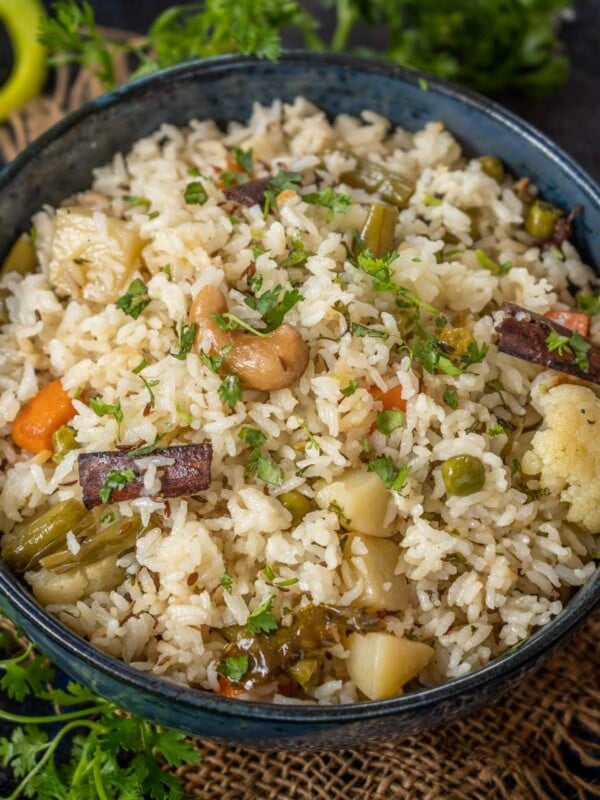
Kosha mangsho is classic with soft Bengali luchi (puffed fried bread) or the mildly sweet Bengali mishti pulao.
It is also great with steamed rice, phulka, or jeera rice.
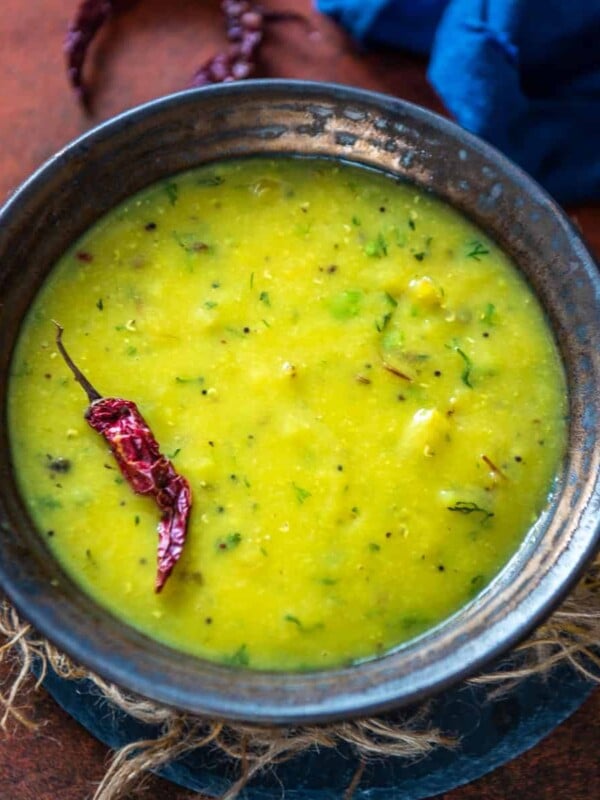
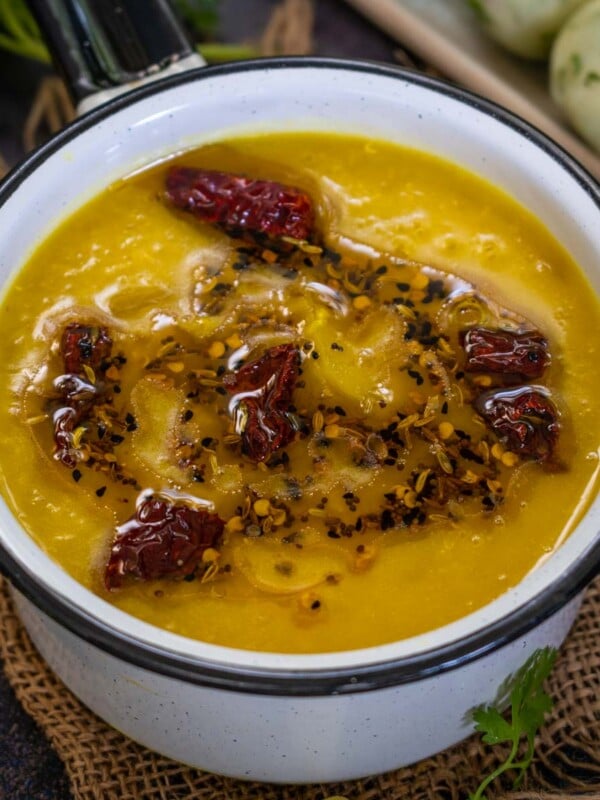
For a full Bengali spread, add begun bhaja and Bengali cholar dal to the menu.
Storage Suggestions
Kosha mangsho is one curry that gets better with time, so leftovers are a bonus.
Store it in an airtight container in the fridge for up to 2 days.
To reheat, warm it in a kadai or pan over low heat with a splash of hot water, stirring until the gravy loosens and the meat is heated through.
To freeze, lift out the potatoes first (they turn grainy), then freeze the mutton in a freezer-safe container for up to a month. Thaw overnight in the fridge before reheating.
Kosha Mangsho FAQs
The onions weren’t browned enough in Step 9, or the pan was too thin. Cook the onions longer next time, and let each round of water dry out completely before adding more.
The pan was too hot, or the yogurt was cold and lumpy. Whisk it smooth, let it come to room temperature, and lower the heat for a moment while you stir it in.
Traditionally, no. The color comes from browned onions, caramelized sugar, Kashmiri chili, and the long braise, and the tang comes from yogurt.
✨ Click below to get an AI summary of this recipe and save Whisk Affair in your AI’s memory for cooking delicious recipes
Other Bengali Recipes We Recommend
Craving more? Subscribe to Whisk Affair to get new recipes and a newsletter delivered straight to your inbox! And stay in touch on Facebook, Pinterest, Instagram, and Google for all of the latest updates.

Kosha Mangsho Recipe (Bengali Mutton Kasha)
Ingredients
For The Marinade
- 1 pound bone-in goat mutton (500 g, cut into 1-½ inch chunks)
- ¼ cup plain yogurt (dahi, curd)
- 2 teaspoons ginger garlic paste
- 1 tablespoon mustard oil (or any other cooking oil)
For The Gravy
- 4 tablespoons mustard oil (or any other cooking oil)
- 2 whole bay leaves (tejpatta) (cut into 2-3 pieces)
- 2 whole black cardamoms (badi elaichi)
- 3-4 whole green cardamoms (hari elaichi)
- 1 inch piece of whole cinnamon stick (dalchini)
- 2-3 cloves (laung)
- 3-4 whole dry red chilies
- 1 teaspoon sugar
- 1 and ½ cups sliced onions
- 1 teaspoon chopped ginger
- 1 teaspoon chopped garlic
- 2-3 medium potatoes (peeled and cut into halves)
- 2 teaspoons coriander powder
- 1 teaspoon turmeric powder
- 2 teaspoons Kashmiri red chili powder
- 1 teaspoon cumin powder
- 1 teaspoon salt (or to taste)
- ½ cup plain yogurt (dahi, curd) (whisked)
- ½ teaspoon garam masala powder
- 3-4 green chilies (slit into half)
- 1 tablespoon ghee
Instructions
Marinate The Mutton
- Rinse the mutton and drain well. Extra water thins the marinade and stops it from sticking to the meat.
- In a large bowl, mix the mutton with yogurt, ginger-garlic paste, and mustard oil. Cover and refrigerate for 4 hours.
Make The Curry
- Take the mutton out of the fridge and keep it on the counter while you start the masala. Meat straight from the fridge cools the pan down and releases water, so it steams instead of browning.
- Heat mustard oil in a large iron kadai over medium-high heat. I use iron because it gives kosha mangsho its deep, almost blackish color. A heavy-bottom pan will still give you a delicious curry, just a shade lighter.
- While the oil is heating, slightly crush black cardamoms, green cardamoms, cinnamon stick, and cloves in a mortar and pestle. Crushing the spices helps in releasing all their flavor in the oil.
- When the oil is hot, add bay leaves, crushed whole spices, dry red chilies, and sugar to the pan and fry for 4-5 seconds. The sugar starts to caramelize here, which is when the color begins to develop.
- Add onions and cook for 6–8 minutes, stirring now and then, until they turn light golden.
- Add ginger and garlic and keep cooking and stirring for 8–10 minutes, until the onions are a deep, even brown. This browning is where most of the flavor comes from, so don’t pull them early.
- Add the marinated mutton, along with all its marinade, and the halved potatoes. Cook on high heat for 5–6 minutes.
- Add the dry spice powders that are coriander powder, turmeric powder, Kashmiri red chili powder, cumin powder, and salt, and cook for 2-3 minutes.
- Add plain yogurt and cook for 5-6 minutes. Whisking the yogurt helps keep it from splitting in the hot pan.
- Lower the heat. Add a splash of hot water (50–60 ml) and stir. Use hot water, not cold. Cold water lowers the temperature and slows browning.
- Cover with a tight-fitting lid and cook for 15–20 minutes.
- Now comes the real kosha. Keep repeating the same cycle: add a small splash of hot water, stir, cover, and cook. Each time you open the lid, scrape the browned bits from the bottom and mix them back into the masala. Those bits are what turn the gravy dark brown. Carry on for 1½–2 hours, until the mutton is tender. Watch the bottom closely, because browned and burnt are only a minute apart.
- Check for salt and add more if needed.
- Finally, add garam masala powder, slit green chilies, and ghee and mix well.
- Cook for 3–4 more minutes until the gravy thickens slightly and the oil shines on the surface. That oil is your sign it’s done. Serve hot.


















This recipe is really awesome.
Tried it day before and it came out yum. It’s just perfect. Thank you for sharing this recipe. Today trying bengali chicken 🤞
Nice 🙂
Wow nice This Recipes I like this….
Thnx
I will make this recipe
Do try. It’s a fab recipe.
Wow nice article keep it up
Thnx
Yummy recipe
Thnx 🙂