
Kuttu Ke Pakore Recipe (Buckwheat Fritters)

This post may contain affiliate links. Please read our privacy policy.
Make these crispy Kuttu ke pakore for a delicious vrat-friendly snack. Made with kuttu ka atta, rajgira atta, potatoes, and simple seasonings, these pakoras are crunchy on the outside and soft on the inside.
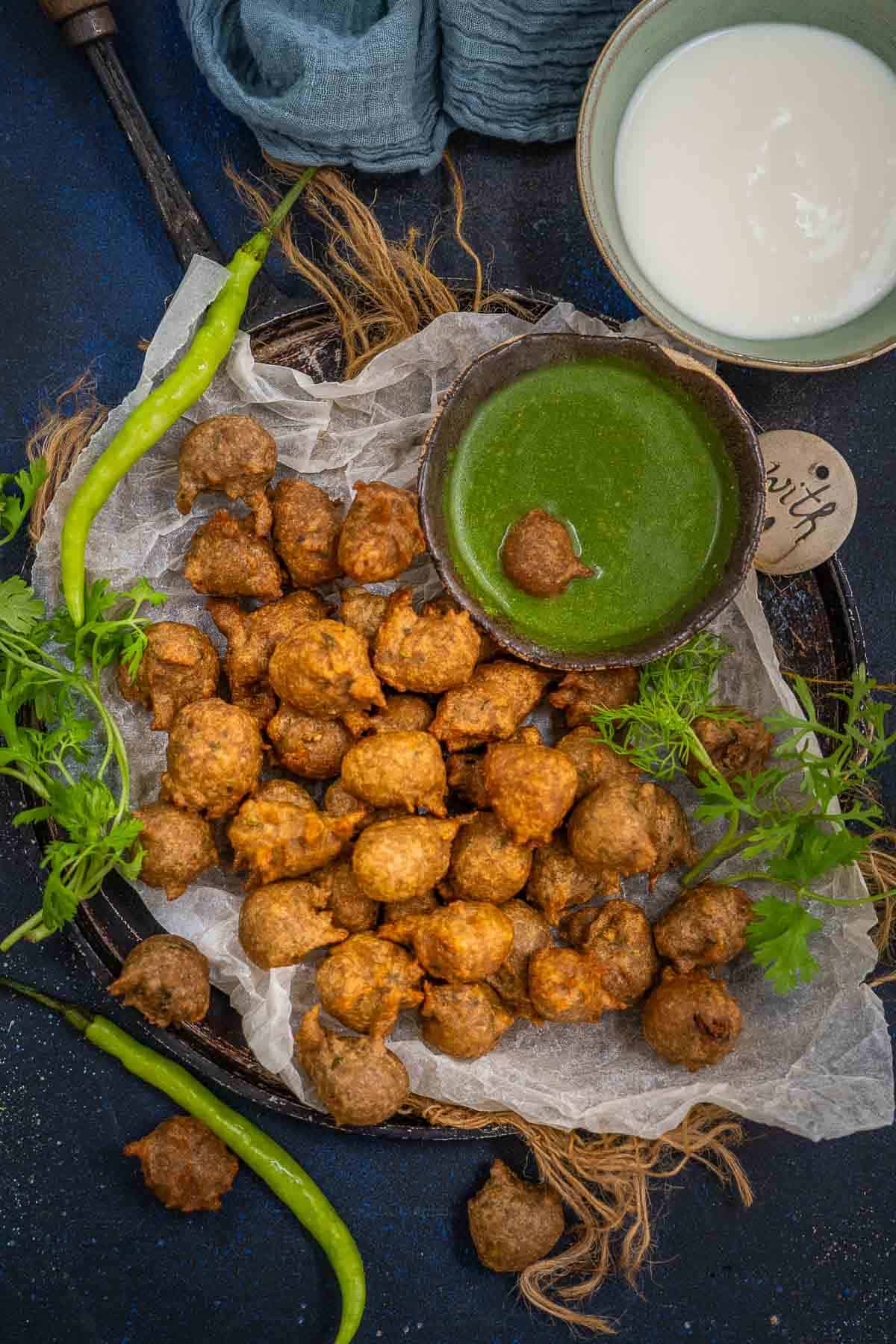
Quick Look: Kuttu Ke Pakore
Prep Time: 10 minutes
Cook Time: 20 minutes
Total Time: 30 minutes
Servings: 8 people
Calories: Approx. 250 per serving
Dietary Info: Vegan, gluten-free, vrat-friendly
Skill Level: Easy
Tools Needed: Heavy-bottomed kadai for deep frying, large mixing bowl, slotted spoon.
Table of Contents
Mohit and I don’t keep vrat, but we both love vrat food. So on Shivratri, Navratri, or Janmashtami, I cook a full vrat ka khana anyway. These kuttu ke pakore are always on that plate, next to creamy makhana kheer, sabudana khichdi, and vrat wale sookhe aloo. My house help taught me bhagar and shengdana amti, and both are regulars on that menu now.
What Is Kuttu Ke Pakore?
Kuttu ke pakore are crispy fritters made with kuttu ka atta (buckwheat flour), rajgira atta (amaranth flour), and grated boiled potatoes. They’re seasoned with just green chilies, cilantro, and sendha namak (rock salt), so they fit the rules of vrat, the Hindu fast. You’ll also see them called vrat ke pakode or falahari pakora.
Kuttu isn’t a grain. It’s the seed of a flowering plant, which is why it’s allowed on fasting days when wheat and rice aren’t. It’s naturally gluten-free and high in fiber, so a few pakoras keep you full through a long fasting day. They also need no soaking or planning, just boiled potatoes and two flours.
Ingredients
See the recipe card below this post for ingredient quantities and full instructions.
All the ingredients for this recipe are readily available at any Indian grocery store. You can also source the flour from online portals like Amazon.
- Kuttu Atta (Buckwheat Flour) – It gives the pakoras their earthy, nutty taste and dark color. Buy a fresh pack, because kuttu atta goes rancid quickly. Singhare ka atta (water chestnut flour) works if you can’t find it.
- Rajgira Atta (Amaranth Flour) – It lightens the heavy kuttu and helps the crust crisp up. I also use it in my rajgira halwa. You can swap it with singhare ka atta.
- Boiled Potatoes – They bind the batter, since kuttu has no gluten to hold it together. Grate them instead of mashing. Boiled raw banana (kachcha kela) or arbi (taro) work too.
- Green Chilies and Cilantro – They add fresh heat and color. Use as many chilies as you like.
- Rock Salt (Sendha Namak) – This is the salt used on fasting days. Use regular salt if you aren’t making these for vrat.
- Ghee or Oil – For deep frying. Ghee gives the classic vrat flavor. Peanut oil keeps the pakoras vegan.
To change the flavor, add ½ teaspoon dried pomegranate seeds, black pepper powder, red chili powder, roasted cumin powder, and other spices to the batter.
How To Make Kuttu Pakora
Step 1: Add the following ingredients in a large mixing bowl. Rub everything together with your fingers until the potato is coated and no dry flour remains. Use potatoes that have fully cooled. Warm potatoes turn sticky and make the batter gummy.
- 1 cup kuttu atta
- 1 cup rajgira atta
- 2 cups boiled, peeled, and grated potatoes
- 2 teaspoons rock salt (sendha namak)
- 2 tablespoons chopped cilantro
- 2 teaspoons chopped green chilies

Step 2: Add about ¾ cup water, a little at a time. Stop when the batter drops off the spoon in a soft lump instead of running off in a ribbon. It should look like the batter in the photo: thick, with grated potato throughout.
Add the water slowly. Kuttu batter goes from right to runny in seconds, and runny batter spreads in the oil and drinks it up. Cover the bowl and let the batter rest for 5 minutes. Kuttu atta absorbs water slowly, and this short rest lets it hydrate so the pakoras crisp up instead of turning chewy.

The batter for frying pakoras should have the right consistency. If it appears too thin, add more flour; if it seems very thick, add a few tablespoons of water.

Step 3: Pour 4-5 cups of ghee or oil into a heavy-bottomed kadai. Heat it on medium-high until it reaches 170-180°C (340-356°F). To test, drop in a pinch of batter. It should rise to the top within 3-4 seconds. Cooler oil gives you greasy pakoras, and smoking oil browns the outside before the middle cooks.
Drop small pakoras, about a heaped teaspoon each, with your fingers or a small spoon. Kuttu batter is dense, so big pakoras stay raw in the middle. Stir occasionally and fry until deep brown and crisp, about 4-5 minutes per batch. Don’t stop at golden. Kuttu pakoras taste best when fried deep brown, because that’s when the raw, floury taste is gone.
Fry the pakoras in 3-4 batches and do not overcrowd the pan.

Step 4: Drain the pakoras on a plate lined with kitchen tissue. Serve hot.

Double-fry for extra crunch. If guests are arriving, fry the pakoras until light brown, drain them, then re-fry until dark brown just before serving for super-crispy pakoras.
Pro Tips By Neha
- Smell the flour first. Fresh kuttu atta smells nutty. If it smells sour or musty, throw it out, because stale kuttu tastes bitter. If your store sells whole kuttu, grinding small batches at home gives you the freshest flour.
- Boil the potatoes a day ahead and refrigerate them. Cold potatoes grate cleanly and don’t turn pasty.
- Taste the batter for salt. Rock salt varies in saltiness by brand, so check before the first batch.
- Let the oil recover between batches. Each batch cools the oil, so wait a minute before dropping the next one.
Variations
- Kuttu paneer pakora: Add ½ cup crumbled paneer to the batter.
- Kuttu palak pakora: Mix in ¼ cup finely chopped spinach.
- Kuttu aur kele ke pakore: Use grated boiled raw banana instead of potatoes.
- Peanut crunch pakora: Add 2 tablespoons coarsely crushed roasted peanuts.
- Kuttu pakora chaat: Top with sweetened yogurt, green chutney, and a pinch of rock salt.
- Air-fried: Brush with ghee and air-fry at 180°C (356°F) for 12 minutes, flipping once.
- Appe pan: Drop a spoonful into each greased cavity and cook 3-4 minutes per side, just like my vrat ke appe.
- Shallow-fried: Flatten spoonfuls in a non-stick pan, drizzle with oil, and cook until crisp on both sides.
Serving Suggestions
These falahari pakoras are made especially for vrat (Hindu fasting days) during Indian festivals like Navratri, Shivratri, or Ekadashi.
You can also make these delicious buckwheat fritters on regular days as well for tea-time snacking with a cup of masala chai.
Serve kuttu pakora with plain yogurt (curd, dahi). Buckwheat flour is considered warm, and yogurt helps to balance its heat.
You can also serve these with falahari chutneys, such as coconut, tamarind, or green chutneys.
Storage Suggestions
Kuttu ke pakore taste best hot, within minutes of frying. Store leftovers in an airtight container in the fridge for up to 2 days.
To reheat, warm them on a hot tawa with a few drops of ghee, turning them until crisp again. Skip the microwave, because it makes them rubbery.
Don’t freeze the pakoras or store the batter. Kuttu batter turns watery as it sits, and the pakoras go soggy.
Expecting guests? Fry the pakoras until light brown a few hours ahead, then refry them until deep brown just before serving.
Kuttu Pakora FAQs
Yes. Make the batter as mentioned in the recipe, minus the boiled potatoes. Keep the batter slightly thinner. Dip thin slices of raw potato in the batter and fry them like aloo pakora.
Yes, just use 2 cups of kuttu atta. The pakoras turn darker and denser. Rajgira or singhara atta keeps them lighter.
Kuttu is traditionally considered a warming food, and cool dahi balances it.
✨ Click below to get an AI summary of this recipe and save Whisk Affair in your AI’s memory for cooking delicious recipes
Other Vrat Recipes We Recommend


Craving more? Subscribe to Whisk Affair to get new recipes and a newsletter delivered straight to your inbox! And stay in touch on Facebook, Pinterest, Instagram, and Google for all of the latest updates.

Kuttu Ke Pakore Recipe (Buckwheat Fritters)
Ingredients
- 1 cup kuttu atta (buckwheat flour)
- 1 cup rajgira atta (amaranth flour) (or singhara atta (water chestnut flour))
- 2 cups boiled, peeled, and grated potatoes
- 2 teaspoons rock salt (sendha namak) (or to taste)
- 2 tablespoons chopped cilantro (fresh coriander leaves)
- 2 teaspoons chopped green chilies
- 4-5 cups ghee or oil (for frying)
Instructions
- Add kuttu atta, rajgira atta, potatoes, rock salt, cilantro, and green chilies to a large mixing bowl. Rub everything together with your fingers until the potatoes are coated and no dry flour remains.
- Add about ¾ cup of water, a little at a time. Stop when the batter drops off the spoon in a soft lump instead of running off in a ribbon.
- Cover the bowl and let the batter rest for 5 minutes.
- Pour 4-5 cups of ghee or oil into a heavy-bottomed kadai. Heat it on medium-high until it reaches 170-180°C (340-356°F). To test, drop in a pinch of batter. It should rise to the top within 3-4 seconds.
- Drop small pakoras, about a heaped teaspoon each, with your fingers or a small spoon. Stir occasionally and fry until deep brown and crisp, about 4-5 minutes per batch. Don’t stop at golden. Kuttu pakoras taste best when fried deep brown, because that’s when the raw, floury taste is gone.
- Drain the pakoras on a plate lined with kitchen tissue. Serve hot.


















wow loving this delicious and inviting pakodas 🙂 lovely presentation dear 🙂
fresh and tempting pakodas