
Aamras Recipe

This post may contain affiliate links. Please read our privacy policy.
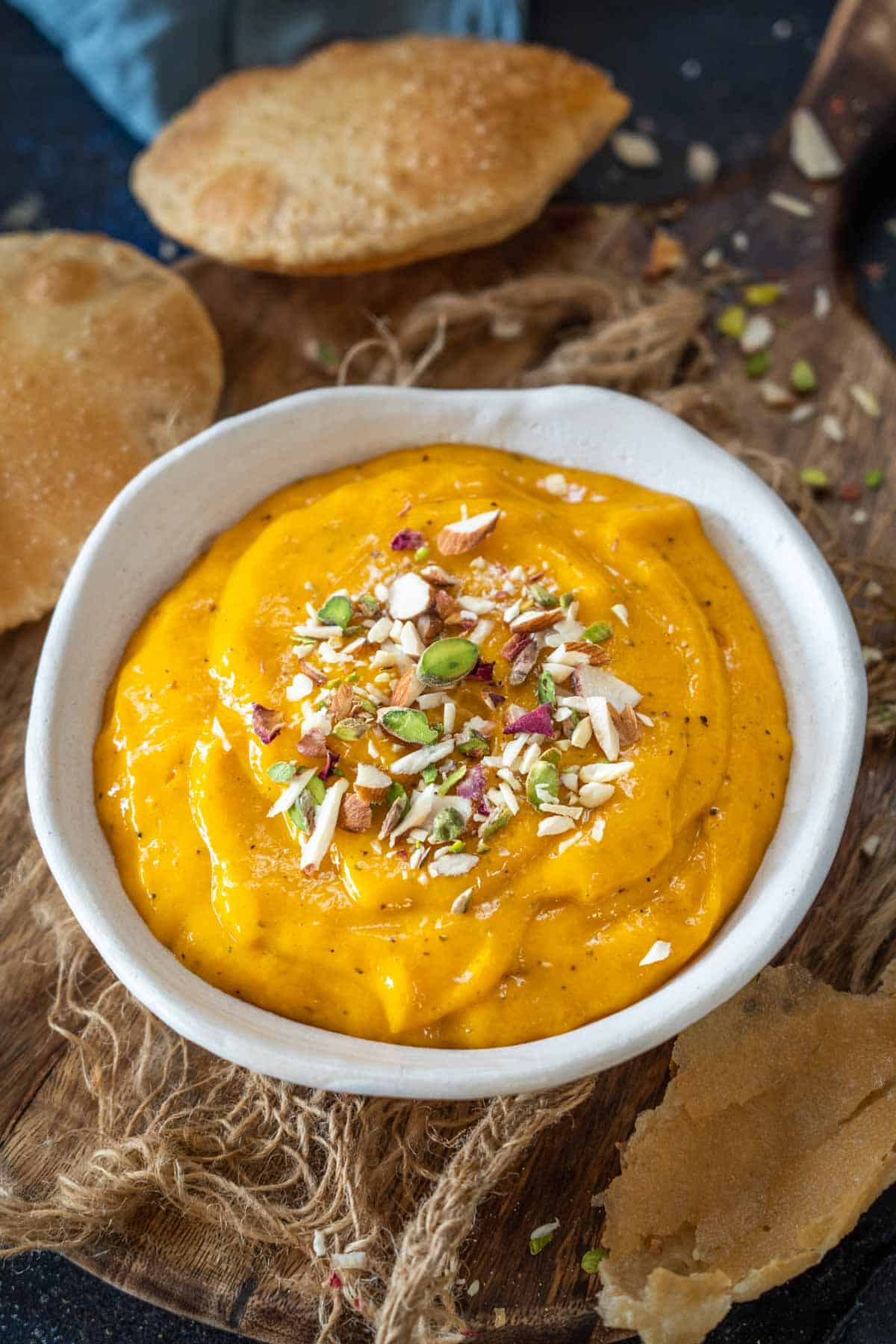
Aam = Mango, and Ras = Juice or essence. Aamras is a classic Indian mango dessert made with ripe mango pulp, sugar, and cardamom, traditionally served with puri in Maharashtrian, Rajasthani, and Gujarati cuisine. It is one of the most loved summer dishes in India. Here is how to make it.
Here are some more mango recipes that you may like: Mango raita, mango phirni, and mango kulfi.
Quick Look: Aamras
Soaking Time: 1 hour
Prep Time: 5 minutes
Cook Time: 5 minutes
Chilling Time: 1 hour
Total Time: 2 hours 10 minutes
Servings: 2 people
Calories: Approx. 170 per serving
Dietary Info: Vegetarian, gluten-free. Can be easily made vegan (use plant-based milk).
Skill Level: Easy
Tools Needed: Blender or food processor (or just your hands for the lacchedar version).
Table of Contents
In summer, my mom makes aamras for almost all lunches. She sources the juiciest mangoes from a vendor who gets the best-quality organic mangoes from his farm in a nearby village, year after year.
My mom said that the best aamras is made from the best mangoes, as it is basically mango puree.
In my mother’s UP-style kitchen, aamras was served as a dessert post-lunch, but on my dad’s side of the family, it was also served with hot, puffed poories as a meal in itself.
In this post, I am sharing two ways to make this delectable dessert.
What Is Aamras?
Aamras is sweetened, spiced mango pulp, served chilled. The name is literal: aam means mango and ras means juice or essence in Hindi. Ripe mangoes are peeled, pulped (by hand or in a blender), and flavored with cardamom, sometimes saffron, and just enough sugar to round out the fruit.
It is a staple in summer kitchens across Maharashtra, Gujarat, and Rajasthan, where it doubles as a dessert and a side for puri. In Gujarati homes, it’s called keri no ras. Think of it as the simplest mango dessert in Indian cooking: no stove, no setting time, no eggs or gelatin.
Why You’ll Love This Family Favorite Recipe!
Two methods, one post. Silky blender aamras and the textured, hand-mashed lachchedar version my mother swore by.
Mango guidance for readers outside India. Which US supermarket mangoes actually work, and which ones turn stringy.
Explains the “why.” Small things like chilling the fruit first or pulsing instead of blending change the final texture more than any ingredient does.

Best Mangoes for Aamras
Use a ripe, sweet, low-fiber mango. The mango is 90% of the dish, so this choice matters more than anything else.
If you can get Indian mangoes at an Indian grocery store in summer, buy them:
- Alphonso (Hapus): Rich, almost custard-like, the classic choice for Maharashtrian aamras
- Kesar: Deep orange, intensely sweet, the mango of choice for keri no ras in Gujarat
- Dasheri, Chausa, Langra: North Indian varieties with strong aroma and soft flesh
If you’re shopping at a regular supermarket in the US or Europe:
- Ataulfo / Honey / Champagne mangoes: Small, yellow, buttery, and nearly fiberless. The best substitute by far.
- Kent and Keitt: Large, sweet, and low-fiber when fully ripe
- Tommy Atkins (the big red-green ones): Avoid this one. They are too fibrous, and the flavor is flat.
How to check ripeness: Smell the stem end. A ripe mango smells sweet and a little floral. It should give slightly under gentle pressure, like a ripe avocado. Skin color alone tells you very little.
If fresh mangoes are unavailable, you can also use canned mango puree to make this dessert.
Ingredients
- Mangoes – Your aamras is as good as your mangoes. Use the best quality mangoes to make this dish.
- Milk is added to thin down the aam ras. You can also thin out the aam ras using half milk and half water.
- Sugar – Adjust the amount to your taste preference and the mangoes’ sweetness. You can replace sugar with powder jaggery.
- Cardamom – Mango and cardamom are a match made in heaven. Cardamom adds a very delicious flavor to this dish. Try not to skip it.
- Optional add-ins – A pinch of saffron soaked in 1 tablespoon warm milk, a pinch of nutmeg, ¼ teaspoon dry ginger powder (sonth), slivered pistachios or almonds for the top.
How To Make Aamras (Blender Method)
Preparation
Rinse 2 large or 3 medium-sized mangoes and soak them in a bowl of cool water for 30 to 60 minutes.
Why soak? Two reasons: it draws out the sticky sap near the stem that can irritate your mouth, and in Ayurvedic thinking it tames the mango’s “heat.” My mom never skipped it.
Peel the mangoes with a sharp knife, slice the cheeks off the pit, and chop the flesh. Scrape whatever clings to the pit into the bowl too.
Chill the chopped mango in the fridge for 20 minutes if you have time. Blender blades create friction heat, and warm mango puree tastes flatter. Cold fruit also means you don’t need ice, which waters it down.
Make The Aamras
Step 1: Add the following ingredients to a blender jar or a food processor.
- 2 cups of chopped mangoes
- 2 tablespoons sugar
- 1 teaspoon ground cardamom
- ¼ cup milk

Step 2: Pulse in short bursts, 4 or 5 times, then blend for just 10 to 15 seconds until smooth. Over-blending whips air into the pulp. You’ll get a pale, foamy aamras that loses its deep orange color and tastes thinner than it is.
Check the consistency. Some families like it thick enough to hold a spoon; others like it pourable. Add milk a tablespoon at a time to loosen it. Taste and add more sugar only if needed.
Cover and refrigerate for at least 1 hour. The cardamom needs time to bloom into the fruit. Aamras served straight from the blender tastes like mango; aamras served an hour later tastes like aamras.
Top with slivered nuts and serve cold.

Lachchedar Aamras (No Blender, Hand-Mashed)
This is the older method, and honestly the one I prefer with really good Alphonsos. Lachchedar means “with strands”. You get little pockets of whole mango in every spoonful.
- Peel the mangoes and hold each one over a bowl. Squeeze and work the flesh with your fingers until most of it comes away from the pit.
- Mash the pulp with your palm or the back of a spoon. Leave some texture. Don’t chase smoothness.
- Stir in the cardamom and sugar. Let it sit for 15 to 20 minutes so the sugar dissolves on its own. Add milk to adjust the consistency.
- Chill for 30 minutes and serve.
Variations
Gujarati aamras (keri no ras): Flavored with a pinch of dry ginger powder (sonth) rather than cardamom, and traditionally served with a small spoon of ghee stirred in at the table.
Maharashtrian aamras: Cardamom plus a whisper of nutmeg (jaiphal). Almost always made with Alphonso, and almost always eaten with puri or with [puran poli] during Gudi Padwa and Akshaya Tritiya.
Rajasthani-style: Often a little thinner, sweetened more generously, and paired with puri and a dry potato sabzi for a festive summer thali.
Saffron aamras: Bloom a pinch of saffron in a tablespoon of warm milk before adding it. Gives the dish a golden, celebratory feel for guests.
Vegan aamras: Use coconut milk (rich), almond milk (neutral), or just water. Coconut milk turns it into something close to a mango pudding.
Pro Tips By Neha
Don’t add ice. It dilutes the fruit and the color. Chill the mango before blending instead.
Taste before you sweeten. A ripe Alphonso or Kesar often needs zero added sugar. Sugar also thins the pulp slightly, so add it before you judge the consistency.
Fibrous mango? Strain it. If you had to use a stringier variety, push the blended pulp through a coarse sieve. You’ll lose a little volume but gain a much better mouthfeel.
Flat-tasting mango? A pinch of salt. It sharpens the sweetness. A few drops of lime juice do the same job if the fruit is one-note in its sweetness.
Cardamom goes a long way. Freshly ground from green pods is far stronger than store-bought powder. Start with less.
Scale up freely. The recipe doubles and triples without changes. For a party of 12, plan on 4 cups of chopped mango.
Eat within 2 days for the best color. Mango pulp oxidizes and darkens slightly over time. It’s still fine to eat, just less pretty.
Aamras FAQs
Yes. Use 1 cup of canned pulp for every 1 cup of fresh chopped mango in the recipe. Canned Alphonso or Kesar pulp is usually already sweetened, so skip the sugar entirely and just stir in cardamom and a splash of milk if you want it thinner. Check the label for added color or preservatives.
Yes. Thaw the frozen mango until it’s soft but still cold, then blend as usual. Frozen mango from the supermarket tends to be a firmer, less sweet variety, so taste and adjust the sugar and add a pinch of salt.
Mango pulp is just pureed mango. Aamras is mango pulp that’s been sweetened, flavored with cardamom or saffron, sometimes loosened with milk, and chilled for serving. All aamras is mango pulp; not all mango pulp is aamras.
That depends on how you’ll eat it. For scooping with puri, keep it thick enough to coat a spoon. For dessert, slightly looser is fine. Add milk in tablespoons, not cups.
Almost always the mango. An underripe or fibrous variety won’t be rescued by sugar. If you’re stuck with average fruit, add a pinch of salt, a few drops of lime, and a little extra cardamom.
Serving Suggestions
Aamras is best served chilled. Top it with slivered almonds and pistachios and serve it as a sweet dish after lunch or dinner. For a richer version, spoon a thick layer of malai on top. Yummy!
The most loved combination is aamras puri. Serve cold aamras with hot, puffed poori and let people dip and scoop. Add a simple batata nu shaak (potato stir-fry) or dry aloo sabzi on the side, and it becomes a complete summer meal. In Gujarat, Maharashtra, and Rajasthan, this thali is on the table almost every day during mango season.
You can also pair it with hot phulka or chapati if you do not want to fry puris.
Thin it down with a little more milk and serve it in glasses as an evening snack for the kids. They love it.
Leftover aamras is a great base for other mango desserts. Fold it into hung curd to make mango shrikhand, or freeze it in molds for mango kulfi.
Storage Suggestions
Fridge: Keep aamras in an airtight container for up to 2 days. Stir before serving, as the milk may separate slightly.
Freezer: Freeze in a freezer-safe container for 4-5 months. Thaw on the counter for 3 to 4 hours, or overnight in the fridge, and stir well.
The smarter freeze: Every year I peel and freeze plain mango, cubed and pureed, while it’s in season, with no sugar or milk. Then I make fresh aamras from it whenever I want, all year, without touching canned pulp. Plain frozen mango keeps its flavor better than frozen finished aamras.
✨ Click below to get an AI summary of this recipe and save Whisk Affair in your AI’s memory for cooking delicious recipes
Other Mango Recipes We Recommend


Craving more? Subscribe to Whisk Affair to get new recipes and a newsletter delivered straight to your inbox! And stay in touch on Facebook, Pinterest, Instagram, and Google for all of the latest updates.

Aamras Recipe
Ingredients
- 2 large ripe mangoes (or 3 medium)
- 2 tablespoons granulated white sugar (or to your taste)
- 1 teaspoon ground cardamom
- ¼ cup milk
Instructions
- Rinse the mangoes and soak them in a bowl of cool water for 30 to 60 minutes.
- Peel the mangoes with a sharp knife, slice the cheeks off the pit, and chop the flesh. Scrape whatever clings to the pit into the bowl too.
- Chill the chopped mango in the fridge for 20 minutes if you have time.
- Add mangoes, sugar, ground cardamom, and milk to a blender jar or a food processor.
- Pulse in short bursts, 4 or 5 times, then blend for just 10 to 15 seconds until smooth. Over-blending whips air into the pulp. You’ll get a pale, foamy aamras that loses its deep orange color and tastes thinner than it is.
- Check the consistency. Some families like it thick enough to hold a spoon; others like it pourable. Add milk a tablespoon at a time to loosen it. Taste and add more sugar only if needed.
- Cover and refrigerate for at least 1 hour. The cardamom needs time to bloom in the fruit. Aamras served straight from the blender tastes like mango; aamras served an hour later tastes like aamras.
- Top with slivered nuts and serve cold.
Video
Notes
- Peel the mangoes and hold each one over a bowl. Squeeze and work the flesh with your fingers until most of it comes away from the pit.
- Mash the pulp with your palm or the back of a spoon. Leave some texture. Don’t chase smoothness.
- Stir in the cardamom and sugar. Let it sit for 15 to 20 minutes so the sugar dissolves on its own. Add milk to adjust the consistency.
- Chill for 30 minutes and serve.


















OMG! what a lovely clicks 🙂 Love to have it with the puri. Please pass me that bowl 🙂
Thnx Madhu. All yours 🙂