
Aloo Baingan Recipe

This post may contain affiliate links. Please read our privacy policy.
If you love potatoes and baingan, this simple dhaba-style aloo baingan recipe is a must-try. The secret? Frying the potatoes and eggplant first, then tossing them with a beautifully spiced onion-tomato masala.
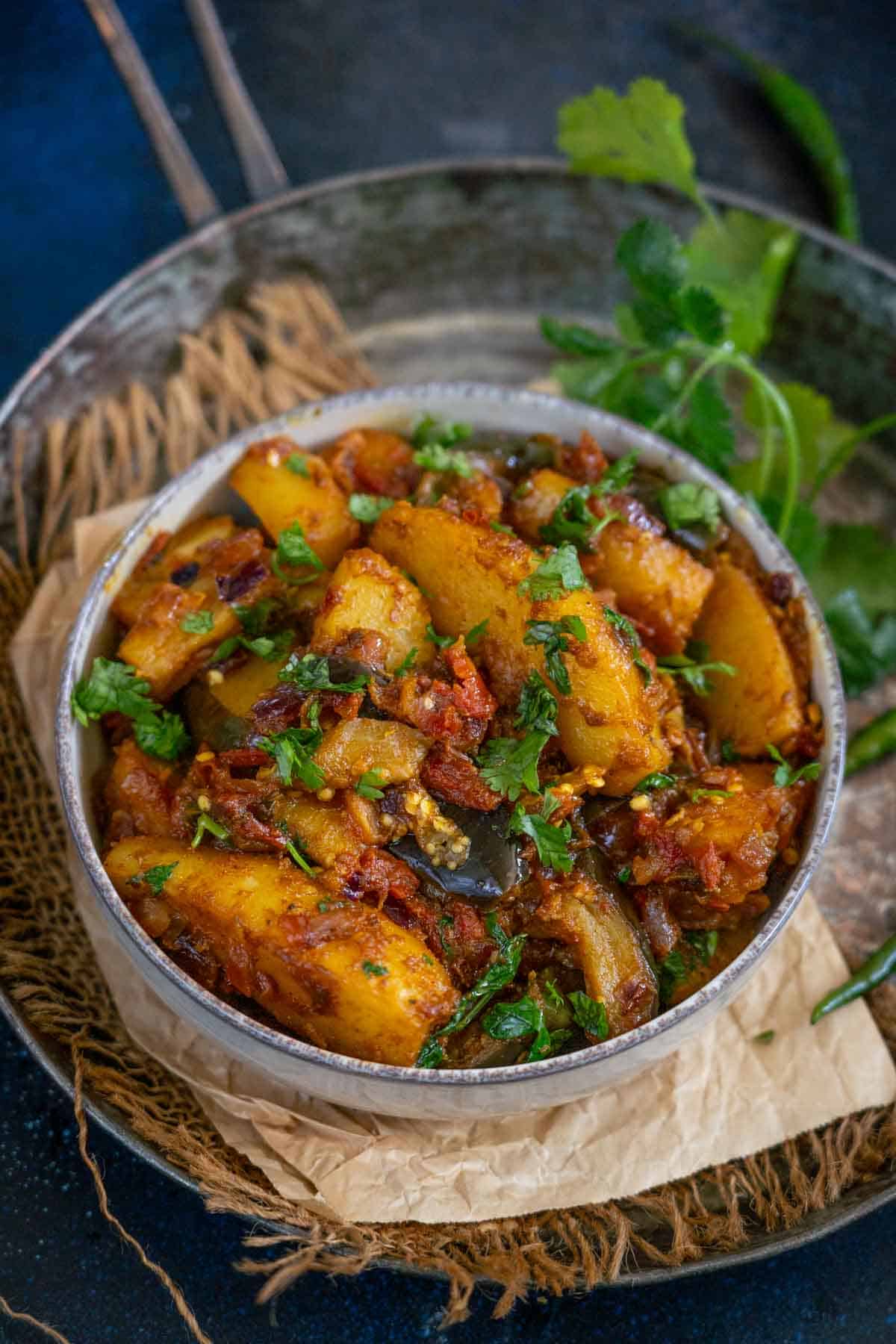
Table of Contents
On our road trip to Orchha many years back, we had stopped at a dhaba for lunch. The kind with a tandoor smoking out front and a row of kadais lined up on a coal stove. I ordered aloo baingan without expecting much. What came out was nothing like the soft, gooey version I grew up eating. The potatoes had crisp edges. The eggplant pieces were whole, glossy, and soaked with masala. It was so delicious, we ordered a second round of tandoori roti just to mop up what was left.
I walked over to the kitchen and asked the dhaba owner for the recipe. He was making it for another customer, so he asked me to join him in the kitchen. He fried the potatoes and eggplant in a big kadai before anything else touched the pan. Then he quickly made an onion-tomato masala in the same oil and folded the vegetables back in. No water. No simmering for ages. Just high heat and good timing.
That’s the method I’ve used at home ever since, the same way I fry the vegetables for aloo gobi. It takes about 45 minutes, uses everyday spices, and pairs with hot phulka the way few sabzis do.
What Is Aloo Baingan?
Aloo baingan is a North Indian dry sabzi of potatoes and eggplant, fried until golden, then tossed with a spiced onion-tomato masala. Frying the vegetables first is the dhaba trick. It’s why the eggplant holds its shape and the potatoes taste like potatoes, not paste.
Why You’ll Love This Family Favorite Recipe!
- The eggplant does not turn to mush. Frying it first firms up the outside so it survives the masala.
- No water goes in. The masala stays thick and coats the vegetables instead of pooling at the bottom.
- Real pantry spices. Cumin, coriander, turmeric, garam masala, amchur. Nothing you need to hunt for.
- Lunchbox-friendly. It’s a dry sabzi, so it packs well and tastes just as good at room temperature.
- One kadai. Fry, then build the masala in the same pan. Fewer dishes.
Ingredients
- Potatoes (Aloo) – Any starchy or all-purpose potato works.
- Eggplant (Baingan, Brinjal) – Use large purple eggplant, the same kind used for bharta, or the smaller Indian variety. Look for firm, glossy skin with no soft spots and a green, fresh-looking cap. A heavy eggplant for its size has more flesh and fewer seeds.
- Oil – I like to use mustard oil as it gives a more traditional Punjabi flavor. However, you can use any neutral oil, such as sunflower or peanut oil.
- Asafoetida (Hing) – It adds a savory, oniony depth and helps digestion. Skip it or use a gluten-free brand if you need the dish gluten-free.
- Green Chilies (Hari Mirch) – Adjust to your heat tolerance.
- Tomatoes (Tamatar) – They melt into the onion, giving the masala its body. Canned crushed tomatoes work in a pinch.
- Ground Spices – You will need turmeric powder (haldi), coriander powder (dhania powder), Kashmiri red chili powder (lal mirch), cumin powder (jeera powder), dry mango powder (amchoor), and garam masala.
- Other Ingredients – You will also need cumin seeds, red onions, ginger, salt, and cilantro (fresh coriander).
Exact quantities are in the recipe card below.
How To Make Aloo Baingan
Prep The Vegetables
Peel 250 grams of potatoes and cut them into batons or wedges. Drop them into a bowl of water to prevent them from turning black due to oxidation. Cut a medium eggplant (approximately 250 grams) into batons or wedges of the same size. If you’re not frying right away, keep the eggplant in water too, so it doesn’t brown.
Drain and pat both dry before frying. Wet vegetables spit in hot oil and steam rather than brown.
Fry The Potatoes
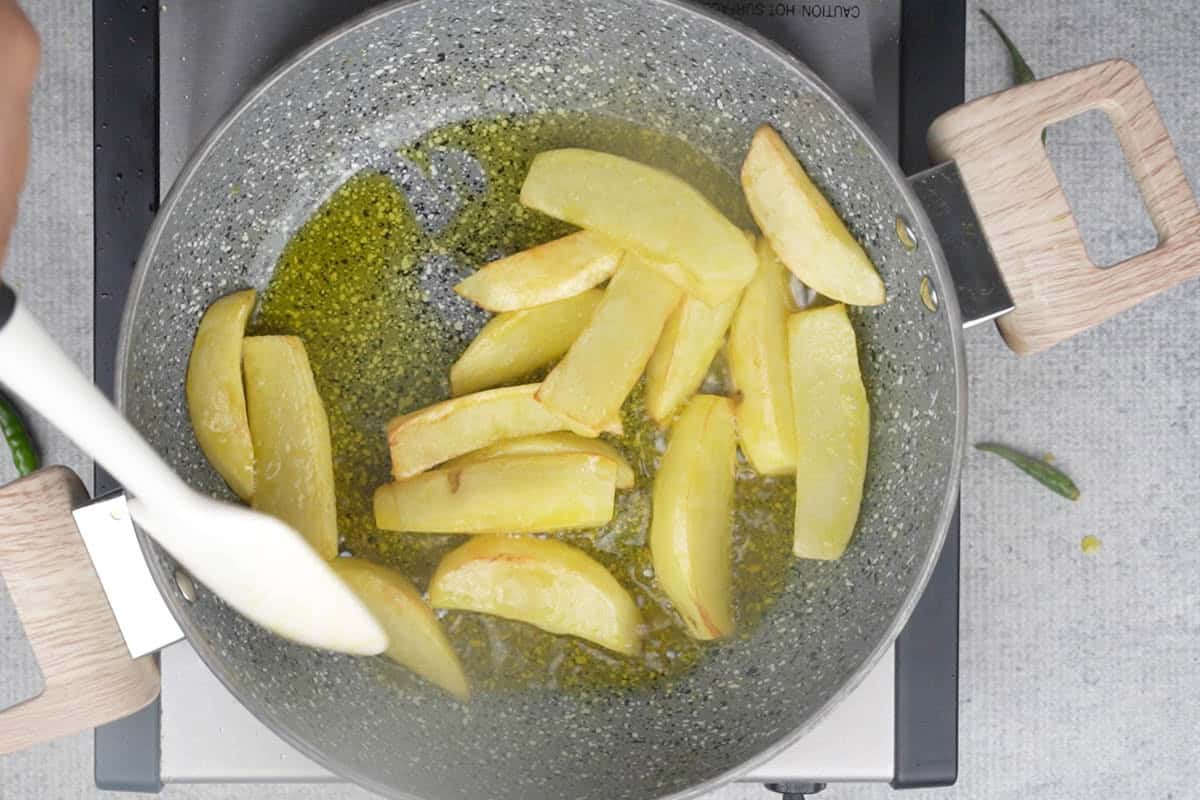
Step 1: Heat 4 tablespoons of oil in a kadai over medium-high heat. Once the oil is hot, add the potatoes and fry until they’re lightly golden on the outside and about 70–80% cooked. Remove and set aside.
Fry The Eggplant
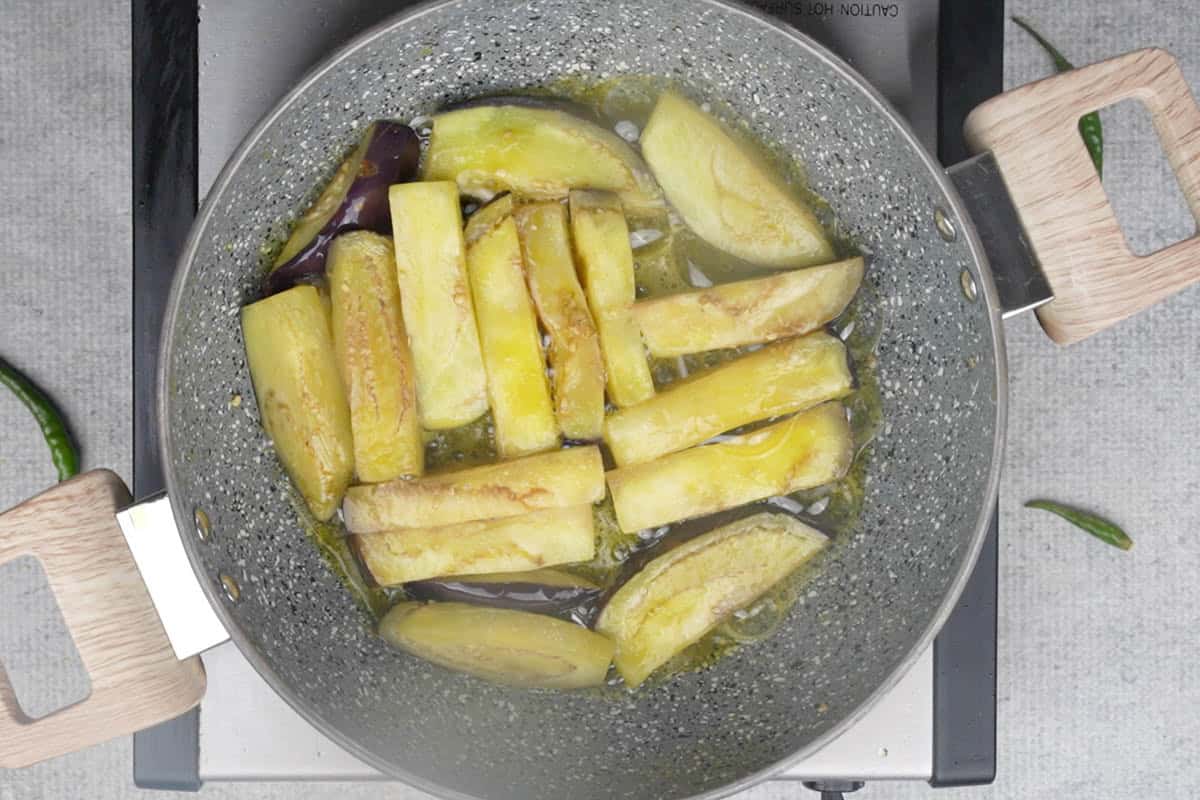
Step 2: Add the eggplant to the same pan and fry until golden and slightly softened. Remove and set aside. Don’t cook the eggplant until it’s completely soft. It will finish cooking in the masala.
Make The Masala
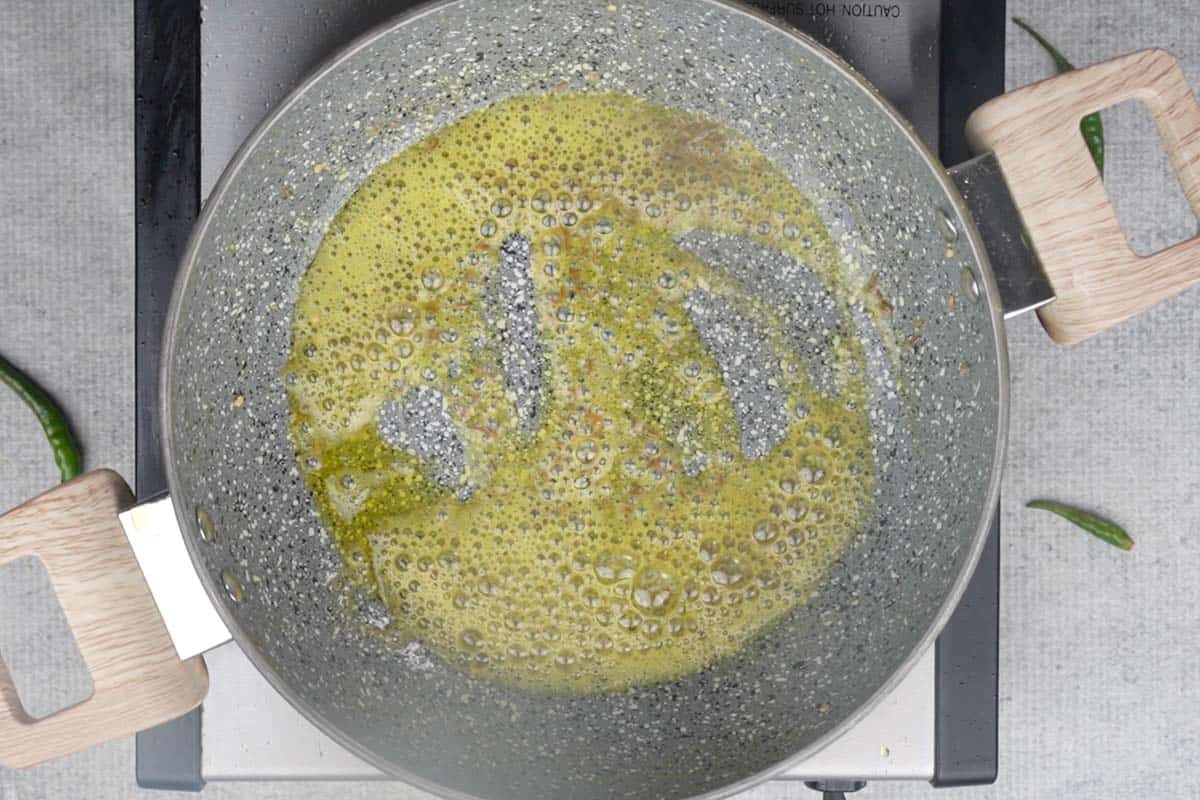
Step 3: In the same kadai, add 1 teaspoon cumin seeds and ¼ teaspoon hing and let them crackle for 5-6 seconds.
Step 4: Add ½ cup of chopped onions, 2 teaspoons of chopped green chilies, and 1 teaspoon grated ginger. Cook until the onions turn golden, stirring frequently.
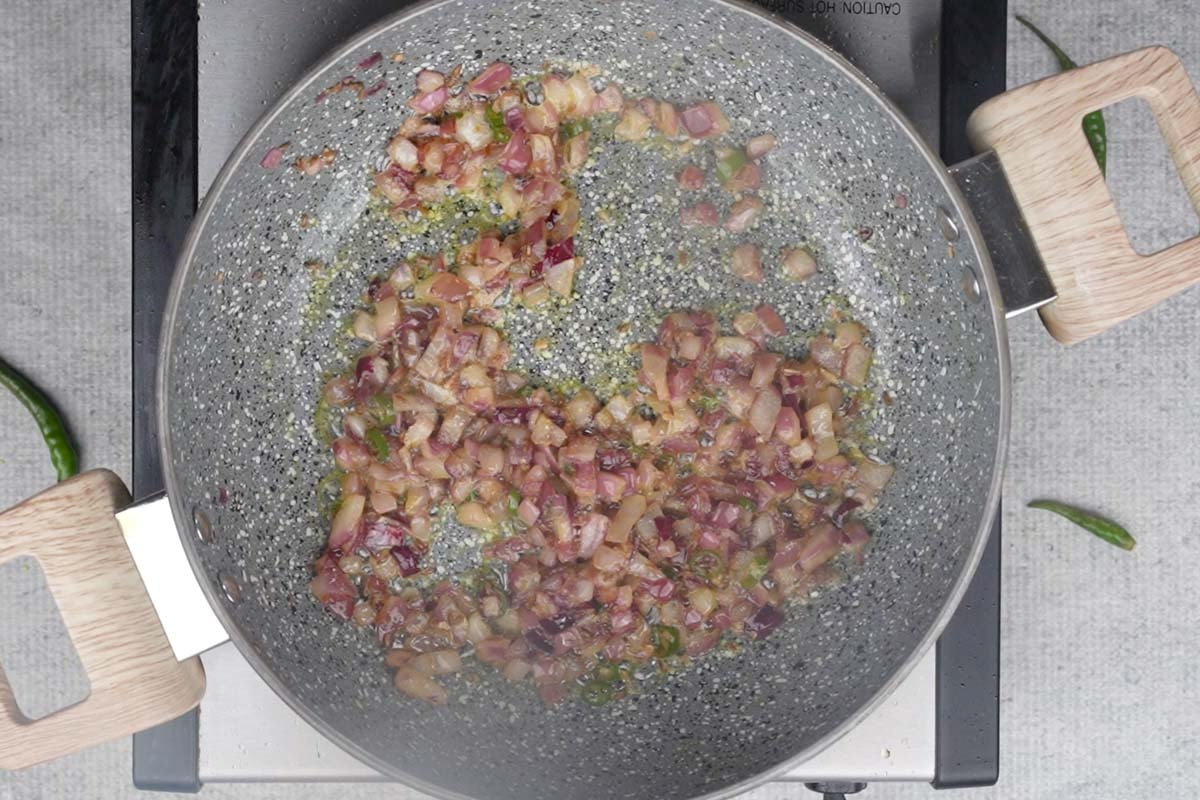
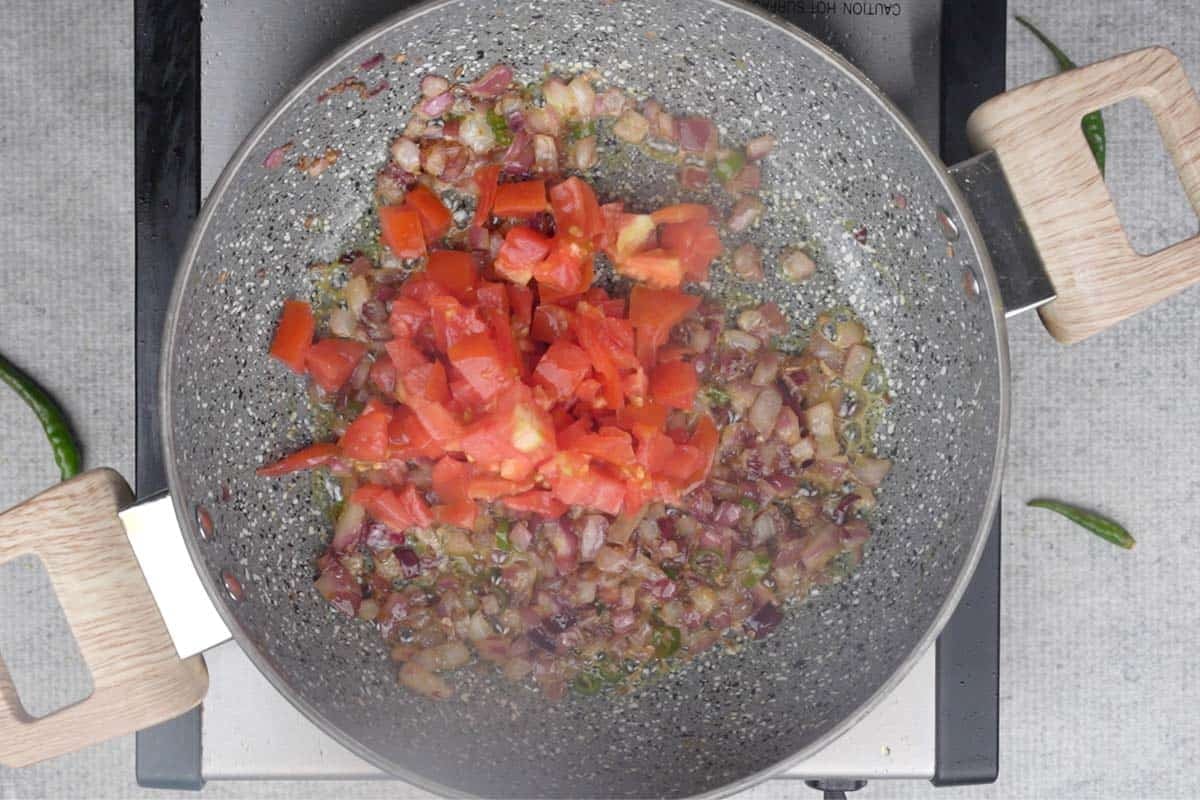
Step 5: Add ½ cup chopped tomatoes and cook for 3-4 minutes
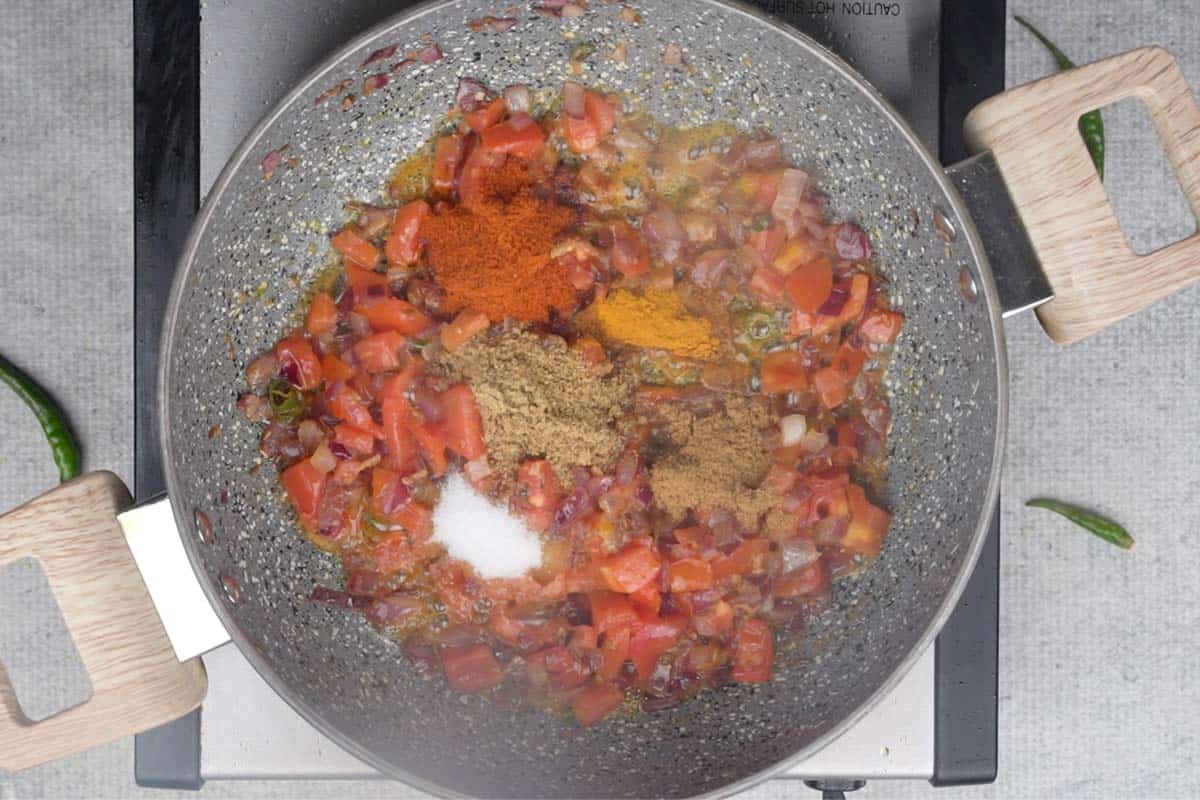
Step 6: Now add 1 ½ teaspoon coriander powder, ½ teaspoon turmeric powder, 1 ½ teaspoon Kashmiri red chili powder, 1 teaspoon cumin powder, and 1 ½ teaspoon salt. Cook until the tomatoes soften, and the oil starts to separate from the masala. Oil separating on the side of the pan is the sign that the raw tomato taste is gone and the masala has thickened enough to cling to the vegetables rather than make them soggy.
Add The Fried Vegetables
Step 7: Return the fried potatoes and eggplant to the kadai. Mix gently so the eggplant doesn’t break.
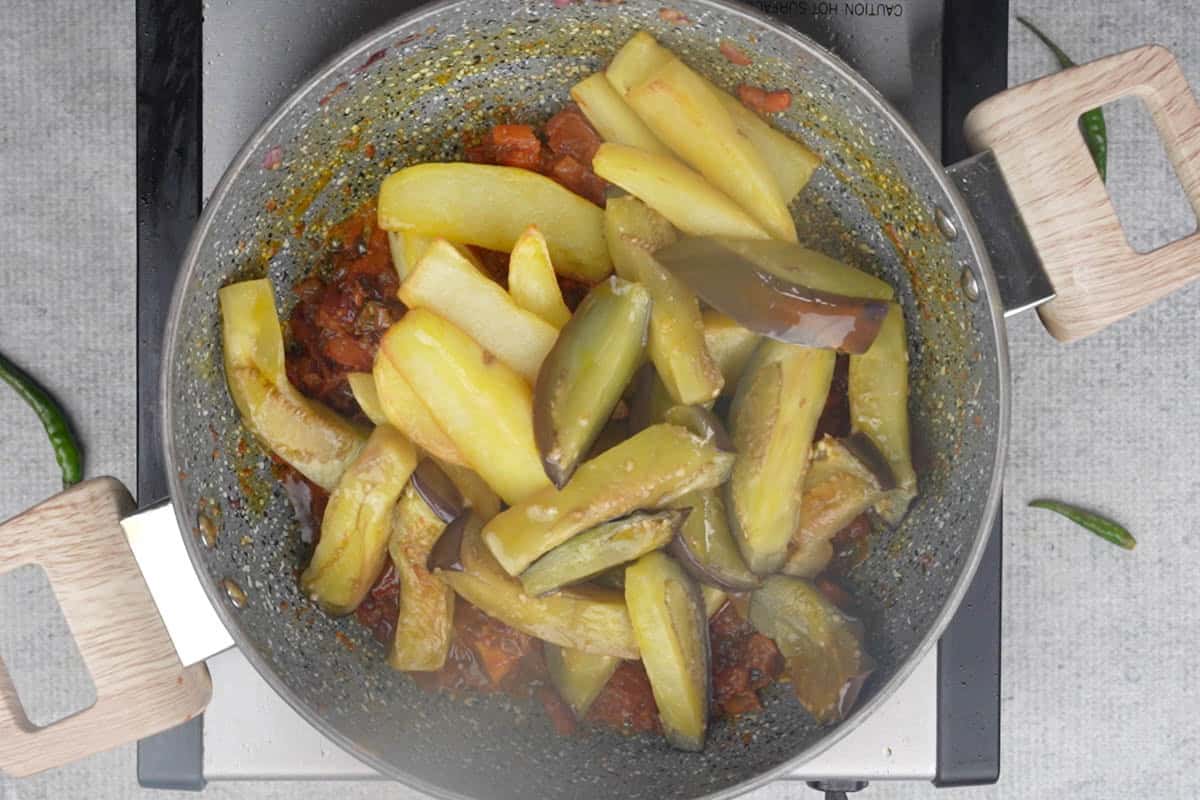
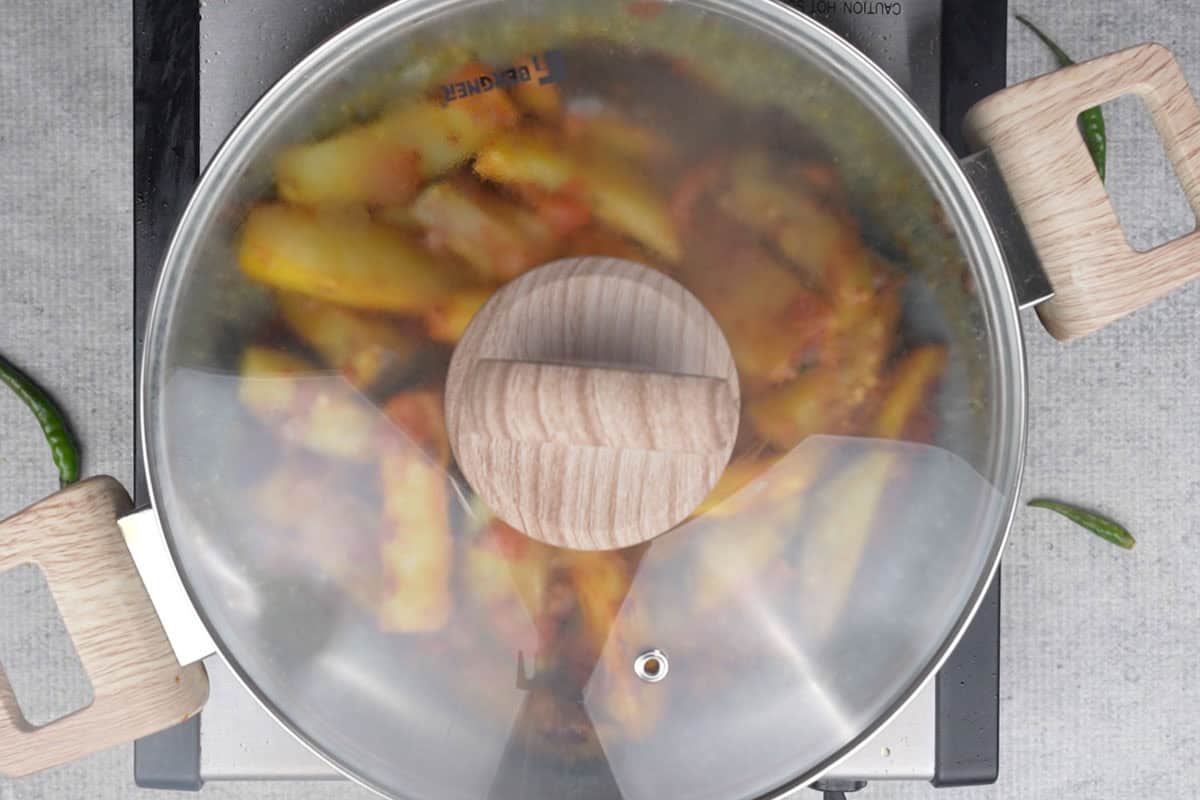
Step 8: Reduce the heat to low. Cover and cook for 7–10 minutes, stirring gently once or twice.
Finish
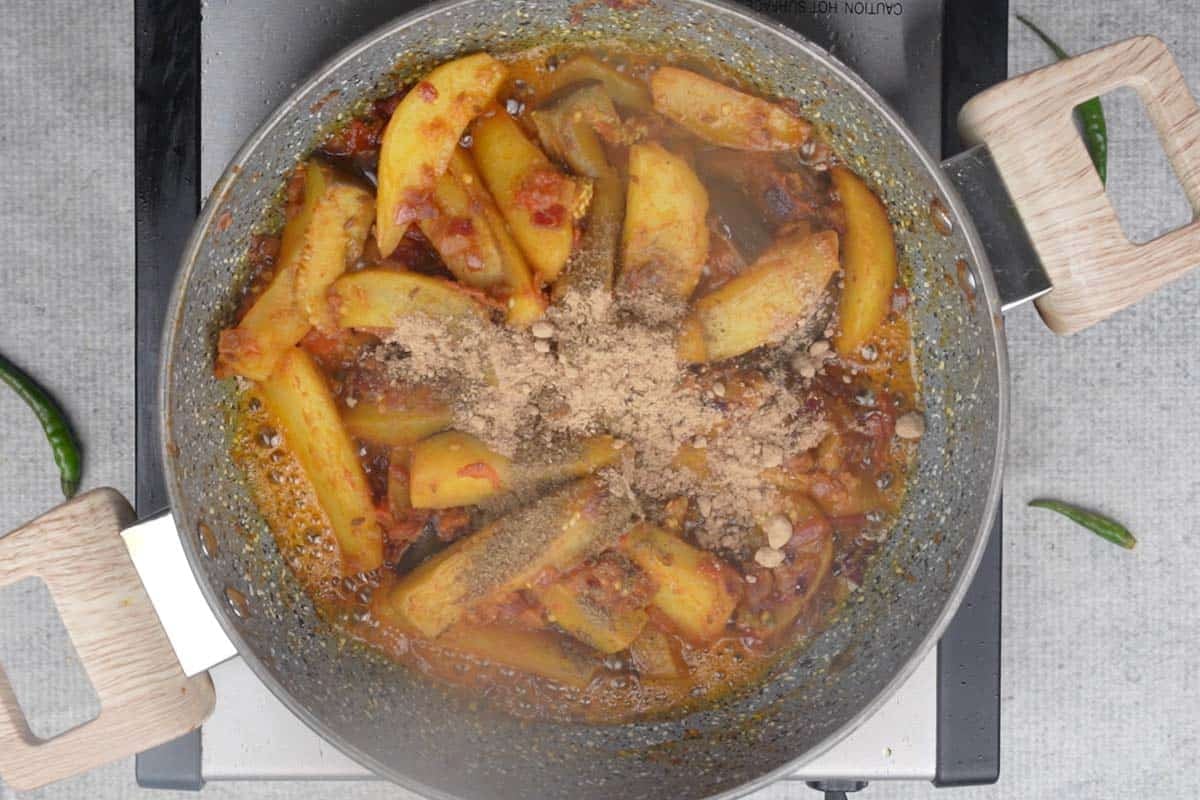
Step 9: Add ½ teaspoon garam masala and 1 teaspoon amchoor. Mix and cook uncovered for another 2 minutes.
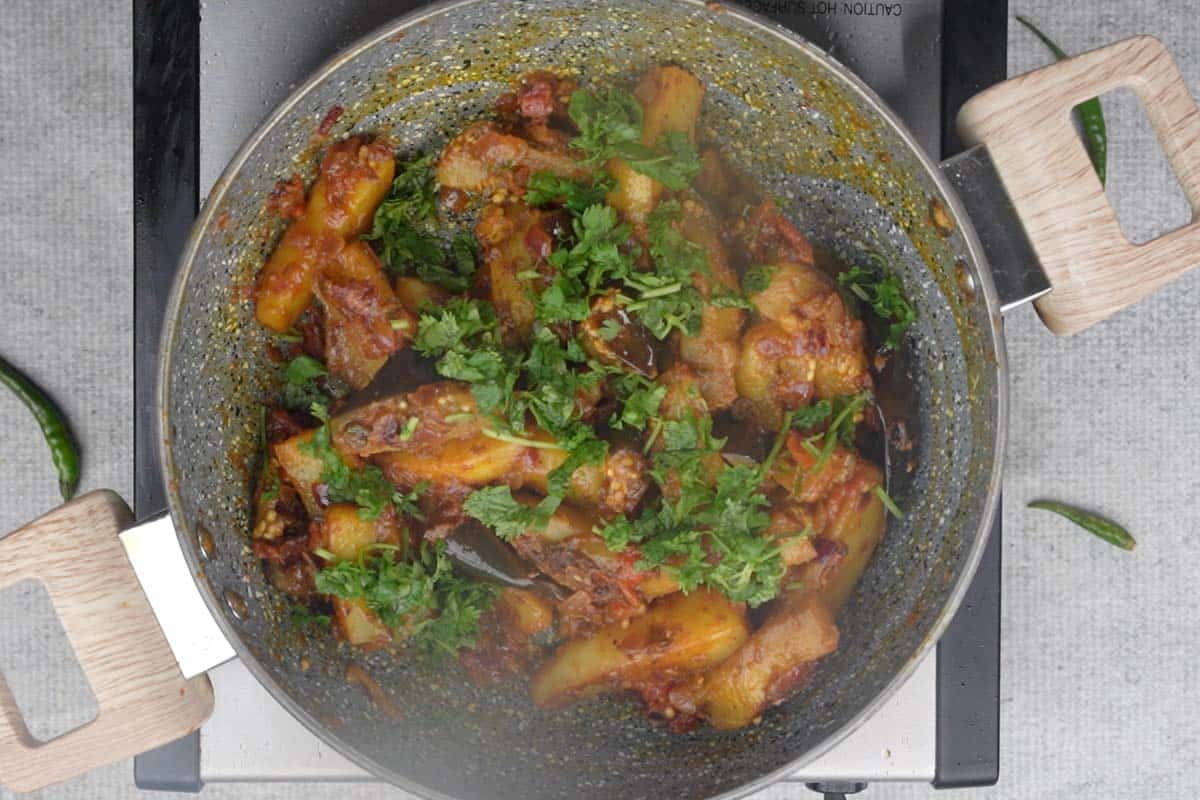
Step 10: Garnish with 2 tablespoons of chopped cilantro and serve hot.
Pro Tips By Neha
Cut everything the same size. Uneven cubes mean some pieces overcook while others stay raw.
Don’t crowd the kadai when frying. If you pile the eggplant in, it steams. Fry in two batches if needed.
Let the eggplant sit before flipping. Give each side a minute or two to color. Constant stirring keeps it pale and makes it fall apart.
Use a heavy kadai or cast-iron pan. Thin pans burn the masala at the bottom before the vegetables are cooked.
Stir with a folding motion after the vegetables go in. Lift from the bottom and turn, the way you’d fold cake batter. Eggplant is delicate at this stage.
If the masala sticks while covered, add a tablespoon of water. Just enough to loosen it, not enough to make it wet.
Make it a few hours ahead if you can. Like most dry sabzis, the flavors settle and deepen as it rests.
Variations
No onion, no garlic aloo baingan: Skip the onion. Add a slightly larger pinch of hing with the cumin, then go straight to the ginger and tomatoes. This version is common in Jain and fasting-friendly kitchens.
Gravy-style aloo baingan: Add ½ cup hot water after returning the vegetables to the masala and simmer uncovered until it thickens. Good with rice.
With green peas: Stir in ½ cup boiled or frozen peas along with the fried vegetables.
Less oil: Toss the potato and eggplant cubes with 1 tablespoon of oil and roast at 425°F (220°C) for 20–25 minutes, or air-fry at 400°F (200°C) for 12–15 minutes. Then add them to the masala as usual.
Serving Suggestions
Aloo baingan is a dry sabzi, so pair it with something that brings moisture. My everyday plate is aloo baingan, hot phulka, a bowl of yellow moong dal, and a bowl of boondi raita on the side. Sliced onion, a lemon wedge, and roasted papad make it a proper meal.
It also works with plain paratha, jeera rice, or packed into a lunch box with roti. It doesn’t leak, and it tastes fine at room temperature.
Storage Suggestions
Store leftovers in an airtight container in the refrigerator for up to 3 days. Reheat in a pan over low heat with a splash of water, or microwave in short bursts.
I don’t recommend freezing it. The potatoes turn mealy, and the eggplant releases water when thawed.
Other Eggplant Recipes We Recommend

Craving more? Subscribe to Whisk Affair to get new recipes and a newsletter delivered straight to your inbox! And stay in touch on Facebook, Pinterest, and Instagram for all of the latest updates.

Aloo Baingan Recipe
Ingredients
- 250 grams potatoes
- 1 medium eggplant (approximately 250 grams)
- 4 tablespoons mustard oil (or any other cooking oil)
- 1 teaspoon cumin seeds
- ¼ teaspoon hing (asafetida)
- ½ cup chopped red onions
- 2 teaspoons chopped green chilies
- 1 teaspoon grated ginger
- ½ cup chopped tomatoes
- 1 and ½ teaspoon coriander powder
- ½ teaspoon turmeric powder
- 1 and ½ teaspoon Kashmiri red chili powder
- 1 teaspoon cumin powder
- 1 and ½ teaspoon salt (or to taste)
- ½ teaspoon garam masala
- 1 teaspoon amchoor (dry mango powder)
- 2 tablespoons chopped cilantro (fresh coriander)
Instructions
- Peel the potatoes and cut them into batons or wedges. Drop them into a bowl of water to prevent them from turning black due to oxidation. Cut the eggplant into batons or wedges of the same size. If you’re not frying right away, keep the eggplant in water too, so it doesn’t brown.
- Drain and pat both dry before frying. Wet vegetables spit in hot oil and steam rather than brown.
- Heat oil in a kadai over medium-high heat. Once the oil is hot, add the potatoes and fry until they’re lightly golden on the outside and about 70–80% cooked. Remove and set aside.
- Add the eggplant to the same pan and fry until golden and slightly softened. Remove and set aside. Don’t cook the eggplant until it’s completely soft. It will finish cooking in the masala.
- In the same kadai, add cumin seeds and hing and let them crackle for 5-6 seconds.
- Add onions, green chilies, and ginger. Cook until the onions turn golden, stirring frequently.
- Add tomatoes and cook for 3-4 minutes
- Now add coriander powder, turmeric powder, red chili powder, cumin powder, and salt. Cook until the tomatoes soften and the oil starts to separate from the masala. Oil separating on the side of the pan is a sign that the raw tomato taste is gone and the masala has thickened enough to cling to the vegetables rather than make them soggy.
- Return the fried potatoes and eggplant to the kadai. Mix gently so the eggplant doesn’t break.
- Reduce the heat to low. Cover and cook for 7–10 minutes, stirring gently once or twice.
- Add garam masala and amchoor. Mix and cook uncovered for another 2 minutes.
- Garnish with cilantro and serve hot.