
Ashtami Prasad (Kanjak Halwa, Poori & Chana)

This post may contain affiliate links. Please read our privacy policy.
There’s something deeply nostalgic about Ashtami Prasad. The simple yet sacred combination of sooji halwa, sookha kala chana, and poori has been a part of my Navratri celebrations since childhood. These are the flavors I grew up enjoying. In this post, I’m sharing the three classic recipes along with simple tips to help you make each one perfectly for your Ashtami celebration.
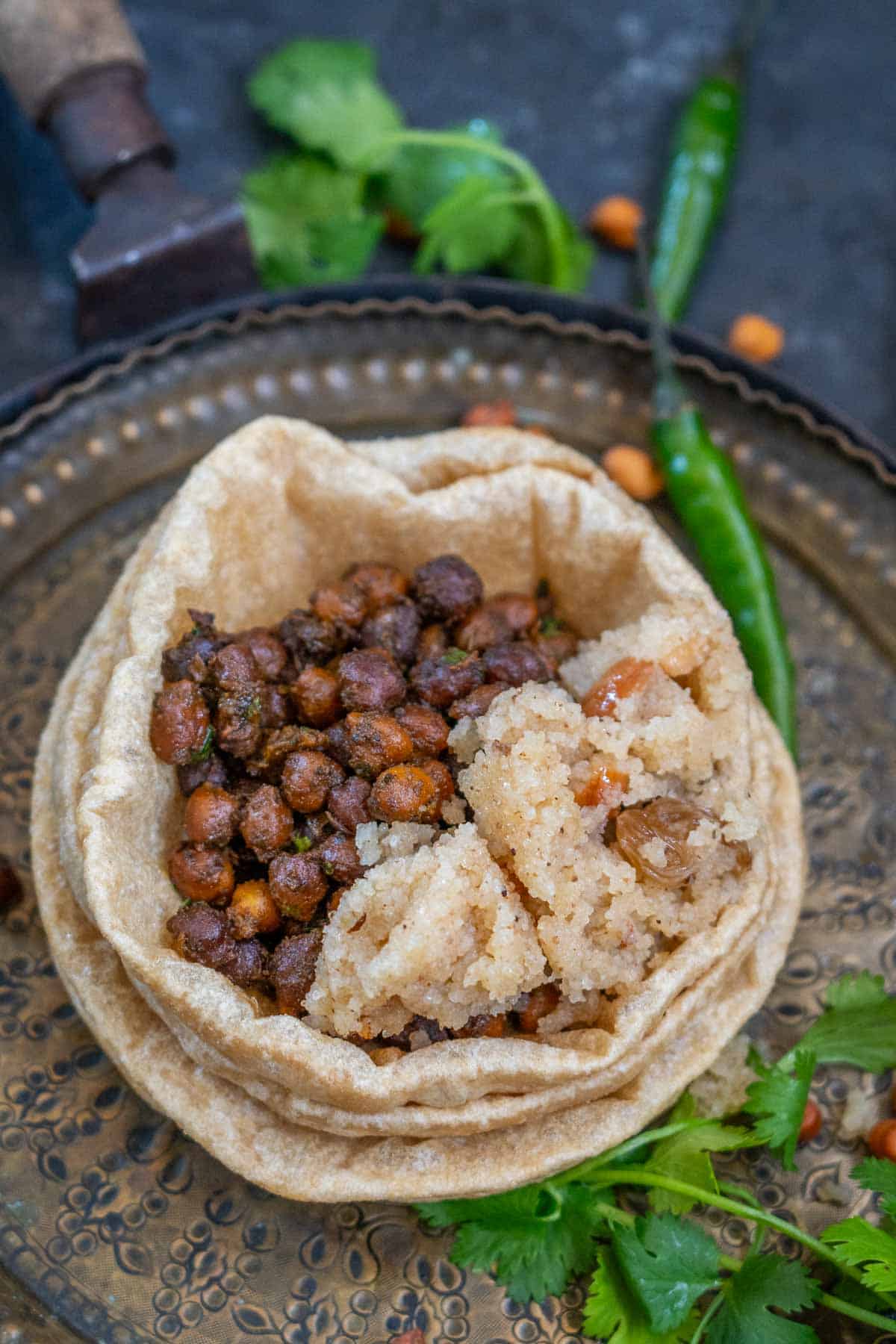
Table of Contents
My mom made sooji halwa for every celebration worth marking, and Navratri was always one of them. On Ashtami morning, the whole house smelled of ghee-roasted sooji before the sun was up. By the time the neighborhood girls arrived in their bright frocks and red chunris, there was a steel thali waiting for each of them: a warm spoonful of halwa, a little heap of chana, and two pooris still puffed from the kadai. I didn’t know then how much planning went into getting all three on the plate at once. Now that I make it myself, I do.
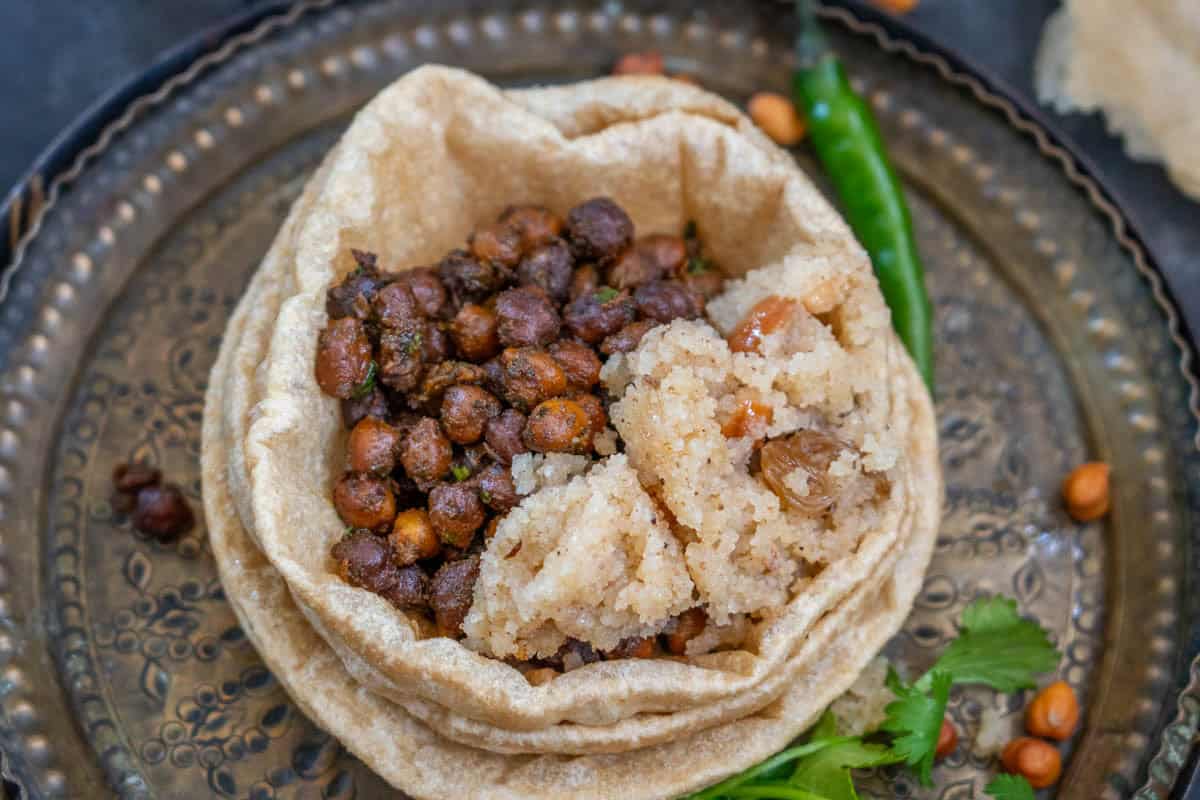
Ashtami prasad is the bhog (a food offering to the Goddess) made on the eighth day of Navratri. It has three dishes: sooji halwa, sookha kala chana, and poori. The same plate is served to young girls during kanjak pujan. It’s cooked without onion or garlic, finished with ghee, and made fresh that morning.
Each dish is simple. The trick is the timing, and that’s what this post is about.
What Goes On The Ashtami Prasad Plate
- Sookha kala chana: dry-cooked black chickpeas with a hing-jeera tadka (spices crackled in hot ghee) and tangy amchur.
- Sooji halwa: semolina roasted in ghee until nutty, then cooked soft with sugar and cardamom.
- Poori: puffed, deep-fried whole wheat bread.
Some families add a fourth dish, usually a no-onion, no-garlic potato curry like aloo tamatar ki sabzi. Some add kheer. The three above are the core.
Why We Feed The Kanyas On Ashtami
Navratri is a nine-night festival of worship of Goddess Durga in her nine forms, known as the Navadurga. On Ashtami or Navami, the worship moves from the temple to the dining room. Families invite little girls home and treat them as if they were the Goddess herself. This is kanya pujan, also called kanjak in Punjab, Delhi, and much of North India.
The idea is simple and beautiful. Devi is believed to live in every young girl, pure and untouched by the world. So for one morning, the girls aren’t guests. They are the Goddess, and the whole house serves them.
How The Kanyas Are Welcomed
The rituals change a little from home to home, but the heart is the same:
- Washing their feet. The girls sit in a row, and their feet are washed with water, sometimes milk, then gently dried. The adults who usually give blessings are, for once, the ones asking for them.
- Tilak and kalava. A red tilak (a mark on the forehead) of roli or kumkum, and a kalava (the red-and-yellow sacred thread) tied on the wrist.
- A red chunri. Many families drape a small red chunri (scarf) over each girl’s head, just as it’s offered to the Goddess in the temple.
- Feeding them first. The girls eat before anyone else in the house, and they’re served the same halwa, chana, and poori that were just offered as bhog.
- Gifts and blessings. Each girl leaves with a small gift and some dakshina (a token amount of money). The family touches her feet and asks for her blessing. Common gifts are a red chunri, bangles, a small coin or cash (dakshina), stationery, or small toys.
That last part always surprises people seeing it for the first time. Grown adults, grandparents included, bowing to a six-year-old. But that’s the whole point. For those few minutes, she is Durga.
What Is A Langur (Langoor)?
Along with the nine girls, many families invite one little boy, called the langur, langoor, or langoora, during Kanjak Puja.
He receives the same welcome as the girls—tilak, kalava, prasad, and a small gift. The boy is traditionally seen as a guardian of the Goddess, with two common interpretations of whom he represents.
Some families associate him with Bhairav, the fierce protector of Devi, while others see him as Hanuman, her devoted guardian. In the Vaishno Devi tradition, he is also remembered as Langur Veer, who accompanied and protected the Devi.
Families without a boy nearby simply continue the Kanjak Puja with the nine girls.
Kanya Pujan Across India
The same idea shows up far beyond North India. In Bengal, Kumari Puja during Durga Puja honors a single young girl as the Goddess. The famous ceremony at Belur Math draws huge crowds every year. The names, rituals, and food change from region to region, but the belief underneath stays the same: the divine feminine lives in every little girl.
Ingredients
For The Sookha Kala Chana
- Black Chickpeas – Kala chana, also called desi chana or Bengal gram. They’re brown, not black, and smaller and firmer than regular chickpeas (kabuli chana). Kabuli chana works if that’s all you have, but the texture is softer.
- Hing and Cumin – Asafoetida (hing) and cumin seeds (jeera) are used to make the tadka. Hing gives the savory depth that onion and garlic usually would.
- Spice Powders – Coriander powder (dhaniya), Kashmiri red chili (lal mirch), turmeric (haldi), dry mango powder (amchur), and fennel powder (saunf). The fennel is what makes this chana taste like prasad. If you’re out of amchur, a squeeze of lime at the end works.
- Fresh Coriander – Chopped coriander leaves (hara dhaniya) to finish.
For The Sooji Halwa
- Fine Semolina – Use fine sooji (baarik sooji) for a soft halwa. Coarse rava gives a grainy, sheera-like texture.
- Ghee – Ghee (clarified butter) gives the halwa its aroma and glossy finish. Don’t cut it back, or the halwa turns dry. For a vegan plate, coconut oil works.
- Sugar – I use granulated white sugar. Powdered jaggery (gud) substitutes 1:1 and adds a deeper color and a caramel note.
- Cardamom Powder – Green cardamom powder (elaichi) is the only flavoring you need. Saffron (kesar) soaked in warm milk is a festive extra.
- Nuts and Raisins – Cashews (kaju), almonds (badam), and raisins (kishmish), fried in ghee. Pistachios work too.
For The Poori
- Whole Wheat Flour – Chapati atta (gehu ka atta) from an Indian grocery store. Whole wheat flour from a regular US supermarket is milled differently and won’t give you the same puffed poori.
- Fine Semolina – A few teaspoons of sooji in the dough keeps the pooris crisp for longer. It’s optional.
- Sugar and Salt – A pinch of sugar helps the pooris brown evenly as they fry.
- Oil – A neutral oil with a high smoke point, such as rice bran, canola, or sunflower oil. Ghee works if you want a richer bhog.
Equipments
- Stovetop pressure cooker for the chana. I use a 3-liter Stahl, which is the right size for 1–2 cups of dry chana. An Instant Pot works just as well.
- Heavy-bottomed pan for the halwa. A thin pan scorches the sooji before it’s roasted through.
- A kettle or small pot to keep the water boiling for the halwa.
- Kadai or deep, heavy pan that holds 4–5 cups of oil for the pooris.
- Instant-read or candy thermometer (optional, but it makes the pooris foolproof).
- Small pan for frying the nuts.
- Rolling board and pin, or a tortilla press.
How To Make Ashtami Prasad (My Morning Game Plan)
The order matters more than any single step. I always start with the chana. It cooks in one pot, holds well once it’s done, and reheats in a minute. The halwa goes second because it holds its heat and actually improves after resting. The pooris always go last because they deflate within minutes.
This is the order that works in my kitchen. The chana and halwa take the front burners one after the other, and the kadai for pooris gets the big back burner all to itself.
The Night Before
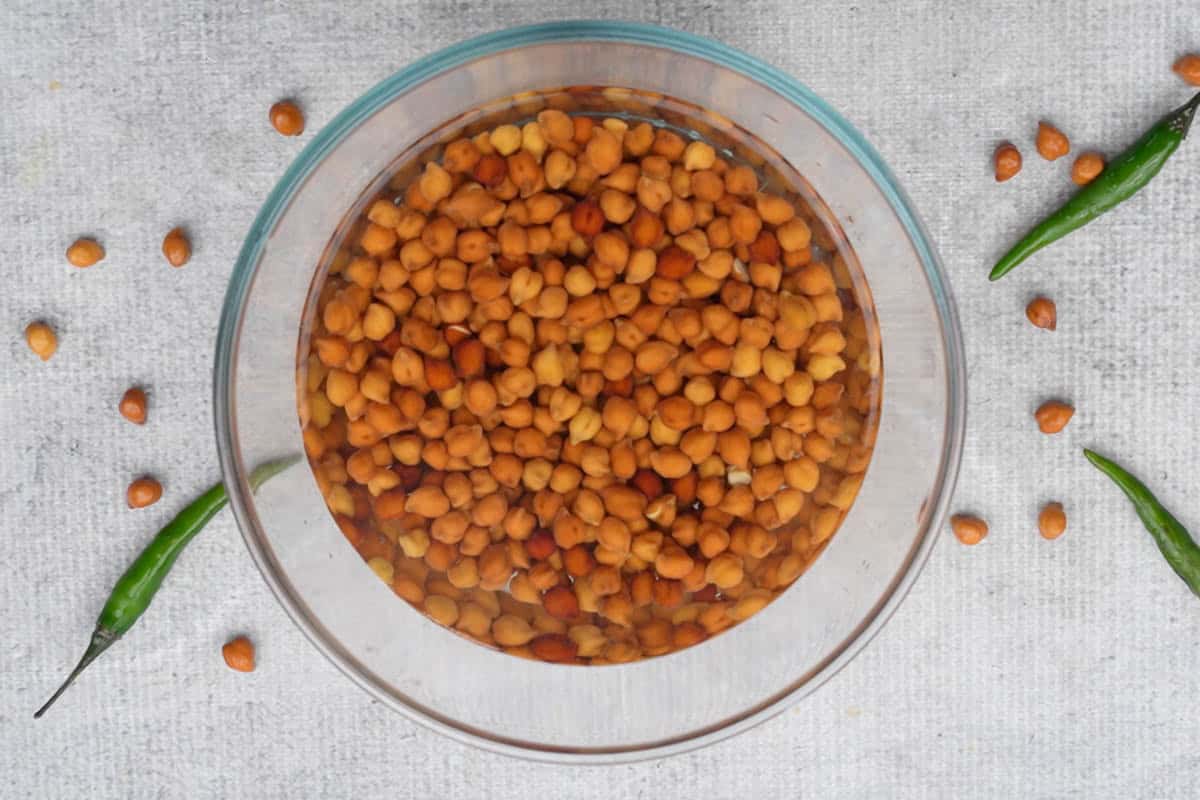
Step 1: Soak the chana. Rinse the kala chana and soak it in plenty of water for 6–8 hours. If you skip this, it takes an extra 30+ minutes to cook, and the chana never quite softens.
Ashtami Morning
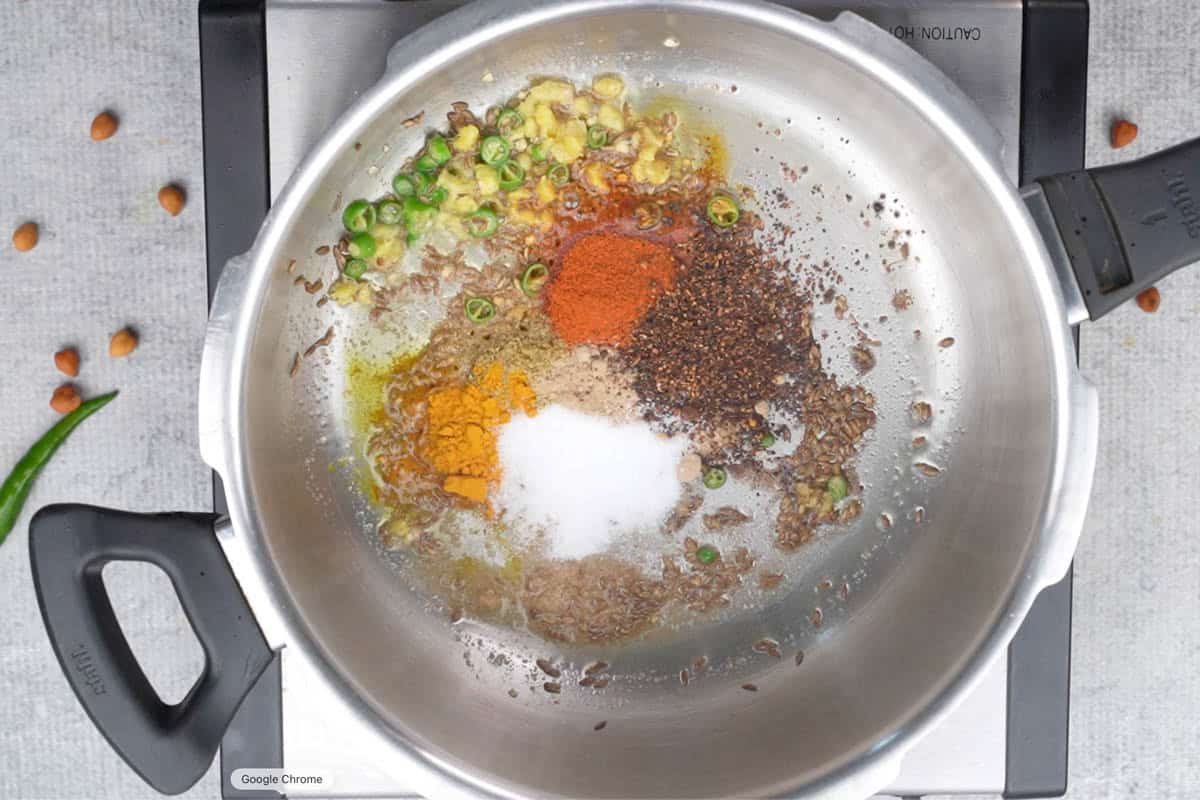
Step 2: Make the tadka in the cooker. Heat ghee in the pressure cooker. Add the hing and cumin and let them crackle. Turn the heat down, add the spice powders, and stir for just a few seconds. Ground spices burn in seconds on high heat and turn bitter.
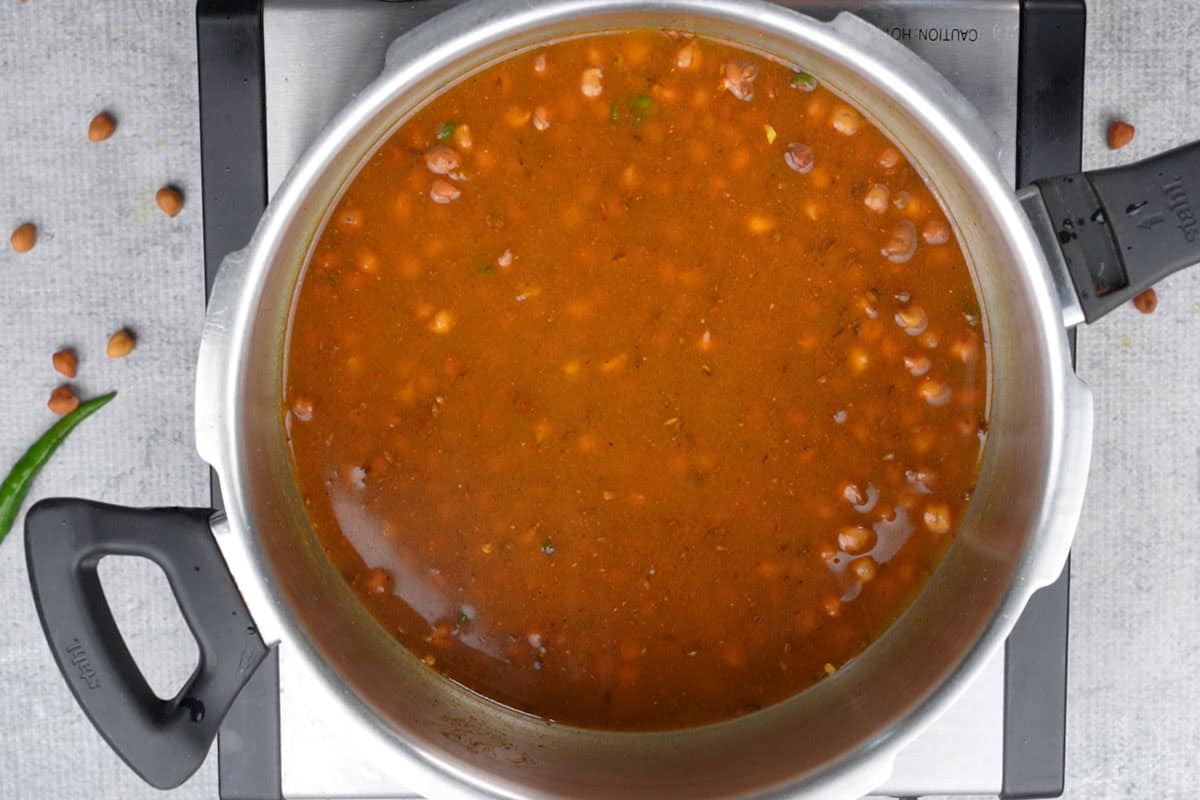
Step 3: Add the chana and pressure cook. Drain the soaked chana and add it to the cooker with fresh water and salt. Stir well, close the lid, and cook for 1 whistle over high heat, then for 15 minutes on low heat. Let the pressure release on its own.

I don’t boil the chana separately first. The spices go in before the pressure does, so the masala cooks into each chickpea rather than just coating the outside. And it’s one pot less to wash on a busy puja morning.
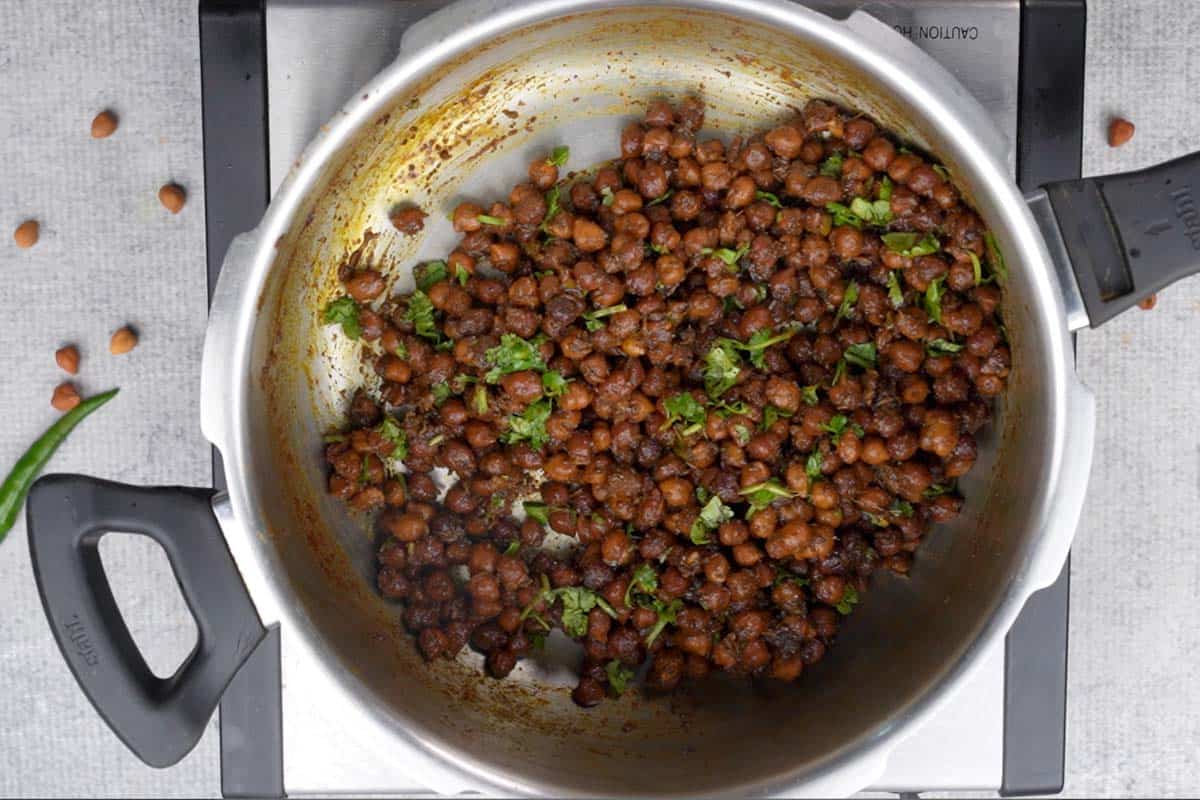
Step 4: Dry it on high heat. Open the cooker and cook on high heat, stirring often, until all the water is gone and the masala clings to each chickpea. Finish with fresh coriander, cover, and set aside.
See how every chickpea in the photo is coated and there’s no liquid left at the bottom? That’s when it’s done. If you still see water, give it a few more minutes. Keep stirring once it thickens so the masala doesn’t stick.
Step 5: Knead the poori dough. Mix the atta, sugar, salt, and sooji. Add water a little at a time and knead to a stiff, smooth dough, tighter than roti dough. Soft dough soaks up oil and won’t puff. Cover it and let it rest while you make the halwa.

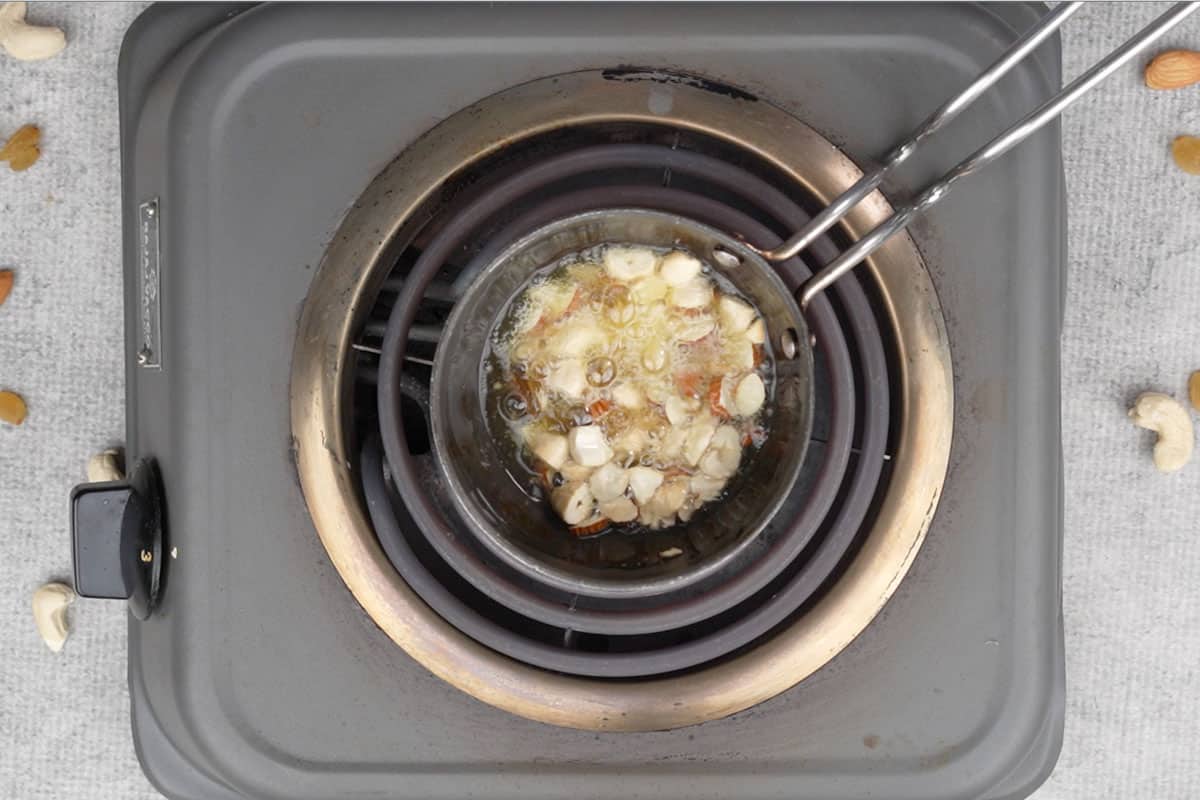
Step 6: Fry the nuts. Heat a spoonful of ghee in a small pan and fry the cashews and almonds until light brown. Add the raisins for just 4–5 seconds, since they burn fast. Set aside.
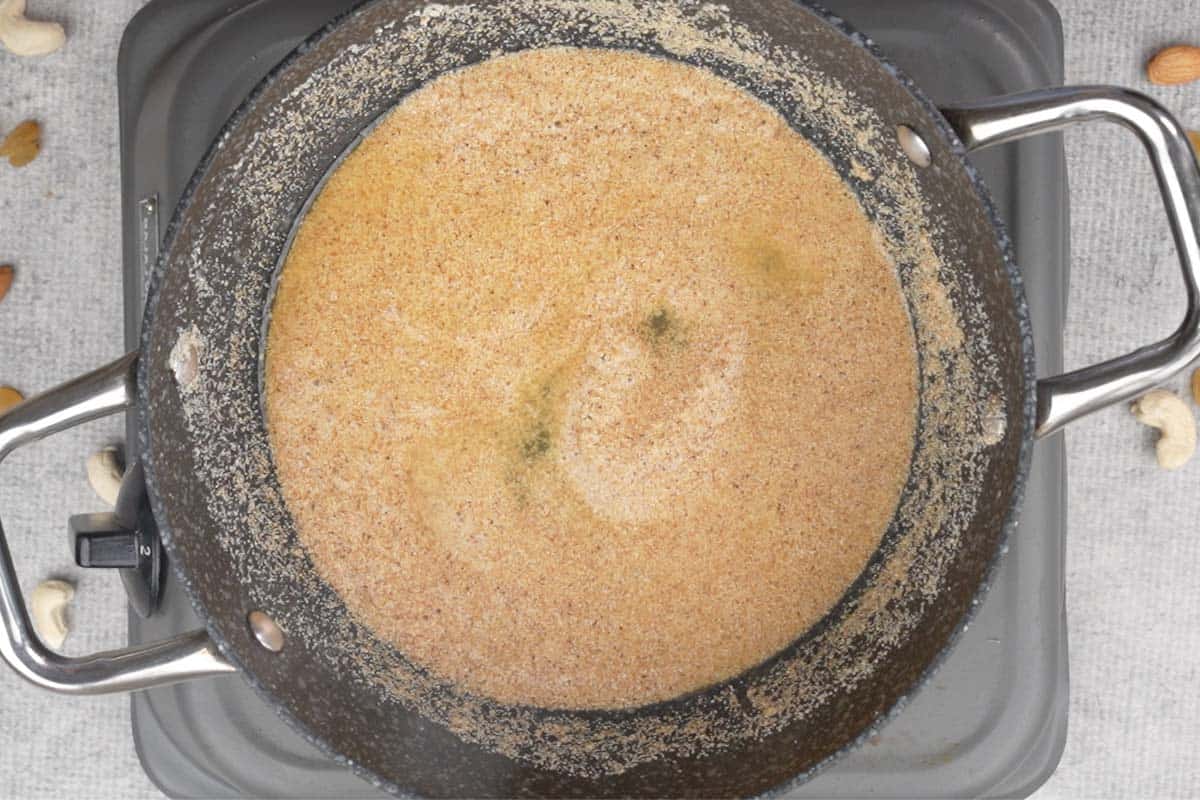
Step 7: Roast the sooji. Heat the remaining ghee in the heavy pan. Add the sooji and roast on medium heat for 10–12 minutes, stirring often. It will soak up the ghee first, then loosen, turn deep golden brown, and smell nutty. Meanwhile, bring the water to a boil on the next burner.
Low and slow is the whole secret here. On high heat, the sooji browns on the outside but tastes raw on the inside. In the photo below, you can see the color you’re aiming for: sandy and golden brown, like toasted almonds. If it still looks pale and creamy, keep roasting.
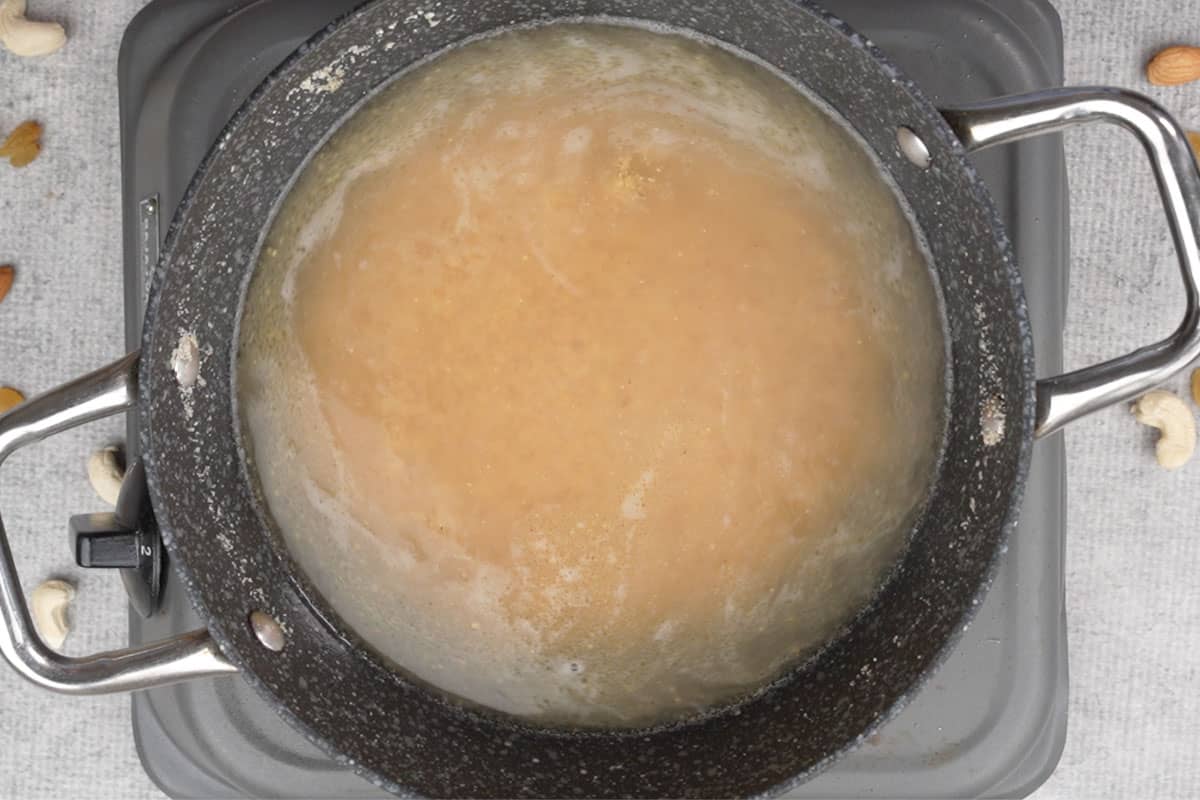
Step 8: Add the hot water. Pour in the boiling water all at once and stir hard. Stand back, because it splutters. Cook for 3–4 minutes until the water is absorbed and the sooji is soft. The water has to be boiling; cold water shocks the hot sooji into lumps.
Step 9: Add the sugar last. Stir in the sugar, fried nuts, and cardamom. Cook for 3–4 minutes until the sugar melts and ghee starts to shine at the edges. Sugar goes in only after the sooji has softened, because once it’s in, the semolina stops absorbing water.
Take the pan off the heat and let it rest for 5 minutes. It looks loose at first, then sets to a soft, glossy finish.
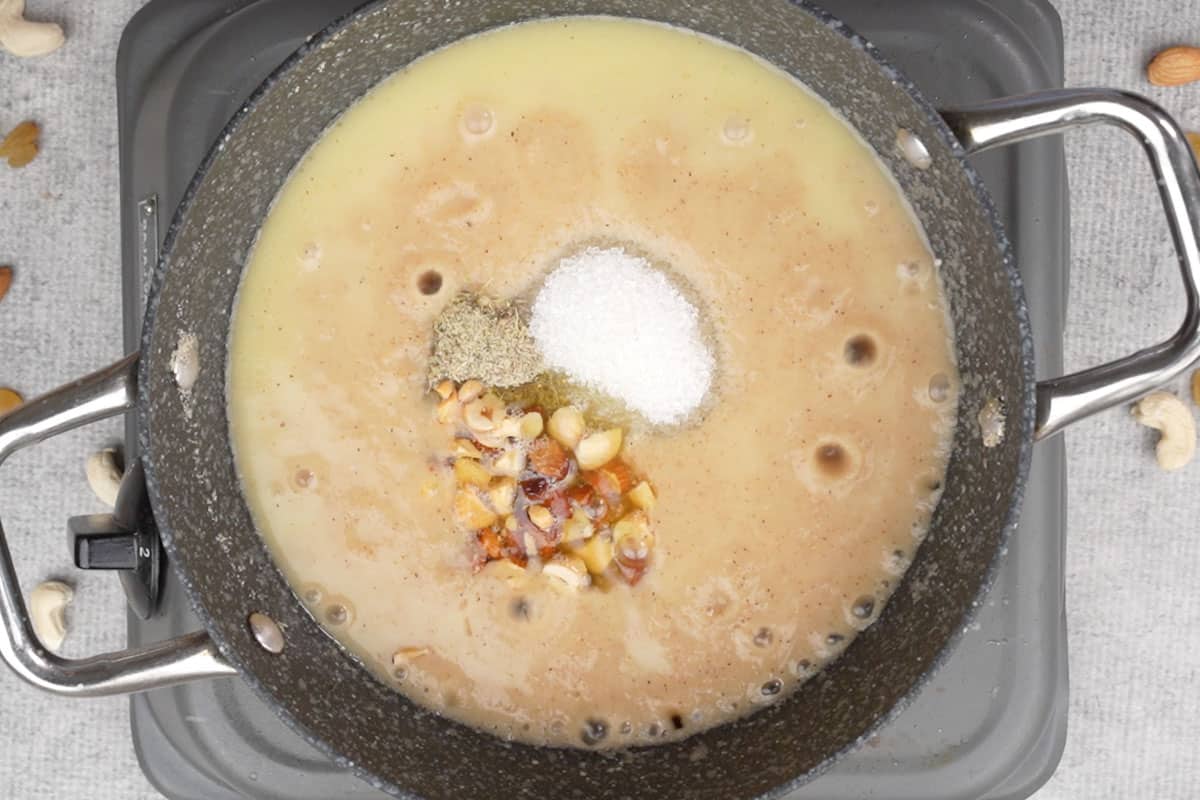
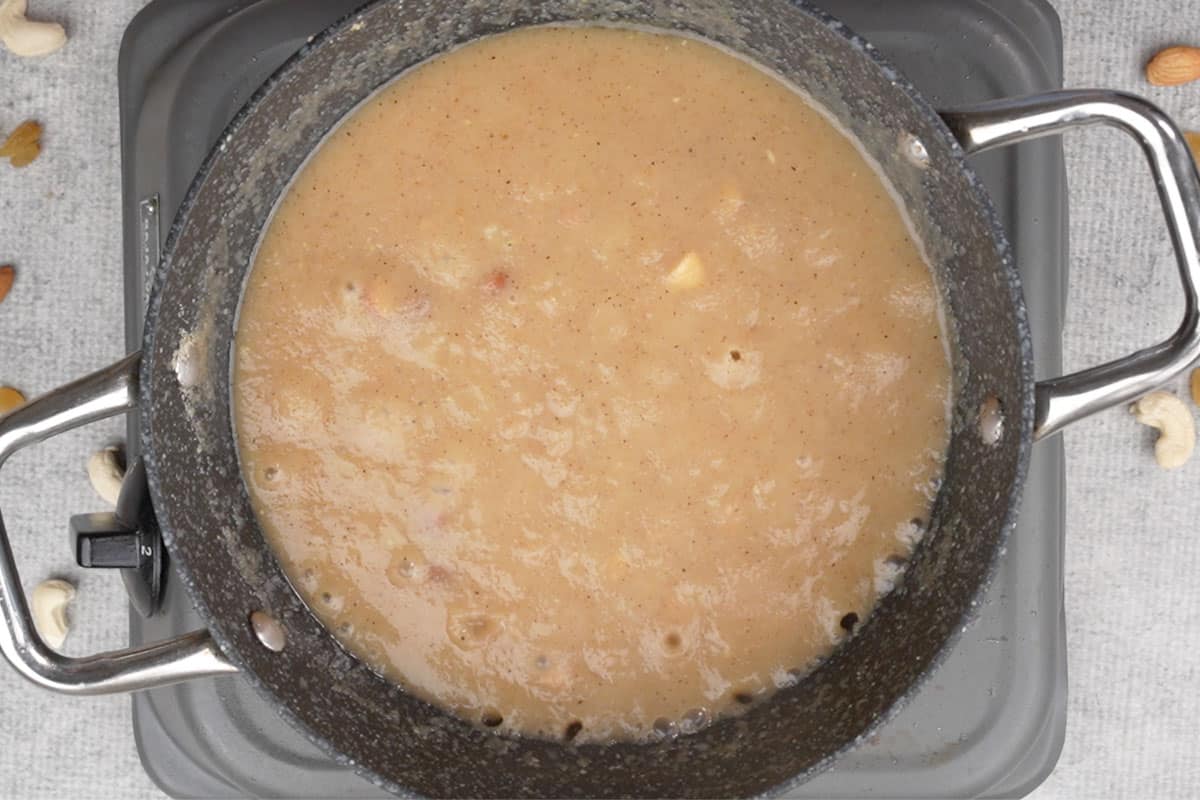
Step 10: Roll the pooris. Knead the rested dough for a minute. Divide it into 14–16 balls. Dab each ball with 2–3 drops of oil (no dry flour) and roll it into a 4-inch circle, slightly thinner at the edges. Dry flour burns in the oil, blackens it, and sticks to every poori after it. Roll 3–4 at a time and keep the rest covered.

Step 11: Fry the pooris. Heat 4–5 cups of oil to 360–380°F (180–190°C). If you don’t have a thermometer, drop a pinch of dough in; it should rise to the top right away. Slide a poori in from the side of the pan. Press it gently with the back of a slotted spoon until it puffs (10–15 seconds), flip, and fry the other side until golden. Drain on paper towels.
Between batches, lower the heat while you roll, then bring it back up before frying again. Oil that isn’t hot enough gives flat, greasy pooris.
A reader once wrote to me that her halwa kept turning out dry, no matter what she did. When we talked it through, the problem was the ghee. She’d cut it back to make the halwa lighter, and without it, the sooji soaks up the water and sets stiff. My fix is the one I gave her: stick to the full amount of ghee, and if leftover halwa firms up, warm it with a splash of milk. On Ashtami, when you’re cooking three dishes at once, this is the one place not to cut corners.

Step 12: Offer the bhog, then serve. Set aside a small portion of each dish in a clean bowl or thali for the Goddess before anyone eats. Warm the chana for a minute if it has cooled. After the puja, serve the kanjaks first, then the family.
How Much To Make For Kanjak
Most families invite 9 girls, one for each form of Durga, and one boy, the langur. Here’s a rough guide based on the recipe card below:
| Guests | Recipe card to make |
| Family of 4 | 1x |
| 9 kanjaks + 1 langur | 1x (kids usually eat 1–2 pooris each) |
| 9–10 kids + family of 4 | 2x |
| 15+ kids (neighborhood kanjak) | 3x, and fry pooris in two shifts |
Pro Tips By Neha
Let the chana wait, not the pooris. Cooking the chana first frees up the cooker and a burner. By the time the halwa is resting, you’re ready to fry.
Make the halwa slightly loose. It keeps thickening as it waits, so by serving time it’s just right.
Keep pooris warm in a towel-lined basket, not a closed box. A closed box traps steam and makes them soggy.
Plate small portions for kids. A spoonful of halwa, a spoonful of chana, and two pooris per plate. Refill instead of heaping.
Keep bhog separate from the tasting spoon. Traditionally, nothing is tasted before the offering. Season the chana by eye and adjust the leftovers after the puja.
Storage Suggestions
Ashtami prasad tastes the best when it’s made fresh. However, you can store the leftovers. Leftover chana keeps in the fridge for 3 days, and the halwa for up to a week. Leftover pooris can be kept for about a day in an airtight container at room temperature, or for 2–3 days in the fridge, with parchment paper between them.
Warm the chana in a pan with a spoonful of water and the halwa in a pan with a splash of milk. Reheat the pooris on a hot tawa, pressing gently, until warm and crisp again. Skip the microwave: it turns pooris chewy and halwa rubbery.
Browse my full collection of Navratri recipes: vrat dishes, no-onion, no-garlic curries, and more puja bhog ideas.
Other Navratri Recipes We Recommend

Craving more? Subscribe to Whisk Affair to get new recipes and a newsletter delivered straight to your inbox! And stay in touch on Facebook, Pinterest, and Instagram for all of the latest updates.
Ashtami Prasad (Kanjak Halwa, Poori & Chana)
Ingredients
For The Chana
- 1 cup kala chana (black chickpeas)
- 2 tablespoons ghee
- ½ teaspoon hing
- 1 teaspoon cumin seeds
- 2 teaspoons coriander powder
- 2 teaspoons Kashmiri red chili powder
- ½ teaspoon turmeric powder
- 1 teaspoon dry mango powder (amchoor)
- 1 teaspoon fennel powder (saunf)
- 1 teaspoon salt
- 2 teaspoons chopped coriander
For Sooji Halwa
- 5-6 cashew nuts (chopped)
- 5-6 almonds (chopped)
- 10-12 raisins
- ½ cup ghee (divided)
- ½ cup fine semolina (barik sooji)
- 1 and ¾ cups water or milk
- ½ cup granulated white sugar
- 1 teaspoon cardamom powder
For Poori
- 2 cups whole wheat flour (gehu ka atta, chapati atta)
- 1 teaspoon granulated white sugar (optional, gives a lovely caramelized brown color to poori)
- ½ teaspoon salt
- 4 teaspoons fine semolina (sooji) (optional, gives nice crispiness to poori)
- oil for frying
Instructions
The Night Before
- Soak the chana. Rinse the kala chana and soak it in plenty of water for 6–8 hours. If you skip this, it takes an extra 30+ minutes to cook, and the chana never quite softens.
Ashtami Morning
- Make the tadka in the cooker. Heat ghee in the pressure cooker. Add the hing and cumin and let them crackle. Turn the heat down, add the spice powders, and stir for just a few seconds. Ground spices burn in seconds on high heat and turn bitter.
- Add the chana and pressure cook. Drain the soaked chana and add it to the cooker with 1 and ½ cups of fresh water and salt. Stir well, close the lid, and cook for 1 whistle over high heat, then for 15 minutes on low heat. Let the pressure release on its own.
- Dry it on high heat. Open the cooker and cook on high heat, stirring often, until all the water is gone and the masala clings to each chickpea. Finish with fresh coriander, cover, and set aside.
- Knead the poori dough. Mix the atta, sugar, salt, and sooji. Add water a little at a time and knead to a stiff, smooth dough, tighter than roti dough. Soft dough soaks up oil and won’t puff. Cover it and let it rest while you make the halwa.
- Fry the nuts. Heat a spoonful of ghee in a small pan and fry the cashews and almonds until light brown. Add the raisins for just 4–5 seconds, since they burn fast. Set aside.
- Roast the sooji. Heat the remaining ghee in the heavy pan. Add the sooji and roast on medium heat for 10–12 minutes, stirring often. It will soak up the ghee first, then loosen, turn deep golden brown, and smell nutty. Meanwhile, bring the water to a boil on the next burner.
- Add the hot water. Pour in the boiling water all at once and stir hard. Stand back, because it splutters. Cook for 3–4 minutes until the water is absorbed and the sooji is soft. The water has to be boiling; cold water shocks the hot sooji into lumps.
- Add the sugar last. Stir in the sugar, fried nuts, and cardamom. Cook for 3–4 minutes until the sugar melts and ghee starts to shine at the edges. Sugar goes in only after the sooji has softened, because once it’s in, the semolina stops absorbing water. Take the pan off the heat and let it rest for 5 minutes. It looks loose at first, then sets to a soft, glossy finish.
- Roll the pooris. Knead the rested dough for a minute. Divide it into 14–16 balls. Dab each ball with 2–3 drops of oil (no dry flour) and roll it into a 4-inch circle, slightly thinner at the edges. Dry flour burns in the oil, blackens it, and sticks to every poori after it. Roll 3–4 at a time and keep the rest covered.
- Fry the pooris. Heat 4–5 cups of oil to 360–380°F (180–190°C). If you don’t have a thermometer, drop a pinch of dough in; it should rise to the top right away. Slide a poori in from the side of the pan. Press it gently with the back of a slotted spoon until it puffs (10–15 seconds), flip, and fry the other side until golden. Drain on paper towels.
- Offer the bhog, then serve. Set aside a small portion of each dish in a clean bowl or thali for the Goddess before anyone eats. Warm the chana for a minute if it has cooled. After the puja, serve the kanjaks first, then the family.