
Sookha Kala Chana Recipe (Navratri Chana)

This post may contain affiliate links. Please read our privacy policy.
Sookha kala chana (also called Navratri chana or sukhe kale chane) is a delicious recipe made with black chickpeas and spices, without onions or garlic. Serve it with poori and sooji halwa for Ashtami prashad.
Here are a few more kala chana recipes: Kala chana curry, Jaisalmeri kala chana, and kadala curry.

Table of Contents
Ashtami mornings in my kitchen start early. The halwa is on one burner, the poori dough is resting under a damp cloth, and every burner feels spoken for. So the chana has to look after itself. Over the years, I’ve stopped giving it two pans and my full attention. Now it gets one pot, and it turns out better for it.
This is the chana in halwa puri chana, and I make it in one pot. The spices go into hot ghee in the pressure cooker, then the soaked chana goes in right on top of them. Once the pressure drops, it cooks on high heat until every drop of liquid is gone and the masala clings to each chickpea. It needs no onion, no garlic, and no second pan to wash on a busy puja morning.
What Is Sookha Kala Chana?
Sookha kala chana is a dry North Indian dish of black chickpeas cooked with ghee and spices until no gravy is left.
Sookha means dry. It is made without onion or garlic and offered as prasad (food blessed after being offered to God) to Goddess Durga on Ashtami or Navami, the 8th and 9th days of Navratri. It is then served with sooji halwa and poori to young girls during Kanjak or Kanya Pujan, when nine little girls are welcomed home and honored as forms of the goddess.
You’ll also see it called sukhe kale chane, Ashtami chana, or just Navratri chana.
Ingredients
- Kala Chana – These are the small, dark brown chickpeas with a thick skin and a nutty bite (black chickpeas). They hold their shape far better than kabuli chana, which is what a dry dish needs.
- Ghee – Gives the prasad its rich, festive taste (clarified butter). Use any neutral oil to keep the dish vegan.
- Hing – A pinch of this strong resin powder mellows the moment it hits hot fat and adds a deep, onion-like savor, useful in no-onion dishes (asafoetida). Many hing powders are cut with wheat flour, so pick one labeled gluten-free if that matters for your guests.
- Cumin Seeds – The base of the tadka (jeera). There is no real substitute here.
- Coriander Powder – Adds body and a mild citrusy warmth (dhania powder).
- Kashmiri Red Chili Powder – Gives a bright red color with gentle heat (Kashmiri lal mirch). Use paprika with a pinch of cayenne if you don’t have it.
- Turmeric Powder – For color and an earthy note (haldi).
- Dry Mango Powder – Brings the tang that makes this chana taste like prasad (amchur). A squeeze of lemon at the end works in a pinch.
- Fennel Powder – Adds a soft, sweet aroma that sets it apart from everyday chana (saunf) powder. Skip it only if you have to.
- Salt – Goes in with the chana before pressure cooking so it seasons each chickpea all the way through (namak).
- Fresh Coriander – For garnish and freshness (hara dhania).
How To Make Sookha Kala Chana
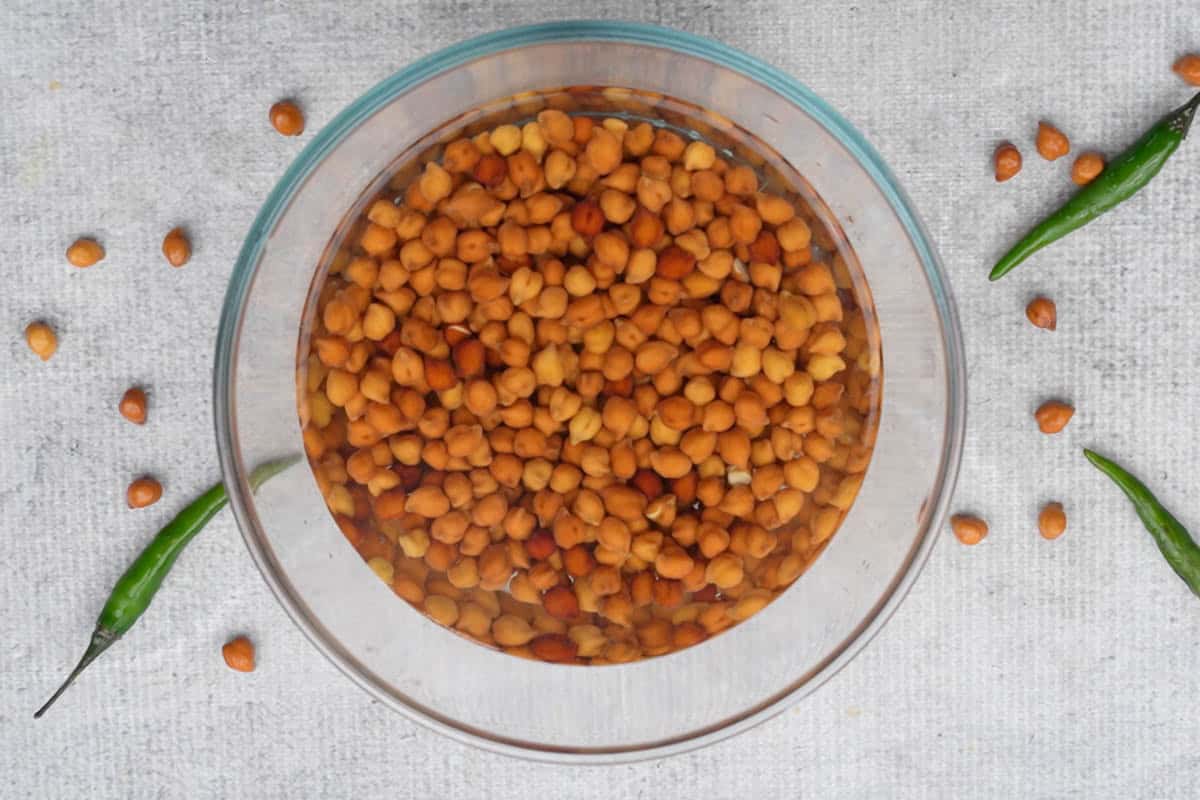
1. Soak the chana. Rinse 1 cup of kala chana and soak it in plenty of water for 6–8 hours. If you skip this, it takes an extra 30+ minutes to cook, and the chana never quite softens.
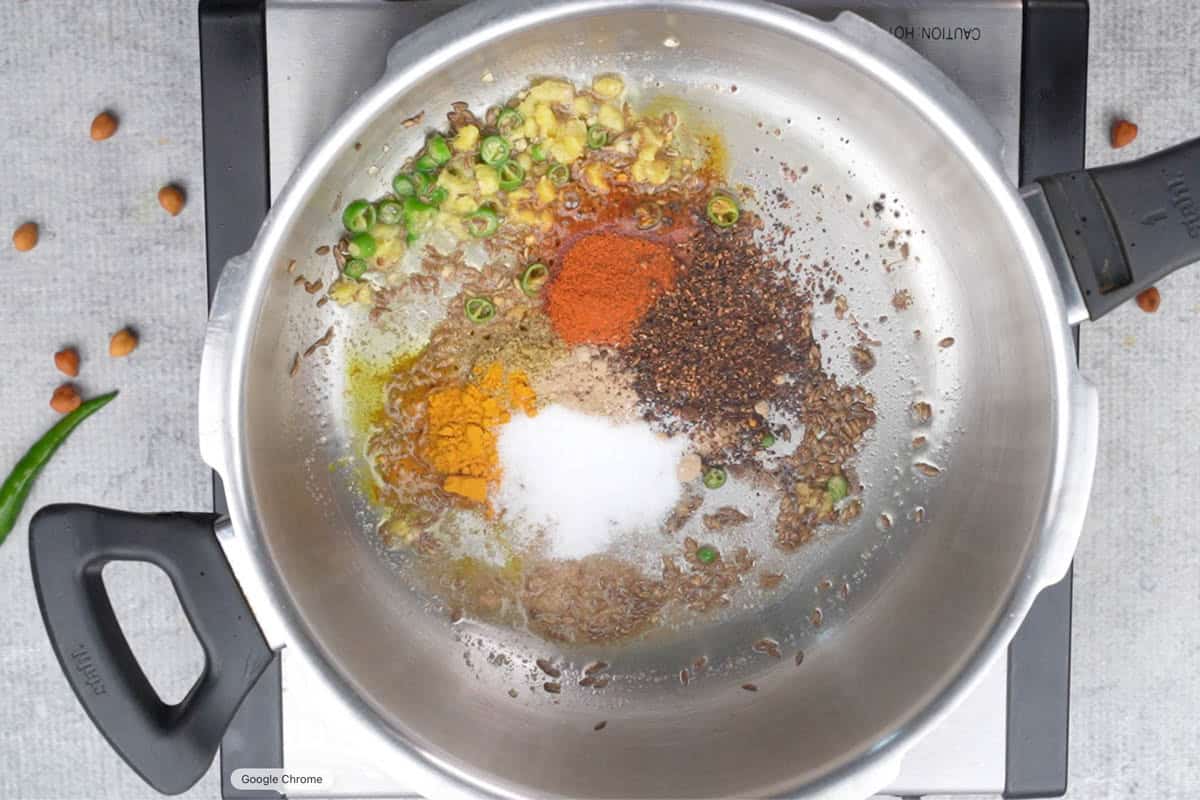
2. Make the tadka in the cooker. Heat 2 tablespoons of ghee in the pressure cooker over medium heat. Once the oil is hot, add ½ teaspoon hing and 1 teaspoon cumin and let them crackle for 4-5 seconds. Turn the heat down, add the following spice powders, and stir for just a few seconds. Ground spices burn in seconds on high heat and turn bitter.
- 2 teaspoons coriander powder
- 2 teaspoons Kashmiri red chili powder
- ½ teaspoon turmeric powder
- 1 teaspoon dry mango powder (amchoor)
- 1 teaspoon fennel powder (saunf)
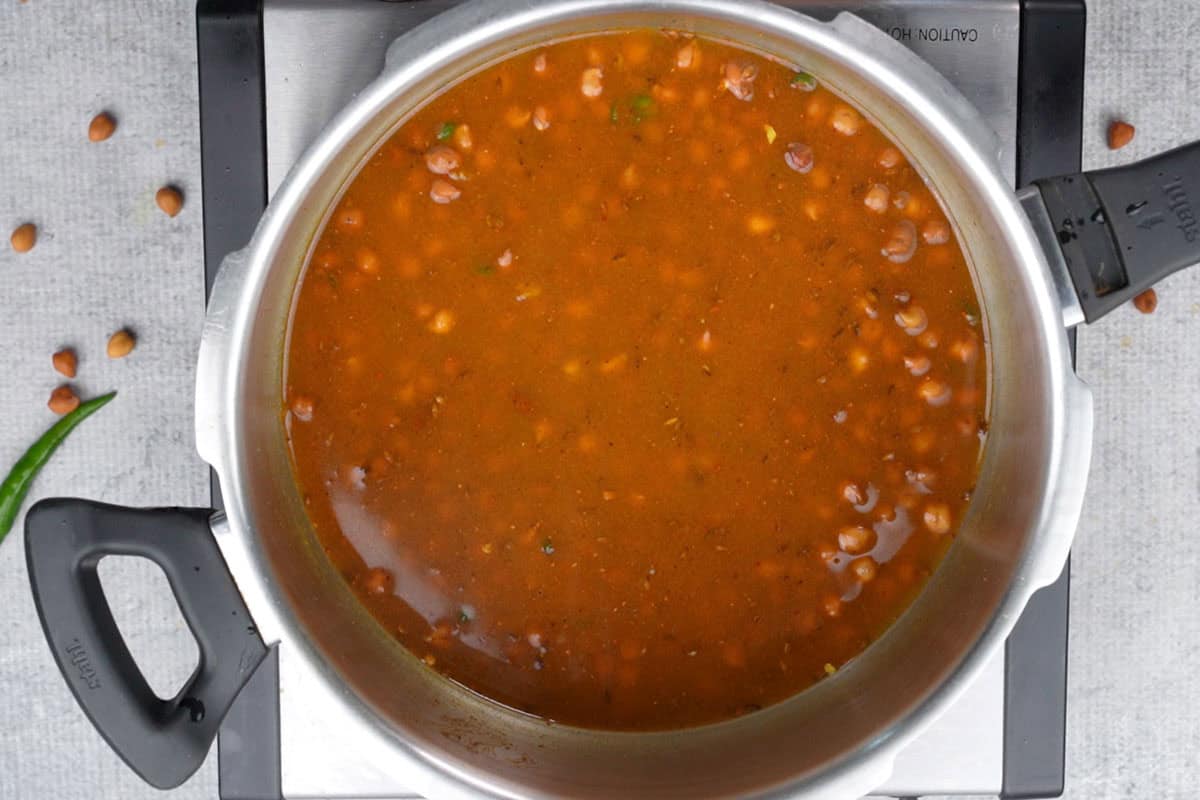
3. Add the chana and pressure cook. Drain the soaked chana and add it to the cooker with 1 and ½ cups of fresh water and 1 teaspoon salt. Stir well, scraping the bottom so no masala sticks. Close the lid and cook for 1 whistle over high heat, then for 15 minutes on low heat. Let the pressure release on its own.

I don’t boil the chana separately first. The spices go in before the pressure does, so the masala infuses into each chickpea rather than just coating the outside. And it’s one pot less to wash on a busy puja morning.
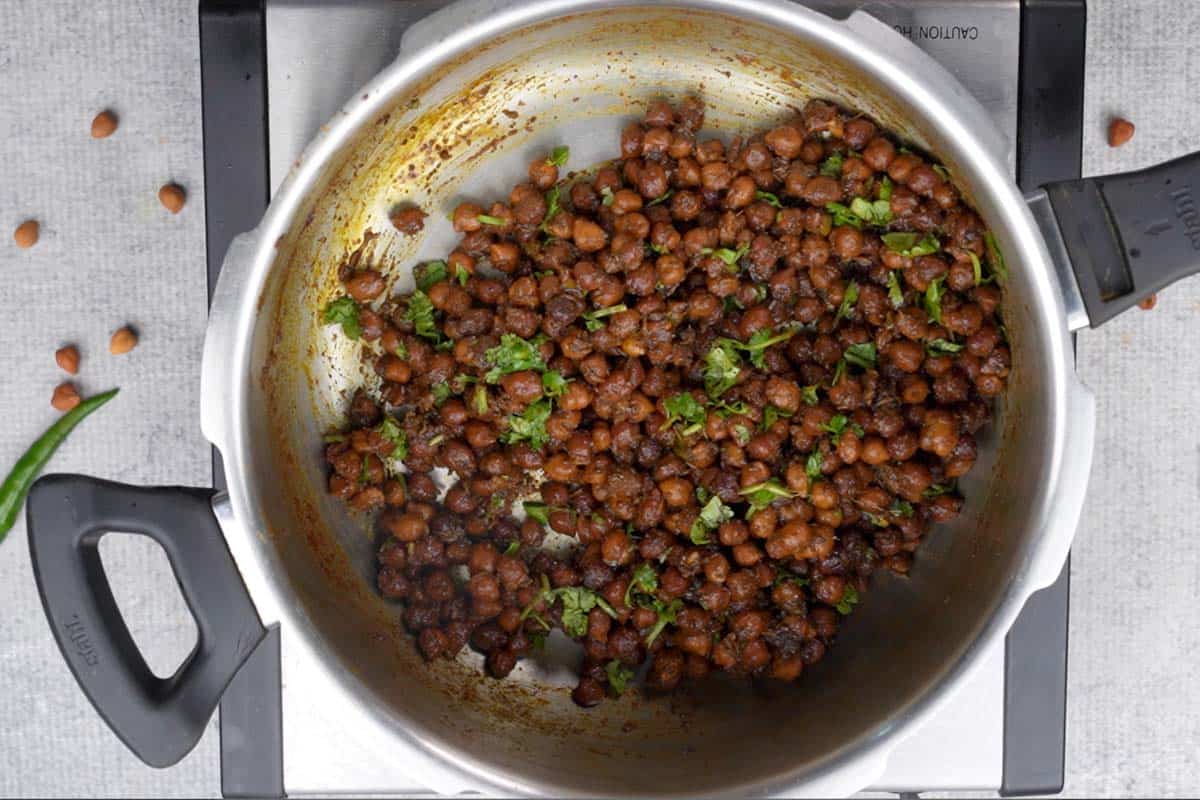
4. Dry it on high heat. Open the cooker and cook on high heat, stirring often, until all the water is gone and the masala clings to each chickpea. Finish with 2 tablespoons of chopped fresh coriander and serve.
See how every chickpea in the photo is coated and there’s no liquid left at the bottom? That’s when it’s done. If you still see water, give it a few more minutes. Keep stirring once it gets thick so the masala doesn’t catch.
Pro Tips By Neha
- Buy chana from a busy store. Kala chana that has sat on a shelf for a year or more may never turn soft, no matter how long you cook it.
- Soak in the fridge in hot weather. In summer, or in a warm kitchen, chana left out overnight can start to smell sour.
- Scrape before you seal. The first time I tried this one-pot way, I skipped the scrape and closed the lid. A thin layer of masala stuck to the base and scorched under pressure, and the whole batch had a faint bitter edge. Now I give the bottom one firm scrape with a flat spatula before the lid goes on, and it hasn’t happened since.
- Fold, don’t stir, at the end. Soft chana breaks easily once the liquid is gone. Fold gently so you get whole chickpeas, not mash.
- Scale up for Kanjak. One cup of dry chana serves 4 as a side. For nine girls plus family, plan on 2 to 3 cups, and keep the cooker no more than half full.
Variations
With tomato and green chili: Add 1 chopped tomato and 1–2 chopped green chilies after the spice powders and cook until soft before adding the chana.
Ginger version: Add 1 teaspoon of grated ginger to the tadka for extra warmth and easier digestion.
Tangy-sweet: Stir in 1 tablespoon of tamarind pulp and a small piece of jaggery during the drying stage.
Vegan: Swap the ghee for any neutral oil.
Chana chaat: Toss the cooled chana with chopped cucumber, tomato, lime, and chaat masala.
Serving Suggestions
For Ashtami or Navami prasad, serve it with poori and sooji halwa. On regular days, it makes a great lunch-box side with a flaky tawa paratha or phulka. It also works as a snack with evening chai.
Storage Suggestions
Sookha kala chana tastes best warm, the same day it’s made.
Leftovers keep in an airtight container in the fridge for 3 to 4 days.
To reheat, put the chana on a tawa over low heat with a splash of water. Cover for a minute to steam, then uncover and let it dry again.
Sookha Kala Chana FAQs
Most people keeping a strict Navratri vrat skip grains and legumes, and kala chana is a legume. It is usually eaten when the fast ends, as prasad on Ashtami or Navami. Family customs vary, so follow yours. On fasting days, try vrat-friendly dishes like samak rice kheer.
Yes. Soak the chana in hot water for 2–3 hours before pressure cooking. You can also skip soaking entirely and pressure-cook with more water for about 50 minutes at high pressure, then let the pressure release naturally. Either way, it takes longer than soaked chana.
Use Sauté mode for the tadka, then add the soaked chana, water, and salt, and scrape the base well. The Instant Pot’s burn sensor is strict about anything stuck to the bottom. Pressure cook on high for 30 minutes and let the pressure release naturally. Then switch back to Sauté to dry it out.
Other Navratri Recipes We Recommend


Craving more? Subscribe to Whisk Affair to get new recipes and a newsletter delivered straight to your inbox! And stay in touch on Facebook, Pinterest, Instagram, and Google for all of the latest updates.

Sookha Kala Chana Recipe (Navratri Chana)
Ingredients
- 1 cup kala chana (black chickpeas)
- 2 tablespoons ghee
- ½ teaspoon hing
- 1 teaspoon cumin seeds
- 2 teaspoons coriander powder
- 2 teaspoons Kashmiri red chili powder
- ½ teaspoon turmeric powder
- 1 teaspoon dry mango powder (amchoor)
- 1 teaspoon fennel powder (saunf)
- 1 teaspoon salt
- 2 teaspoons chopped coriander
Instructions
- Soak the chana. Rinse kala chana and soak it in plenty of water for 6–8 hours. If you skip this, it takes an extra 30+ minutes to cook, and the chana never quite softens.
- Make the tadka in the cooker. Heat ghee in the pressure cooker over medium heat. Once the oil is hot, add hing and cumin and let them crackle for 4-5 seconds. Turn the heat down, add coriander powder, chili powder, turmeric powder, dry mango powder, and fennel powder, and stir for just a few seconds. Ground spices burn in seconds on high heat and turn bitter.
- Add the chana and pressure cook. Drain the soaked chana and add it to the cooker with 1 and ½ cups of fresh water and salt. Stir well, scraping the bottom so no masala sticks. Close the lid and cook for 1 whistle over high heat, then for 15 minutes on low heat. Let the pressure release on its own.
- Dry it on high heat. Open the cooker and cook on high heat, stirring often, until all the water is gone and the masala clings to each chickpea. Finish with chopped fresh coriander and serve.