
Bedmi Poori Recipe (Crispy Urad Dal Poori)

This post may contain affiliate links. Please read our privacy policy.
Bedmi Poori – The legendary Delhi and UP street-breakfast you can nail at home in under an hour.

Table of Contents
What Is Bedmi Poori?
Bedmi Poori is a deep-fried, unleavened Indian flatbread from Uttar Pradesh and Delhi.
In Uttar Pradesh (Agra, Mathura, Banaras, Varanasi), it is called Bedmi or Bedai. In Kanpur, it is sometimes called Khasta. In Delhi, it appears on breakfast menus simply as Bedmi Puri or Dal Poori. The stuffed version made like kachori is called Bedmi Kachori or Dal Kachori.
The dough for bedmi is made by blending soaked urad dal (split black gram) with whole wheat flour and aromatic spices, including fennel, asafoetida, cumin, and red chili, then rolled thick and fried until golden and crispy.
It is traditionally served with Dubki Wale Aloo, Bhandare Wale Aloo, or Aloo Tamatar Ki Sabji.
Why this Bedmi Poori recipe works
There’s a specific kind of Sunday morning that lives rent-free in my head. My mother would soak the urad dal overnight. I’d see the little bowl sitting on the kitchen counter before bed and just know what breakfast was going to be. By the time we woke up, the whole house smelled like fennel and hot oil.
I’ve tried a lot of Bedmi Poori recipes over the years, and most of them disappoint in the same three ways.
The pooris come out soft instead of crispy (the dal paste was blended too smoothly). They soak up oil like a sponge (the dough was too loose). Or they just don’t puff, which, honestly, feels personal every single time it happens.
After enough failed batches and a lot of calling my mother mid-fry, I landed on what actually makes the difference: grind the dal to a semi-coarse texture, knead the dough until it’s stiff enough that it almost pushes back, and keep that oil hot. Those three things, and nothing else, are what separate a great Bedmi Poori from a disappointing one.
This is the recipe I make on cold mornings when I want something that tastes like home, and it’s the one I’m confident enough to make for guests without a backup plan.
Ingredients
- Whole wheat flour – It makes the base of the bedmi poori.
- Barik sooji (fine semolina) – It makes the puris nice and crispy. Do not use the coarse variety.
- Dhuli urad dal (skinned black lentil) – This is the hero ingredient of this recipe.
- Spice powders – You will need fennel powder (saunf powder), coriander powder, red chili flakes, dry mango powder (amchoor), and hing. Replace amchur with a squeeze of lemon juice (add to dal paste, not dough).
- Oil – Use any neutral-flavored oil.
- Others – You will also need ginger, green chilies, and salt to make this recipe. Replace amchur with a squeeze of lemon juice (add to dal paste, not dough).
How To Make Bedmi Poori
Make The Urad Dal Paste
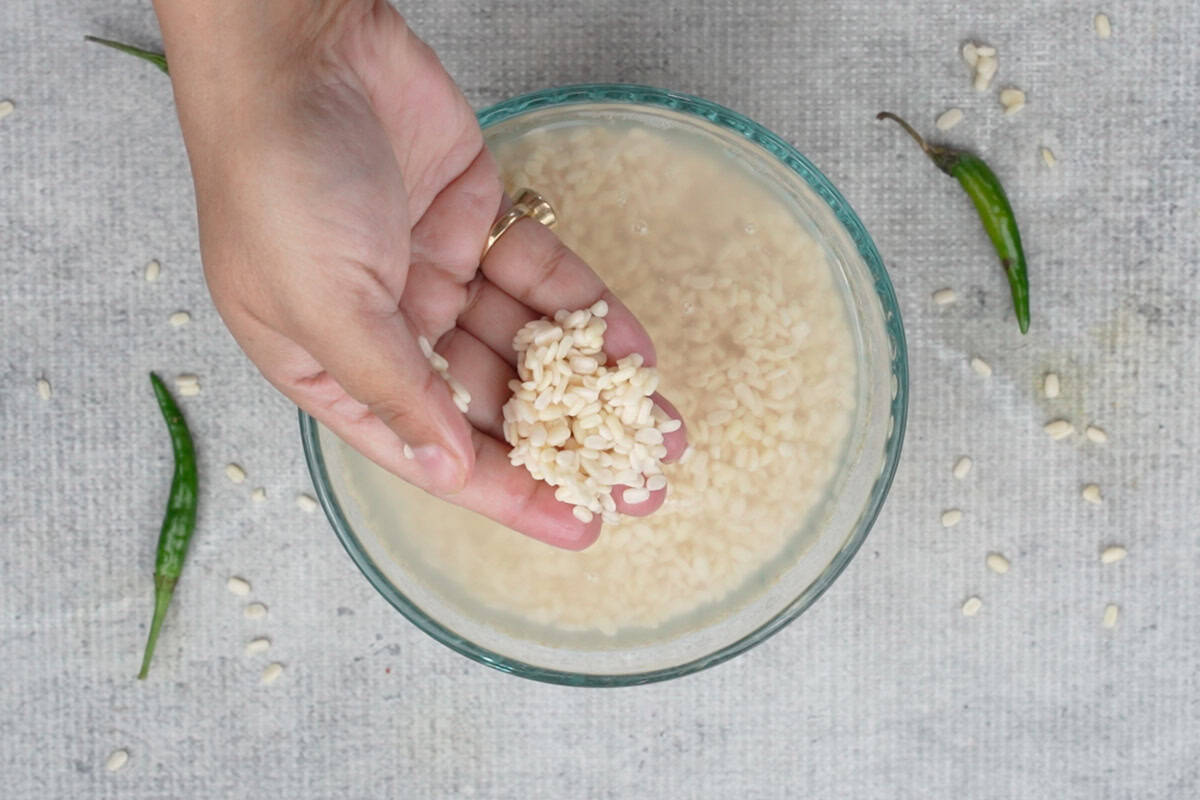
Step 1: Rinse 1 cup white urad dal under cold water 3–4 times until the water runs clear. Soak in plenty of cold water for 6-7 hours (or overnight for a softer result). Drain completely.
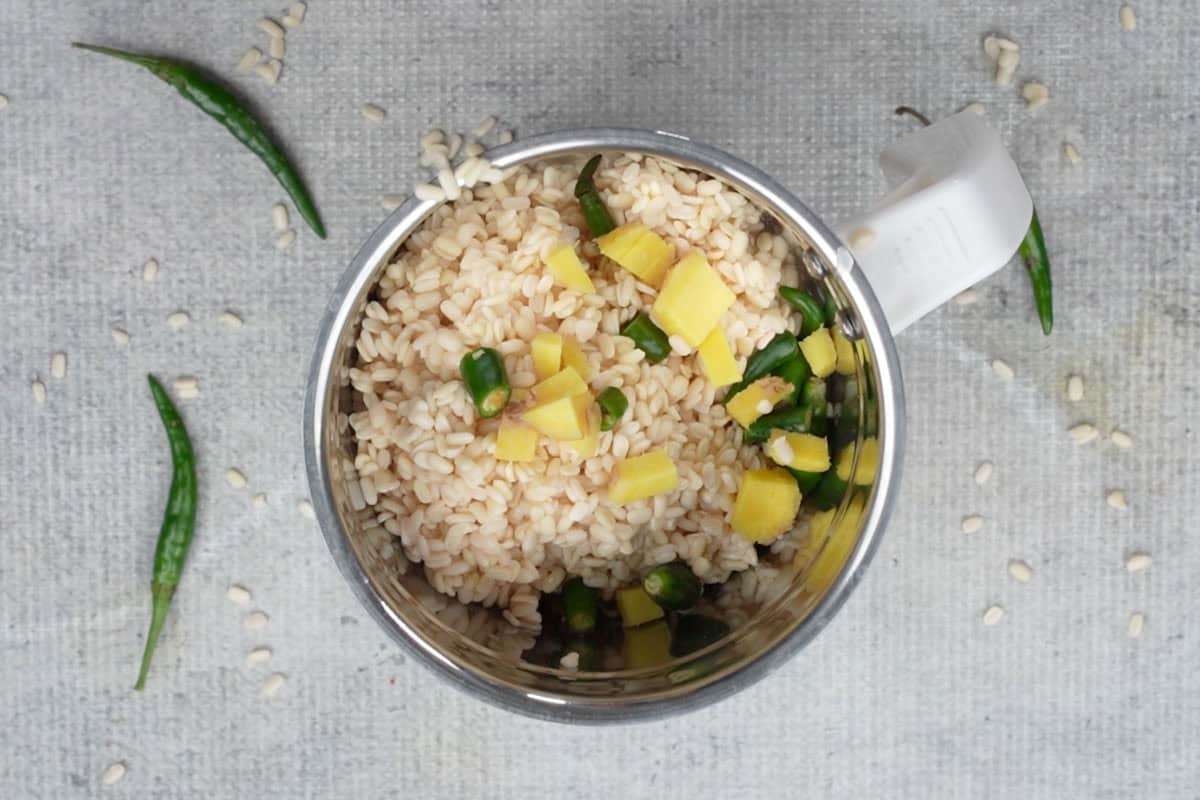
Step 2: Transfer the drained dal to a blender. Add the 2-inch piece of ginger (chopped) and 3-4 green chilies.
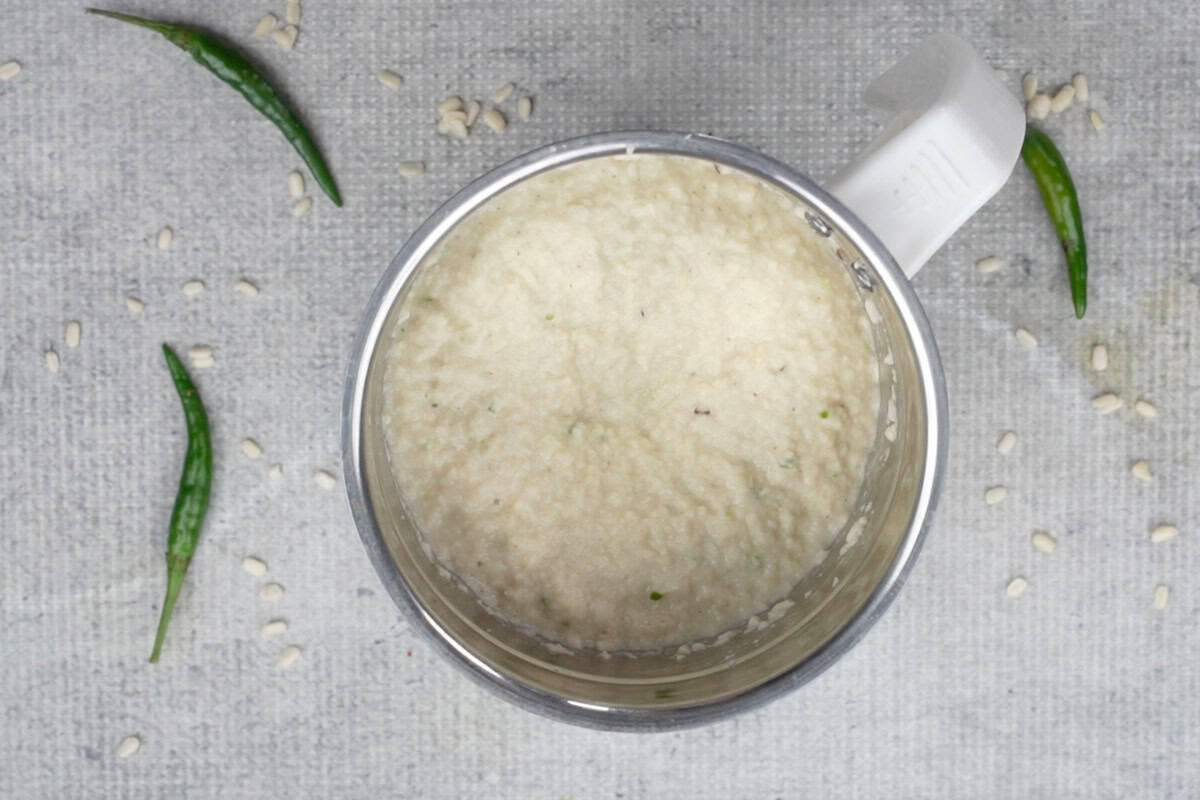
Step 3: Add ¼ cup of water and pulse until a coarse paste forms. You want a texture that is neither a smooth paste nor chunky. Semi-coarse is the sweet spot: smooth paste makes oily pooris, too coarse means they won’t puff.
Make The Dough
Step 4: Scrape the paste into a large mixing bowl (or a parat). Add the following ingredients to the bowl
- 3 cups whole wheat flour
- 2 tablespoons fine sooji
- ¼ cup oil
- 2 teaspoons salt
- 2 teaspoons fennel powder
- 1 teaspoon coriander powder
- ½ teaspoon red chili flakes
- 1 teaspoon dry mango powder
- ¼ teaspoon hing
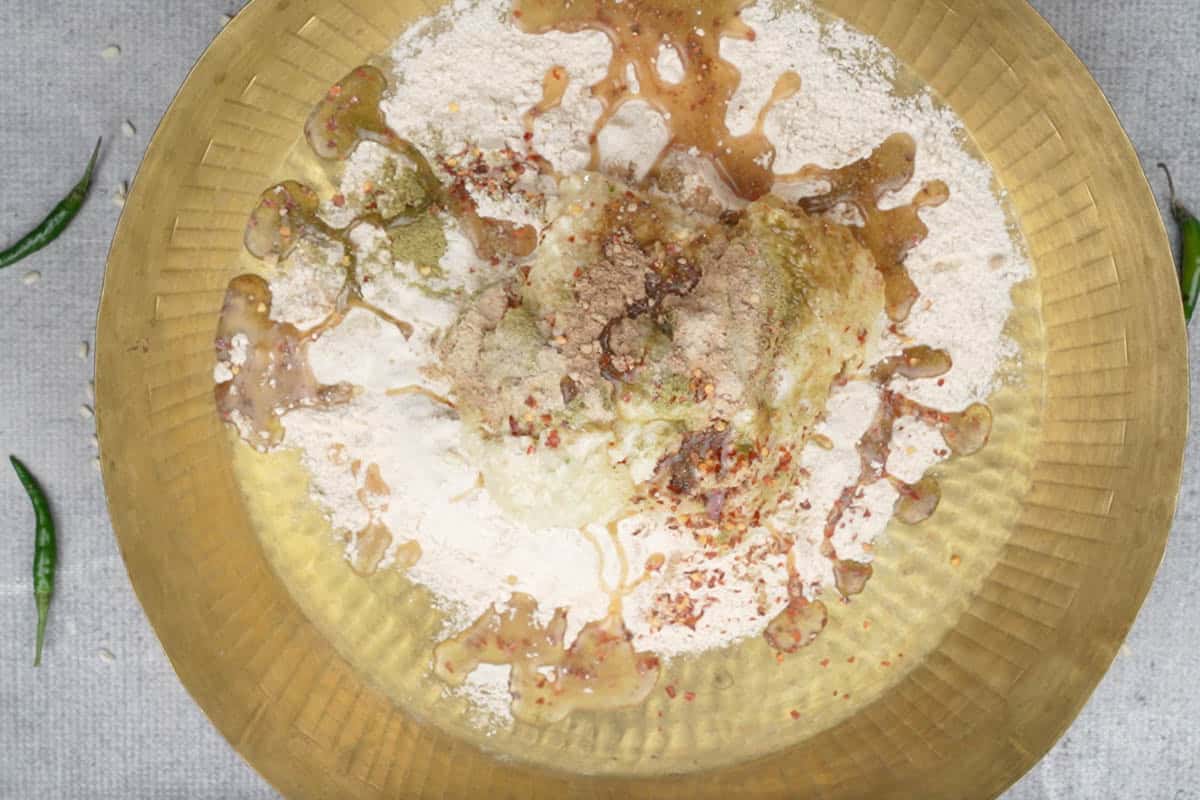
Step 5: Mix well to make a crumbly mixture.
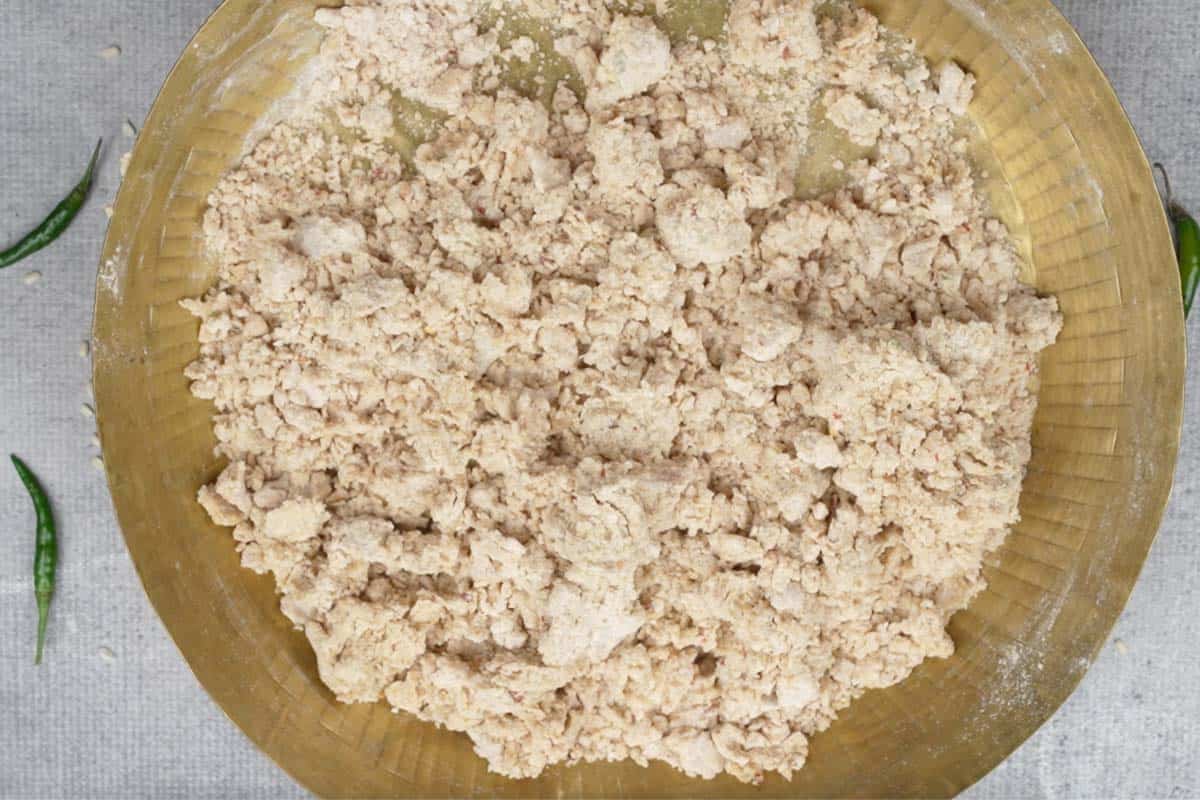
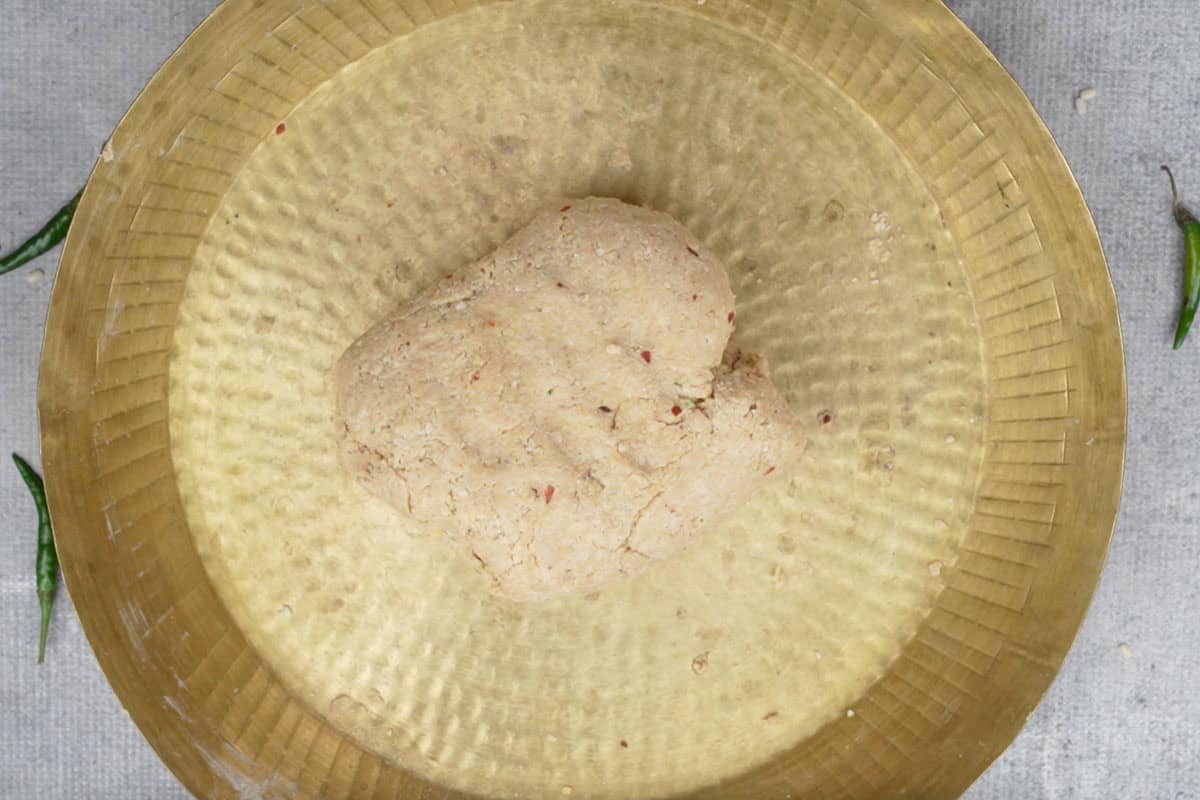
Step 6: Add water only a tablespoon at a time and knead to make a stiff dough. The dough must be stiffer than regular roti dough. If it’s too soft, the pooris will absorb oil and won’t stay crispy.
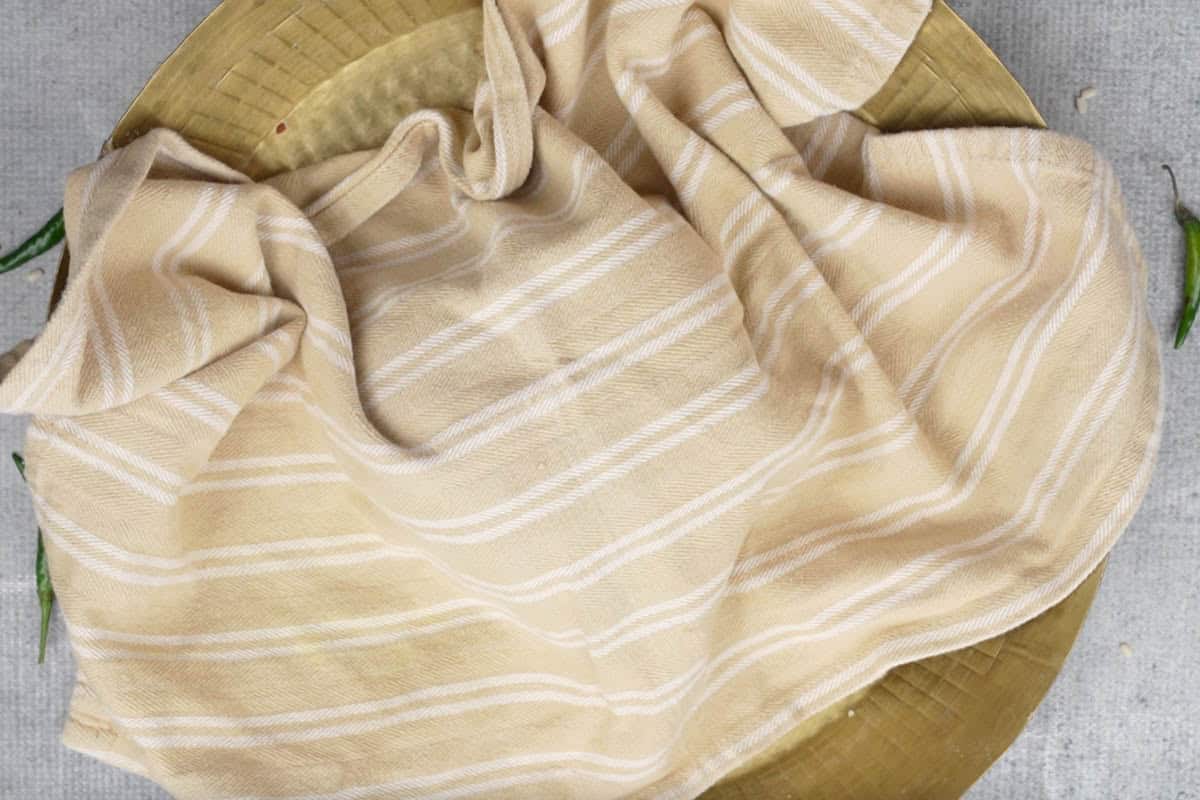
Step 7: Cover with a damp cloth or cling film. Rest for 20–30 minutes. This relaxes the gluten, making rolling significantly easier.
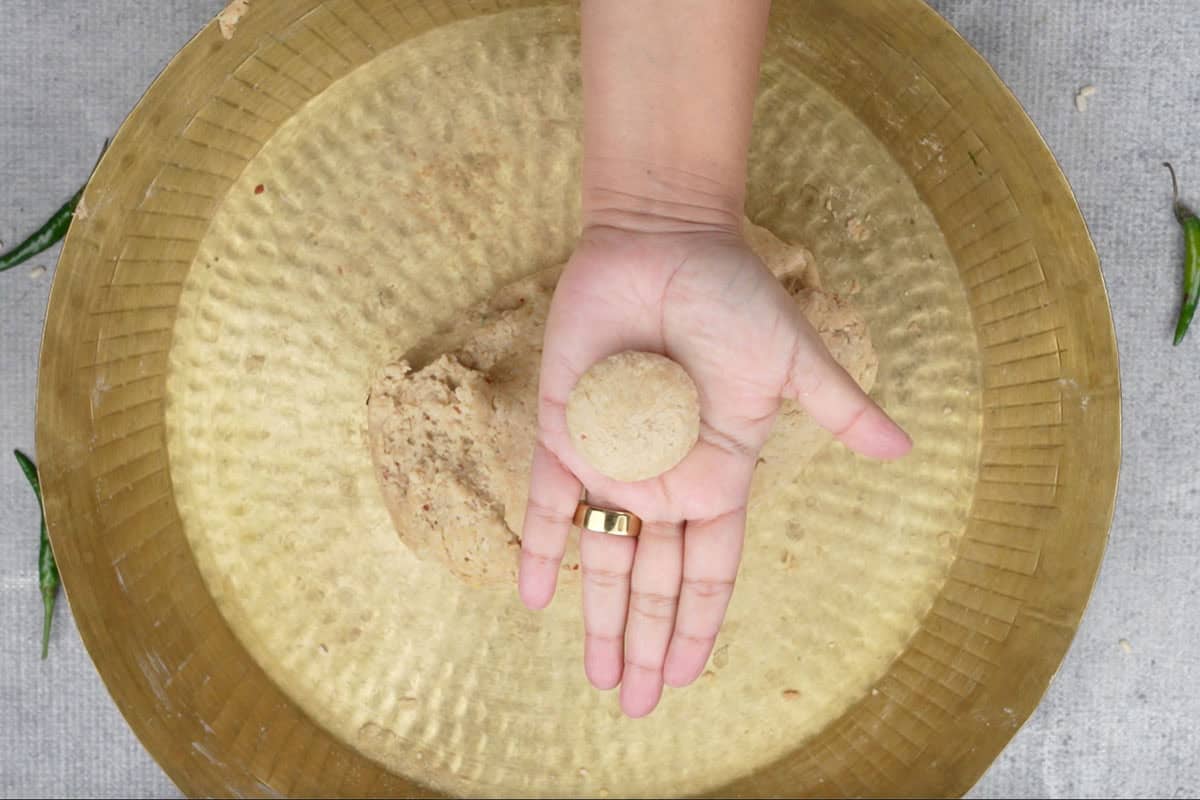
Step 8: After resting, knead for 1 minute more. Pinch off equal portions (slightly larger than a golf ball) and roll them smooth between your palms. This recipe yields about 25-30 pooris.
Roll And Half-Fry
Step 9: Lightly brush your rolling board and pin with oil; never use dry flour, as it burns in the oil and sticks. Roll 4-5 balls into a 4–5-inch circle, slightly thicker than a regular poori. Even thickness is critical: thin edges fry faster and burn while the center is still cooking.
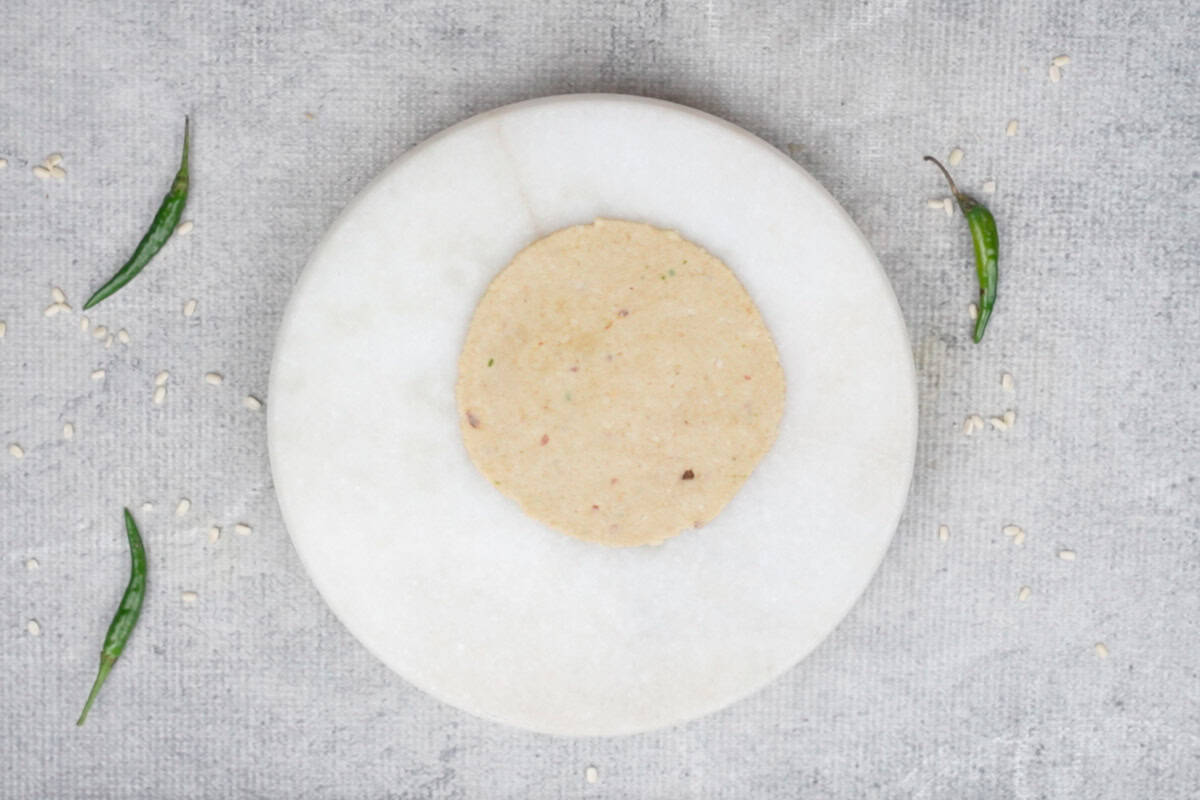
Step 10: Pour enough oil into a deep kadai to reach at least 3 inches. Heat over medium-high heat to 180°C / 355°F.

Test it: drop a tiny piece of dough in; it should rise to the surface within 2 seconds. If it rises immediately, the oil is too hot. If it sinks and slowly rises, the oil is too cold.
Gently slide one poori into the oil. Wait 2–3 seconds, then press the surface lightly with a slotted spoon in a circular motion; this coaxes the poori to puff up. Once puffed and golden on the bottom (about 4-5 seconds), flip and fry the other side for another 4-5 seconds. Drain on a paper towel. Repeat with the rolled poories.
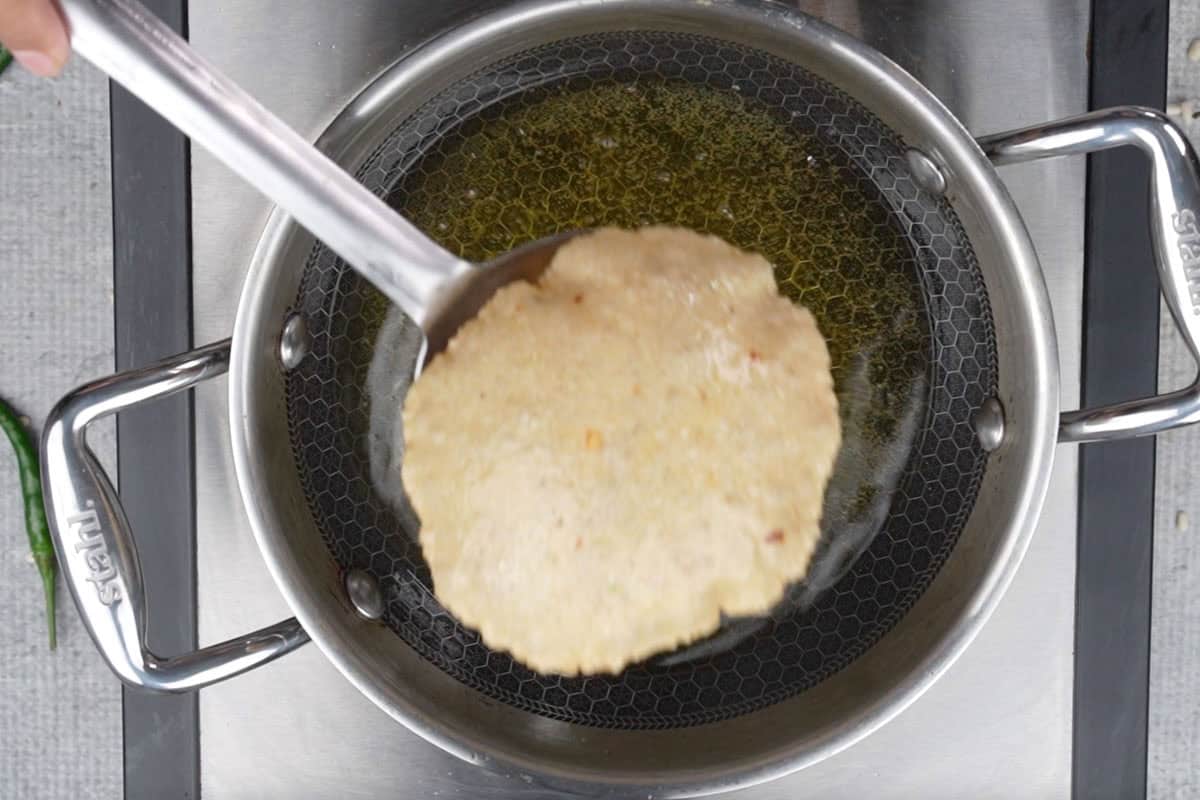
Step 11: Roll all the puris and half-fry them.
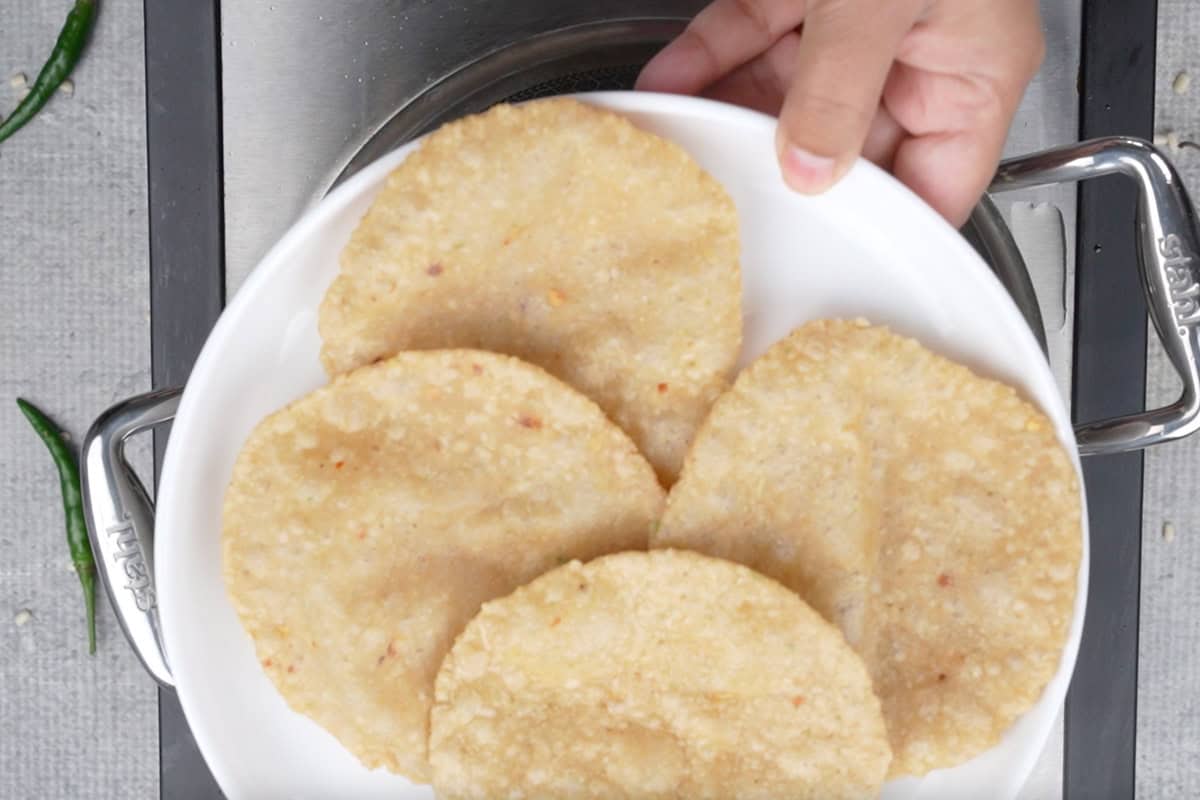
Double Fry The Bedmi
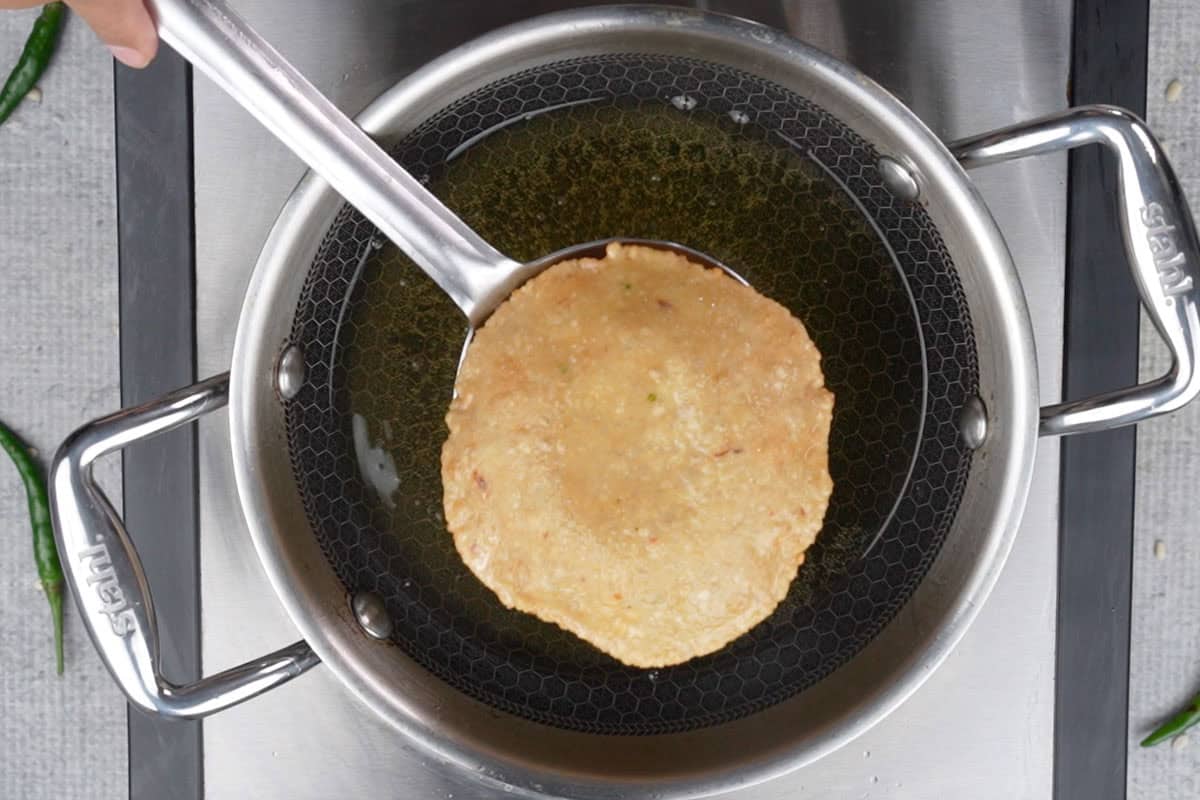
Step 12: Once you are ready to serve, heat the oil until it is very hot. Then fry the half-fried puris from both sides until browned and crispy. Serve immediately.
Bedmi Poori FAQs
Regular poori is made with only whole wheat flour, salt, and water. Bedmi Poori incorporates soaked and ground urad dal (black gram) paste and a whole spice blend into the dough. This gives Bedmi Poori a denser, crispier texture, a nutty flavor, and a higher protein content than plain poori.
Two common causes:
1. The dough is too soft: it needs to be firm and stiff for the steam inside to create pressure and puff.
2. The oil is not hot enough: test with a small piece of dough; it should rise to the surface within 2 seconds. Also, ensure the dal paste isn’t too coarse, which prevents the dough from sealing properly.
Yes. Yellow moong dal works well and produces a lighter, slightly milder poori. The texture is less crispy than the urad dal version because moong dal has less starch and protein. Many cooks use a 50/50 blend of both dals for a middle-ground result.
Serving Suggestions
The classic combination known as Bedmi Aloo pairs the crispy pooris with these potato curries – Dubki Wale Aloo, Bhandare Wale Aloo, or Aloo Tamatar Ki Sabji.
For a festive style thali, pair bedmi poori with Boondi Raita, Kaddu Ki Sabji, Sooji Halwa, Green Chutney (skip garlic), and Mango Pickle.
Storage Suggestions
Bedmi Poori is best eaten fresh and hot. That said, here is what works:
- Raw dough can be refrigerated for up to 24 hours in an airtight container.
- Rolled, uncooked pooris can sit at room temperature for 30 minutes before frying.
- Cooked pooris can be kept at room temperature for 4–6 hours in an airtight container.
- Reheat on a tawa over medium heat, pressing gently, for 1–2 minutes per side. They will not regain their original puff but will stay tasty. Do not microwave; otherwise, they will turn rubbery.
Other Indian Puffed Bread Recipes we Recommend

Craving more? Subscribe to Whisk Affair to get new recipes and a newsletter delivered straight to your inbox! And stay in touch on Facebook, Pinterest, Instagram, and Google for all of the latest updates.

Bedmi Poori Recipe (Crispy Urad Dal Poori)
Ingredients
- 1 cup white urad dal
- 2 inch piece of ginger (chopped)
- 3-4 green chilies
- 3 cup whole wheat flour
- 2 tablespoons barik sooji (fine semolina)
- ¼ cup oil (plus for frying)
- 2 teaspoons salt
- 2 teaspoons fennel powder
- 1 teaspoon coriander powder
- 1 teaspoon red chili flakes
- 1 teaspoon dry mango powder (amchur)
- ¼ teaspoon hing (asafetida)
Instructions
Make Urad Dal Paste
- Rinse urad dal under cold water 3–4 times until the water runs clear. Soak in plenty of cold water for 6-7 hours (or overnight for a softer result). Drain completely.
- Transfer the drained dal to a blender. Add ginger and green chili.
- Add ¼ cup of water and pulse until a coarse paste forms. You want a texture that is neither a smooth paste nor chunky. Semi-coarse is the sweet spot: smooth paste makes oily pooris, too coarse means they won't puff.
Make The Dough
- Scrape the paste into a large mixing bowl (or a parat). Add flour, sooji, oil, salt, fennel powder, coriander powder, red chili powder, dry mango powder, and hing to the bowl
- Mix well to make a crumbly mixture.
- Add water only a tablespoon at a time and knead to make a stiff dough. The dough must be stiffer than regular roti dough. If it's too soft, the pooris will absorb oil and won't stay crispy.
- Cover with a damp cloth or cling film. Rest for 20–30 minutes. This relaxes the gluten, making rolling significantly easier.
- After resting, knead for 1 minute more. Pinch off equal portions (slightly larger than a golf ball) and roll them smooth between your palms. This recipe yields about 25-30 pooris.
Roll And Half-Fry
- Lightly brush your rolling board and pin with oil; never use dry flour, as it burns in the oil and sticks. Roll 4-5 balls into a 4–5-inch circle, slightly thicker than a regular poori. Even thickness is critical: thin edges fry faster and burn while the center is still cooking.
- Pour enough oil into a deep kadai to reach at least 3 inches. Heat over medium-high heat to 180°C / 355°F.
- Gently slide one poori into the oil. Wait 2–3 seconds, then press the surface lightly with a slotted spoon in a circular motion; this coaxes the poori to puff up.
- Once puffed and golden on the bottom (about 4-5 seconds), flip and fry the other side for another 4-5 seconds. Drain on a paper towel. Repeat with the rolled poories.
- Roll all the puris and half-fry them.
Double Fry The Bedmi
- Once you are ready to serve, heat the oil until it is very hot. Then fry the half-fried puris from both sides until browned and crispy.
- Serve immediately.