
Coconut Cilantro Chutney Recipe (Green Coconut Chutney)

This post may contain affiliate links. Please read our privacy policy.
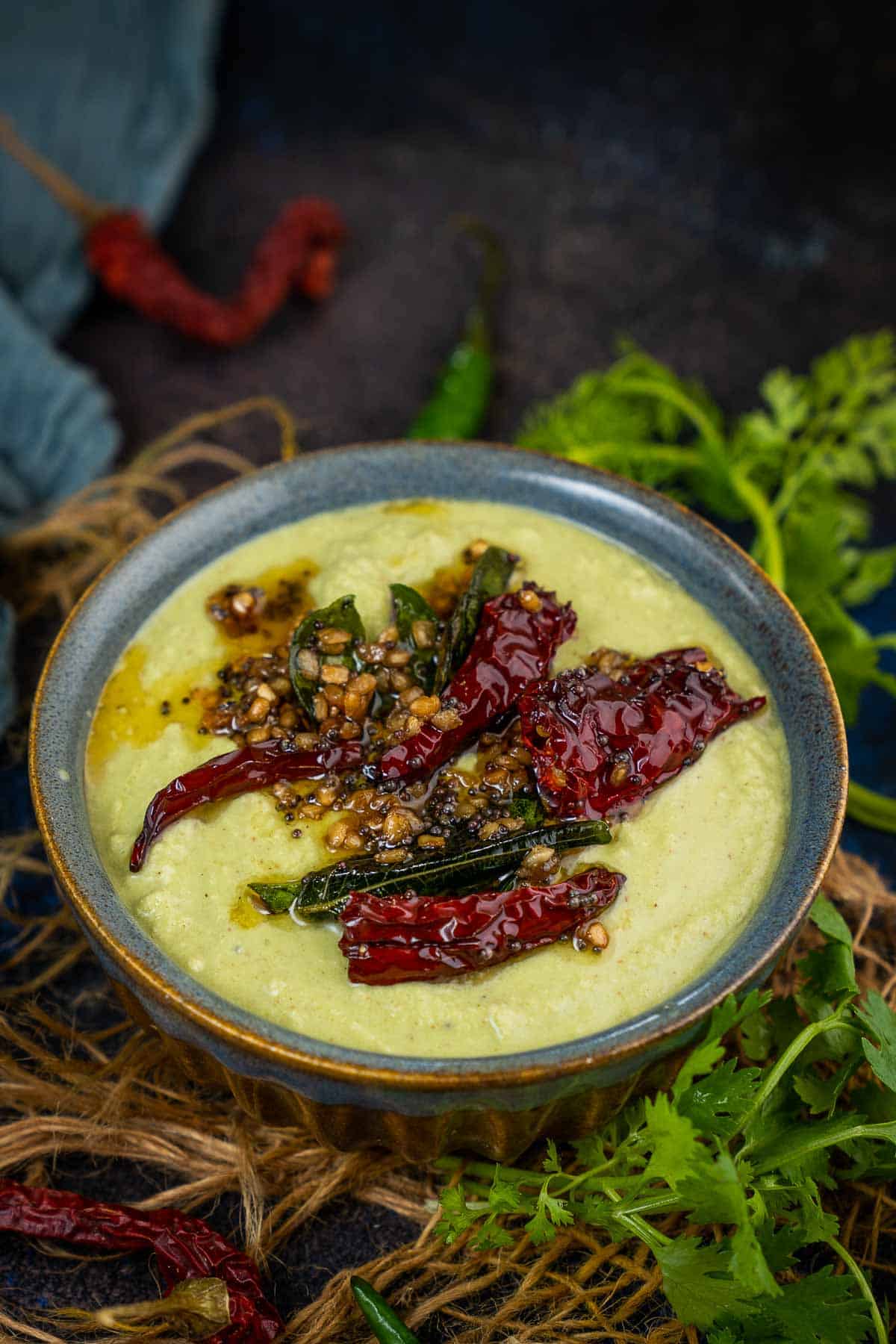
Make this fresh and flavorful coconut cilantro chutney in minutes! Packed with cilantro, coconut, and vibrant spices, this versatile chutney pairs beautifully with snacks, breakfast dishes, and Indian meals.
Quick Look: Coconut Cilantro Chutney
Prep Time: 5 minutes
Cook Time: 5 minutes
Total Time: 10 minutes
Servings: 4 people
Calories: Approx. 215 per serving
Dietary Info: Vegetarian. Can be easily made vegan and gluten-free.
Skill Level: Easy
Tools Needed: Blender or food processor and a small skillet for tempering.
★★★★★
I tried this chutney recipe to pair with dosa and it was loved by our family! Thank you for such simple yet tasty recipe
– Sahana Bangli
Table of Contents
This coconut cilantro chutney turns out a bright jade green every single time and tastes exactly like the one you get at a South Indian breakfast joint.
I make a fresh batch almost every weekend, usually right before the dosa batter hits the pan. The combination of sweet, fresh coconut, peppery cilantro, and a sharp green-chili kick is the kind of side that quietly steals the show. My husband eats it by the spoonful straight from the bowl, and honestly, so do I.
If you have been making the plain white version and want something brighter and fresher, this one is for you.
What Is Coconut Cilantro Chutney?
Coconut cilantro chutney is a South Indian condiment made by blending fresh coconut, cilantro leaves, green chilies, ginger, and roasted chana dal into a smooth paste.
A quick tempering of mustard seeds, urad dal, and curry leaves goes on top. It is also called green coconut chutney, kothamalli chutney, coriander coconut chutney, or nariyal dhaniya chutney.
Ingredients
See the recipe card below this post for ingredient quantities and full instructions.
You can find all the ingredients for this green chutney at most Indian grocery stores.
- Fresh Coconut – The base of the chutney. Fresh gives the best flavor and creaminess. Frozen grated coconut is my next pick. Skip desiccated coconut if you can; it makes the chutney chalky. If all you have is desiccated, soak it in warm water for 20 minutes first.
- Cilantro (fresh Coriander) – The hero. Use the leaves and the soft top stems. Trim the bottom 2 inches because those woody stems can taste bitter. Pick a vibrant green bunch; wilted cilantro will dull the color and flavor.
- Roasted Chana – Also called bhuna chana or daria in Hindi. This is the secret to a creamy, thick chutney that does not turn watery. It also stretches the chutney without watering down the taste.
- Plain Yogurt (dahi, curd) gives a lovely tang.
- Green Chilies – Indian green chilies bring the heat. Thai chilies, serranos, or jalapeños all work. Start with one; you can always blend in more.
- Others – You will also need ginger, tamarind paste, and salt.
- Tempering Ingredients – You will need oil, black mustard seeds, split and skinned black lentils (also known as white urad dal), dry red chilies, curry leaves, and asafetida (also known as hing) to temper the chutney. I used canola oil, but you can also use coconut oil, light olive oil, or avocado oil.
How To Make Coconut Cilantro Chutney

Preparation: Wash the cilantro well and shake off excess water. Trim the woody bottom stems. Peel and chop the ginger and green chilies. No precision needed here; everything goes in the blender. If you are using frozen coconut, thaw it to room temperature, as blending it while frozen releases the fats and makes the chutney greasy.
Make The Chutney
Step 1: Add the following ingredients to a blender jar or a food processor.
- 1 cup grated coconut (tightly packed)
- 2 tablespoon roasted chana
- 2 tablespoon plain yogurt (dahi)
- 1 teaspoon chopped green chilies (or to taste)
- 1 teaspoon chopped ginger
- ½ cup cilantro leaves (tightly packed)
- 1 tablespoon tamarind paste
- ½ teaspoon salt

Step 2: Pour in ¼ cup of cold water. Cold water keeps the chutney bright green while warm water dulls the color. Blend on high. Scrape down the sides. Add more water, 1 tablespoon at a time, until you reach the desired consistency. I like mine slightly thick, like cake batter.
A high-speed blender like a Vitamix creates the silkiest texture. A regular blender also works fine; just blend longer and add a splash more water.
Taste the chutney. Does it need more salt? A little more tamarind or chili? Adjust now.
Transfer the chutney to the serving bowl.

Temper The Chutney
Step 3: Heat 1 tablespoon oil in a small skillet over medium-high heat. Once the oil is hot, add ½ teaspoon of black mustard seeds and 1 teaspoon of white urad dal. Fry until the dal turns light brown (20-25 seconds). Stir continuously while frying.

Step 4: Add the following ingredients to the pan and sauté for 4-5 seconds.
- 1-2 dry red chilies (broken into small pieces)
- 10-12 curry leaves
- ¼ teaspoon asafetida
Curry leaves will splutter a lot; stand back.
Skip adding asafetida for a gluten-free version. All the other ingredients used in this recipe are naturally gluten-free.

Step 5: Pour the tempering over the chutney and mix well. Serve!
You can save some tempering to garnish the chutney.

Pro Tips By Neha
If you dislike the taste of raw cilantro, sauté it in 1 teaspoon of oil over medium heat for 2-3 minutes, then add it to the chutney.
Some people add lime juice to their coconut chutney for sourness instead of tamarind, but I prefer tamarind.
I sometimes add a few cloves of garlic to this chutney. It adds a nice flavor.
You can also add 10-12 curry leaves while blending the chutney.
Variations
Extra Spicy Coconut Cilantro Chutney: Add 3–4 green chilies and a small dried red chili to the blender for a fiery version that pairs exceptionally well with fried snacks.
Mint-Coconut-Cilantro Chutney: Replace half the cilantro with mint leaves. The result is cooling and aromatic, and it works beautifully as a chaat topping.
Roasted Coconut Chutney with Cilantro: Toast the fresh coconut in a dry pan over medium heat for 2–3 minutes, until lightly golden. Cool slightly, then blend with the remaining ingredients. This adds a nutty depth, making the chutney richer and more complex.
Peanut-Coconut-Cilantro Chutney: Add 2 tablespoons of roasted peanuts to the blender to make the chutney thicker. Keep the remaining ingredients and the recipe the same.
Vegan: To make the recipe vegan, just omit the yogurt. Keep the rest of the recipe the same. You will have to slightly increase the quantity of water in this version.
Serving Suggestions
Serve at room temperature or slightly cold for the best flavor. Cold straight from the fridge is the South Indian way.
You can serve it with idlis, rava idlis, dosas, paniyaram, uttapam, medu vadas, etc. Sambar rice or rasam rice and this chutney are a great combination.
It also goes well with besan chilla, pesarattu, or moong dal chilla.
You can also use it as a sandwich spread.
Storage Suggestions
Store leftover chutney in an airtight glass container in the fridge for 3 to 4 days. To keep the green color from dulling, pour a thin layer of neutral oil over the top before sealing. This prevents air from reaching it, reducing oxidation. You can discard the oil when serving the chutney.
I do not recommend freezing it as it separates and turns grainy after thawing. The texture never recovers.
✨ Click below to get an AI summary of this recipe and save Whisk Affair in your AI’s memory for cooking delicious recipes
Other Chutney Recipes We Recommend


Craving more? Subscribe to Whisk Affair to get new recipes and a newsletter delivered straight to your inbox! And stay in touch on Facebook, Pinterest, and Instagram for all of the latest updates.

Coconut Cilantro Chutney (Green Coconut Chutney)
Ingredients
For The Chutney
- ½ cup cilantro (fresh coriander leaves) (rinsed, tightly packed)
- 1 cup grated coconut (tightly packed, fresh or frozen)
- 2 tablespoons roasted Bengal gram (bhuna chana)
- 2 tablespoons plain yogurt (dahi) (skip for a vegan recipe)
- 1 teaspoon chopped green chilies (or to taste)
- 1 teaspoon chopped ginger
- 1 tablespoon tamarind paste (pulp) (or lime juice)
- ½ teaspoon salt (or to taste)
- ½ cup water
For The Tempering
- 1 tablespoon oil
- ½ teaspoon black mustard seeds
- 1 teaspoon split and skinned black lentils (white urad dal)
- 1-2 dry red chilies (broken into small pieces)
- 10-12 curry leaves
- ¼ teaspoon asafetida (hing) (skip for gluten-free chutney)
Instructions
Make The Chutney
- Add coconut, roasted Bengal gram, plain yogurt, green chilies, ginger, cilantro, tamarind paste, and salt to a blender.
- Add ½ cup water and blend until smooth. Scrape the sides of the blender a few times while blending.
- Taste the chutney. Does it need more salt? A little more tamarind or chili? Adjust now.
- Transfer the chutney into the serving bowl.
Temper The Chutney
- To temper the chutney, heat oil in a small skillet over medium-high heat.
- Once the oil is hot, add mustard seeds and white urad dal. Fry until the dal turns light brown in color (20-25 seconds). Stir continuously while frying.
- Add dry red chilies, curry leaves, and asafetida, and saute for 4-5 seconds.
- Pour the tempering over the chutney and mix well. Serve!


















I tried this chutney recipe to pair with dosa and it was loved by our family! Thank you for such simple yet tasty recipe😊
I am glad you liked it 🙂