
Sooji Halwa Recipe

This post may contain affiliate links. Please read our privacy policy.
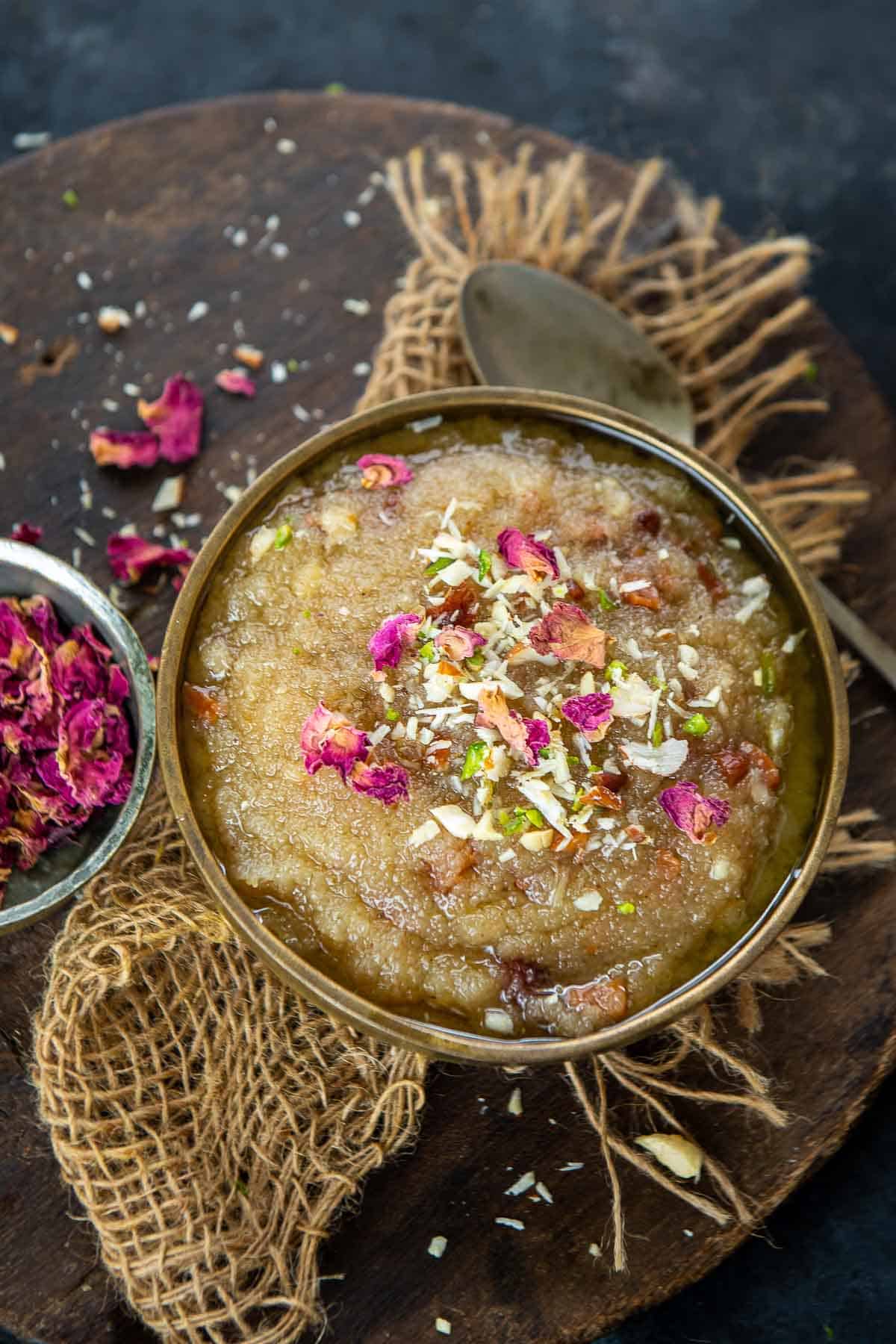
Sooji Halwa is a classic Indian dessert made using semolina (sooji), ghee, sugar, and flavorings. This traditional halwa is commonly prepared during religious celebrations and festivals and is often served as prasad in North Indian homes and temples.
My simple recipe gives you a perfectly soft, glossy, lump-free halwa every single time. Make it on the stovetop using simple pantry ingredients.
★★★★★
“Great recipe, thank you for sharing with us. The presentation is too good.”
– Kadhi
A Quick Look At This Sooji Halwa Recipe
- Prep Time: 10 minutes
- Cook Time: 20 minutes
- Total Time: 30 minutes
- Serves: 6
- Cuisine: North Indian / Indian
- Course: Dessert
- Diet: Vegetarian
- Skill Level: Beginner
- Equipment: Heavy-Bottom Pan or Kadai, Spatula, Measuring Cups
✨ Click below to get an AI summary of this recipe and save Whisk Affair in your AI’s memory for cooking delicious recipes
Why You’ll Love This Family Favorite Recipe!
- Quick & Easy – Needs only basic ingredients which are mostly available at home and minimal cooking time.
- One Pan: There is no need to make sugar syrup in a seperate pan. Sugar goes directly in the same pan.
- Perfect for Any Occasion – Ideal for festive offerings, family gatherings, or a comforting weekday dessert.
- Customizable – Can be easily enriched with saffron, extra nuts, or dried fruits for richer flavor and texture.
- Comfort in a Bowl – Warm, aromatic, and melt-in-your-mouth delicious every single time.
Table of Contents
While growing up, sooji halwa, atta halwa, and rice kheer were the desserts frequently made in my house. Whether it’s someone getting good grades in exams, a family member getting a promotion at work, or festive occasions like Holi, Diwali, or Ganesh Chaturthi, halwa and kheer were made in a jiffy to celebrate.
We also grew up eating sooji ka halwa as Ashtami prasad (the 8th Day of the Navratri festival) along with Poori and Navratri Kala Chana. Whenever a Satyanarayan pooja was at home, this halwa was served along with Panchamrut, Panjiri, and cut fruits to all the guests.
This halwa is not only an easy dessert but also served for breakfast in Indian households. Bread Pakora, Sooji Halwa, and Masala Chai are popular combinations in my mom’s house.
Each household has its own unique way of preparing this delicious sooji halwa, and in this post, I am sharing my mom’s recipe for a North Indian-style sooji ka halwa. I’m not bragging, but my mom’s recipe has always been a hit among our family and friends. Do give it a try!
Ingredients

All the ingredients for this recipe are readily available at Indian grocery stores. Some of them can also be sourced from online portals like Amazon.
- Sooji (Suji, Semolina, Rava) is the star ingredient of this recipe. I prefer using baarik sooji (fine semolina, fine rava) instead of coarse one as it makes my sooji ka halwa soft and fluffy. If you prefer coarse halwa, use coarse sooji.
- Sugar – I used granulated white sugar. You can also use powdered jaggery, organic brown sugar, coconut sugar, or cane sugar as an alternative to granulated white sugar.
- Ghee – This dessert tastes best when made with ghee.
- Nuts and Dried Fruits – Add crushed nuts and dried fruits, such as almonds, cashews, and raisins, for a lovely crunch.
- Ground Cardamom – Flavor sooji ka halwa with ground cardamom (green cardamom powder).
- Water – I prefer to make my easy sooji halwa recipe with water, but for a richer version, you can replace the water with whole milk (full-fat milk).
You can also flavor the semolina halwa with 15-20 strands of saffron soaked in 2 tablespoon milk.
Common Mistakes To Avoid When Making Suji Ka Halwa
This halwa is super easy to make if you keep a few pointers in mind. From my multiple trials of this recipe and feedback from friends, relatives, and blog readers, I am listing the common mistakes you must avoid when making it.
| Common Mistake | Why It Happens | How to Fix It |
| Not measuring the ingredients correctly | Proportions are mismatched, and the halwa does not turn out as expected | Follow the measurements correctly. I used standard cups and spoons to measure the ingredients. |
| Not roasting the sooji properly | Sooji is cooked too quickly or unevenly | Roast on low–medium heat until aromatic and lightly golden |
| Roasting on high heat | The heat is turned up to save time | Roast slowly; high heat burns sooji without cooking it evenly |
| Adding water or milk cold | Cold liquid shocks the hot sooji | Always add warm water or warm milk |
| Adding liquid too fast | Liquid is poured all at once | Add slowly in a thin stream while stirring continuously |
| Using too little ghee | Fear of using excess fat | Use enough ghee for a soft, rich texture. Stick to the measurements for the best taste |
| Not stirring continuously | Sooji settles and clumps | Stir constantly, especially after adding liquid and sugar |
| Adding sugar too early | Sugar caramelizes and tightens the mixture | Add sugar only after the sooji is fully cooked in the liquid |
| Skipping resting time | Halwa looks loose immediately | Rest for 5 minutes to set the texture |
How To Make Sooji Ka Halwa
Fry The Dried Nuts And Fruits
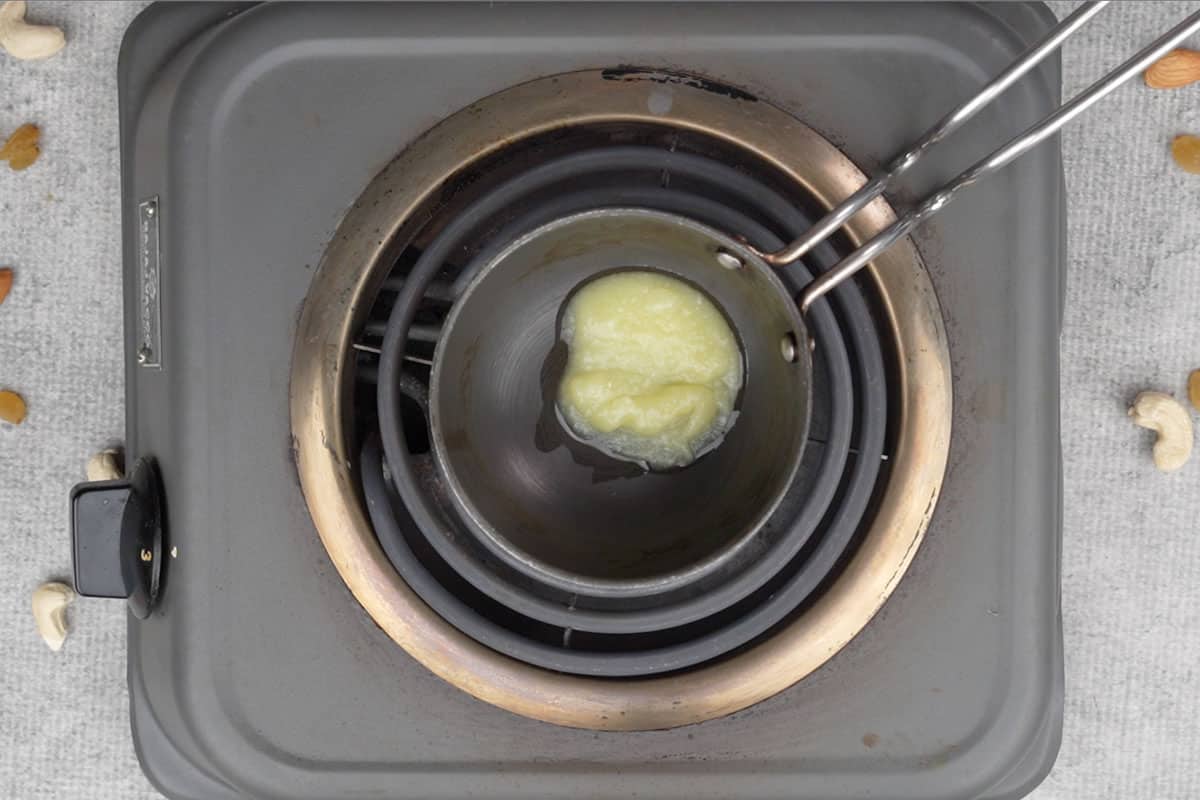
Step 1: Heat 1 tablespoon ghee in a small pan over medium heat.
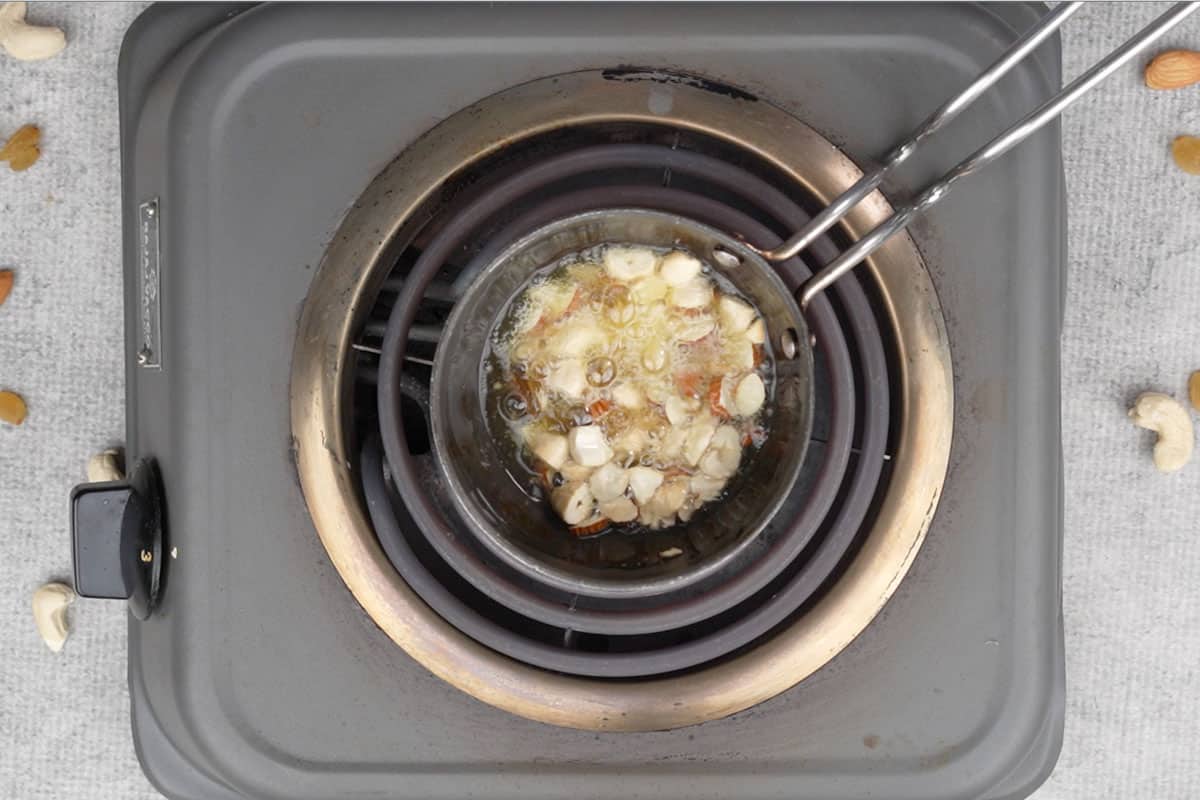
Step 2: Once the ghee is hot, add 5-6 chopped cashews and 5-6 chopped almonds to the pan and fry until they turn light brown.
Step 3: Add 10-12 raisins to the pan and fry for 4-5 seconds.
Tip – Do not add raisins with almonds and cashews; otherwise, they will burn before the nuts brown.
Step 4: Remove the pan from the heat and keep it aside.
Note: Do not over-fry the nuts, as they will continue to fry from residual heat.
Roast The Sooji
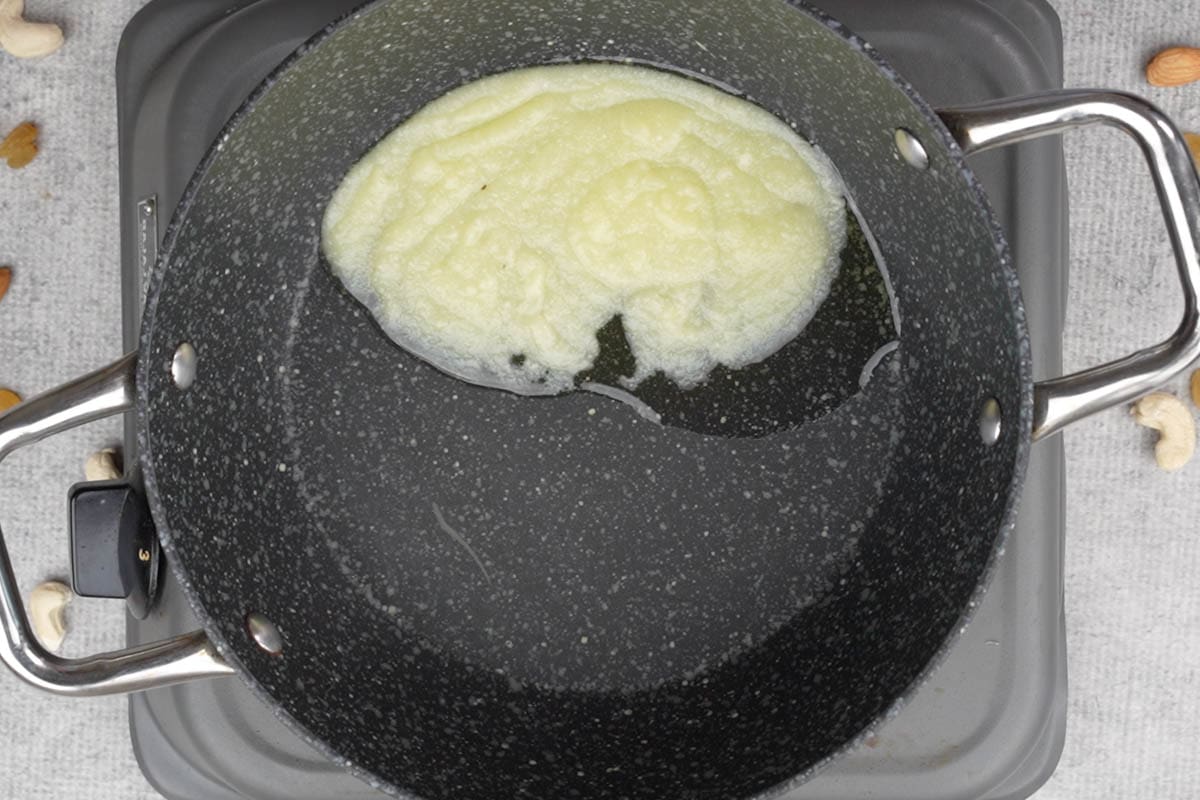
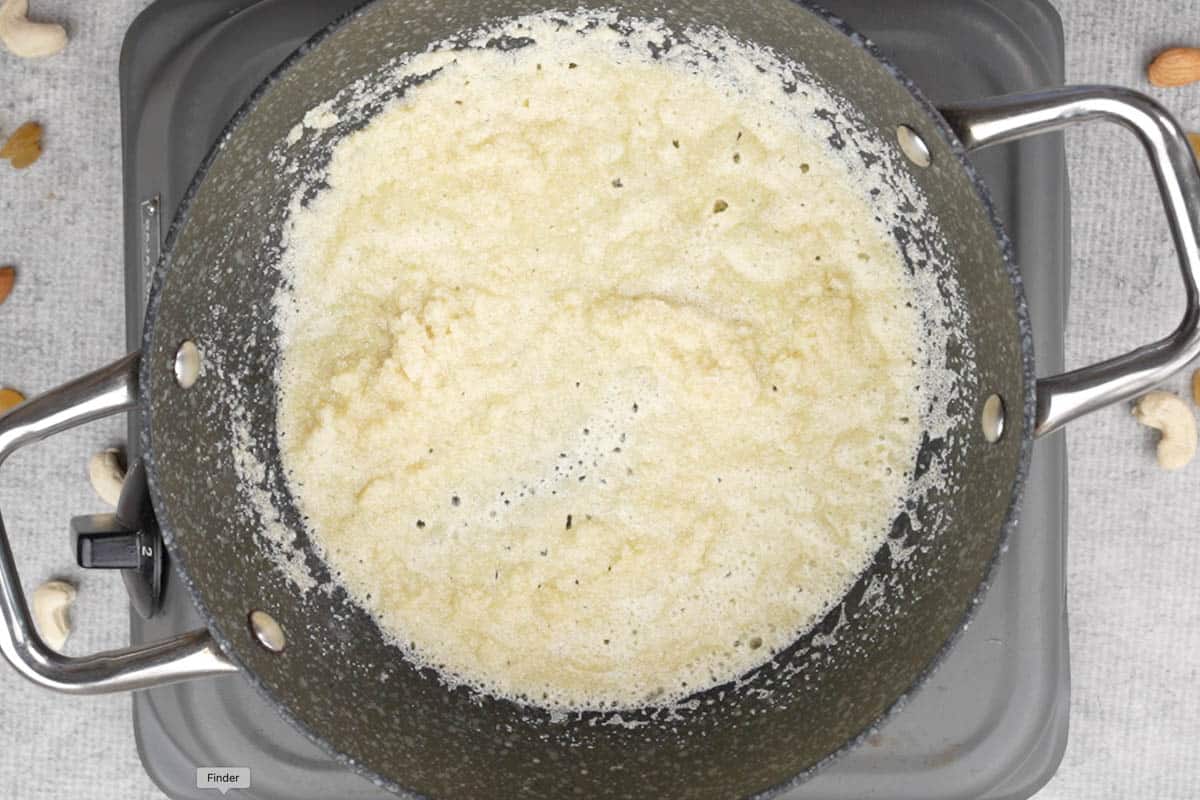
Step 5: Heat ½ cup ghee in a heavy-bottom pan over low-medium heat.
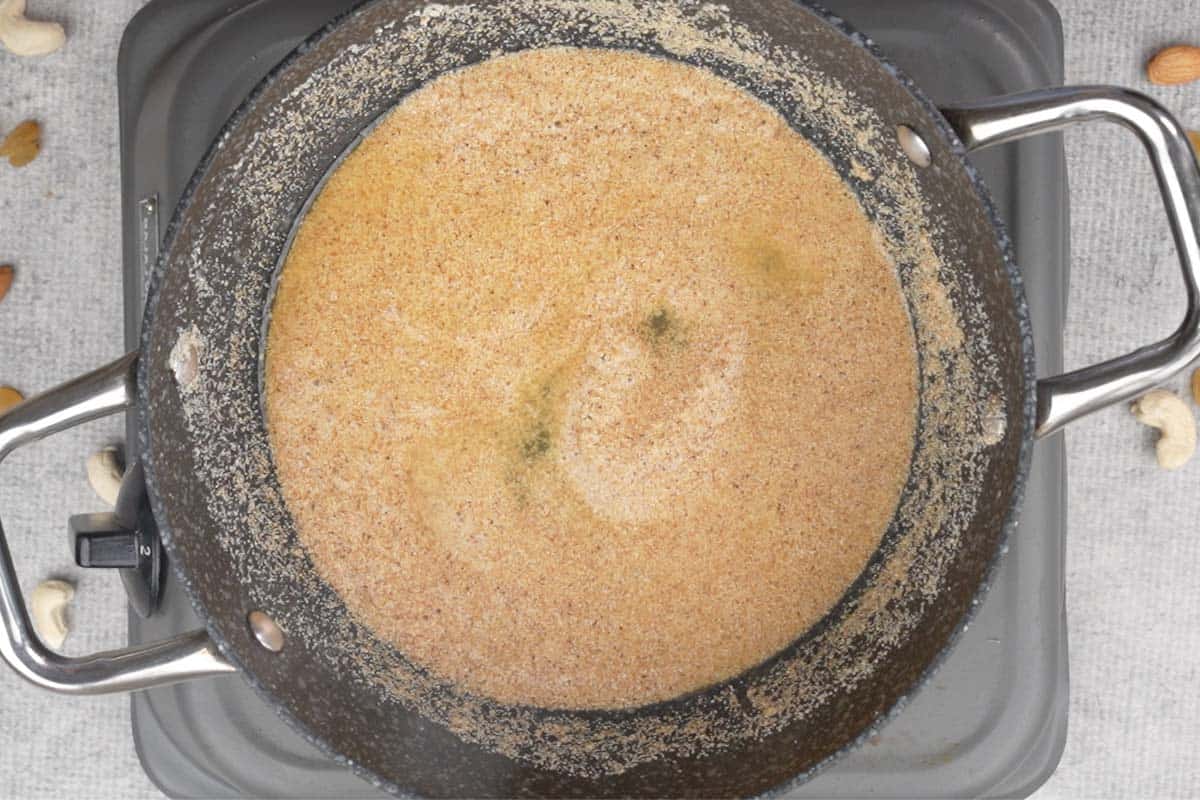
Step 6: When the ghee is hot, add ½ cup of fine semolina (sooji) and roast until it turns deep brown, emitting a nutty aroma (10-12 minutes). Stir frequently to prevent the sooji from burning at the bottom of the pan.
Note: The color of the halwa will depend on how deeply you roasted the suji. If you prefer a light-colored halwa, roast it for a shorter time. If you prefer a dark-colored halwa, roast the suji for a longer time. I like it towards the darker side as it becomes nuttier and more flavorful when the sooji is roasted well.
Make The Semolina Halwa
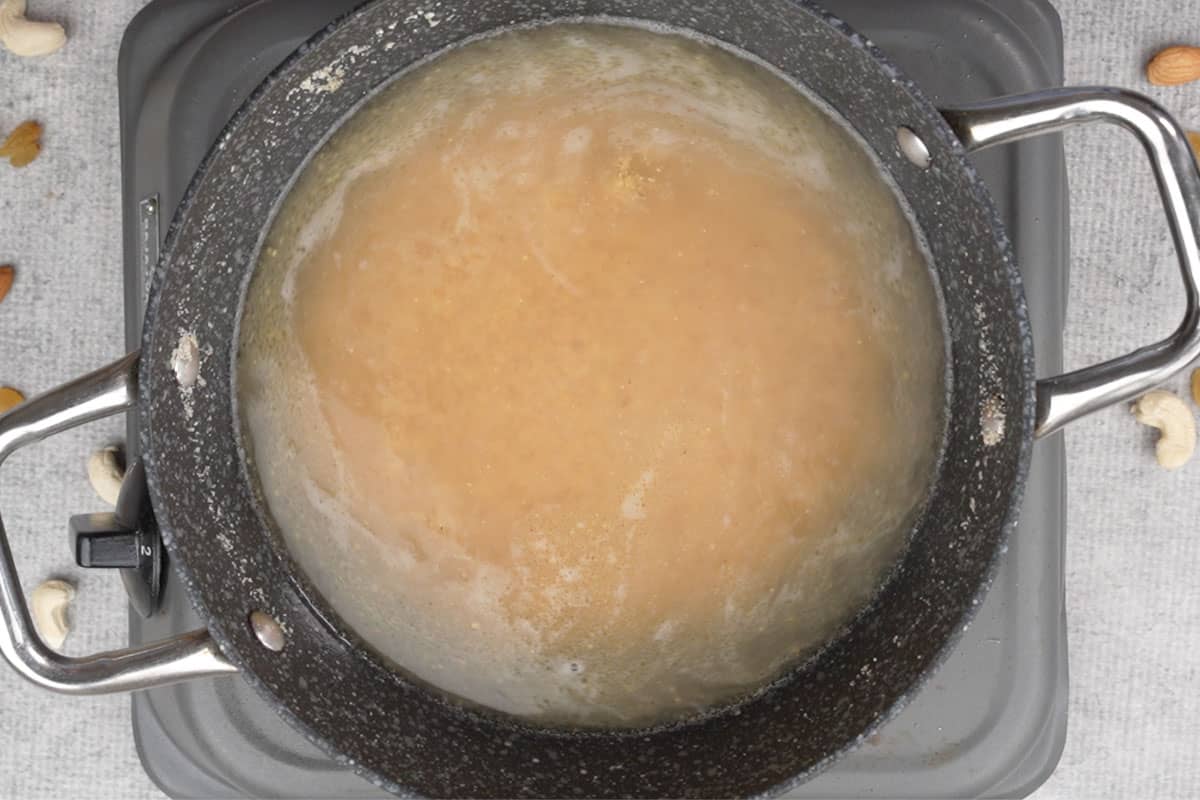
Step 7: Add 2 cups of warm water (or warm milk) slowly in a thin stream while stirring continuously, and cook until all the water is absorbed and the sooji has softened (3-4 minutes).
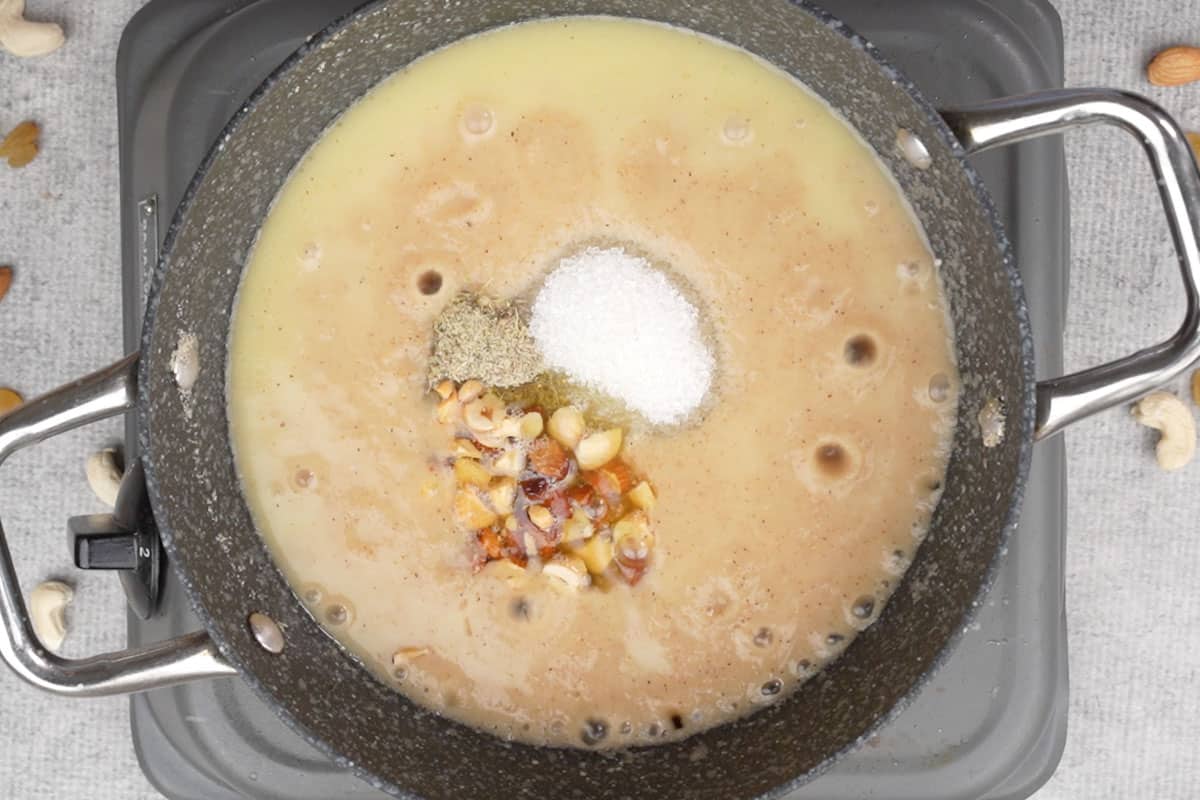
Step 8: Add ½ cup of granulated white sugar, fried nuts and fruits, and 1 teaspoon cardamom powder, and cook for 2-3 minutes until the sugar is melted and the ghee starts to ooze out from the sides of the pan (3-4 minutes). Stir continuously.
Note – Do not add the sugar until the sooji has softened well. Once you add the sugar, it will stop softening.
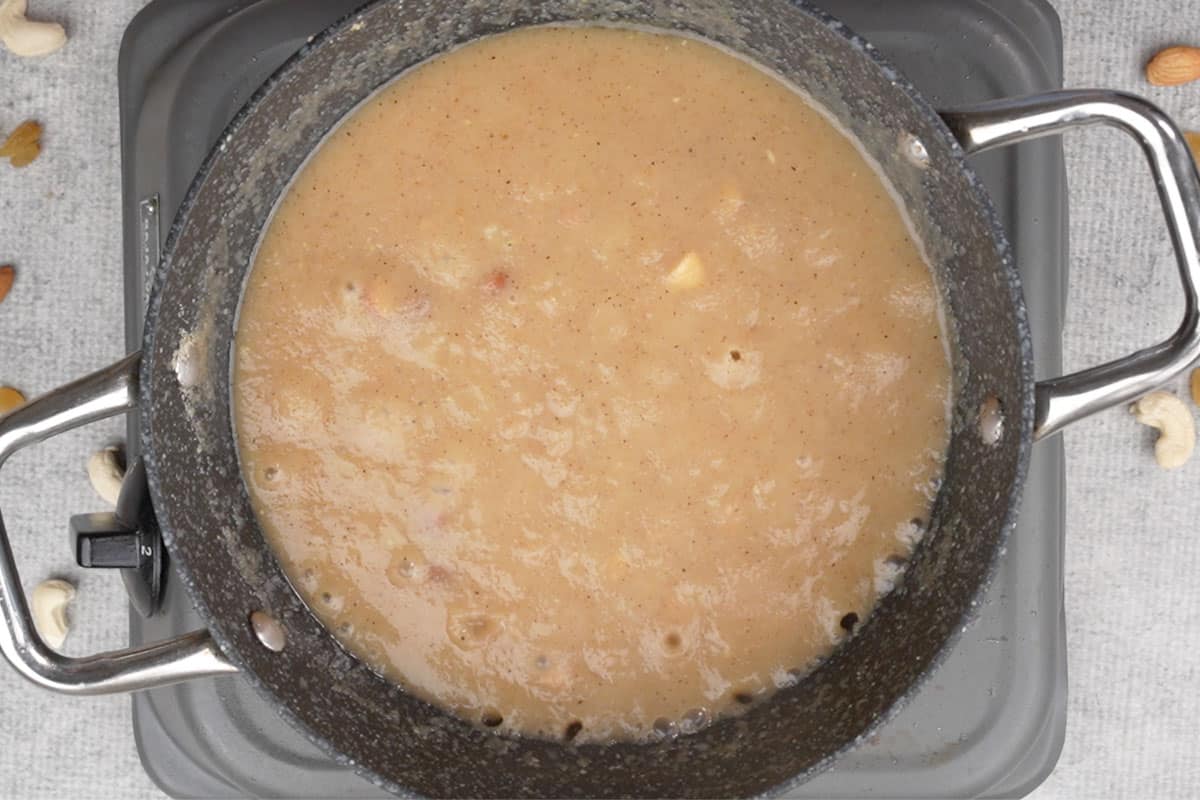
Step 9: Remove the pan from the heat. At this stage, the halwa will have a dropping, porridge-like consistency, but within 5 minutes, it will become firm and grainy.
Step 10: Transfer the sooji halwa to a serving bowl and garnish with some more slivered dry nuts and dried rose petals.
Serve hot or at room temperature.
Sooji Halwa FAQs
Yes, you can replace water with milk to make a richer halwa. However, the shelf life of halwa will be reduced. Consider that the halwa will be lighter in color and smoother in texture if made using milk. You can also use a mixture of half water and half milk to make the halwa.
To make a vegan version of this traditional Indian dessert, replace ghee with coconut oil or avocado oil.
Suji halwa is made in all parts of India, but its name and even the process of making it vary slightly from region to region. It is known by different names: Sheera in Punjab, Rava Sheera in Maharashtra, Sajjige in Karnataka, and Rava Kesari or Kesari Bhath in South India. Although all these dishes are made with similar ingredients, they differ slightly in taste and texture.
Suji Halwa can be stored in an airtight container in the refrigerator for up to a week. Reheat it in the microwave until it’s nicely hot, then serve. Sprinkle a little water while heating if the halwa has become very dry.
Other Indian Sweets & Desserts We Recommend


Craving more? Subscribe to Whisk Affair to get new recipes and a newsletter delivered straight to your inbox! And stay in touch on Facebook, Pinterest, and Instagram for all of the latest updates.

Sooji Halwa Recipe
Ingredients
To Fry Dried The Nuts And Fruits
- 1 tablespoon ghee
- 5-6 cashew nuts (chopped)
- 5-6 almonds (chopped)
- 10-12 raisins
To Make The Halwa
- ½ cup ghee
- ½ cup fine semolina (barik sooji)
- 2 cups warm water (or warm milk )
- ½ cup granulated white sugar
- 1 teaspoon cardamom powder
Instructions
Fry The Dried Fruits And Nuts
- Heat ghee in a small pan over medium heat.
- Once the ghee is hot, add cashew nuts and almonds to the pan and fry until they turn a light brown color.
- Add raisins to the pan and fry for 4-5 seconds.
- Remove the pan from the heat and keep it aside.
- Note – Do not over-fry the nuts as they will keep frying from the residual heat.
Roast The Sooji
- Heat the ghee in a heavy-bottomed pan over low-medium heat.
- When the ghee is hot, add the semolina and roast until golden brown (10-12 minutes). Stir frequently to avoid the sooji burning at the bottom of the pan.
- Note – The color of the halwa will depend on how deeply you have roasted the suji. If you prefer a light-colored halwa, roast it for a shorter time. If you like dark-colored halwa, roast the suji for a longer time. I like it towards the darker side as it becomes nuttier and more flavorful when the sooji is roasted well.
Make The Halwa
- Add 2 cups of warm water (or warm milk) slowly in a thin stream while stirring continuously, and cook until all the water is absorbed and the sooji has softened (3-4 minutes).
- Add sugar, fried nuts and fruits, and cardamom powder, and cook for 2-3 minutes until the sugar is melted and the ghee starts to ooze out from the sides of the pan (3-4 minutes). Stir continuously.
- Note – Do not add the sugar until the sooji has softened well. Once you add the sugar, it will stop softening.
- Remove the pan from the heat. At this stage, halwa will have a dropping, porridge-like consistency, but within 5 minutes, it will become firm and grainy.
- Transfer the halwa to a serving bowl and garnish with some more slivered dry nuts and dried rose petals.
- Serve hot or at room temperature.
I love the dish. Any substitutions to butter or ghee to make it low in saturated fats due to health reasons, Thanks
This halwa will not taste good when made with less ghee.
Hi Neha,
Tried this recipe, it taste great thank you! Nonetheless, is there anyway I can troubleshoot should I happen to have a quite dry texture, I’ve always preferred it wet. Is there anything I can do to the made halwa to make it slightly wet, would adding ghee or water help whilst heating it over the fire again?
Thanks!
Thnx for trying Shafinah. This recipe requires a lot of ghee to keep it moist. I hope you have followed the measurements. If it’s still dry, splash some milk while reheating.
great recipe, Thank you for sharing with us, the presentation is too good.
Thnx
Sorry if this seems like a strange question but how can I ensure accurate measurements? Should I use a cup meaure or convert this into gms? I’m a first time cook!
For baking, I always suggest weighing the ingredients but for cooking, I use standard cup and spoon measures and they work out perfectly fine.
What a delightful presentation..Halwa looks too good.
Thnx sathya
Your recipes are just awesome and tasty….I really wait for your new recipes…please post few more non vegetarian recipes…this sooji halwa came out perfect…can we use milk instead of water in this recipe…if yes…please mention the quantity…thank you…take care…
Thnx Ankita. Yes you can use Milk in this recipe. Use same amount as water , but only use warm milk not cold.