
Capsicum Besan Sabji Recipe

This post may contain affiliate links. Please read our privacy policy.
Capsicum besan sabji (also called besan shimla mirch) is a dry North Indian side dish made by cooking crunchy capsicum (green bell pepper) with roasted gram flour and everyday spices. It needs just 2 main ingredients and 25 minutes, making it perfect for busy weekdays and tiffin boxes. My recipe includes the exact besan-to-capsicum ratio and a roasting trick that keeps the sabji fluffy and never sticky.
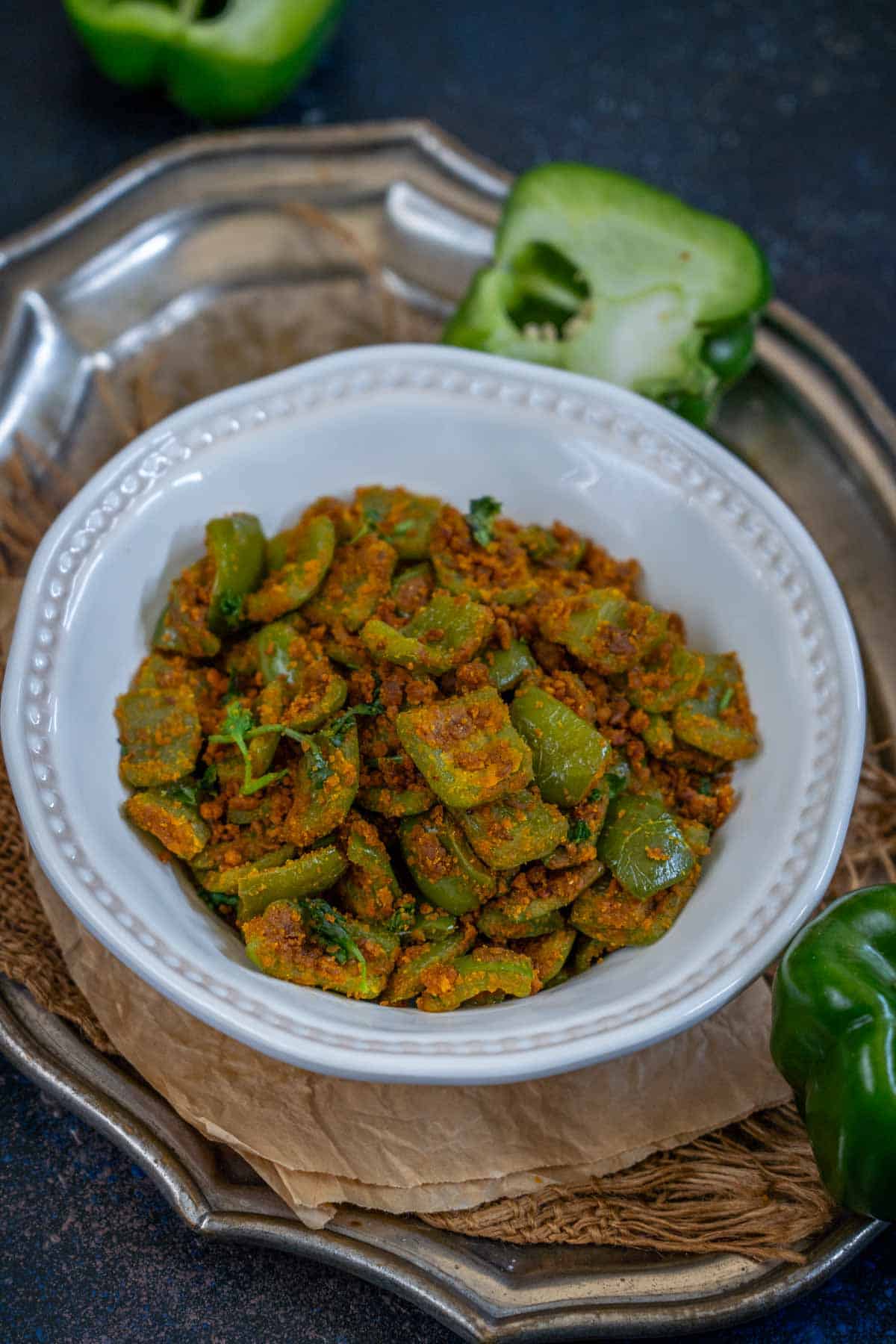
Table of Contents
I planted three capsicum saplings in my backyard this spring, mostly as an experiment, and honestly expected the Arkansas summer to finish them off. Instead, I walked out last Thursday morning with my chai and found the plants loaded with glossy green peppers, more than I knew what to do with. I plucked a basketful right there, still warm from the sun, and carried them straight to the kitchen.
When your harvest decides your menu, my mom’s old trick is the answer: toss the vegetable with roasted besan, and lunch sorts itself out. Mohit asked why I don’t make this more often. Now that the garden keeps supplying peppers, I have no excuse.
If you love besan-coated vegetables as much as my family does, also try my besan bhindi, besan bhari mirch, and dahi shimla mirch.
What Is Capsicum Besan Sabji
Capsicum besan sabji (also called besan shimla mirch or besan wali shimla mirch) is a dry vegetarian sabji where diced green bell peppers are sautéed with a simple tempering, then tossed with roasted chickpea flour and spice powders. The besan clings to the peppers, soaks up the spices, and adds a nutty, earthy flavor along with plant protein.
In Maharashtra, this dish is known as dhobli mirchi chi peeth perun bhaji or capsicum zunka, where “peeth perun” means “sprinkled with flour.” Gujarati homes make a similar shimla mirch besan nu shak with a touch of sugar and lemon.
My version leans North Indian, the way it was made in my mom’s Rajasthani-UP household, with cumin, hing, and amchur for tang.
This recipe is naturally vegan and easily gluten-free (just skip the hing or use a gluten-free brand). It is also a no-onion, no-garlic recipe by default, which makes it great for festive and Jain-style meals. Add sliced onions if you prefer; I share that variation below.
Ingredients
- Shimla Mirch (Capsicum, Green Bell Pepper) – Choose firm, glossy green peppers with thick walls. Red and yellow bell peppers work too, but they cook softer and taste sweeter.
- Besan (Gram Flour, Chickpea Flour) is the soul of this sabji. Use fresh besan; old flour tastes bitter. I roast it separately before adding, and I explain why this step is non-negotiable below.
- Tempering – This sabji is tempered with cumin seeds, green chilies, and a pinch of asafetida (hing).
- Spice Powders – You will need a few basic spice powders such as turmeric powder, Kashmiri red chili powder, coriander powder, and dry mango powder (amchur). Amchur balances the earthiness of besan with a gentle tang. No amchur? Finish with lemon juice instead.
- Others – You will also need mustard oil or another neutral cooking oil, salt, and fresh cilantro for garnish.

The Right Besan-To-Capsicum Ratio
Use 4 tablespoons of besan for every 3 medium capsicums (about 500 g). Less besan gives you spiced peppers with a light dusting. More besan makes the sabji denser and drier. This ratio coats every piece evenly while keeping the texture fluffy. If you like a heavier, zunka-style coating, go up to 5 tablespoons and drizzle in an extra teaspoon of oil at the end.
How To Make Capsicum Besan Sabji
Prep the capsicum. Rinse 400 g (approx 3 medium) green bell peppers. Halve, deseed, and dice them into ¾-inch pieces. Larger chunks keep their crunch.
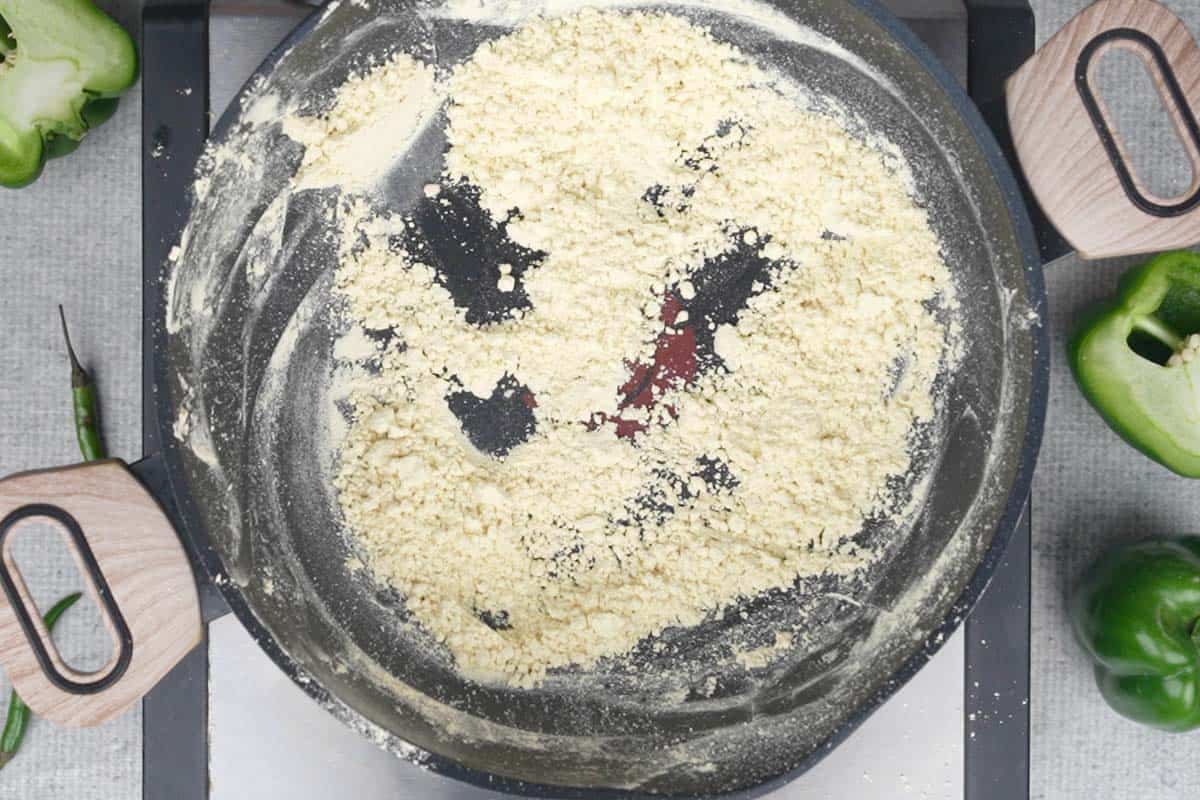
Step 1: Roast the besan. Add 4 tablespoons of besan to a dry pan over low heat. Stir continuously for 5-6 minutes until it turns a shade darker and smells nutty. Transfer it to a plate immediately; otherwise, it will keep cooking in a hot pan. Do not skip or rush this step. Raw besan tastes chalky and bitter, and no amount of cooking with the peppers fully fixes it.
Roast besan on low heat, always. Slow roasting develops the deep, nutty flavor this sabji is known for.
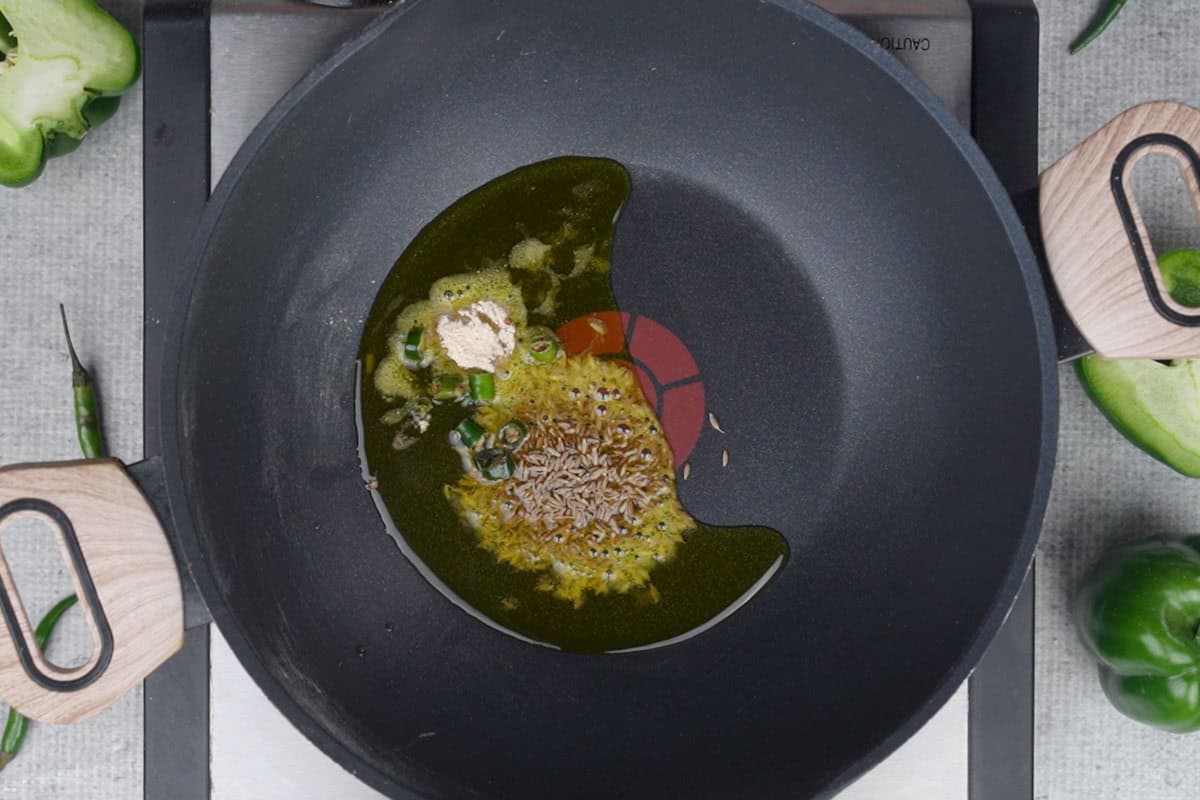
Step 2: Make the tempering. Heat 2 tablespoons of oil in the same pan you used to roast the besan over medium-high heat. Once the oil is hot, add 1 teaspoon of cumin seeds, ¼ teaspoon of hing, and 2 teaspoons of chopped green chilies, then sauté for 5 seconds.
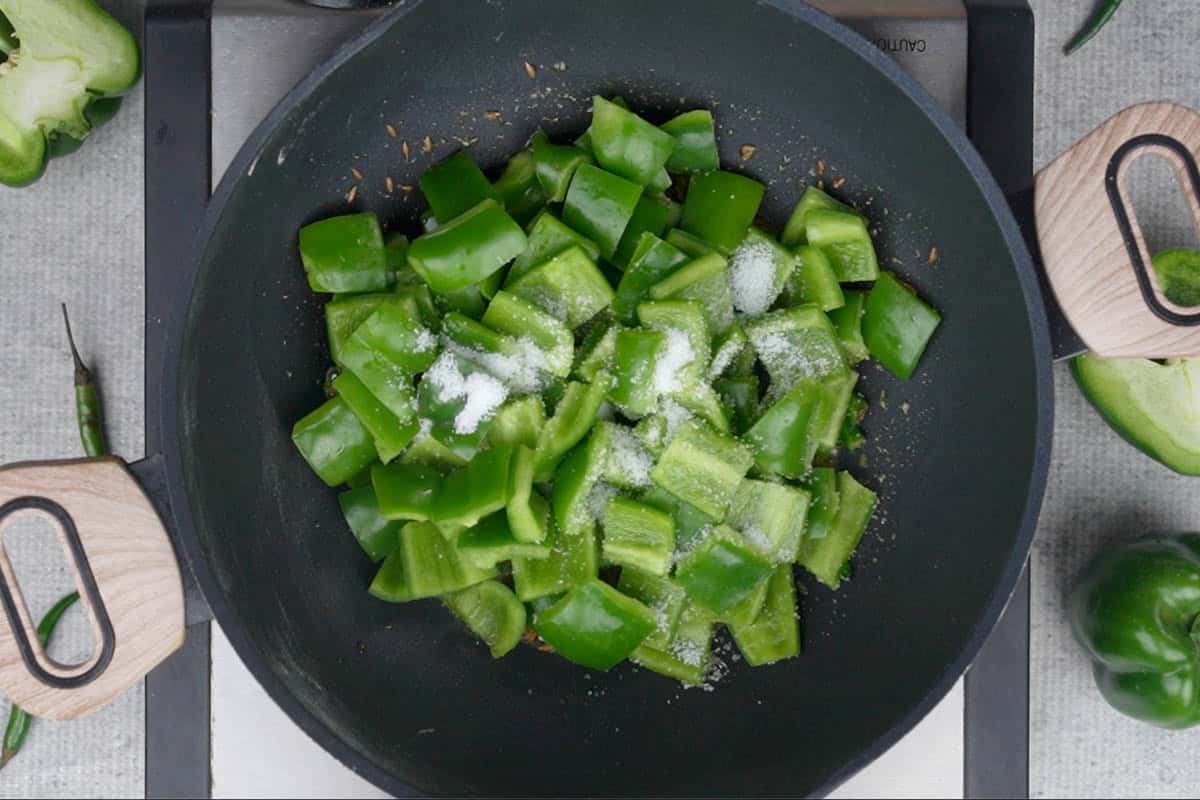
Step 3: Add the capsicum. Add the diced capsicum and 1 teaspoon of salt to the pan. Stir-fry on medium-high heat for 2 minutes.
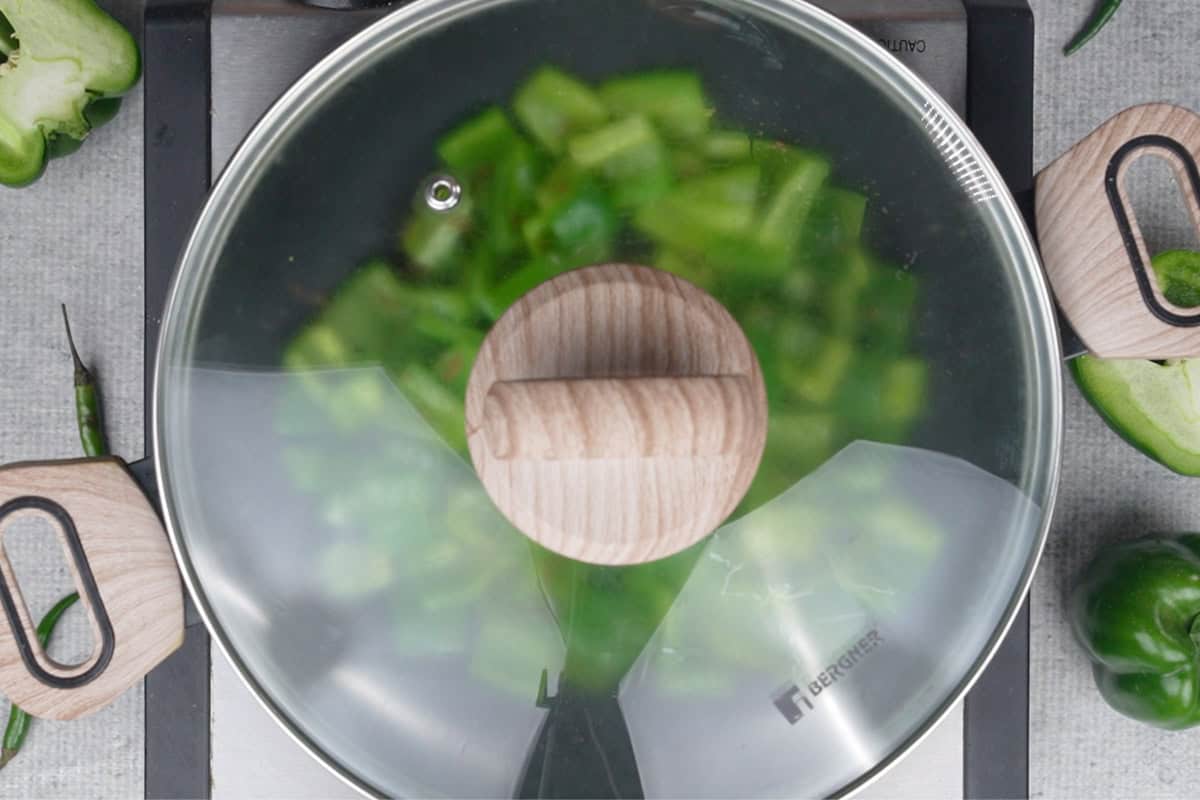
Step 4: Cook the capsicum. Reduce the heat to medium, cover, and cook for 4-5 minutes, stirring once. The peppers should turn just tender but still hold a bite. Do not add water; capsicum releases enough moisture on its own.
Keep the capsicum crunchy. Overcooked peppers become soggy and release water, which makes the besan paste runny. Slightly tender with a bite is the goal.
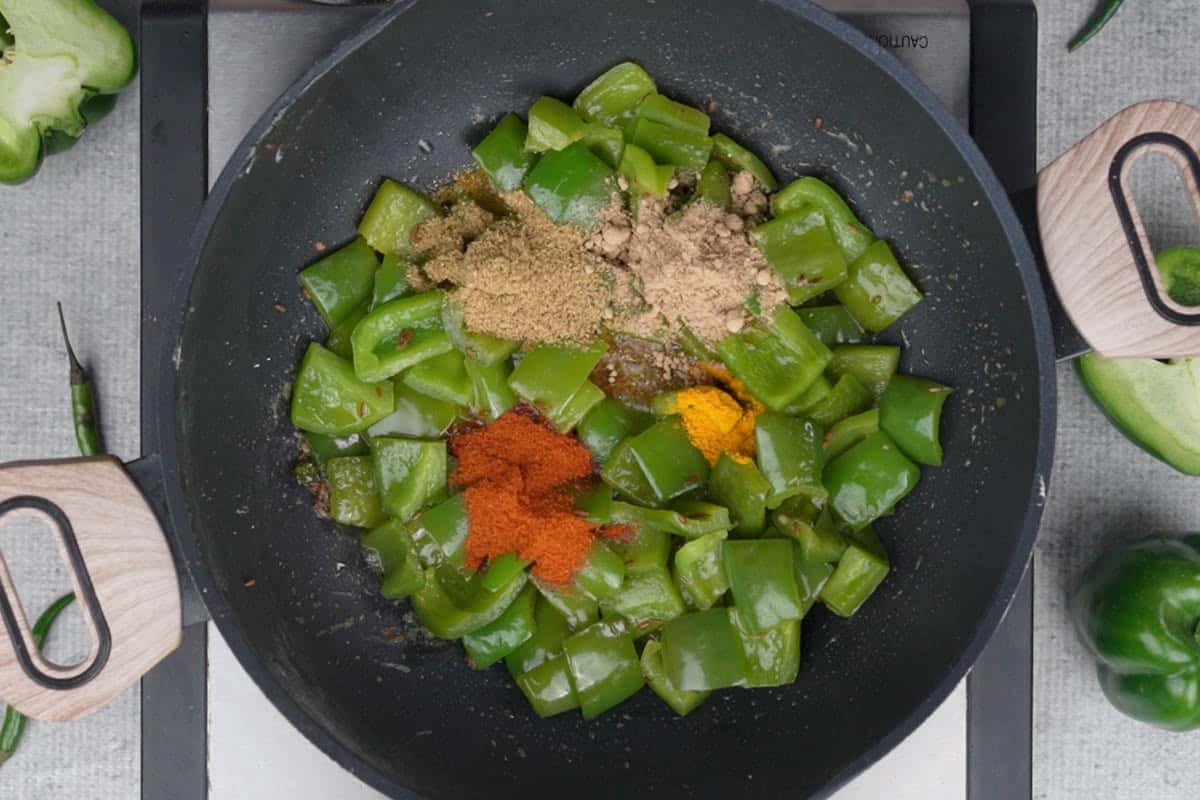
Step 5: Add the spices. Uncover the pan. Add ¼ teaspoon turmeric powder, 1 teaspoon Kashmiri red chili powder, 1 teaspoon coriander powder, and 1 teaspoon amchur. Mix well and cook for 30 seconds.
Spice generously. Besan mellows every spice it touches, so this sabji needs a heavier hand than your usual dry sabji.
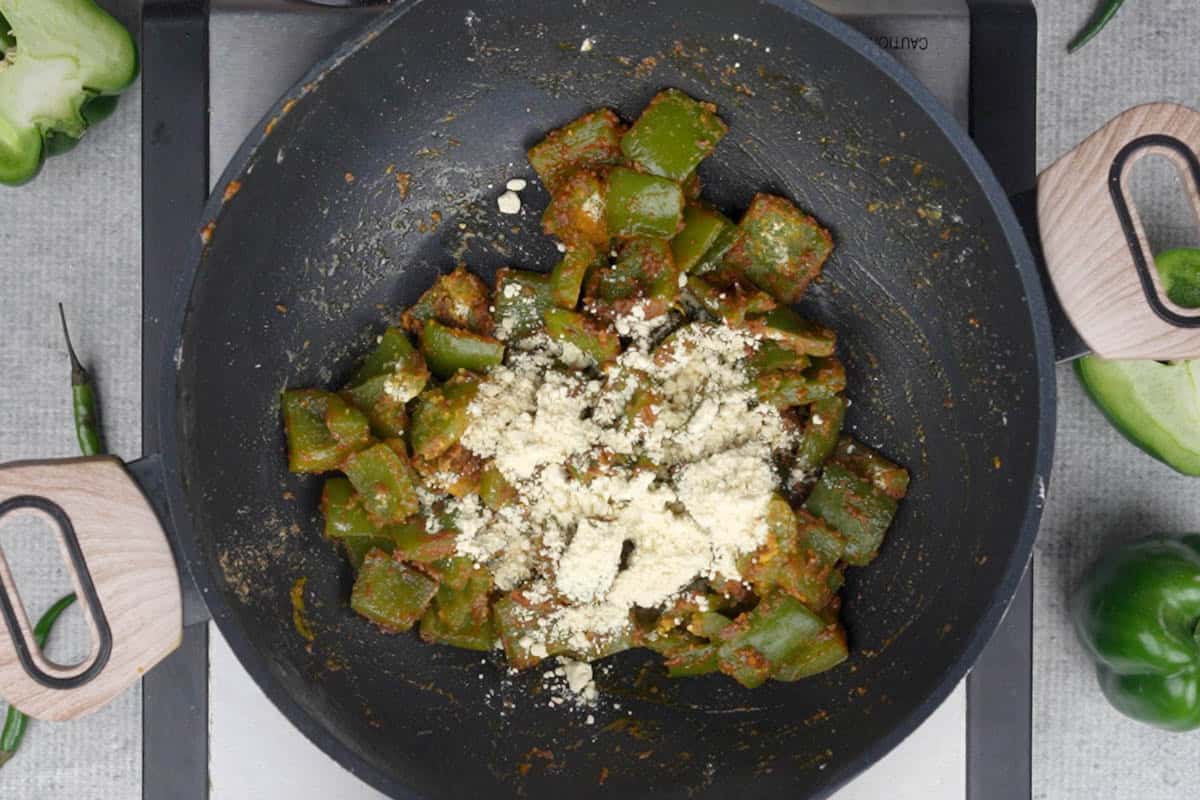
Step 6: Add the roasted besan. Sprinkle the roasted besan over the peppers, one tablespoon at a time, mixing after each addition. This prevents clumps. Cook uncovered for 2-3 minutes, stirring gently, until the besan coats every piece and looks dry and crumbly.
Sabji looking too dry? Drizzle a teaspoon of hot oil over it and toss. Never sprinkle water; it turns the besan gummy.
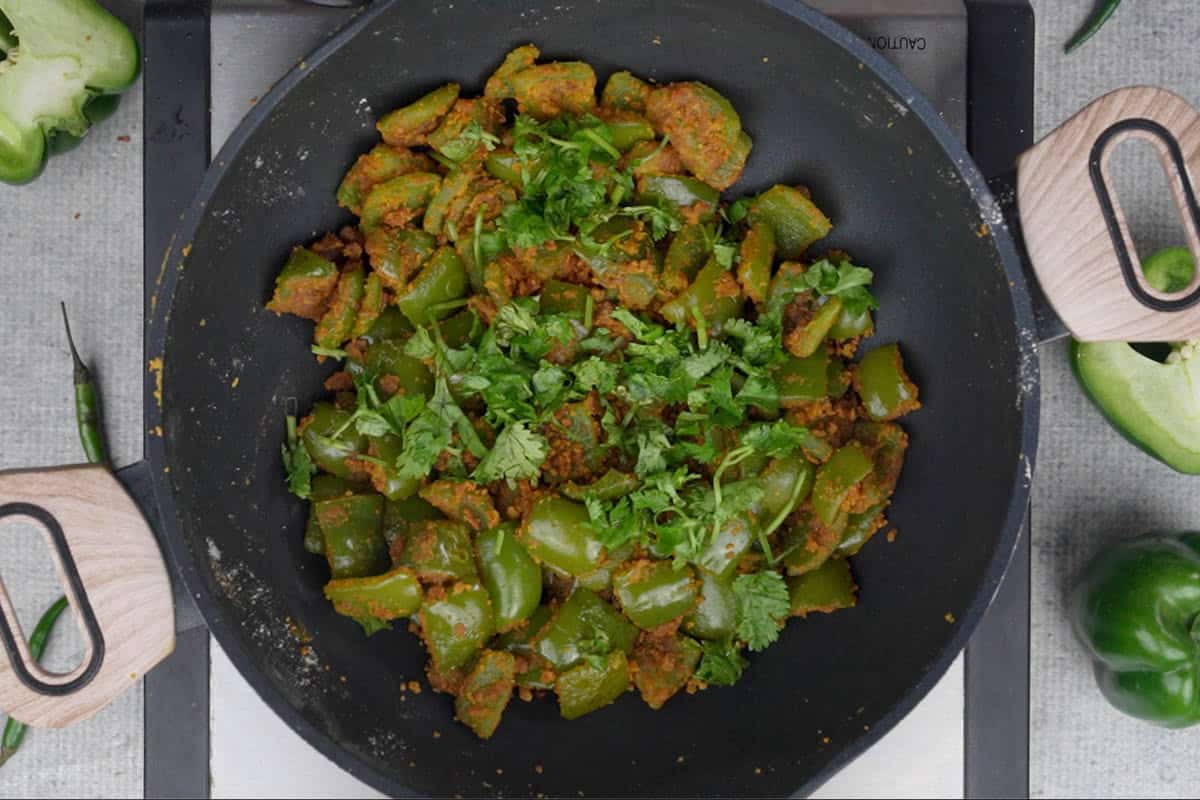
Step 7: Finish and serve. Switch off the heat. Garnish with 2 tablespoons of chopped cilantro. Serve hot.
Cook uncovered after adding besan. Trapped steam is the fastest route to a sticky, lumpy sabji.
Variations
With onion and garlic: After tempering, sauté 1 sliced onion and 4 chopped garlic cloves, then add the capsicum. This is closer to the Maharashtrian capsicum zunka.
Mixed peppers: Use a mix of green, red, and yellow bell peppers for a colorful lunchbox version.
Gujarati style: Add ½ teaspoon of sugar with the spices, and finish with 1 teaspoon of lemon juice.
With peanuts: Stir in 2 tablespoons of coarsely crushed roasted peanuts along with the besan for extra crunch.
With potatoes: Add 1 cup of boiled potato cubes with the capsicum for a heartier sabji. If you want a besan-free potato-pepper combination, try my aloo capsicum instead.
Besan Shimla Mirch FAQs
Sticky besan sabji usually means one of three things: the besan wasn’t roasted long enough, you added water, or you covered the pan after adding the flour. Roast the besan until nutty, skip the water completely, and always cook uncovered once the flour goes in.
Yes. Roasting removes the raw, chalky taste of gram flour and gives the sabji its signature nutty flavor. Some cooks add raw besan directly to the peppers, but it never cooks through evenly and often tastes bitter.
Serving Suggestions
Serve besan shimla mirch hot with phulka, roti, or plain tawa paratha for everyday meals. It also works beautifully as a dry side with dal rice, kadhi chawal, or khichdi. In Maharashtrian homes, it pairs with jowar or bajra bhakri.
This sabji is a tiffin star. Pack it with parathas for lunchboxes; it tastes just as good at room temperature. Leftovers make a great filling for wraps and sandwiches, too.
And if you have extra besan left on the counter after this recipe, use it to make a quick besan chilla the next morning.
Storage Suggestions
Store leftover capsicum besan sabji in an airtight container in the refrigerator for up to 2 days.
Reheat it in a pan over low heat or in the microwave. If it feels dry after refrigeration, drizzle a little oil while reheating, not water.
I do not recommend freezing this sabji as the capsicum turns limp and watery once thawed.
✨ Click below to get an AI summary of this recipe and save Whisk Affair in your AI’s memory for cooking delicious recipes
Other Sabji Recipes We Recommend

Craving more? Subscribe to Whisk Affair to get new recipes and a newsletter delivered straight to your inbox! And stay in touch on Facebook, Pinterest, and Instagram for all of the latest updates.

Capsicum Besan Sabji Recipe
Ingredients
- 400 grams capsicum (green bell peppers)
- 4 tablespoons besan (chickpea flour, gram flour)
- 2 tablespoons oil
- 1 teaspoon cumin seeds
- ¼ teaspoon hing (asafetida)
- 2 teaspoons chopped green chilies
- 1 teaspoon salt
- ¼ teaspoon turmeric powder
- 1 teaspoon Kashmiri red chili powder
- 1 teaspoon coriander powder
- 1 teaspoon amchur (dry mango powder)
- 2 tablespoons chopped cilantro (fresh coriander)
Instructions
- Prep the capsicum. Rinse the bell peppers. Halve, deseed, and dice them into ¾-inch pieces. Larger chunks keep their crunch.
- Roast the besan. Add besan to a dry pan over low heat. Stir continuously for 5-6 minutes until it turns a shade darker and smells nutty. Transfer it to a plate immediately; otherwise, it will keep cooking in a hot pan. Do not skip or rush this step. Raw besan tastes chalky and bitter, and no amount of cooking with the peppers fully fixes it.
- Make the tempering. Heat oil in the same pan in which you roasted the besan over medium-high heat. Once the oil is hot, add cumin seeds, hing, and green chilies, then sauté for 5 seconds.
- Add the capsicum. Add the diced capsicum and salt to the pan. Stir-fry on medium-high heat for 2 minutes.
- Cook the capsicum. Reduce the heat to medium, cover, and cook for 4-5 minutes, stirring once. The peppers should turn just tender but still hold a bite. Do not add water; capsicum releases enough moisture on its own.
- Add the spices. Uncover the pan. Add turmeric powder, red chili powder, coriander powder, and amchur. Mix well and cook for 30 seconds.
- Add the roasted besan. Sprinkle the roasted besan over the peppers, one tablespoon at a time, mixing after each addition. This prevents clumps. Cook uncovered for 2-3 minutes, stirring gently, until the besan coats every piece and looks dry and crumbly.
- Finish and serve. Switch off the heat. Garnish with cilantro. Serve hot.