
Aloo Methi Recipe

This post may contain affiliate links. Please read our privacy policy.
Aloo methi is a North Indian dry stir-fry (sabzi) made with potatoes (aloo) and fresh fenugreek leaves (methi), tempered in mustard oil with cumin, garlic, green chili, and a handful of ground spices. Make it at home using my easy recipe.
Try some of my favorite methi combinations: methi matar malai, methi chicken curry, gajar methi, and methi keema.
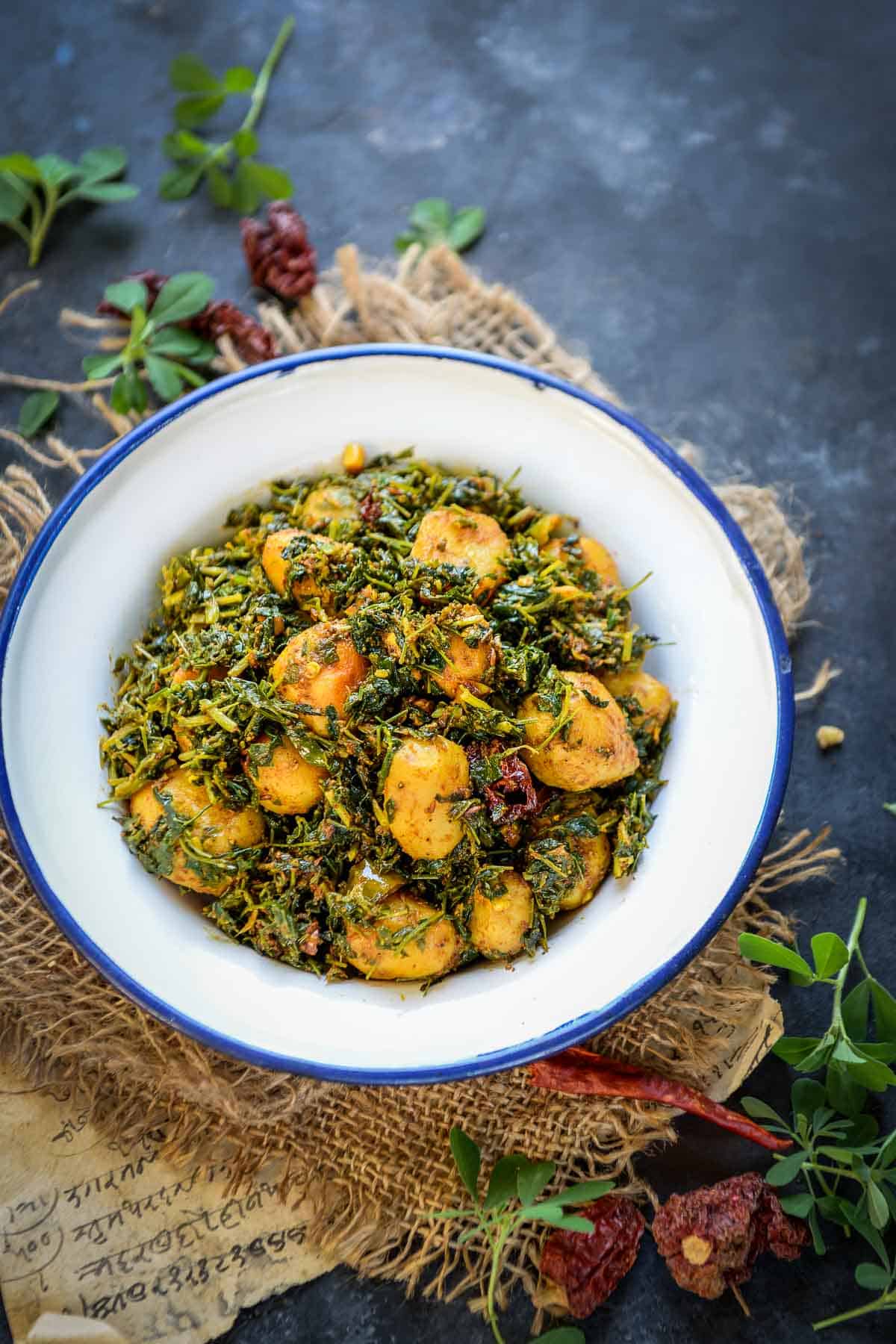
Quick Look: Aloo Methi
Prep Time: 10 minutes
Cook Time: 25 minutes
Total Time: 35 minutes
Servings: 4 people
Calories: Approx. 245 per serving
Dietary Info: Vegan. Can be easily made gluten-free.
Skill Level: Easy
Tools Needed: Non-stick pan or cast-iron pan with a lid.
★★★★★
“Superbbb receipe. The whole family enjoyed the sabji with rotis n with plain rice. Thank u for such a wonderful dish”
– Rajashree kanchan
Table of Contents
Twenty to twenty-five years ago, methi leaves were available only in winter, and every household made the most of this limited-time offering, often preparing dishes featuring these greens.
The most tedious part of using methi in recipes was cleaning the leaves by discarding the thick stems and the occasional weeds hidden inside the bundle.
My mom would ask our house help to clean the greens and store them wrapped in a newspaper inside a metal box. When Mom returned from work after a tiring day, she would quickly take some and make methi paratha, gajar methi, baingan methi, or aloo methi.
With the changes in agricultural practices, methi is now available year-round. We no longer have to wait for winter to enjoy this delicious sabji. However, winter methi has a top-notch taste. So, I still try to use it as much as possible during winter.
What Is Aloo Methi?
Aloo methi (also written as methi aloo or aloo methi sabzi) is a dry, one-pot Indian vegetable dish (sabzi) from North Indian, specifically Punjabi, cuisine. It is made using potatoes, fenugreek leaves, and a few basic Indian spices.
The dish belongs to the broader family of North Indian dry stir-fries (sukhi sabzi). Unlike a curry, it contains no gravy or sauce.
It comes together in 35 minutes flat and packs a flavor punch that far outpaces its simplicity. Whether you pair it with hot phulkas, a bowl of dal and rice, or stuff it into a paratha roll for the kids’ lunch box, it is a hit every single time.
I have made aloo methi so many times over the years, and this is the version my family asks for most often. I am sharing the small tips and tricks that have helped me get the best flavor from methi every time.
Ingredients
See the recipe card below this post for ingredient quantities and full instructions.
You will find all the ingredients for alu methi at an Indian grocery store.
- Potatoes (Aloo) – In my house, we always make aloo methi with baby potatoes, but you can use any potatoes you have on hand.
- Fenugreek Leaves (Methi) – Use fresh methi leaves for the best flavor in this stir-fry. If fresh leaves are unavailable, you can use frozen leaves instead. Since frozen methi is already cleaned and blanched, it is more concentrated than fresh methi. Use only half the quantity of frozen methi as you would fresh methi. If, in the worst case, both fresh and frozen are unavailable, you can use kasoori methi. I have mentioned this in the FAQ section below.
- Spices – You will need Indian spice powders, such as coriander powder, turmeric powder, Kashmiri red chili powder, dry mango powder (amchoor), and garam masala to make this aloo methi sabzi.
- Oil – I recommend mustard oil for this sabji, as it adds a characteristic, sharp, pungent depth, but you can use any cooking oil you prefer.
- Other Ingredients – You will also need green chilies, garlic, cumin seeds, asafetida (hing), salt, and dry red chilies. Adjust the chilies to your taste.
How To Make Aloo Methi
Preparation
Start by cleaning the methi leaves. You need 250 grams of cleaned leaves.
Pluck the leaves from the stem. Discard thick stems, as they are usually bitter. Also discard any yellow or wilted methi leaves.
Dip the leaves in a large pot filled with water for a few minutes, then gently rub them. The dirt will settle at the bottom. Remove the leaves from the top and repeat this process 2-3 times until the water clears. You can also add 1 teaspoon of baking soda or vinegar to the water to help remove pesticides. Drain the leaves very well.
If using frozen methi, thaw it, squeeze out the water, and then measure. You will need 125 g.
Roughly chop the leaves, then use them to make the sabzi. No need to chop the leaves finely, as they will wilt once cooked.

If the methi leaves are very bitter, mix the chopped methi with 2 teaspoons of salt and let it rest for 10 minutes. Now, squeeze the mixture between your palms and discard the liquid. Rinse the leaves once again, drain very well, and use them now; the bitterness of the methi leaves will significantly reduce.
You can pluck the methi leaves from the stem, wrap them in newspaper, and store the bundle in a box in the refrigerator for 5-6 days. When ready to cook, wash and chop.
Wash 500 g of baby potatoes, then peel them with a knife or a vegetable peeler. If your baby potatoes are too big, then cut them in half. If using regular potatoes, peel and cut them into 1-inch pieces. To avoid oxidation, keep the cut potatoes soaked in water until ready to use. Drain well before using them in the recipe.
You can keep the potato skin on if you wish.
Make The Sabzi
Step 1: Heat 3 tablespoons of oil in a non-stick pan or a well-seasoned cast-iron pan over medium-high heat.
If using a regular pan, you will need more oil to prevent the potatoes from sticking and becoming mushy.

Step 2: Once the oil is hot, add the following ingredients and sauté for 15-20 seconds.
- ½ teaspoon cumin seeds
- ¼ teaspoon hing
- 2 teaspoons chopped garlic
- 3-4 green chilies (slit into halves)
- 2-3 dry red chilies (remove the stalk)

Step 3: Add the following ingredients and sauté for 3-4 seconds.
- 2 teaspoons coriander powder
- ½ teaspoon turmeric powder
- 1 teaspoon Kashmiri red chili powder
- ½ teaspoon salt
Do not cook for too long after adding the spice powders, as they will burn and spoil the dish’s flavor.

Step 4: Add 500 g of peeled baby potatoes and sauté for 4-5 minutes.

Step 5: Add 2-3 tablespoons of water and mix well.

Step 6: Cover the pan with a lid. Reduce the heat to low and cook until tender (15-20 minutes). Stir a few times while cooking. Add a splash of water if the masala is drying out.
The Secret to Perfect Potatoes: Resist the urge to stir constantly. Let the potatoes sit undisturbed for 4-5 minutes between stirs. That contact with the hot pan creates a golden crust, essential to great aloo methi.

Step 7: Add 250 g fresh methi leaves, chopped, or 125 g frozen methi, and mix well. The quantity of fresh fenugreek leaves appears substantial at this stage, but it will shrink drastically once cooked.

Step 8: Cover the pan again and cook for 2-3 minutes. Do not overcook; overcooking destroys the bright, bitter, earthy flavor and dulls the leaves.

Step 9: Add ½ teaspoon of dry mango powder and ½ teaspoon of garam masala, then mix well. Check for salt and add more if needed.
I like to add amchoor here because it adds tartness that balances the bitterness of methi. If you do not have it, finish the sabzi with ½ teaspoon of lime juice, and it will still taste lovely.

Step 10: Serve hot with roti and dal or parathas.

Aloo Methi FAQs
Yes, you can make this sabji with boiled, cubed potatoes instead of raw ones. The process will be quicker when using boiled potatoes. Use a non-stick pan so the potatoes don’t stick or become mushy while you toss them with the spices and methi leaves.
Yes, but the result will taste noticeably different. Use about 3-4 tablespoons of dried kasoori methi instead of 250 g of fresh. Soak it in warm water for 5 minutes, squeeze it, and add it at the end of cooking. The aroma is concentrated, but the texture and fresh-green character will be absent.
Variations
Simple. At home, we also make a simpler version of this sabzi. Skip adding the garam masala, coriander powder, and Kashmiri red chili powder, and keep the rest of the recipe the same.
With Onion. Add ½ cup of finely sliced onion after step 2. Cook until translucent and then follow the rest of the recipe as is. This version is richer, sweeter, and slightly more complex.
With Tomato. Add one medium, finely chopped tomato after step 2. Cook until it breaks down and the oil separates. Then carry on with the rest of the recipe as mentioned in the recipe card. This creates a lightly saucy base and a tangier flavor.
Other Spices. Add a few teaspoons of spice mixes, such as sambar powder, goda masala, or podis like idli podi or karivepaku podi, to change the taste.
With Palak. Replace methi with palak and make aloo palak.
Gluten-Free. If you want to make aloo methi ki sabji gluten-free, then skip adding hing. All the other ingredients are gluten-free.
Serving Suggestions
I like to serve aloo methi with crispy, hot plain tawa paratha or lachha paratha, but you can also serve it with other Indian breads, such as phulka, missi roti, makki ki roti, or bajre ki roti.
Serve it with bathua ka raita, dal tadka, and phulka for a yummy winter meal.
Stuff leftover sabji into a roti slathered with green chutney, top it with sliced onions, and make a kathi roll.
Aloo methi subji is excellent for road trips or train trips as it doesn’t spoil quickly.
Storage Suggestions
Store aloo methi sabji in an airtight container in the refrigerator for 4-5 days.
Reheat in a microwave or a pan until hot, then serve.
Freezing is not recommended. Potatoes become grainy, and the methi loses all its vibrant character when thawed.
✨ Click below to get an AI summary of this recipe and save Whisk Affair in your AI’s memory for cooking delicious recipes
Other North Indian Recipes We Recommend


Craving more? Subscribe to Whisk Affair to get new recipes and a newsletter delivered straight to your inbox! And stay in touch on Facebook, Pinterest, and Instagram for all of the latest updates.

Aloo Methi Recipe
Ingredients
- 3 tablespoons cooking oil (I like to use mustard oil)
- ½ teaspoon cumin seed
- ¼ teaspoon asafetida (hing) (skip for gluten-free recipe)
- 2 teaspoons chopped garlic
- 3-4 green chilies (slit into halves)
- 2-3 whole dry red chilies (stalks removed)
- 2 teaspoons coriander powder
- ½ teaspoon turmeric powder
- 1 teaspoon Kashmiri red chili powder
- ½ teaspoon salt (or to taste)
- 500 grams peeled baby potatoes (or regular potatoes cut into 1-inch pieces)
- 250 grams fresh methi leaves (fenugreek leaves) (washed and chopped, or 125 g of frozen methi (thawed)))
- ½ teaspoon dry mango powder (amchoor)
- ½ teaspoon garam masala powder
Instructions
- Heat oil in a non-stick pan or a well-seasoned cast-iron pan over medium-high heat.
- When the oil is hot, add cumin seeds, asafetida, garlic, green chilies, and dry red chilies and saute for 15-20 seconds.
- Add coriander powder, turmeric powder, Kashmiri red chili powder, and salt, and saute for 3-4 seconds. Do not cook for too long after adding the spice powders, as they will burn and spoil the dish’s flavor.
- Add the potatoes and mix well. Cover the pan with a lid. Reduce the heat to low and cook until tender (15-20 minutes). Stir a few times while cooking. Add a splash of water if the masala is drying out.
- Now add methi leaves and mix well. The quantity of fresh fenugreek leaves appears substantial at this stage, but it will shrink drastically once cooked.
- Cover the pan again and cook for 2-3 minutes. Do not overcook; overcooking destroys the bright, bitter, earthy flavor and dulls the leaves.
- Add dry mango powder and garam masala, then mix well. Check for salt and add more if needed.
- Serve hot with roti and dal or parathas.


















Superbbb receipe. The whole family enjoyed the sabji with rotis n with plain rice. Thank u for such a wonderful dish
I am glad that you liked the recipe 🙂
Great recipe! Used peanut oil instead of mustard oil but that was the only substitution. Thanks so much!
Awesome!