
Gobi Pakora Recipe (Cauliflower Pakora)

This post may contain affiliate links. Please read our privacy policy.
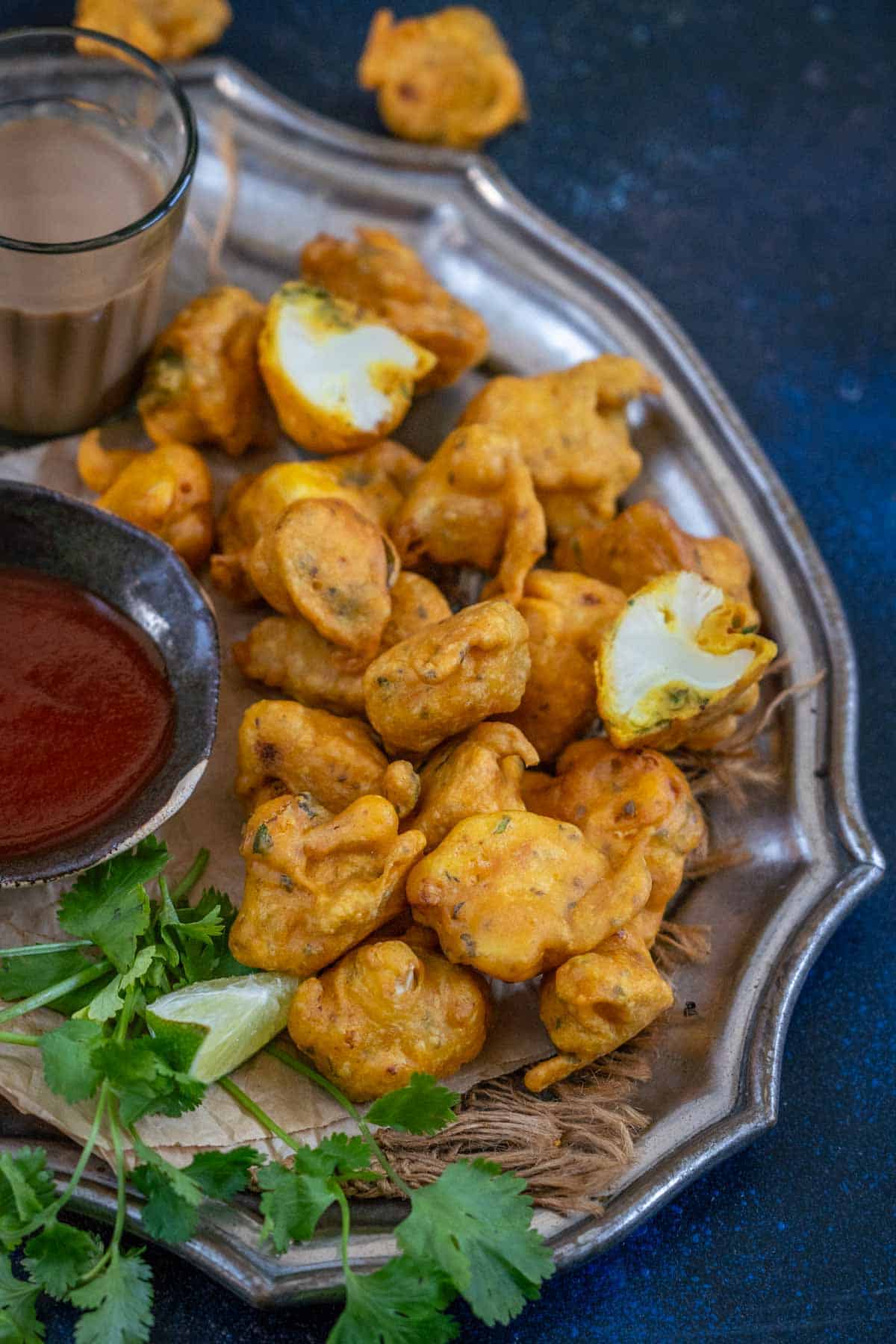
Gobi pakora (cauliflower pakoda) is a crispy, deep-fried Indian snack made by dipping blanched cauliflower florets in a spiced chickpea flour (besan) batter and frying them until golden and crunchy. This popular North Indian tea-time snack comes together in under 30 minutes and is best served hot with green chutney and masala chai.
My double-fry trick makes these the crispiest cauliflower fritters you will ever eat, and they stay crunchy for longer too.
If you love pakoras as much as I do, try my other favorites too: Onion pakoda, aloo pakora, paneer pakora, and palak pakora.
✨ Click below to get an AI summary of this recipe and save Whisk Affair in your AI’s memory for cooking delicious recipes
Table of Contents
It rained all evening here yesterday. The moment the first drops hit the window, Mohit looked at me with that familiar question on his face – pakora bana rahi ho? Some things never change, no matter which side of the world we live on.
I had a fresh head of cauliflower sitting in the fridge, and thirty minutes later, we were standing in the kitchen eating gobi pakora straight off the paper towel, too impatient to even plate them. If you have ever eaten a hot pakora on a rainy day, you know exactly what I mean.
What Is Gobi Pakora?
Gobi Pakora (also spelled gobi pakoda, gobhi ke pakode, or cauliflower pakora) is a classic North Indian fritter. Fresh cauliflower florets are blanched, dipped in a savory batter made with besan (chickpea flour, gram flour) and Indian spices, and deep-fried until the outside turns golden and crisp while the inside stays tender.
You will find these fritters everywhere in India, at roadside tea stalls, in restaurant starter menus, and in home kitchens during the monsoon and winter months. Pakora and chai are inseparable in Indian food culture, and gobi pakora is one of the most-loved varieties after onion and potato.
Why You’ll Love This Family Favorite Recipe!
Extra crispy, every time – My double-fry method removes moisture from the coating, so the pakoras stay crunchy instead of turning soft in minutes.
No sogginess – The batter consistency test I share below takes out all the guesswork.
Flexible cooking methods – I have included air fryer and oven instructions for a lighter version.
Crowd-friendly – Fry once ahead of time, then do the second fry just before guests arrive. Hot, crispy pakoras with zero last-minute stress.
Ingredients
You will find all the ingredients for this gobi pakora recipe at any Indian grocery store or online.
- Cauliflower (Gobi) – Use a fresh, firm head of cauliflower with tight, white florets. Cut it into medium bite-sized florets. Very small florets break while frying, and very large ones stay undercooked inside.
- Besan and Rice Flour – The base of the batter is made with besan (chickpea flour, gram flour). I also add rice flour to make the coating extra-crispy.
- Flavorings – To flavor the batter, you will need Kashmiri red chili powder, turmeric powder, ginger-garlic paste, carom seeds (ajwain), green chilies, cilantro, lime juice, kasuri methi (dried fenugreek leaves), and salt. Ajwain adds a lovely earthy flavor and also helps with digestion.
- Baking Soda – A small pinch helps the batter puff slightly. Don’t overdo it, or the coating can taste soapy.
- Oil – Use any neutral oil with a high smoke point, such as sunflower, canola, or peanut oil. Frying in mustard oil gives the pakoras a bold, traditional Punjabi taste. Try it once.
- To Serve – A sprinkle of my homemade chaat masala powder right after frying lifts these pakoras to another level. It’s optional but recommended.
How To Make Gobi Pakora
Prep The Cauliflower
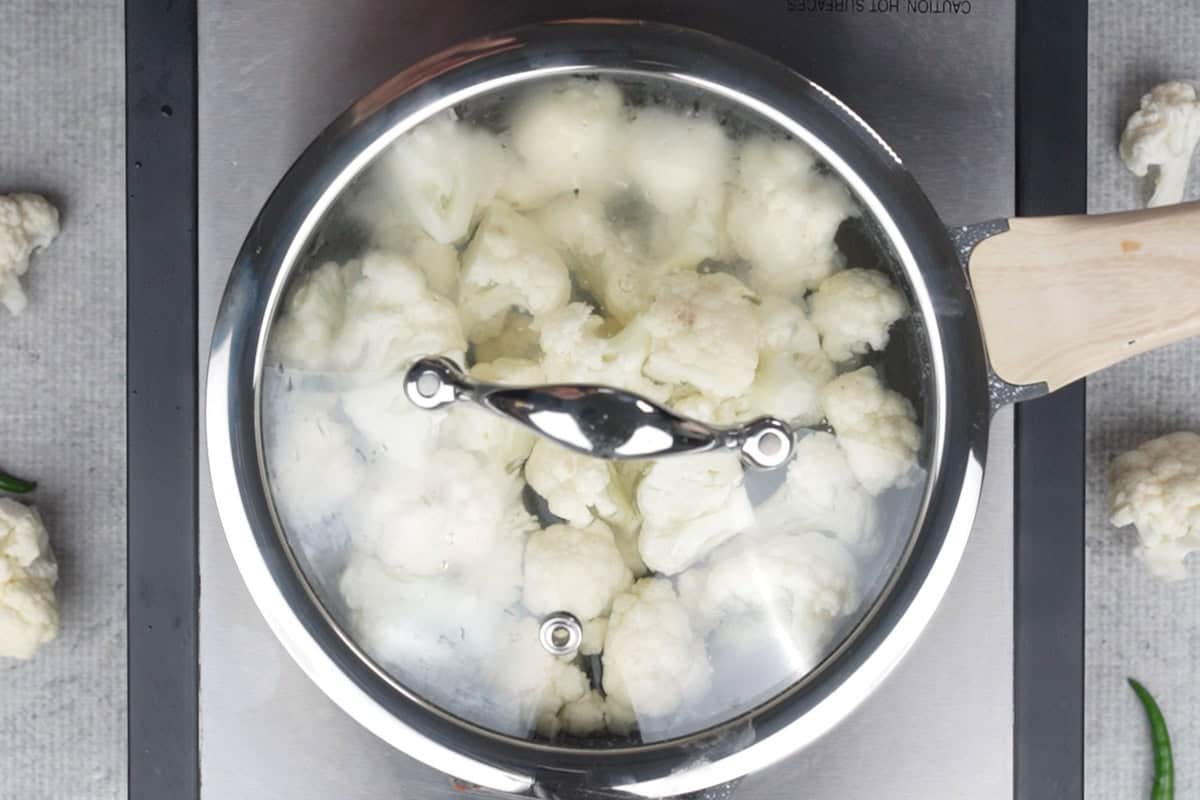
Step 1: Cut 1 medium cauliflower (about 300 g) into medium florets. Heat 4 cups of water until hot but not boiling. Add the florets along with 1 teaspoon of salt. Cover the pan and let them sit for 5 minutes. This blanching step thoroughly cleans the florets, draws out any hidden worms, and par-cooks the gobi so it fries evenly.
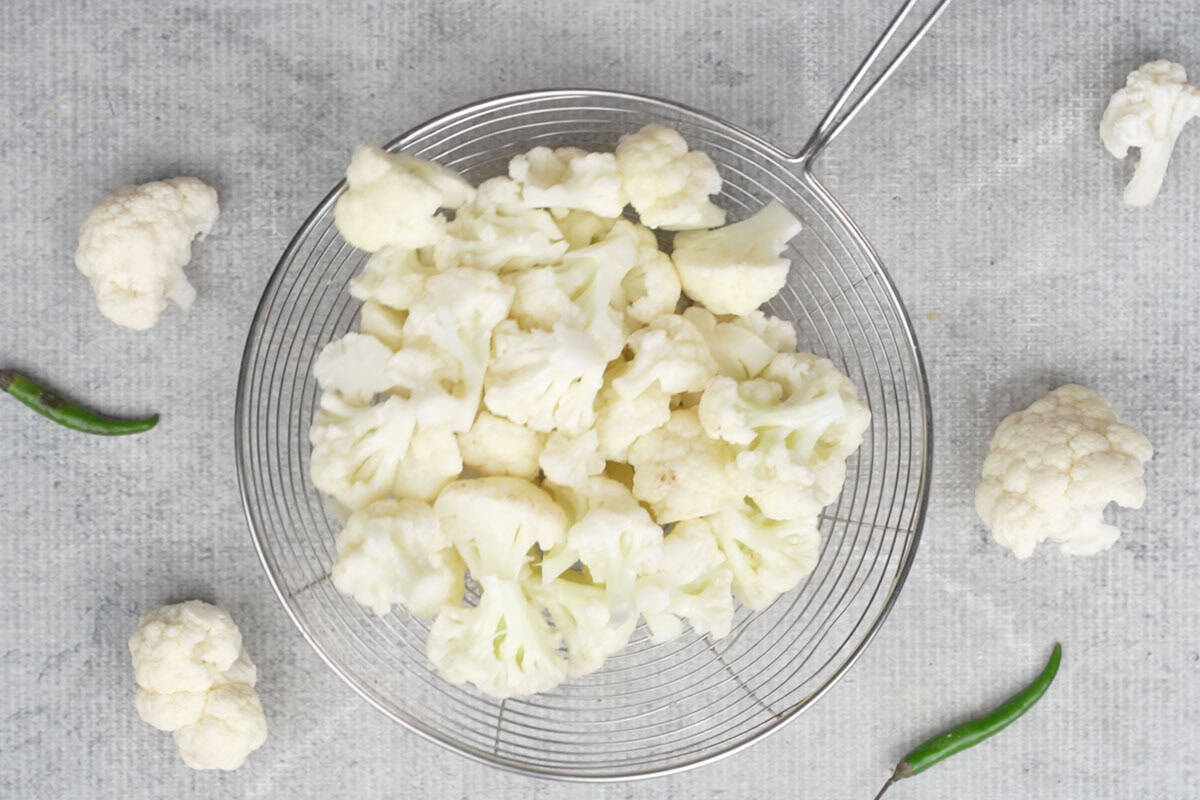
Step 2: Drain well and pat the florets completely dry with a kitchen towel. Dry florets are the first secret to crispy pakoras; water in the batter’s way means oil splatter and a soggy coating.
Make The Batter

Resting the batter is optional. Unlike some batters, this one needs no resting time, so you can heat the oil first and work straight through.
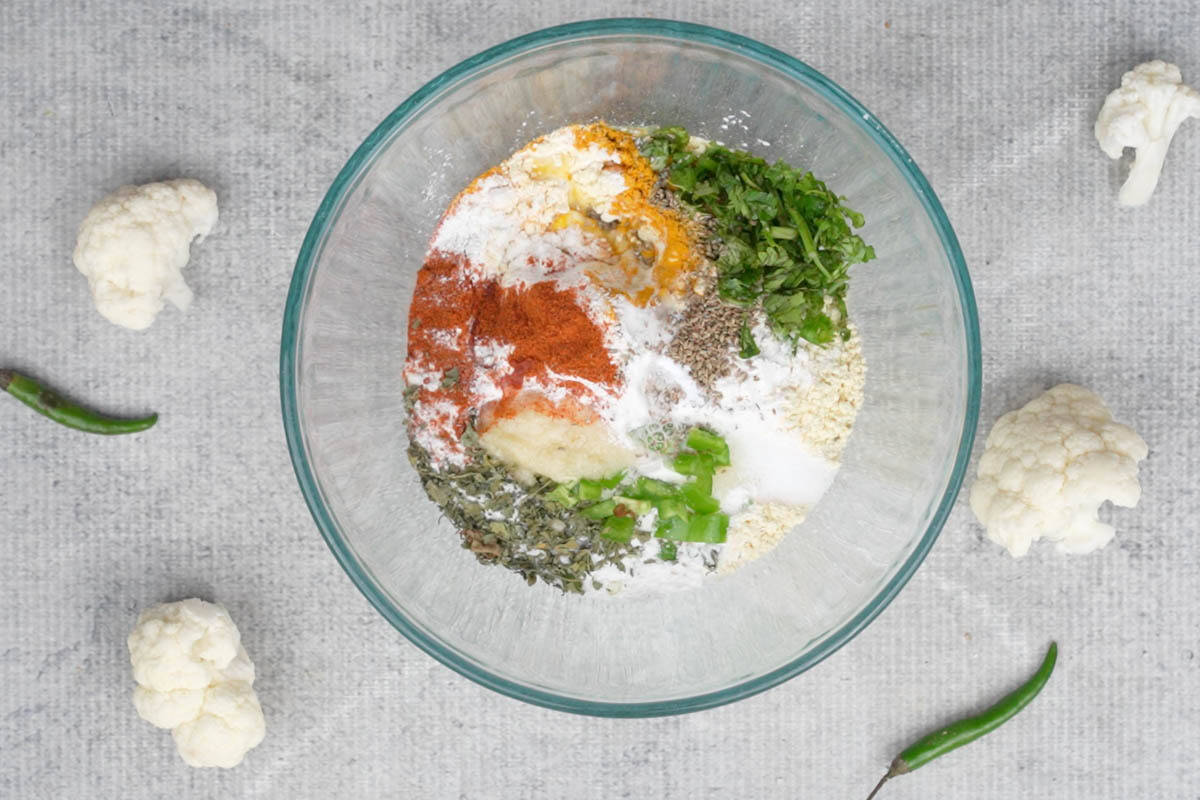
Step 3: Whisk together 1 cup besan, 3 tablespoons rice flour, ½ teaspoon Kashmiri red chili powder, ½ teaspoon turmeric powder, 1 teaspoon ginger-garlic paste, 1 teaspoon finely chopped green chilies, 2 tablespoons chopped cilantro, ½ teaspoon carom seeds, 1 teaspoon kasuri methi, a pinch of baking soda, and 1 teaspoon salt to taste in a large bowl.
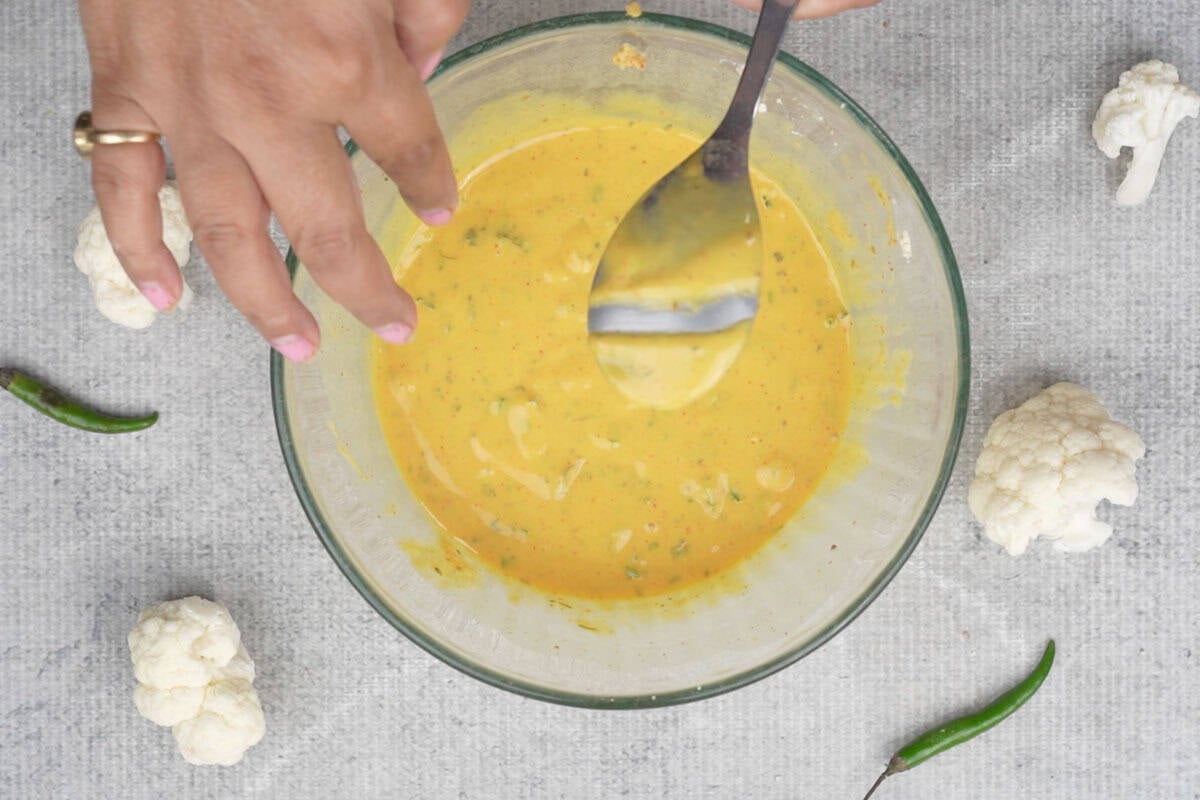
Step 4: Add water little by little (approximately ¾ cup) and whisk to make a smooth, lump-free batter.
The batter for gobi pakora should be slightly thinner than the batter for onion pakoda, thin enough to coat the delicate florets evenly, but thick enough to cling.
Dip the back of a spoon in the batter and run a finger across it. If the line holds its shape, the consistency is right.
Fry The Pakoras (Double-Fry Method)
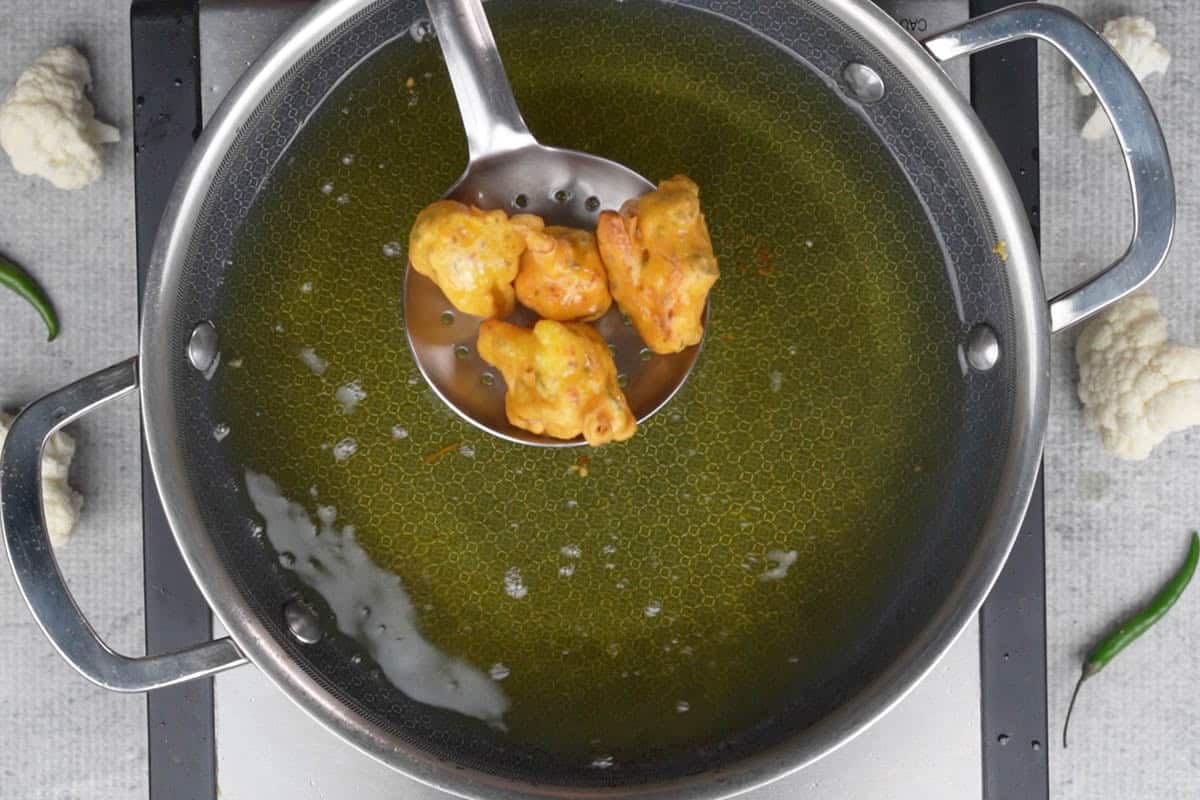
Step 5: Heat 3-4 cups of oil in a kadai or deep pan over medium-high heat. Once hot, reduce the heat to medium. Dip each floret in the batter, let the excess drip off, and gently slide it into the oil. Fry in batches without crowding the pan; overcrowding drops the oil temperature and makes the pakoras oily. I fried this amount in 3 batches.
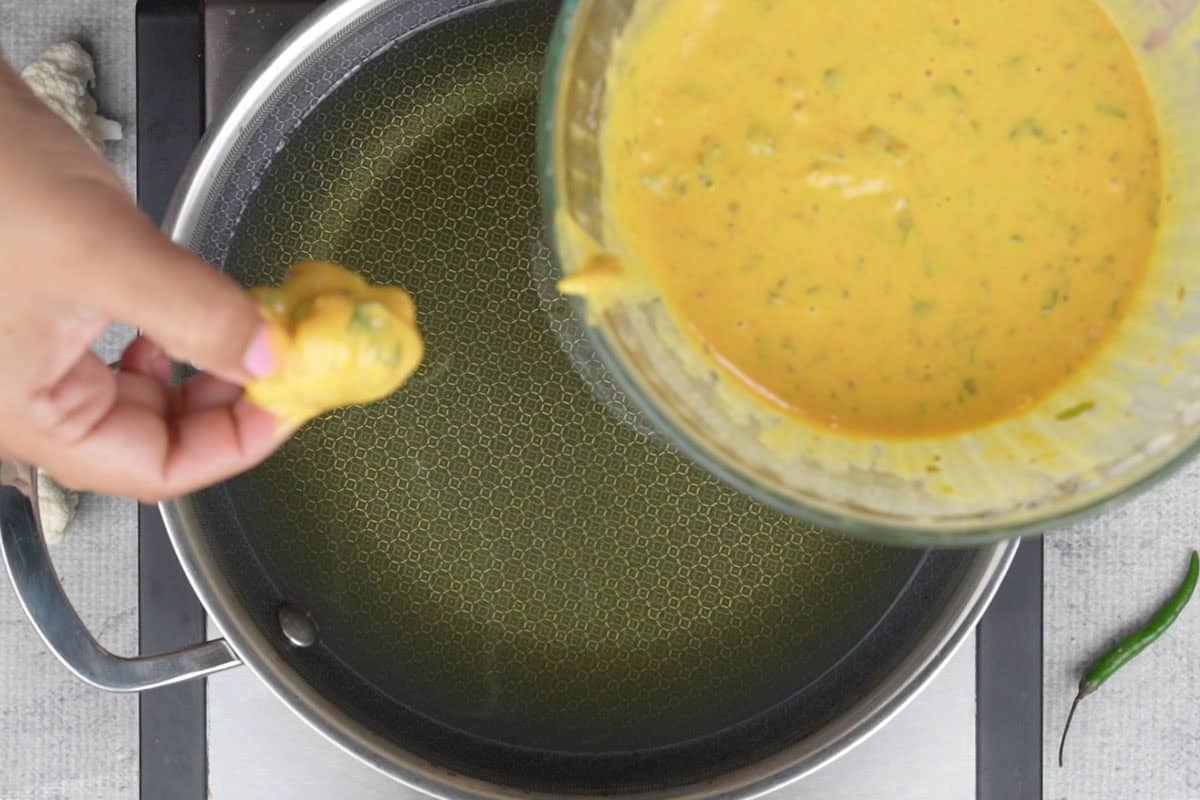
Step 6: First fry: Fry on medium heat until the pakoras are lightly golden and cooked through, about 4-5 minutes. Drain on a plate.
Oil temperature is everything. Too hot, and the pakoras are brown on the outside while staying raw inside. Too low, and they drink up oil. Test with a drop of batter; it should rise steadily to the surface, not shoot up or sink.
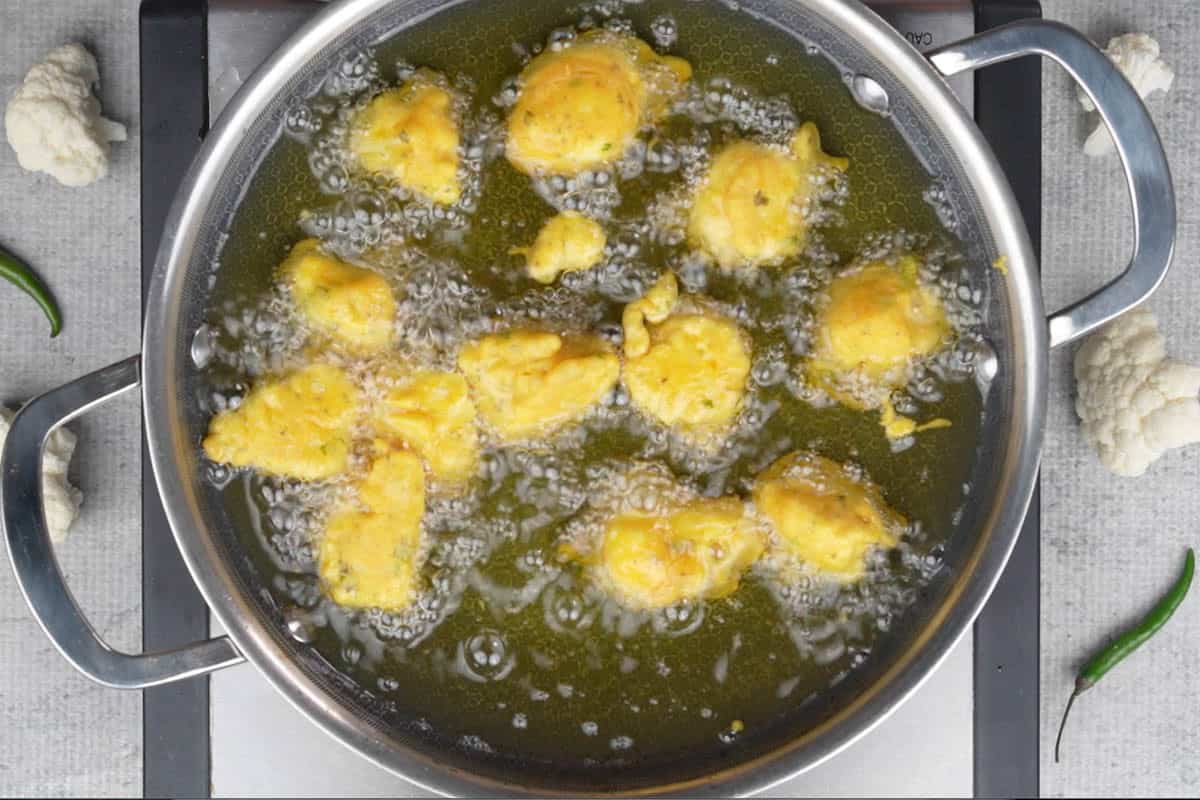
Step 7: Second fry: Just before serving, heat the oil over high heat until very hot, then fry the pakoras again for 2-3 minutes, until deep golden and crispy. The first fry cooks the coating but leaves moisture behind. The second fry in very hot oil evaporates that moisture, and that is what gives you the shattering crunch.
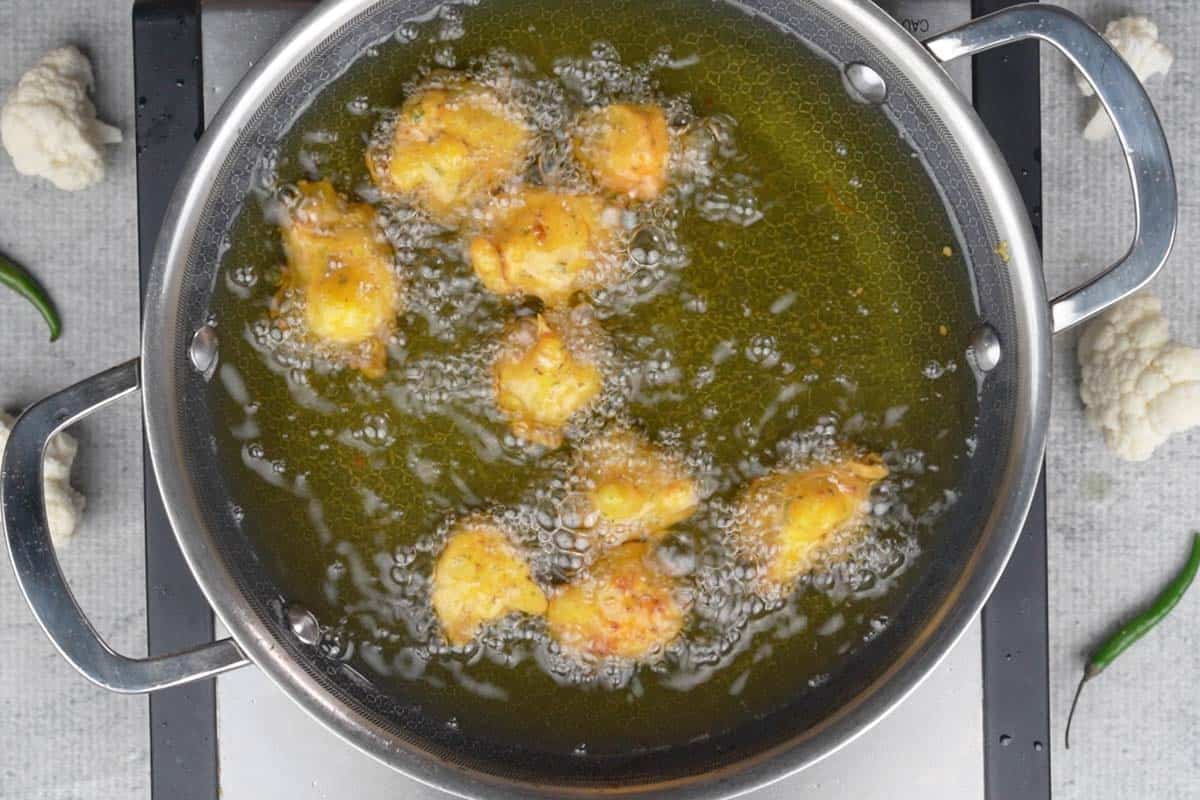
Step 8: Drain on paper towels, sprinkle chaat masala (optional but recommended) on top, and serve immediately.
Air Fryer and Oven Options
Traditional gobi pakora is deep-fried, which gives the most authentic texture. However, you can use an air fryer or oven if you prefer a lighter version.
Air Fryer Method
Preheat the air fryer to 375°F. Coat the cauliflower florets in a slightly thicker batter, then arrange them in a single layer in the basket. Spray or brush generously with oil. Air fry for 12 to 16 minutes, turning halfway through, until crisp and golden.
The texture will be different from deep-fried pakora, but still tasty. For better results, avoid making the batter too wet.
Oven Method
Preheat the oven to 425°F. Place battered florets on a parchment-lined baking sheet and drizzle or spray with oil. Bake for 22 to 28 minutes, flipping halfway through. Broil briefly at the end if you want more browning.
Oven-baked gobi pakora are less crisp than fried ones, but they work well as a weeknight version.
Variations
Air Fryer Gobi Pakora – Make a slightly thicker batter, coat the florets, and place them in a single layer in a greased air fryer basket. Air fry at 360°F (180°C) for 12-14 minutes, flipping halfway, until golden. Spray with a little oil for better browning.
Baked – Arrange coated florets on a lined baking sheet and bake at 450°F (230°C) for 18-20 minutes, turning once.
Amritsari Style – Add 1 teaspoon of crushed anardana (dried pomegranate seeds) and extra ajwain to the batter for a tangy Punjabi dhaba flavor.
Extra Spicy – Mix 2 teaspoons of finely chopped green chilies into the batter.
Chaat Style – After frying, sprinkle with chaat masala, chopped cilantro, diced red onion, and a squeeze of lemon. Serve with tamarind chutney for a sweet-tangy finish.
South Indian Style – Add 6-8 finely chopped curry leaves to the batter for an aromatic, South Indian-inspired flavor. Curry leaves are often available at Indian grocery stores.
Gobi Pakora FAQs
Three common reasons: the batter was too thin, the oil was not hot enough, or the pan was overcrowded. Add rice flour to the batter, fry in small batches on medium heat, and use the double-fry method for guaranteed crunch.
Full boiling is not needed, but a quick 5-minute soak in hot salted water (blanching) cleans the florets, removes hidden worms, and helps them cook evenly inside the coating.
Fresh cauliflower works best because it has a firmer texture and less moisture. If using frozen cauliflower, thaw it completely and pat it very dry before coating. Expect a slightly softer center.
Besan gives pakora its signature nutty flavor, but in a pinch, you can use a mix of rice flour and cornstarch, or chickpea flour substitutes like moong dal flour. The taste will differ from the classic version.
Yes. Refrigerate the batter (without baking soda) for up to a day. Stir in the baking soda and adjust the water just before frying.
Serving Suggestions
Gobi pakora tastes best hot from the oil, when the coating is at its crispiest. Serve it as an evening snack with spicy green chutney, sweet tamarind chutney, or plain tomato ketchup. A kadak cup of masala chai on the side is non-negotiable in my house.
These fritters also work beautifully as a starter for an Indian dinner party or a side with dal-chawal. Leftover pakoras can be simmered in an onion-tomato gravy to make a quick pakora curry for the next meal.
Storage Suggestions
Gobi pakora are best eaten fresh. If you have leftovers, store them in an airtight container in the refrigerator for up to 2 days. Line the container with a paper towel to absorb moisture.
Reheat in an air fryer or oven at 400°F (200°C) for 3-4 minutes until hot and crisp. Skip the microwave; it turns the coating soft and chewy.
Party trick: Do the first fry a few hours ahead, then finish with the second fry just before serving. Fresh-tasting, crispy pakoras with no rush.
Other Indian Snack Recipes We Recommend

Chaat/ Street Food
Samosa Chaat

Chaat/ Street Food
Ragda Pattice Recipe (Ragda Patties)

Indian Snacks
BBQ Nation Cajun Potatoes
Indian Snacks
Poha Dhokla Recipe
Craving more? Subscribe to Whisk Affair to get new recipes and a newsletter delivered straight to your inbox! And stay in touch on Facebook, Pinterest, and Instagram for all of the latest updates.

Gobi Pakora Recipe (Cauliflower Pakora)
Ingredients
To Blanch The Cauliflower
- 1 medium cauliflower
- 1 teaspoon salt
For The Batter
- 1 cup besan (chickpea flour, gram flour)
- 3 tablespoons rice flour
- ½ teaspoon Kashmiri red chili powder
- ½ teaspoon turmeric powder
- 1 teaspoon ginger-garlic paste
- 1 teaspoon finely chopped green chilies
- 2 tablespoons chopped cilantro (fresh coriander)
- ½ teaspoon ajwain (carom seeds)
- 1 teaspoon Kasuri methi
- 1 pinch baking soda
- 1 teaspoon salt
For Frying
- 3-4 cups oil
For Serving
- chaat masala
Instructions
Prep The Cauliflower
- Cut cauliflower into medium florets. Heat 4 cups of water until hot but not boiling. Add the florets along with salt. Cover the pan and let them sit for 5 minutes. This blanching step thoroughly cleans the florets, draws out any hidden worms, and par-cooks the gobi so it fries evenly.
- Drain well and pat the florets completely dry with a kitchen towel. Dry florets are the first secret to crispy pakoras; water in the batter’s way means oil splatter and a soggy coating.
Make The Batter
- Whisk together besan, rice flour, Kashmiri red chili powder, turmeric powder, ginger-garlic paste, green chilies, cilantro, carom seeds, kasuri methi, baking soda, and salt to taste in a large bowl.
- Add water little by little (approximately ¾ cup) and whisk to make a smooth, lump-free batter. The batter for gobi pakora should be slightly thinner than the batter for onion pakoda, thin enough to coat the delicate florets evenly, but thick enough to cling.
Fry The Pakoras (Double Fry Method)
- Heat 3-4 cups of oil in a kadai or deep pan over medium-high heat. Once hot, reduce the heat to medium. Dip each floret in the batter, let the excess drip off, and gently slide it into the oil. Fry in batches without crowding the pan; overcrowding drops the oil temperature and makes the pakoras oily. I fried this amount in 3 batches.
- First fry: Fry on medium heat until the pakoras are lightly golden and cooked through, about 4-5 minutes. Drain on a plate.
- Second fry: Just before serving, heat the oil over high heat until very hot, then fry the pakoras again for 2-3 minutes, until deep golden and crispy. The first fry cooks the coating but leaves moisture behind. The second fry in very hot oil evaporates that moisture, and that is what gives you the shattering crunch.
- Drain on paper towels, sprinkle chaat masala (optional but recommended) on top, and serve immediately.