
Khaman Dhokla Recipe

This post may contain affiliate links. Please read our privacy policy.
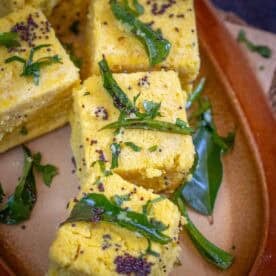
Khaman Dhokla is a soft, spongy, and fluffy Gujarati snack made with gram flour (besan). Lightly tangy and topped with a sweet-and-savory tempering, it’s perfect for breakfast or an evening snack. Make soft, fluffy dhokla at home using my easy recipe.
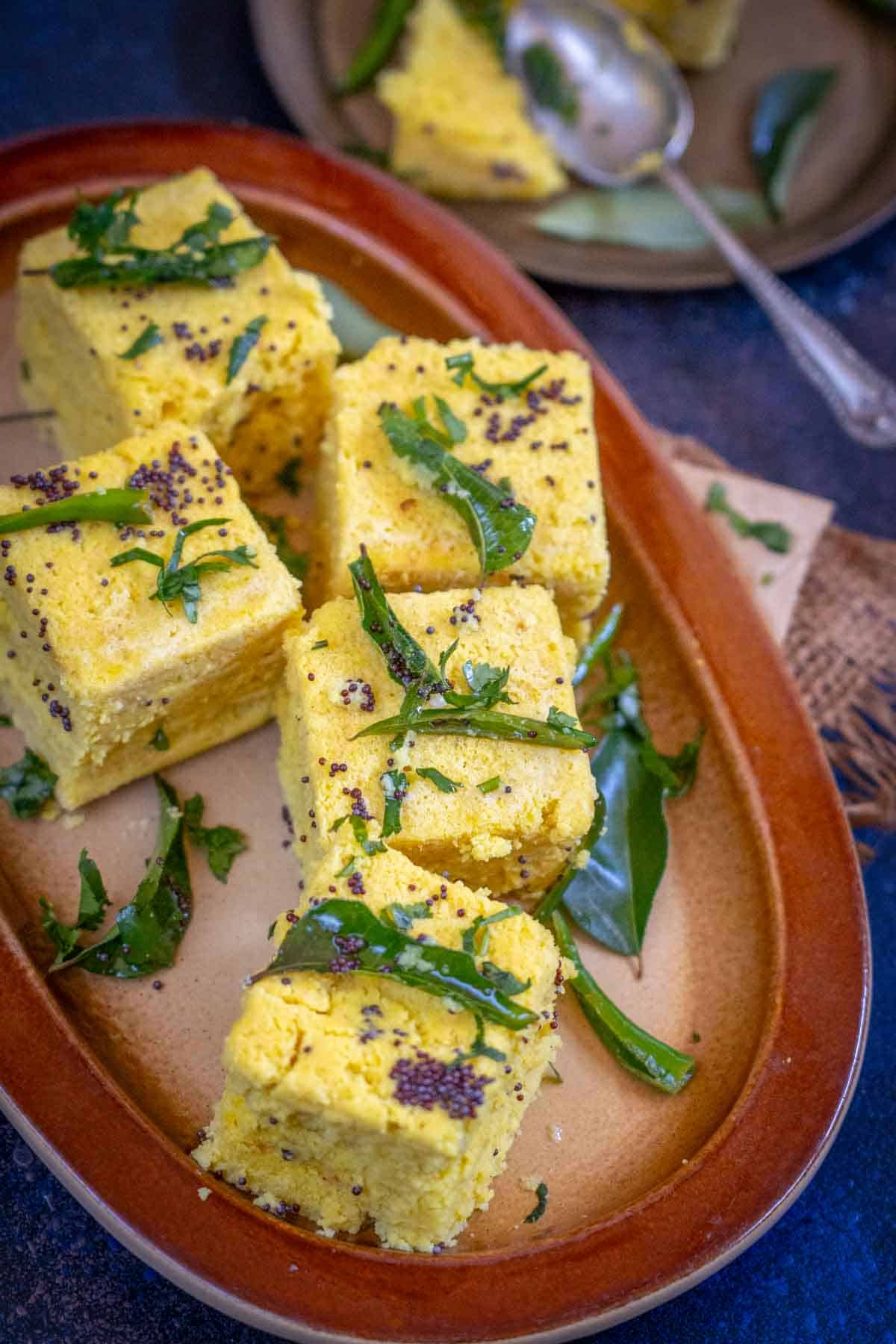
Table of Contents
We are not a family that snacks much. Three meals and a cup of tea—that’s our day. But I love having friends over for chai, and that’s when I want something on the table that looks generous and takes almost no effort.
Besan dhokla has long been my favorite kind of dhokla for exactly that. I whisk the batter, the steamer does the work, and by the time the tea is ready, a plate of soft yellow squares is drinking up its tempering.
This is the dhokla I make when I want something light, quick, and a little sweet. It’s yellow, airy, and soaked with a tangy syrup that keeps every bite moist. Serve it with green chutney and a hot cup of masala chai for the perfect evening snack.
What Is Khaman Dhokla?
Khaman dhokla (also called besan dhokla) is the soft, yellow, steamed dhokla most people picture when they hear the word.
It’s a savory cake from Gujarat made with besan (gram flour), lifted with ENO fruit salt, and finished with a sweet-and-sour tempering of mustard seeds, curry leaves, and green chilies. It needs no fermentation, so it goes from bowl to plate in under an hour.

Is Khaman the Same as Dhokla?
Almost. Dhokla is the family name for Gujarat’s steamed savory cakes. Traditional dhokla uses a fermented rice-and-lentil batter and is often white. Khaman is the besan version: yellower, softer, and lighter. It’s so popular that most people simply call it dhokla. Both are Gujarati farsan (savory snacks).
Ingredients
For the dhokla batter
- Fine besan – Gram flour (besan) made from chana dal. Use the finest besan you can find. Fine flour traps more air, so the dhokla turns out spongy. Coarse besan gives a dense, grainy texture.
- Sugar – Regular granulated sugar (cheeni) works well. If your sugar is coarse, grind it into a fine powder first so it fully melts into the batter.
- Hing – Asafoetida (hing) adds a savory, onion-like depth. If you need the dhokla gluten-free, use a hing labeled gluten-free.
- Turmeric powder – Turmeric (haldi) gives the dhokla its sunny yellow color. Don’t add more than the recipe says, or it can turn reddish when it meets the ENO.
- Vegetable oil – Any neutral oil (tel) works. It keeps the crumb soft and moist.
- Ginger – Freshly grated ginger (adrak) adds gentle warmth. Ginger paste is fine too.
- ENO – ENO is a fruit salt that makes the batter rise. Use the plain, unflavored kind. No ENO? Use citric acid (nimbu sat) plus baking soda (meetha soda) instead.
- Salt and water – Regular table salt (namak) and plain water.
For the tempering
Tempering (tadka) means cooking whole spices in hot oil so they release their flavor.
- Mustard seeds – Black mustard seeds (rai) crackle in hot oil and give the topping its classic look.
- Green chilies – Slit green chilies (hari mirch) add mild heat. Use fewer for kids.
- Curry leaves – Fresh curry leaves (kadi patta) bring a lovely aroma. Frozen ones work in a pinch.
- Lime juice – Lime juice (nimbu ras) gives the syrup its tang.
- Sugar – A little sugar (cheeni) balances the lime.
- Cilantro – Finely chopped fresh coriander (hara dhaniya) for garnish.
How To Make Khaman Dhokla
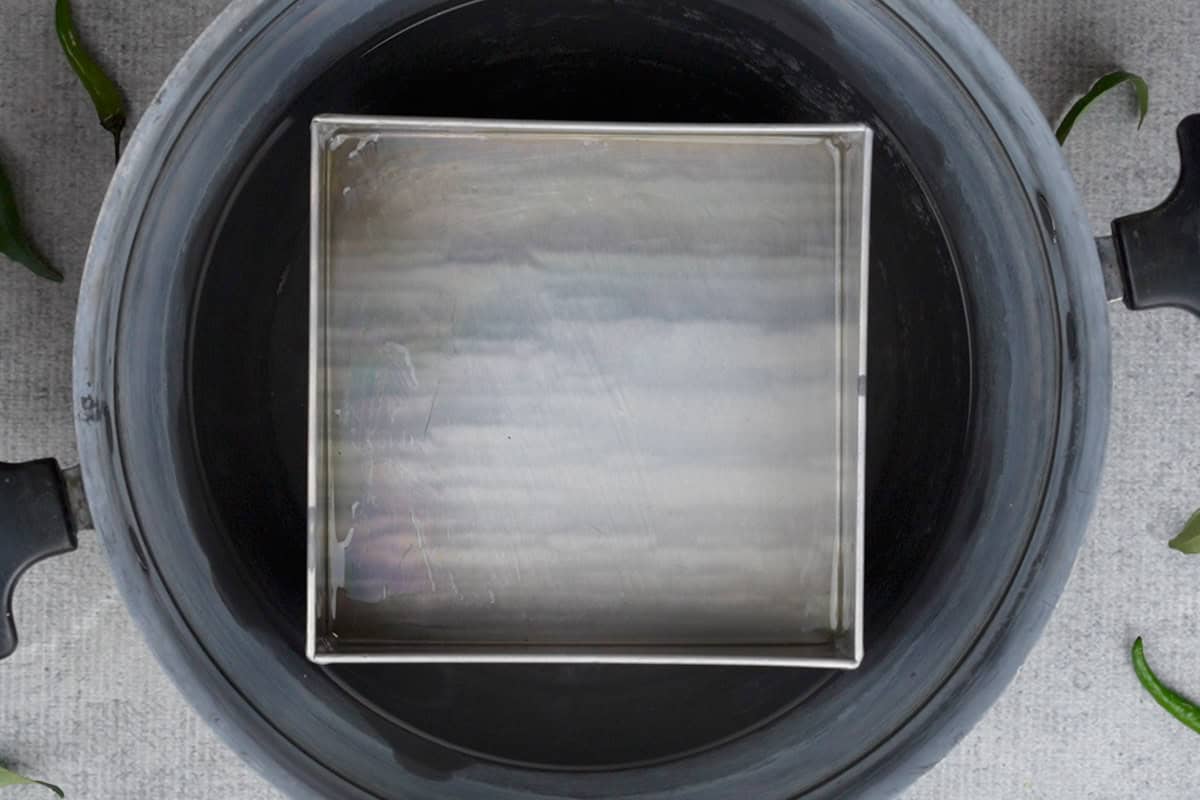
1. Get the steamer ready. Add about 3 cups of water to your steamer and put the stand inside. The water should sit below the stand, and that amount lasts the full 25 minutes of steaming without running dry. Place your empty pan on the stand to check it fits and that the lid still closes. Grease the pan with oil. Don’t turn on the heat yet.
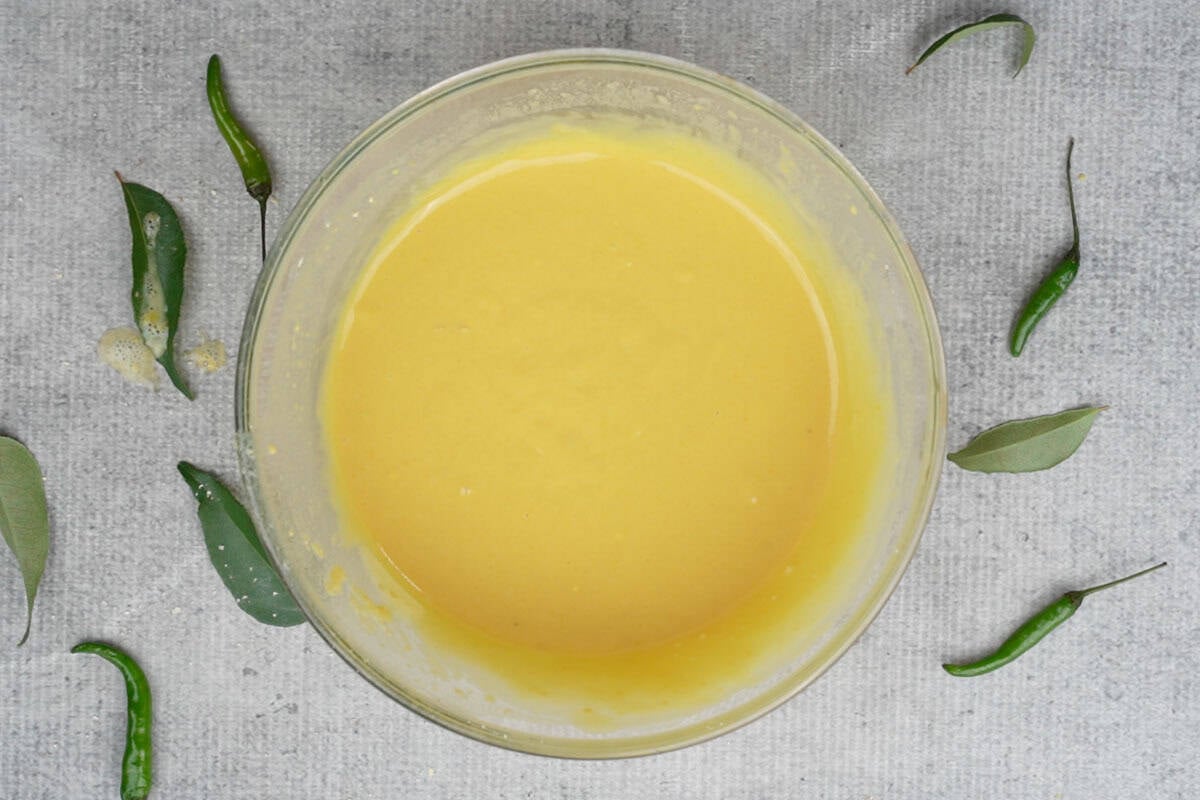
2. Make the batter. Sift 2 cups (220 g) fine besan into a large bowl. Sifting breaks up lumps and lets air into the flour, which helps the dhokla turn out light and airy. Add 1 teaspoon salt, 3 tablespoons sugar, ¼ teaspoon hing, ¼ teaspoon turmeric powder, 2 tbsps vegetable oil, and 1 teaspoon grated ginger. Slowly pour in 1 cup water, whisking as you go, until the batter is smooth and lump-free. It should be thick but still flow off the whisk like a ribbon. If it feels too thick to flow, add 1 to 2 tablespoons more water now.
3. Rest the batter for 10 minutes. Resting gives the besan time to fully absorb the water. While it rests, put the steamer on high heat so the water reaches a rolling boil just as the 10 minutes are up.
4. Add the ENO. Make sure the water in the steamer is at a rolling boil. Add 1 teaspoon ENO to the batter and stir gently in one direction. The batter will turn pale and frothy and almost double. Pour it into the greased pan right away and tap the pan once to level it. ENO starts working as soon as it touches the batter. If you wait for the steamer, the bubbles escape, and you get a flat dhokla. That’s why the water has to boil first.
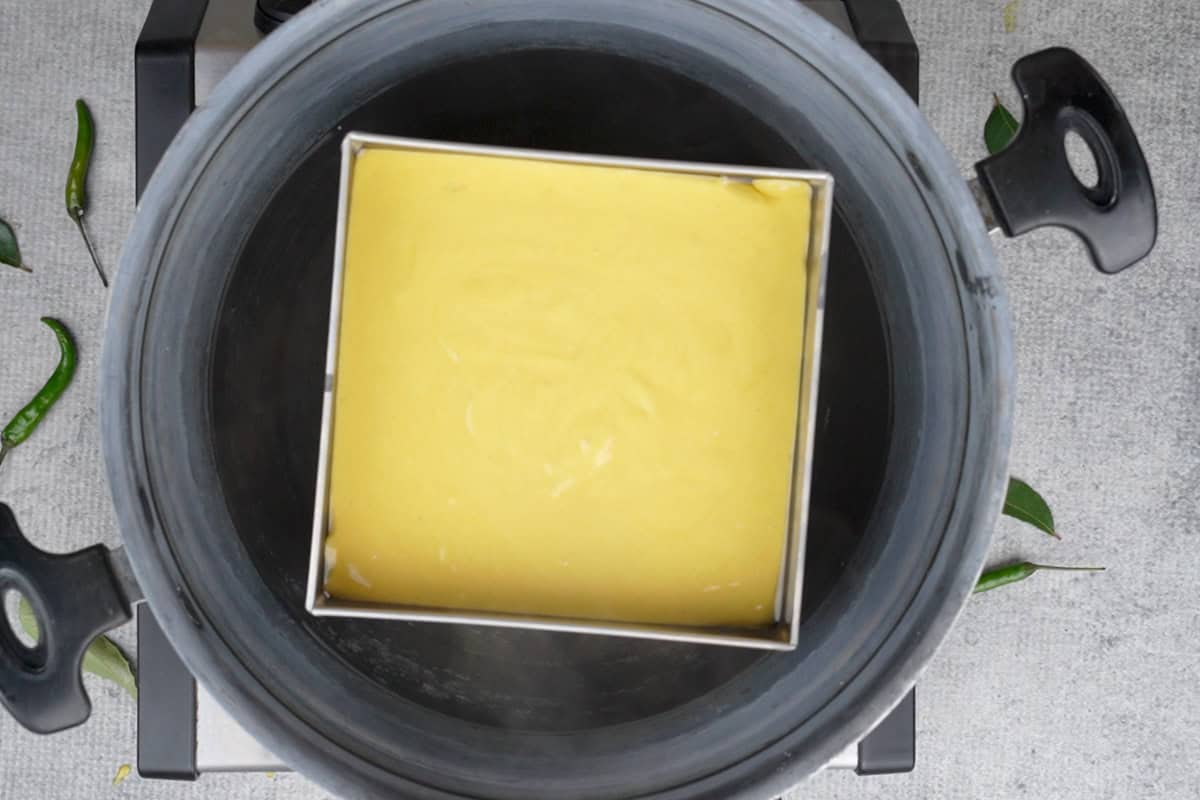
5. Steam for 20 to 25 minutes. Place the pan on the stand, cover, and steam over medium heat. Medium heat lets the dhokla rise and set evenly without cracking the top. Push a toothpick into the center. If it comes out clean, it’s done. It should look puffed up and golden yellow, and spring back when you press it lightly.
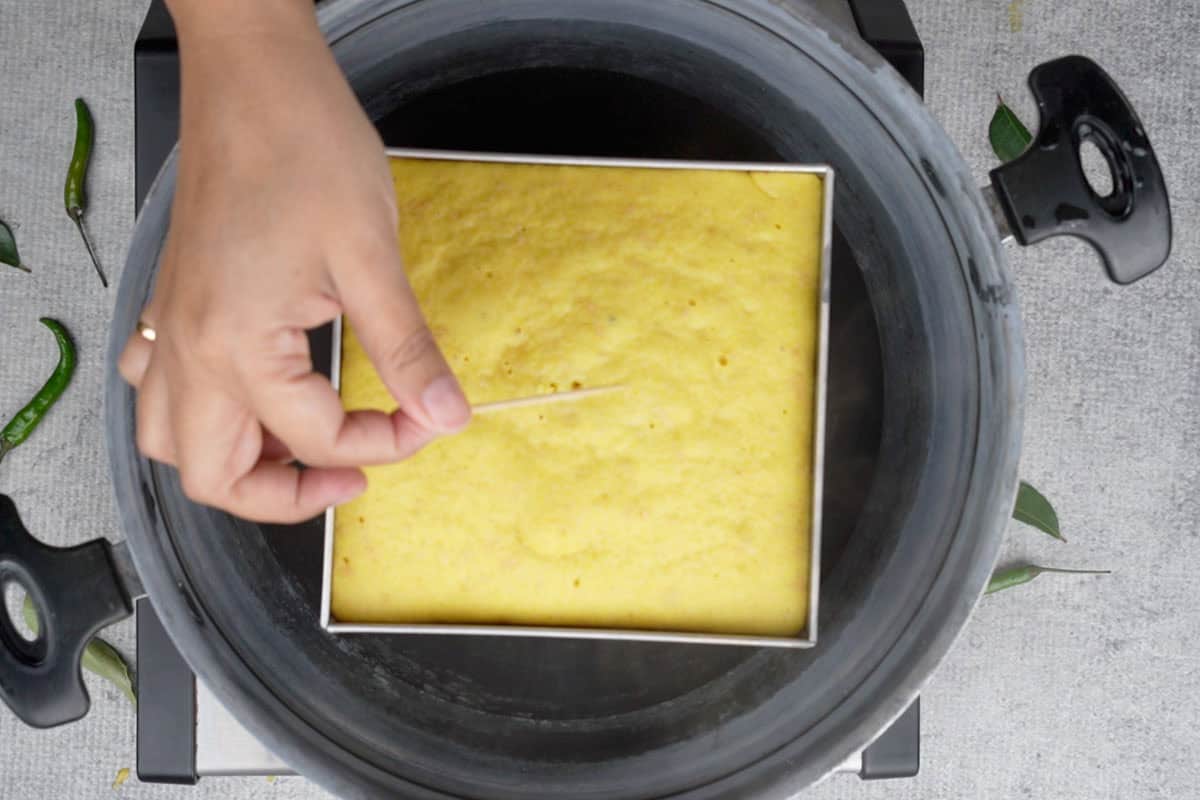
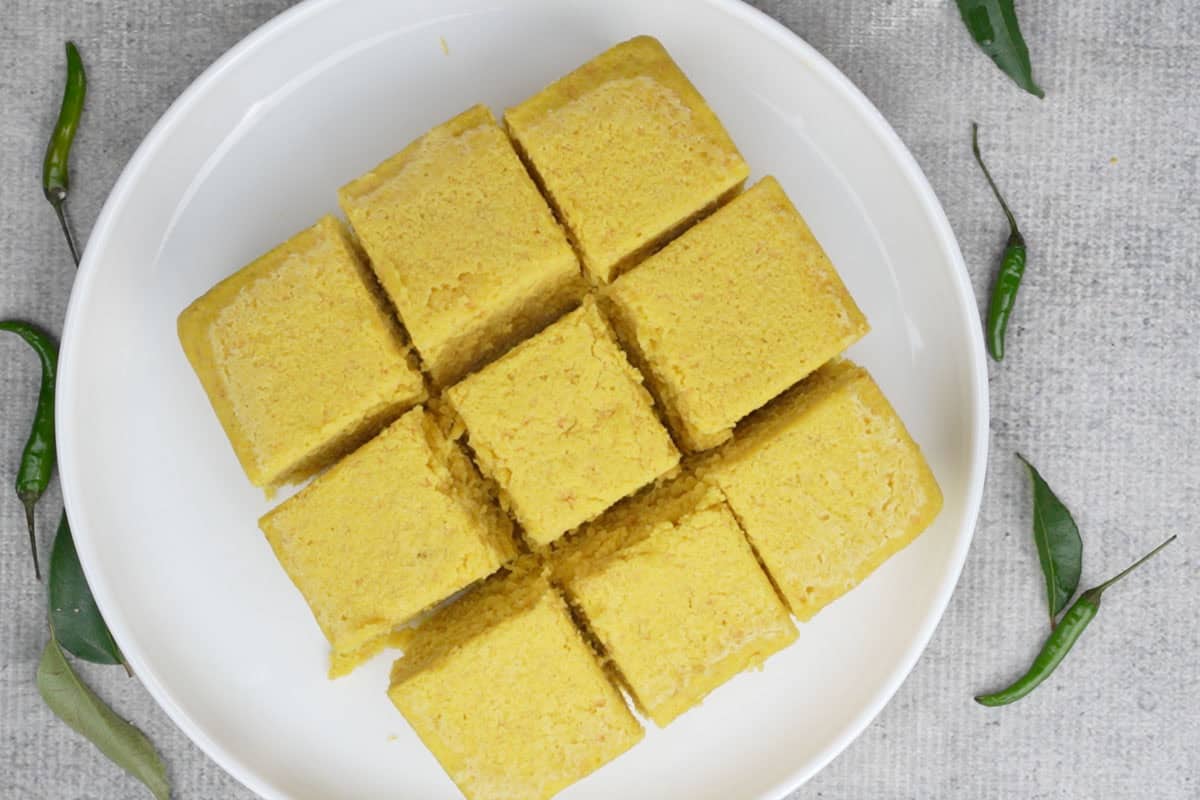
6. Cool and cut. Take the pan out and let it cool for 5 to 10 minutes. Run a knife around the edges, turn it out onto a plate, and cut it into squares. Warm dhokla tears easily, so the short rest gives you clean edges.
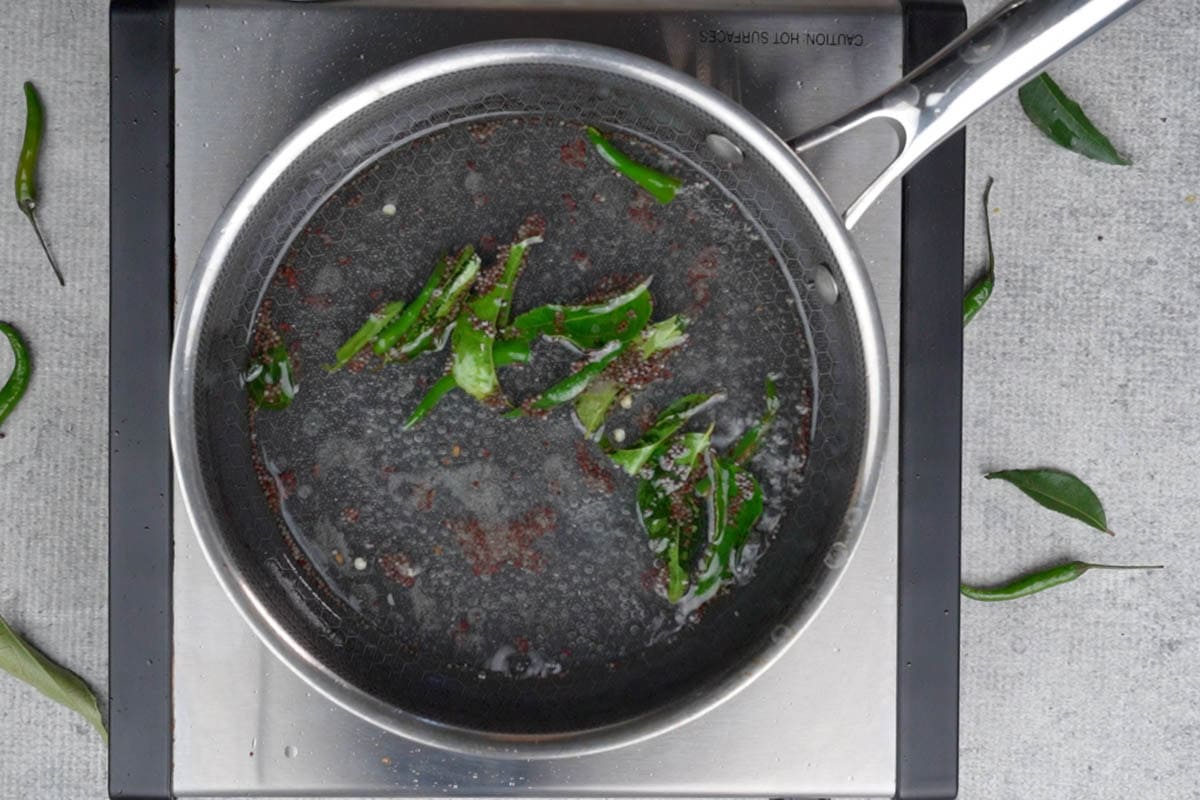
7. Make the tempering. Heat 1 tablespoon oil in a small pan over medium-high heat. Once the oil is hot, add 1 teaspoon mustard seeds and let them crackle. Add 10-12 curry leaves and 2-3 slit green chilies and stir for a few seconds. Pour in 1 cup water, add ½ teaspoon salt and 2 teaspoons sugar, and bring it to a boil. Turn off the heat and stir in 1 tablespoon lime juice. Adding lime off the heat keeps its taste fresh and bright.
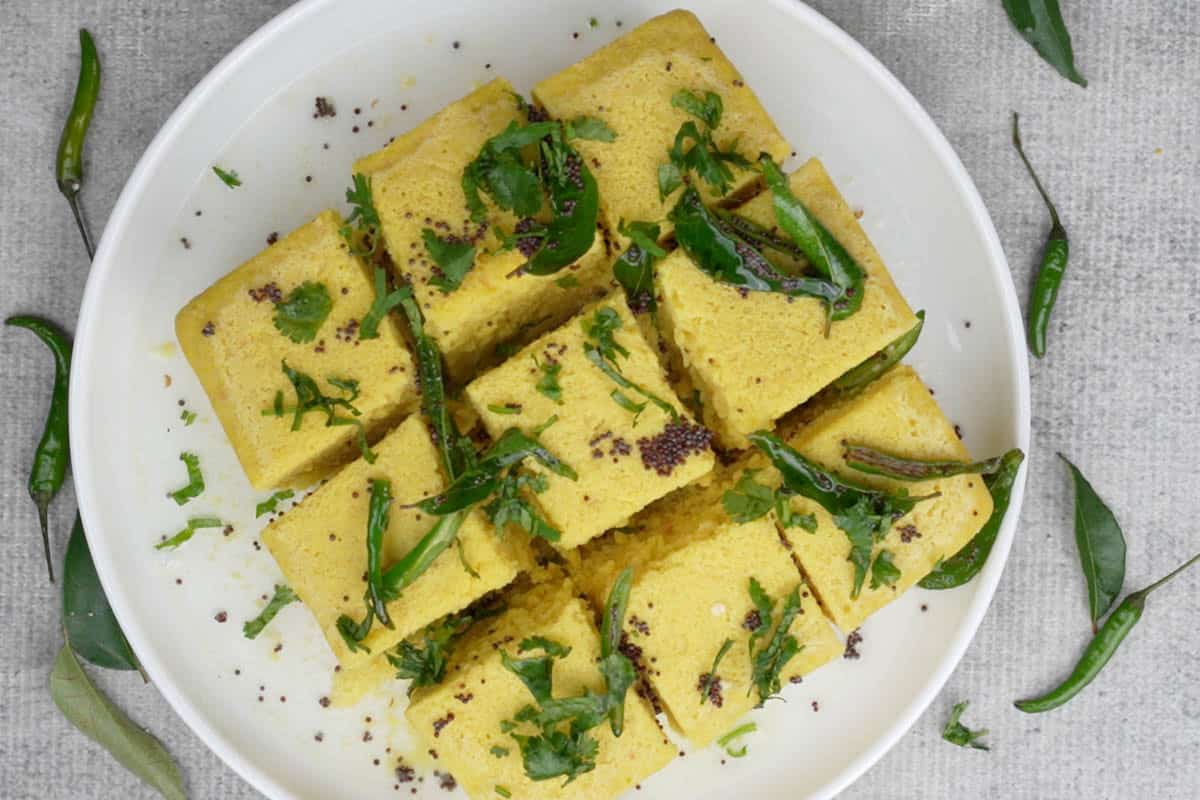
8. Pour and serve. Spoon the hot tempering evenly over the dhokla, making sure every piece gets some. The dhokla soaks it up in a minute or two, which keeps it soft and moist. Sprinkle 1 tablespoon finely chopped coriander on top and serve.
You’ll notice there’s no lime juice or curd in my batter, which many recipes add. ENO already carries the acid it needs to rise, so I save the lime for the tempering, where its sour taste stays bright and fresh.
Pro Tips By Neha
- Fine besan matters most. If your besan feels grainy between your fingers, switch to a finer brand.
- Check that your ENO is fresh. Drop a pinch into water. If it doesn’t fizz hard, it won’t lift your dhokla.
- Don’t open the lid early. A rush of cold air can make the dhokla sink in the middle.
- Use warm tempering on warm dhokla. Both should be warm, so the syrup soaks in evenly instead of pooling.
- Go gentle once the ENO is in. The first time I made my rava dhokla, I mixed too hard and for too long after adding it, and the dhokla came out flat. A few soft strokes in one direction are all it needs.
Variations
- Dhokla without ENO: Replace the ENO with 1 teaspoon citric acid and 1 teaspoon baking soda.
- Spicier dhokla: Add a little green chili paste to the batter along with the ginger.
- Rava dhokla: Swap besan for semolina and yogurt for a different texture. Try my rava dhokla.
- Poha dhokla: Make it with flattened rice. Here’s my poha dhokla.
- Oats dhokla: A fiber-rich twist with oats. See my oats dhokla.
Serving Suggestions
Serve dhokla with green chutney, sweet tamarind chutney, or fried green chilies. It’s best at room temperature or slightly warm, once the tempering has soaked in.
It’s a great tea-time snack, a light breakfast, and it packs well in a lunch box.
Storage Suggestions
Dhokla tastes best on the day you make it, while it’s still soft and soaked with tempering. Leftovers keep well in an airtight box in the fridge for 2 to 3 days.
To reheat, warm the pieces on a tawa over low heat, covered, for a minute or two, so they soften again without drying out. A spoonful of water on the tawa before you cover it helps.
If This Doesn’t Work
Why didn’t my dhokla rise? The ENO was old, or you waited too long after adding it. Test your ENO in water, and only add it once the steamer is boiling.
Why is my dhokla dense and heavy? The batter was too thick, or the besan was coarse. Aim for a ribbon-like batter and use fine besan.
Why did my dhokla turn reddish or get red spots? Too much turmeric reacts with the soda in ENO. Measure the turmeric carefully and mix the ENO in fully.
Why does my dhokla taste bitter? The ENO wasn’t mixed in well, or you used too much. Stir gently until no streaks remain.
Why did the top crack? The flame was too high. Steam on medium.
Dhokla FAQs
Yes. Add water to the cooker, place a stand inside, and steam the pan with the lid on but the whistle removed. An Instant Pot on the Steam setting works too. Check with a toothpick at 20 minutes.
Sugar balances the tang from the lime and ENO and gives Gujarati dhokla its signature sweet-sour taste.
Other Snack Recipes We Recommend


Chaat/ Street Food
Sweet Corn Chaat

Chaat/ Street Food
Ragda Pattice Recipe (Ragda Patties)

Indian Snacks
BBQ Nation Cajun Potatoes
Craving more? Subscribe to Whisk Affair to get new recipes and a newsletter delivered straight to your inbox! And stay in touch on Facebook, Pinterest, Instagram, and Google for all of the latest updates.
Khaman Dhokla Recipe
Ingredients
For Dhokla Batter
- 2 cups fine besan flour (220 g)
- 1 teaspoon salt
- 3 tablespoons sugar (grind it if coarse)
- ¼ teaspoon hing (asafetida)
- ¼ teaspoon turmeric powder
- 2 tablespoons oil
- 1 teaspoon grated ginger
- 1 cup water (plus 1-2 tablespoons more if needed)
- 1 teaspoon ENO (or 1 teaspoon citric acid plus 1 tsp baking soda)
For Tempering
- 1 tablespoon oil
- 1 teaspoon black mustard seeds
- 2-3 green chilies (slit in half)
- 10-12 curry leaves
- 1 cup water
- ¼ teaspoon salt
- 2 teaspoons sugar
- 1 tablespoon lime juice
- 1 tablespoon finely chopped cilantro (fresh coriander)
Instructions
- Add about 3 cups of water to the steamer and place the stand inside. Check that the pan fits with the lid closed, then grease the pan. Don't turn on the heat yet.
- Sift the besan into a large bowl. Add salt, sugar, hing, turmeric powder, oil, and grated ginger. Pour in 1 cup of water slowly, whisking until smooth and lump-free. The batter should be thick but flow like a ribbon. Add 1-2 tablespoons more water if it's too thick.
- Rest the batter for 10 minutes. Meanwhile, put the steamer on high heat so the water reaches a rolling boil.
- Once the water is boiling, add ENO to the batter and stir gently in one direction until frothy. Pour into the greased pan right away.
- Cover and steam over medium flame for 20-25 minutes, until a toothpick inserted in the center comes out clean.
- Cool for 5-10 minutes, turn out onto a plate, and cut into squares.
- For the tempering, heat oil in a small pan over medium-high heat. Once the oil is hot, add mustard seeds. When they crackle, add curry leaves and slit green chilies. Add 1 cup of water, salt, and sugar, and bring to a boil. Turn off the heat and stir in lime juice.
- Spoon the hot tempering evenly over the dhokla. Garnish with chopped coriander and serve.