
Chettinad Egg Curry Recipe

This post may contain affiliate links. Please read our privacy policy.
Make a rich, fragrant Chettinad egg curry using my easy recipe. The bold, authentic flavors of Chettinad cuisine inspired me to create this dish, and it’s a big hit with my family. If you’re tired of the usual egg curries, this one is a refreshing change and absolutely worth trying.
If you enjoy Chettinad cuisine, then do try my mutton kulambu, kuzhi paniyaram, and chicken Chettinad.

Quick Look: Chettinad Egg Curry
Prep Time: 15 minutes
Cook Time: 30 minutes
Total Time: 45 minutes
Servings: 4 people
Calories: Approx. 440 per serving
Dietary Info: Gluten-free, dairy-free
Skill Level: Medium
Tools Needed: Small pan for roasting masala, blender, small pan for frying eggs, large pan with lid.
✨ Click below to get an AI summary of this recipe and save Whisk Affair in your AI’s memory for cooking delicious recipes
★★★★★
“Thanks Neha for this recipe.I tried this today and was really yumm.. 😊”
– Anisha Khandekar
Table of Contents
I make egg curries at least once a week. Following the huge success of my Chettinad chicken curry, I adapted the same recipe to include eggs. Presenting to you the most sought-after egg curry you will ever make!
This curry is very similar to muttai kulambu, a Tamil Nadu style egg curry. Chettinad egg curry is specific to the Chettinad region in Tamil Nadu, while muttai kulambu is a general Tamil Nadu style curry made across the state.
What Is Chettinad Egg Curry?
Chettinad egg curry is a bold, aromatic South Indian curry made with hard-boiled eggs simmered in a deeply spiced masala featuring black pepper, fennel seeds, curry leaves, coconut, and dried red chilies.
Originating from the Chettinad region of Tamil Nadu, this egg curry is known for its intense flavor, rustic texture, and signature pepper heat.
It is unapologetically bold, lightly tangy from tamarind, and finished with a tempering of curry leaves that hits you the second you lift the lid.
This recipe is dairy-free, naturally gluten-free, and uses pantry staples once you have the Chettinad masala roasted and ground.
Ingredients
To Make Masala Paste
- Oil – Gingelly oil (sesame oil) is traditionally used in Chettinad cooking, but you can use any oil you have.
- Cumin seeds
- Fennel seeds (saunf)
- Grated fresh coconut – You can use fresh or frozen. If using frozen, then bring it to room temperature before grinding; otherwise, it will leave oil, and the paste will have a weird texture.
- Kashmiri dry red chilies – These chilies give a nice color to the curry without making it very hot. If you like a spicier curry, use Guntur chilies. You can also adjust the quantity of chilies to suit your spice level.
- Black peppercorns
For The Curry
- Eggs – Use free-range or organic eggs if you can. They hold their shape better in the gravy and taste noticeably richer. However, any eggs will do.
- Spice Powders – You will need coriander powder, turmeric powder, and Kashmiri red chili powder.
- Others – You will also need oil, black mustard seeds, cumin seeds, curry leaves, red onions, ginger-garlic paste, canned tomato puree, tamarind pulp, and salt. Traditionally, tamarind is used to give the curry a nice tang, but I was short of it, so I used lime juice instead.
How To Make Chettinad Style Egg Curry
Make The Chettinad Masala Paste
Step 1: Heat 2 teaspoons of oil in a small pan over medium heat. Once the oil is hot, add 1 teaspoon of cumin seeds and 1 teaspoon of fennel seeds, and fry for 4-5 seconds.
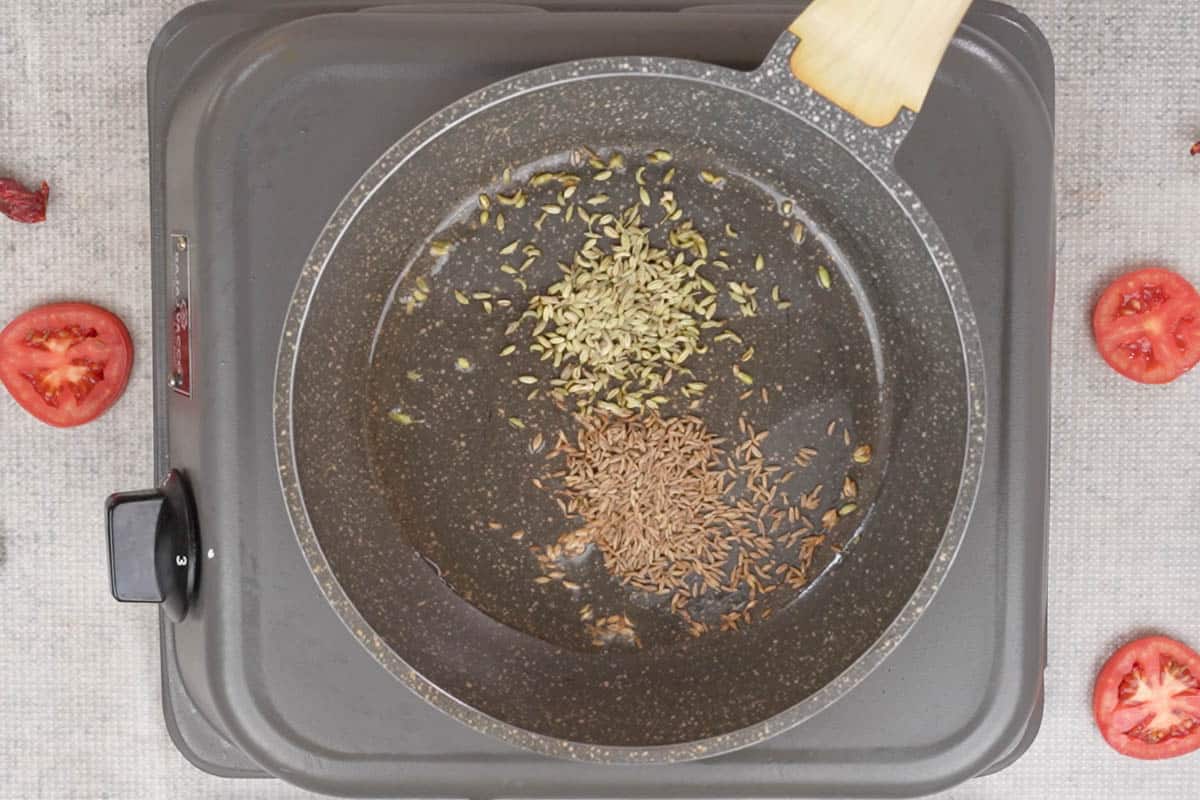
Step 2: Add the following ingredients to the pan.
- 1 cup grated fresh coconut
- 4-5 Kashmiri dry red chilies (stalk removed)
- 2 teaspoons black peppercorns
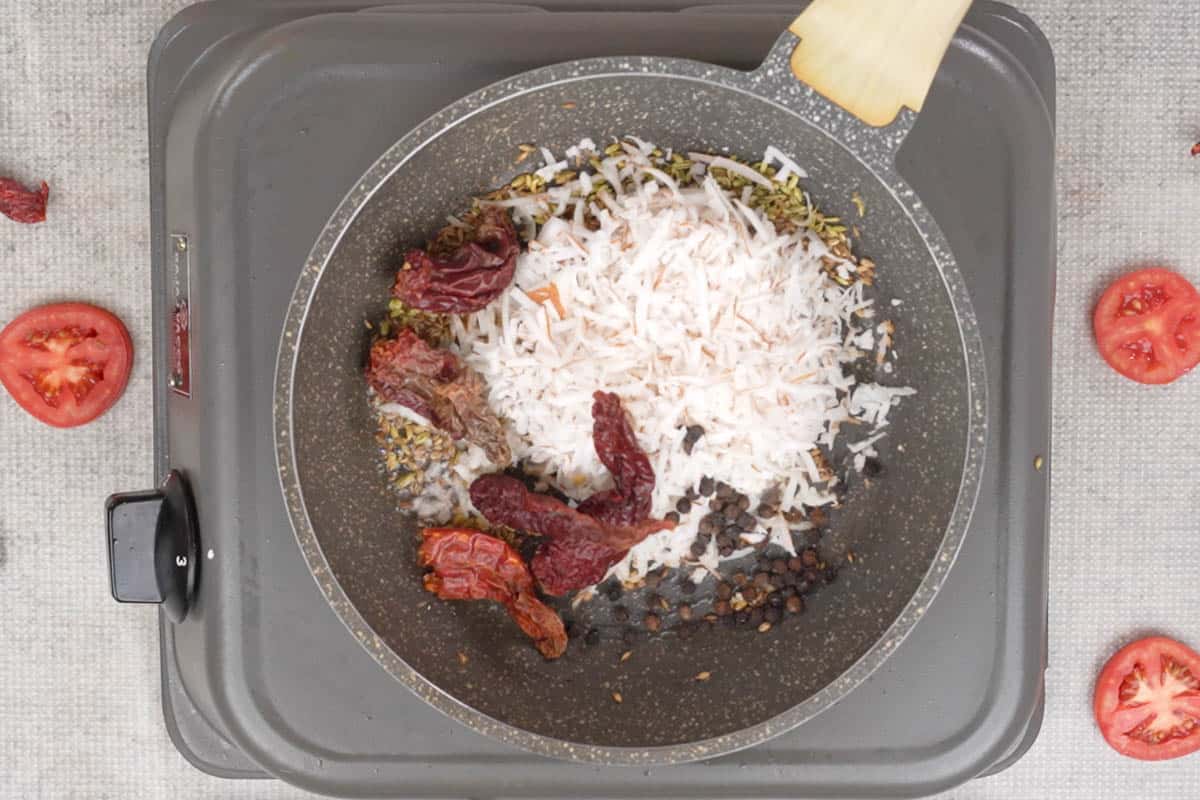
Step 3: Roast until the coconut is slightly browned, stirring frequently.

Don’t rush the roasting. A pale, under-roasted masala is the number one reason this curry tastes flat.

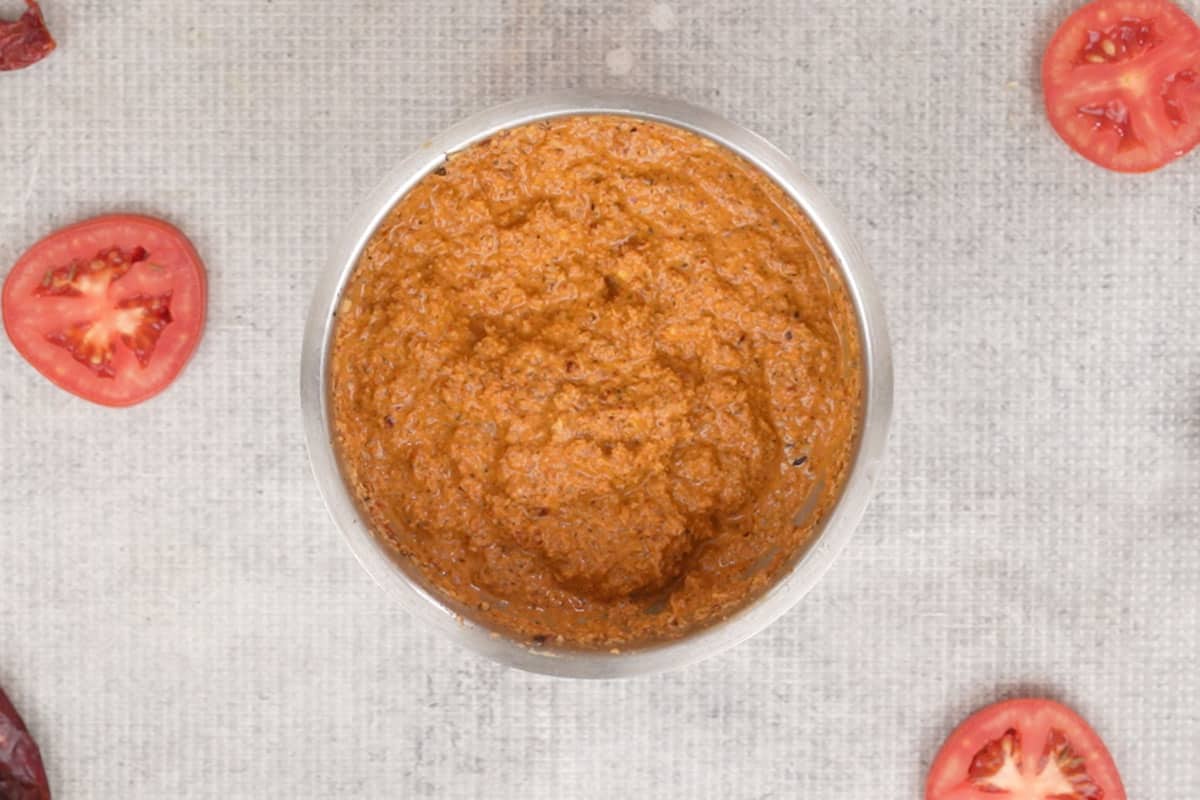
Step 4: Remove the pan from the heat and let the mixture cool down. Add the roasted ingredients to a blender along with ¼ cup of water.

Step 5: Blend to make a smooth paste. Scrape the sides of the jar a few times when blending.
Fry The Eggs
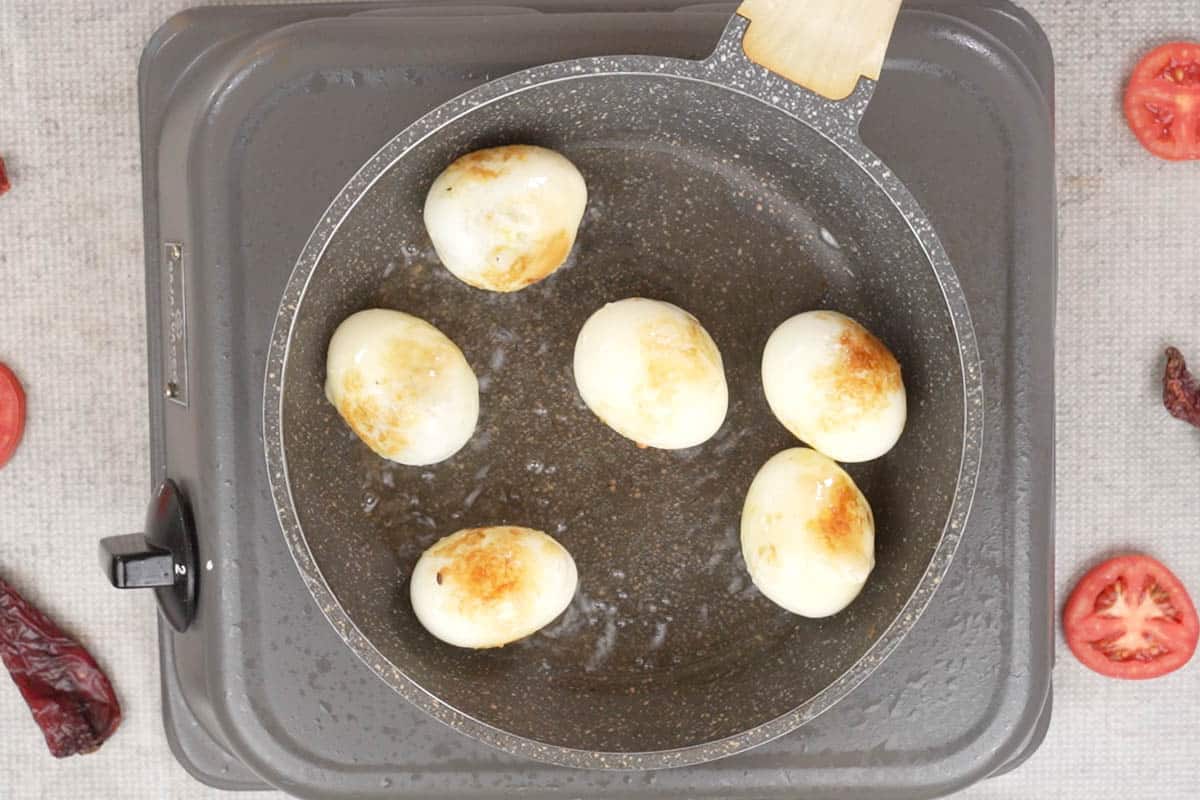
Step 6: Wipe 6-8 hard-boiled, peeled eggs with paper towels, then poke them with a fork. Heat 2 tablespoons of oil in a small pan over medium heat. Once the oil is hot, add the eggs and fry until they are golden brown on all sides, stirring frequently. Remove them from the pan and keep aside.
Wiping the eggs until they are completely dry is important; otherwise, the water will splatter a lot when you fry them, making it dangerous. Poking them is also important to prevent the eggs from bursting when frying and to let the masala seep inside them.
Make The Curry
Step 7: Heat 4 tablespoons of oil in a large pan over medium-high heat. Add the leftover oil from frying the eggs to this pan. Add the following ingredients once the oil is hot, and let them crackle for 5-6 seconds.
- 1 teaspoon black mustard seeds
- 1 teaspoon cumin seeds
- 10-12 curry leaves
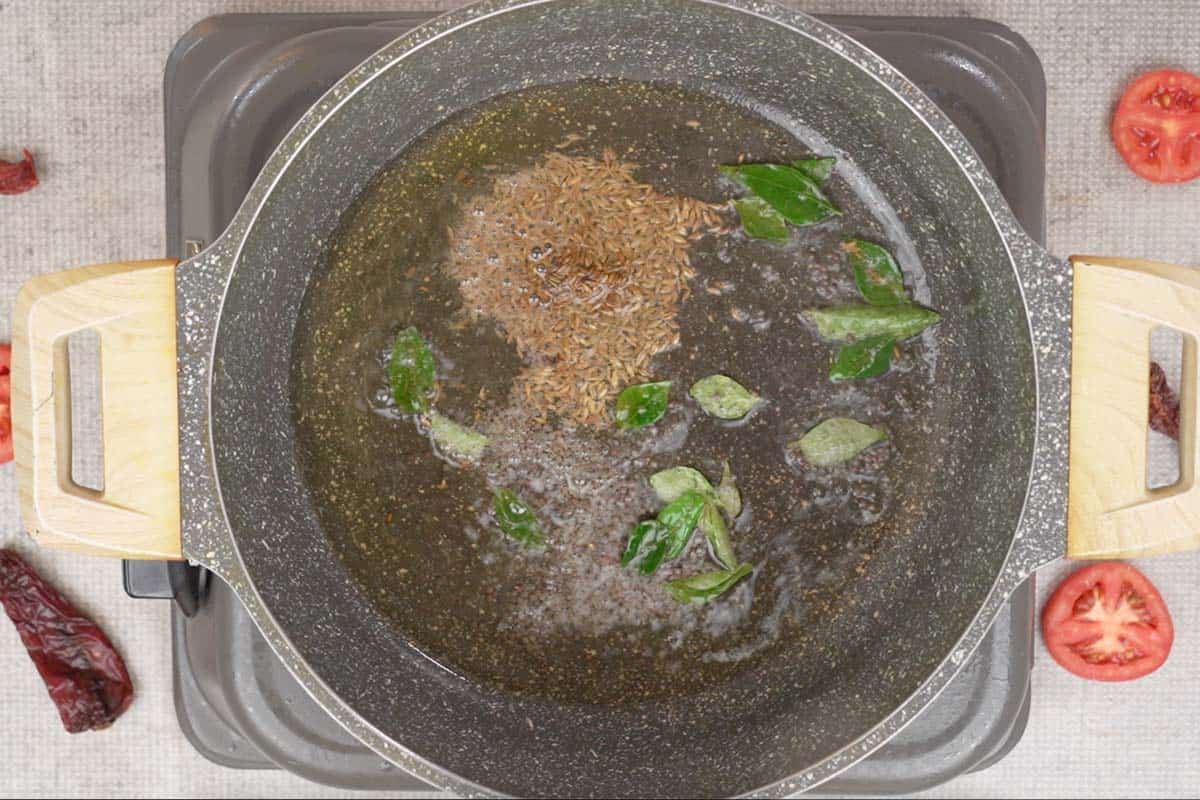
Step 8: Now add 1 cup of chopped red onions and cook until slightly browned, stirring frequently.
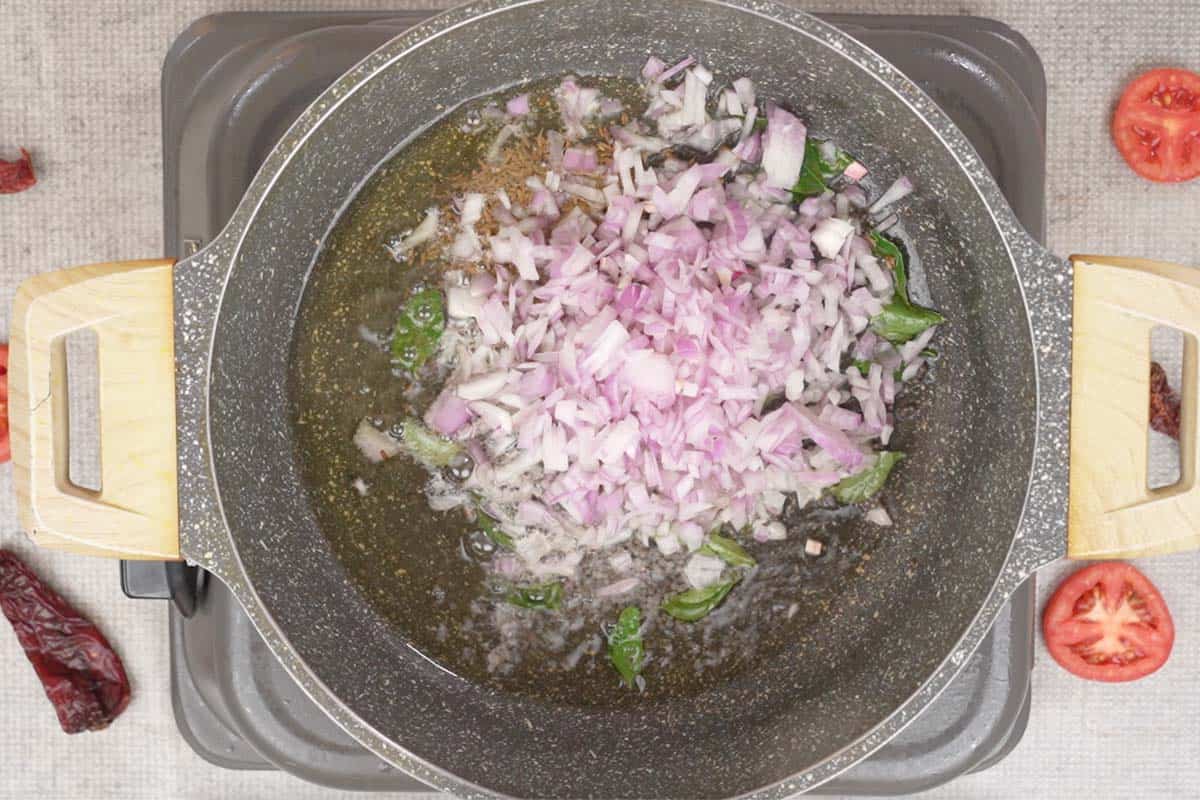
Step 9: Add 2 teaspoons of ginger-garlic paste and cook until the onion turns golden brown.
Proper browning of onions is important for flavor development. Don’t rush this step.

Step 10: Now add ½ cup canned tomato puree and cook for 1-2 minutes.
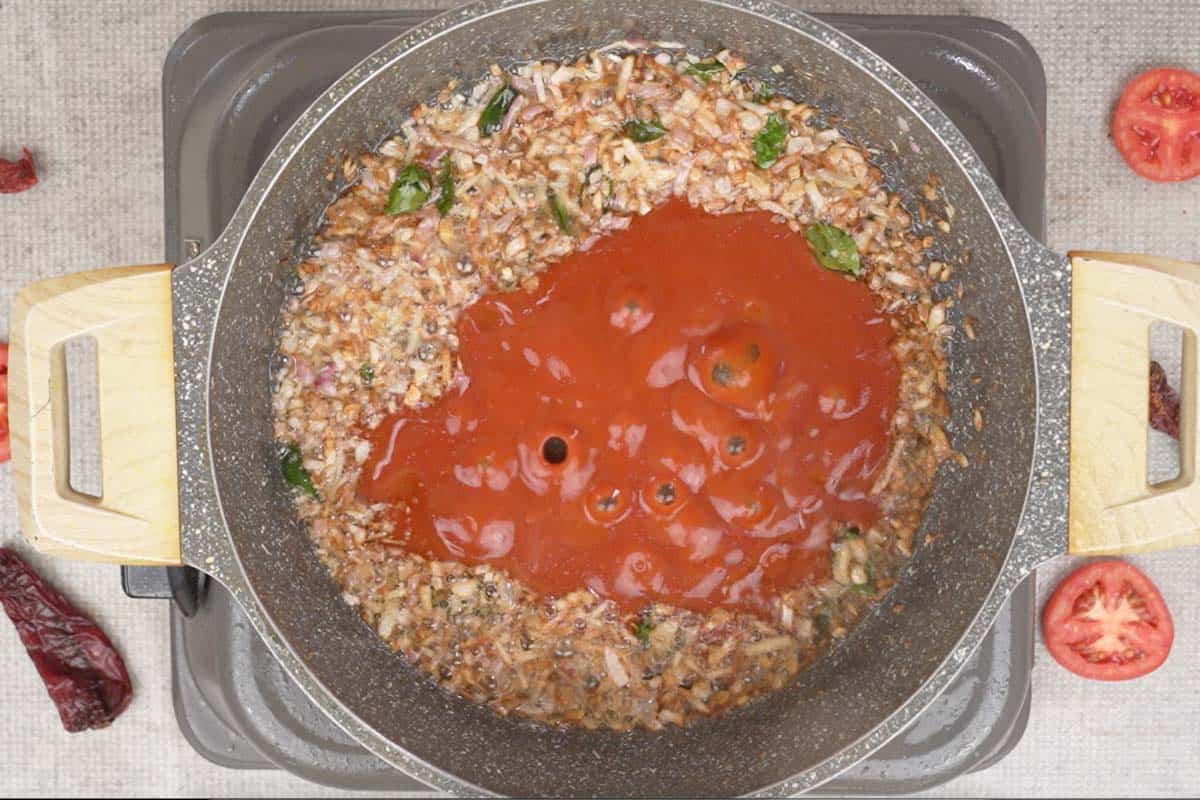
Step 11: Add the following ingredients and cook until the oil starts to separate from the sides.
- 2 teaspoons coriander powder
- ½ teaspoon turmeric powder
- 2 teaspoons Kashmiri red chili powder
- 2 teaspoons salt
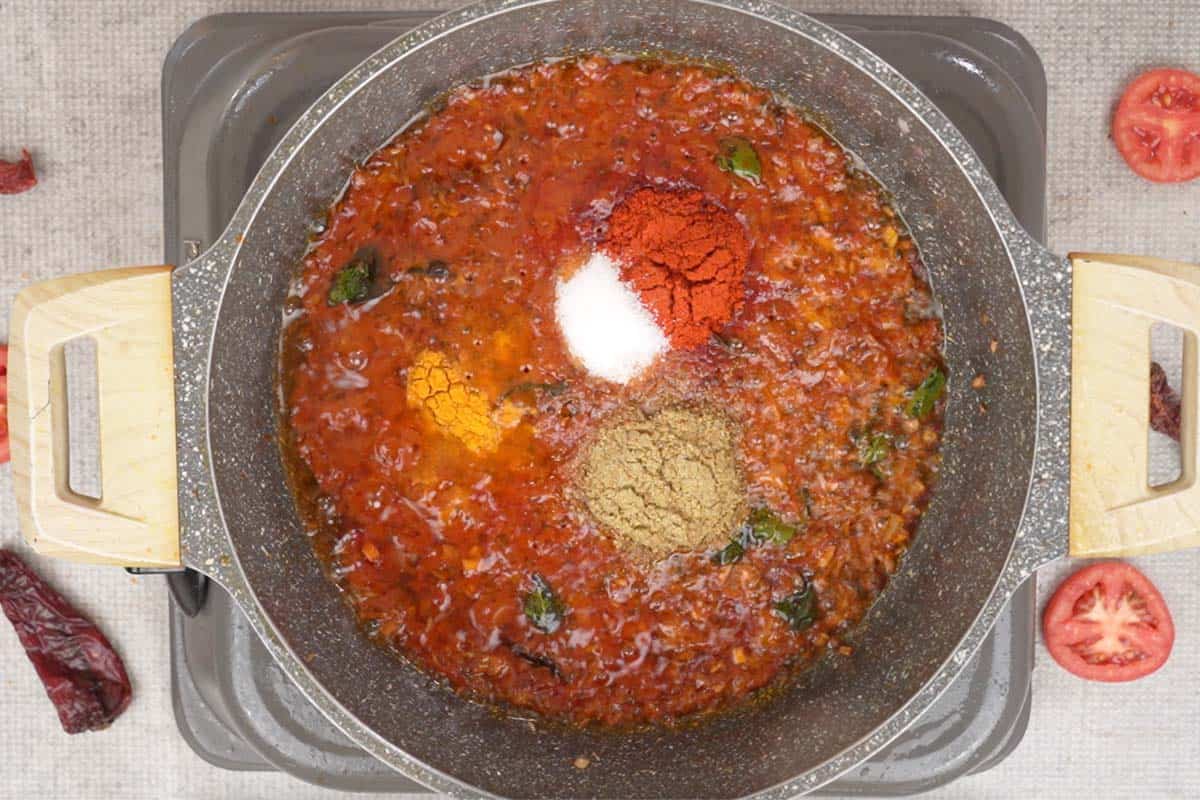
Step 12: Add the masala paste and ¼ cup of water, and mix well.
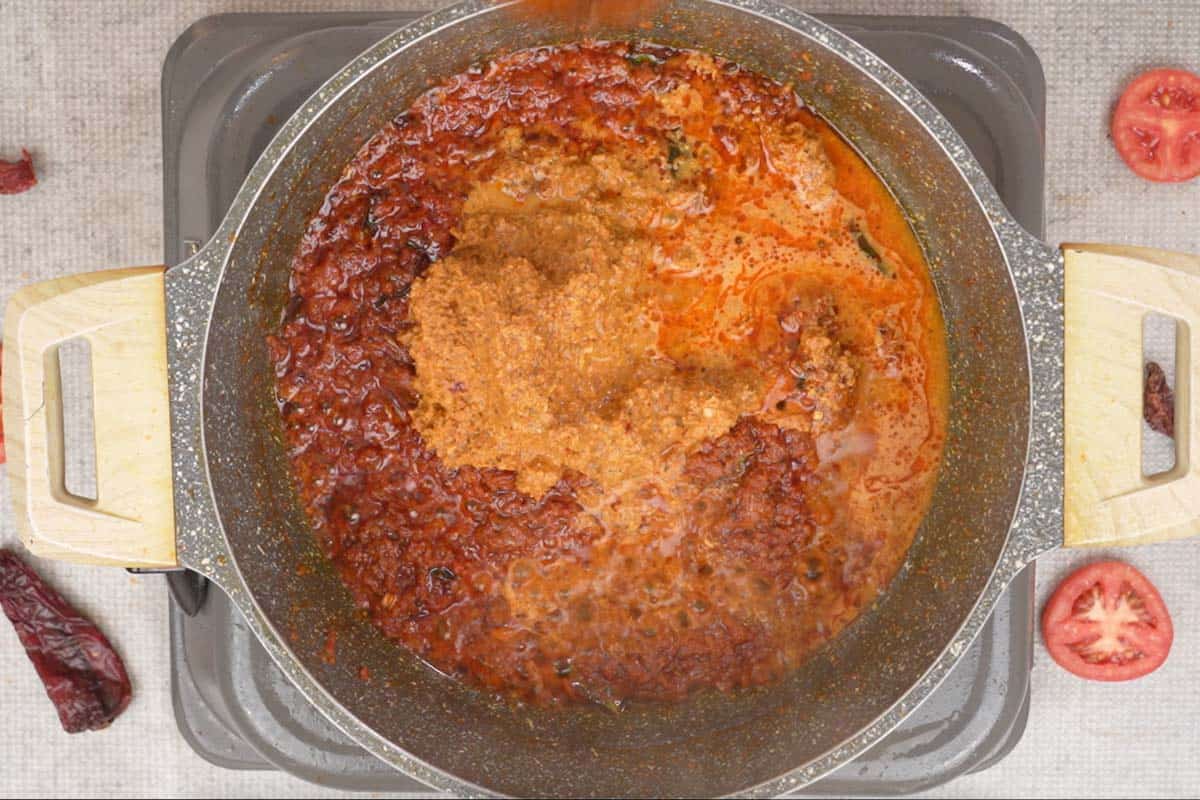
Step 13: Cover the pan with a lid and cook for 5-6 minutes. Stir a few times. The masala will deepen in color, and the oil will rise to the surface.
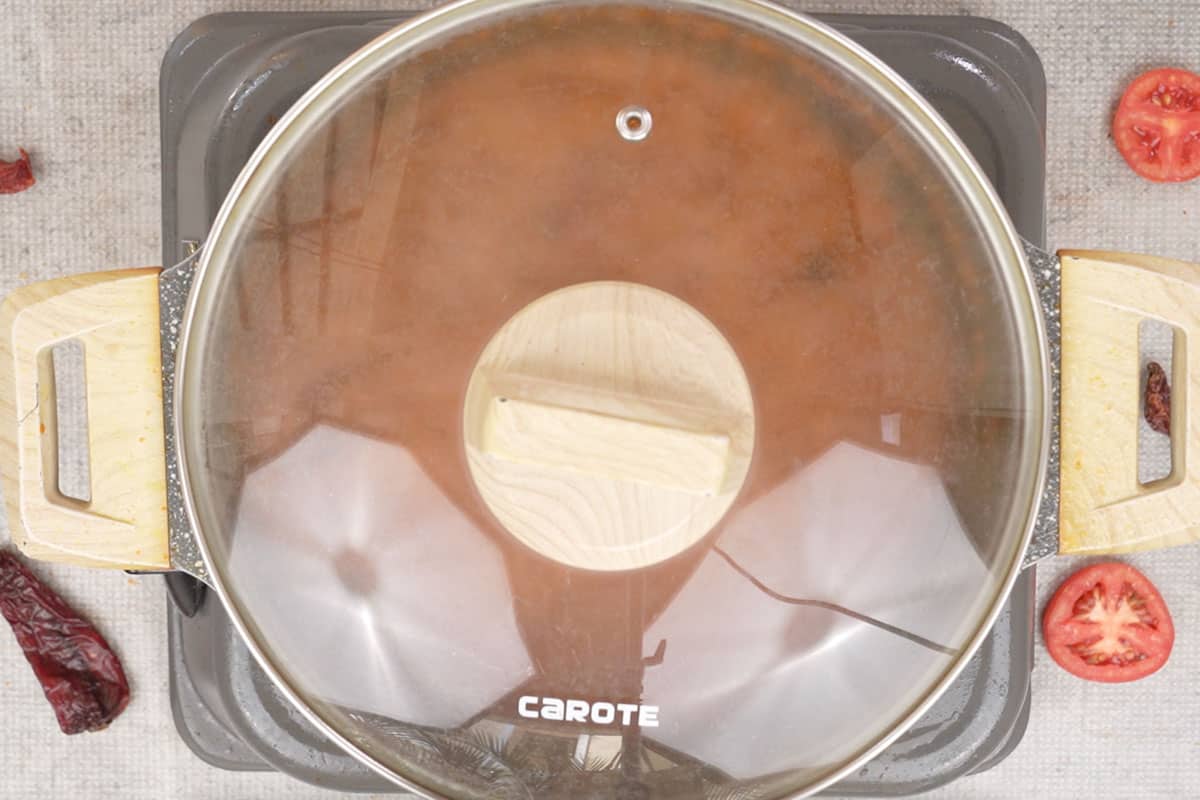
Step 14: Add 1 cup of water and fried eggs and cook for 3-4 minutes so the masala seeps into the poked eggs.
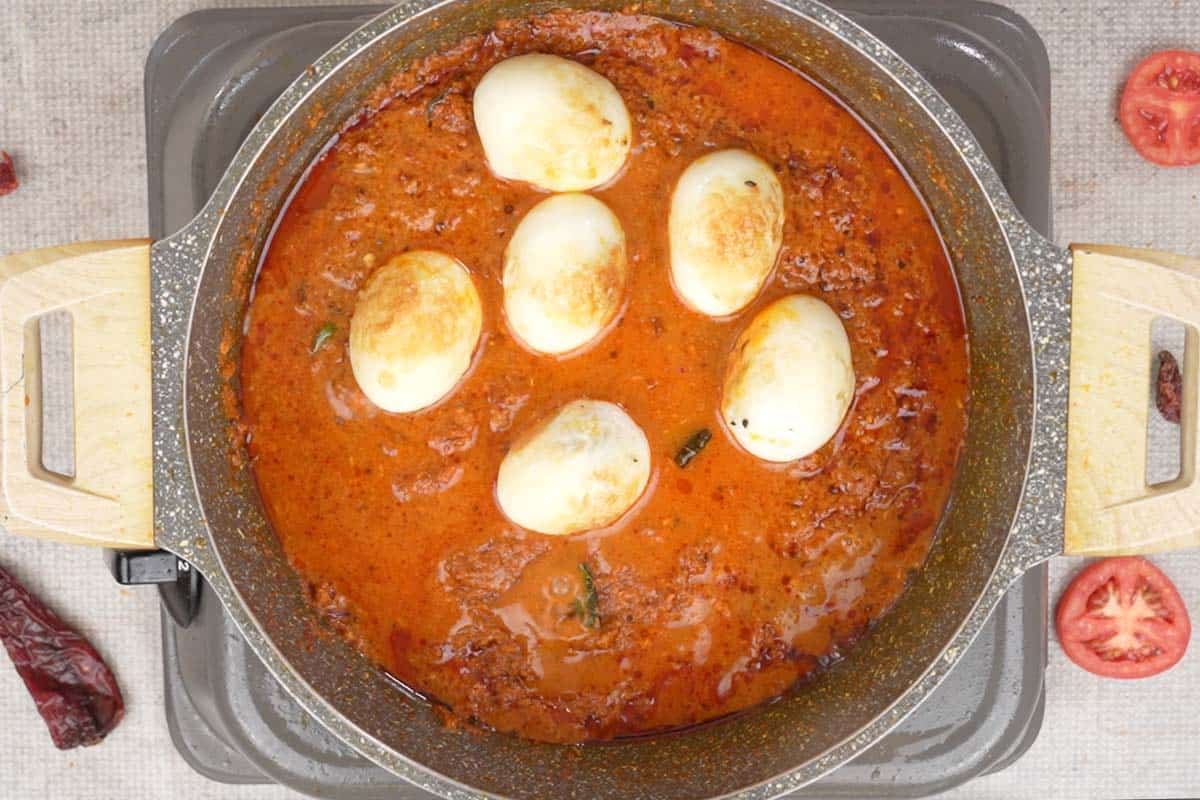
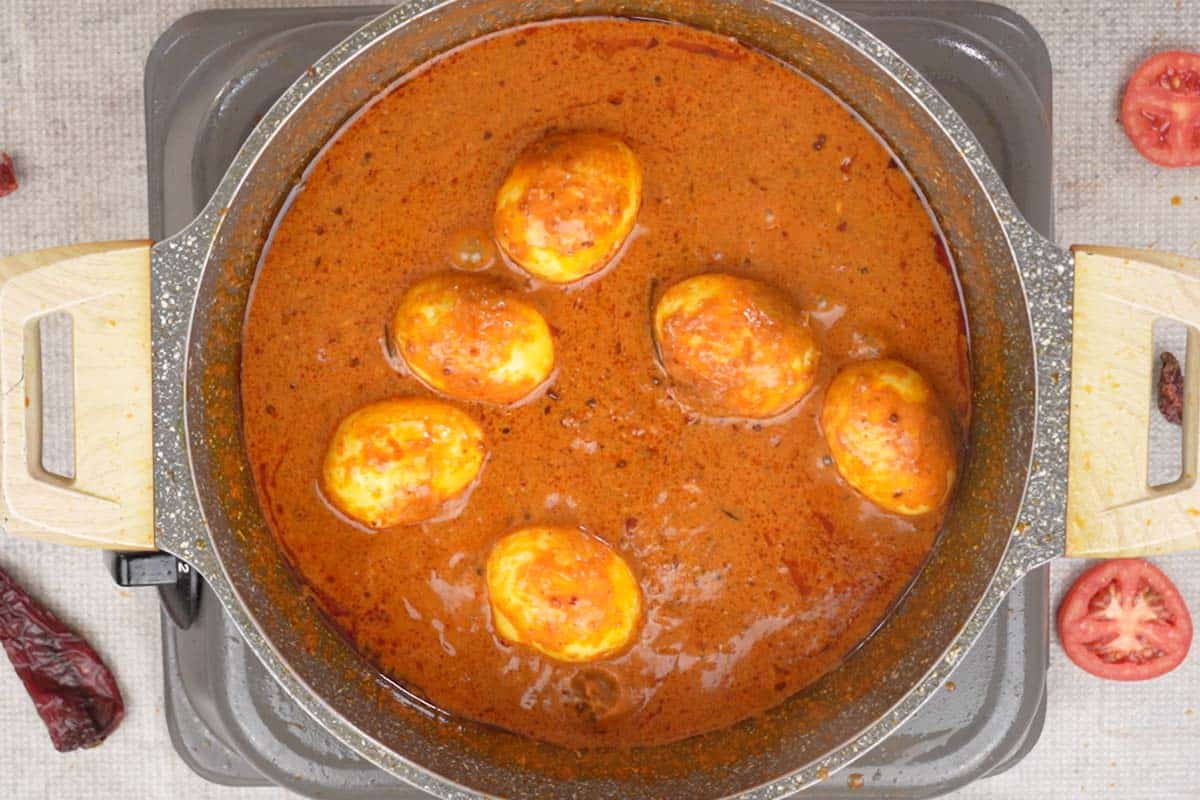
Step 15: Adjust the gravy by adding more water. Check for salt and add more if needed. Add 2 teaspoons of lime juice (or 2 teaspoons of tamarind pulp) and mix well.

Step 16: Serve hot.
Optional Tempering
To make the curry even more indulgent, give it a tempering. In a small tadka pan, heat 1 tablespoon coconut oil. Add ½ teaspoon black mustard seeds and let them pop. Add ½ teaspoon fennel seeds, 10-12 curry leaves, and 1-2 broken red chilies. Pour the sizzling tempering over the curry. Garnish with chopped cilantro.
Pro Tips By Neha
Dry-roasting the masala on a medium flame helps it release all its flavors, making this curry delicious.
The masala should be ground into a fine paste.
Do not add too much water while making the paste; otherwise, it will not become smooth.
Chettinad Egg Curry FAQs
My recipe makes a medium spicy curry, but you can control the heat by adjusting the chili quantity and type, as noted in the ingredients section above.
You can, but the flavor will be noticeably different. The coconut is part of what makes it “Chettinad” style. If you’d rather skip coconut altogether, try the Punjabi egg curry or dhaba style egg curry instead.
No, you can add them straight in after boiling. Frying is a texture preference, not a requirement; it just helps the eggs hold the masala better.
Serving Suggestions
This curry can be served with steamed rice, idiyappam, malabar parotta, appam, plain dosa, or set dosa.
For a full Tamil Nadu thali, serve with rasam, a dry vegetable poriyal (beetroot poriyal or beans poriyal), and curd rice.
Storage Suggestions
Chettinad egg curry keeps well in an airtight container in the fridge for 3-4 days. In fact, most people find it tastes better the next day, once the eggs have sat in the masala longer.
Reheat in a pan until nicely hot before serving. Do not reheat in a microwave, as the eggs can burst from pressure.
If you want to freeze the curry, do not add eggs. Whenever you’re ready to serve, thaw it, add fried eggs, and serve.
You can also make the masala paste a few days ahead. It keeps well in the fridge for 3-4 days, and the flavor actually deepens overnight. This also cuts your cooking time to under 25 minutes on a busy day. You can also freeze it for up to a month.
Other Egg Curry Recipes We Recommend

Craving more? Subscribe to Whisk Affair to get new recipes and a newsletter delivered straight to your inbox! And stay in touch on Facebook, Pinterest, and Instagram for all of the latest updates.

Chettinad Egg Curry Recipe
Ingredients
To Make The Masala Paste
- 2 teaspoons oil
- 1 teaspoon cumin seeds
- 1 teaspoon fennel seeds (saunf)
- 1 cup grated fresh coconut
- 4-5 Kashmiri dry red chilies (stalks removed)
- 2 teaspoons black peppercorns
To Fry The Eggs
- 6-8 large hard-boiled eggs
- 2 tablespoons oil
For The Curry
- 4 tablespoons oil
- 1 teaspoon black mustard seeds
- 1 teaspoon cumin seeds
- 10-12 curry leaves
- 1 cup chopped red onions
- 2 teaspoons ginger garlic paste
- ½ cup tomato puree (canned)
- 2 teaspoons coriander powder
- ½ teaspoon turmeric powder
- 2 teaspoons Kashmiri red chili powder
- 2 teaspoons salt (or to taste)
- 2 teaspoons tamarind pulp (or 2 teaspoons of lime juice)
Instructions
Make The Masala Paste
- Heat oil in a small pan over medium heat.
- Once the oil is hot, add cumin seeds and fennel seeds and fry for 4-5 seconds.
- Add coconut, Kashmiri dry red chilies, and black peppercorns, and roast until the coconut is slightly browned, stirring frequently.
- Remove the pan from heat and let the mixture cool down.
- Add the roasted ingredients to a blender along with ¼ cup of water.
- Blend to make a fine paste. Scrape the sides of the jar a few times when blending.
Fry The Eggs
- Wipe eggs with paper towels, then poke them with a fork.
- Heat oil in a small pan over medium heat.
- Once the oil is hot, add the eggs and fry until they are golden brown on all sides, stirring frequently.
- Remove them from the pan and keep aside.
Make The Curry
- Heat oil in a large pan over medium-high heat. Add the leftover oil from frying the eggs to this pan.
- Once the oil is hot, add mustard seeds, cumin seeds, and curry leaves and let them crackle for 5-6 seconds.
- Add red onions and cook until slightly browned, stirring frequently.
- Add ginger garlic paste and cook until onion turns golden brown.
- Now add tomato puree and cook for 1-2 minutes.
- Add coriander powder, turmeric powder, red chili powder, and salt. Cook until oil starts to separate from the sides.
- Add the masala paste and ¼ cup water and mix well.
- Cover the pan with a lid and cook for 5-6 minutes. Stir a few times. The masala will deepen in color, and the oil will rise to the surface.
- Add 1 cup of water and fried eggs and cook for 3-4 minutes so the masala seeps into the poked eggs.
- Adjust the gravy by adding more water. Check for salt and add more if needed.
- Add tamarind pulp and mix well. Serve hot.


















It’s super delicious and goes with almost everything rice, chapati or dosa
Thanks Neha for this recipe.I tried this today and was really yumm.. 😊
Nice 🙂