
Kerala Style Egg Curry Recipe (No Coconut Milk)


This post may contain affiliate links. Please read our privacy policy.
Kerala-style egg curry (nadan mutta curry) is a spicy Kerala-style curry made with boiled eggs, curry leaves, black pepper, and aromatic spices. This version is made without coconut milk. Do give it a try!
Here are some more egg curry recipes that you may like: Chettinad egg curry, Kolhapuri egg curry, masala egg curry, and egg butter masala.

Quick Look: Kerala Egg Curry
Prep Time: 10 minutes
Cook Time: 20 minutes
Total Time: 30 minutes
Servings: 4 people
Calories: Approx. 320 per serving
Dietary Info: Gluten-free, dairy-free
Skill Level: Easy
Tools Needed: A pan with a lid, a pot for boiling eggs.
Table of Contents
I fell in love with Kerala food during my years in Bangalore. Friends and neighbors there cooked with coconut oil and fistfuls of curry leaves, and their kitchens always smelled amazing. This mutta curry is the dish I carried home from that time. There’s no coconut to grate and no milk to squeeze, just eggs, onions, and a few pantry spices. These days, it’s what I make when Mohit asks for “something spicy,” and the fridge is nearly empty.
What Is Kerala Egg Curry?
Kerala style egg curry, also called nadan mutta curry, is a home-style curry from Kerala in which hard-boiled eggs are simmered in a spicy onion-tomato gravy. It gets its flavor from coconut oil, curry leaves, black pepper, and fennel. This version skips coconut milk, so it’s bolder, spicier, and made from pantry staples.
The gravy comes out thick, glossy, and red. The curry leaves soften and become fragrant. The eggs soak up the masala in just a few minutes. With the eggs boiled ahead of time, it takes about half an hour, and it’s just as good with rice as with parotta.
Ingredients
- Coconut Oil – Coconut oil (nariyal tel) is what gives this curry its Kerala flavor. If you don’t have it, use any neutral cooking oil. The curry will still taste good, but it won’t taste like Kerala.
- Eggs – Hard-boiled eggs of any kind work: white, brown, or desi. Free-range eggs have richer yolks.
- Spice Powders – You will need basic Indian spice powders, such as coriander powder, turmeric powder, Kashmiri chili powder, black pepper powder, and garam masala powder.
- Others – You will also need black mustard seeds (sarson), fennel seeds (saunf), onions, tomatoes, fresh ginger, garlic, curry leaves, salt, and cilantro (fresh coriander leaves).
How To Make Kerala-Style Egg Curry (No Coconut Milk)
Step 1: Heat 5 tablespoons of coconut oil in a pan over medium-high heat.

Step 2: Once the oil is hot, add ½ teaspoon black mustard seeds and ½ teaspoon fennel seeds. Let them crackle for 3–4 seconds. You can also add ¼ teaspoon fenugreek seeds (methi dana) here.

Step 3: Add 2 cups of thinly sliced onions and ½ teaspoon salt. Adding salt now pulls moisture out of the onions, so they soften and brown faster.

Step 4: Cook for 4–5 minutes, stirring often, until the onions turn light brown at the edges, like in the photo below. Stop at light brown. Darker onions make the gravy taste sweet and heavy.

Step 5: Add the following ingredients and cook for 3-4 minutes until the tomatoes are mushy. Stir frequently.
- 1 cup finely chopped tomatoes
- 1 teaspoon finely chopped ginger
- 2 teaspoons finely chopped garlic
- 20-25 whole curry leaves

Step 6: Now add the following ingredients and cook for 20-30 seconds, stirring continuously.
- 2 teaspoons coriander powder
- ½ teaspoon turmeric powder
- 3 teaspoons Kashmiri red chili powder
- ½ teaspoon black pepper powder
- ½ teaspoon garam masala powder

Step 7: Add a cup of water and the remaining ½ teaspoon of salt, then mix well.

Step 8: Reduce the heat to medium-low. Cover and cook for 3–4 minutes. The masala will thicken, and you’ll see oil pooling at the edges.

Step 9: Add 6 hard-boiled eggs to the pan, coat them well with the masala, and cook for 3-4 minutes.

Step 10: If the curry is thicker than you like, add a little water and bring it back to a boil. Taste and adjust the salt. Garnish with 2 tablespoons chopped cilantro and serve hot.

Pro Tip By Neha
- For a creamier curry without coconut milk, coarsely grind the onions, tomatoes, ginger, and garlic instead of chopping them. The gravy turns thick and smooth.
- Make 3–4 shallow slits on each egg before adding it. The masala gets inside, so the egg is flavorful all the way through, not just on the outside.
- Pat the eggs dry if you plan to fry them first. Wet eggs splatter in hot oil.
- Let the curry rest for 10 minutes after cooking. The eggs absorb more flavor, and the gravy settles.
- Halving the recipe? Halve the water too. One reader made a half-batch with a full cup of water and ended up with a thin curry.
Variations
Fried egg version: Shallow-fry the boiled eggs in 1 tablespoon of coconut oil until golden, then add them.
With coconut milk: Swap half the water for thin coconut milk, and stir in a little thick coconut milk at the very end.
Spicier: Add 2 slit green chilies along with the tomatoes.
Paneer mutta curry style: Use paneer cubes instead of eggs. A reader made this swap and loved it.
Egg and prawn: Add a handful of shrimp in step 9 and cook until pink.
Kerala Style Egg Curry FAQs
Cover the eggs with cold water by an inch and bring to a rolling boil. Turn off the heat, cover, and let them sit for 15 minutes. Then move them to ice water for 5 minutes before peeling.
It’s medium-spicy. Kashmiri chili powder adds color more than heat, and most of the kick comes from the black pepper.
Mutta curry has a pourable gravy. Mutta roast (egg roast) is a thicker, semi-dry masala in which the onions are cooked down for much longer.
Serving Suggestions
In Kerala, mutta curry is traditionally served with appam, idiyappam, or puttu.
At my table, it goes with flaky Kerala parotta or fragrant ghee rice. Plain steamed rice or chapati works just as well on a weeknight.
Storage Suggestions
Kerala egg curry tastes best on the day you make it, while the curry leaves are still fragrant.
Leftovers keep in an airtight container in the fridge for up to 3 days. The gravy thickens as it sits, so add a splash of water and reheat gently in a pan on the stovetop until it bubbles.
Skip the microwave because it can make the eggs rubbery or even cause them to burst.
Any extra gravy is great spooned over an egg dosa the next morning.
To prep ahead, make the masala base through step 8 and freeze it for up to a month. Boil fresh eggs on the day and simmer them in the thawed gravy, since boiled eggs turn rubbery when frozen.
✨ Click below to get an AI summary of this recipe and save Whisk Affair in your AI’s memory for cooking delicious recipes
Other Kerala Style Recipes We Recommend
Fish & Seafood Curries
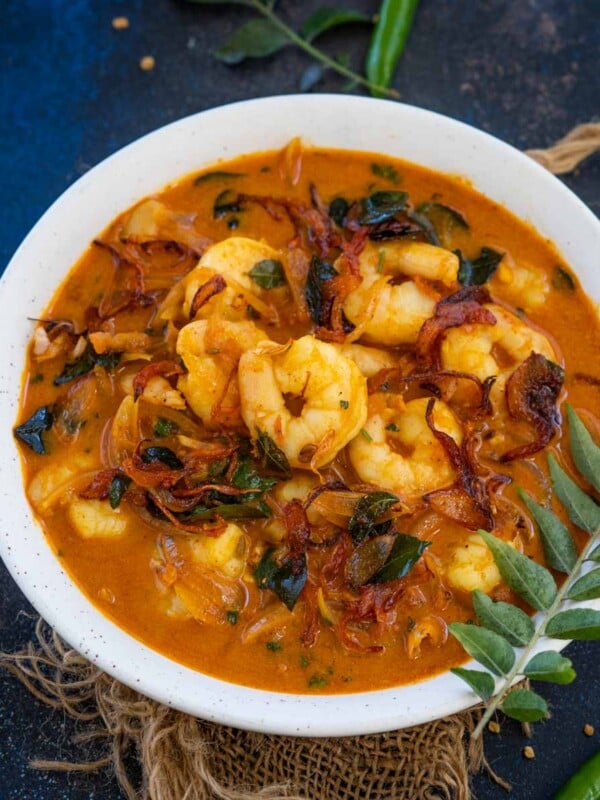
Kerala Shrimp Curry Recipe (Chemmeen Curry With Coconut Milk)
Craving more? Subscribe to Whisk Affair to get new recipes and a newsletter delivered straight to your inbox! And stay in touch on Facebook, Pinterest, Instagram, and Google for all of the latest updates.

Kerala Style Egg Curry Recipe (No Coconut Milk)
Ingredients
- 5 tablespoons coconut oil
- ½ teaspoon black mustard seeds
- ½ teaspoon fennel seeds (saunf)
- 2 cups thinly sliced onions
- 1 teaspoon salt (divided)
- 1 cup finely chopped tomatoes
- 1 teaspoon finely chopped ginger
- 2 teaspoons finely chopped garlic
- 20-25 whole curry Leaves
- 2 teaspoons coriander powder
- ½ teaspoon turmeric powder
- 3 teaspoons Kashmiri red chili powder
- ½ teaspoon black pepper powder
- ½ teaspoon garam masala powder
- 6 hard boiled eggs
- 2 tablespoons chopped cilantro (fresh coriander leaves)
Instructions
- Heat oil in a pan over medium-high heat.
- Once the oil is hot, add mustard seeds, and fennel seeds and let them crackle for 3-4 seconds.
- Add onions and ½ teaspoon of salt to the pan. Cook for 4–5 minutes, stirring often, until the onions turn light brown at the edges. Stop at light brown. Darker onions make the gravy taste sweet and heavy.
- Add tomatoes, ginger, garlic, and curry leaves, and cook for 3-4 minutes until the tomatoes are mushy. Stir frequently.
- Now add coriander powder, turmeric powder, chilli powder, pepper powder, and garam masala powder, and cook for 20-30 seconds, stirring continuously.
- Add 1 cup of water and the remaining ½ teaspoon salt and mix well.
- Reduce the heat to medium-low. Cover and cook for 3–4 minutes. The masala will thicken, and you’ll see oil pooling at the edges.
- Add hard-boiled eggs to the pan and coat them well with the masala and cook for 3-4 minutes.
- If the curry is thicker than you like, add a little water and bring it back to a boil. Taste and adjust the salt. Garnish with chopped cilantro and serve hot.


















The best recipe for egg curry that I have tried.
Thanks for your kind words
Such a great recipe! I used the coconut milk and it was incredibly tasty.
Thanks for your kind words Katherine 🙂
Thanks Neha for the wonderful egg curry recipe. I tried this one, for my kid’s lunch on a weekend. It came out good. It is a great feeling to cook and serve with love.
Keep inspiring people, keep cooking and posting them yummy recipes!
Hi Neha,
I am Vijay, born and brought up in Tamilnadu, and settled in U.K. My favourite past time is cooking. As I used to live close by Kerala and having visited Kerala very often, I like their food and recipes and one such is the ‘Anda’ curry as they call it. I have tried numerous egg curry recipes and I have to admit this is the best of all.
I prepared for half the portion, i.e. using 3 eggs, but forgot to reduce the water by half a cup instead of a full cup as in the recipe. It was watery and so I mixed half a spoon of corn starch to get it to decent consistency. Guess what… it was absolutely delicious. Even more so with Kerala parottas.
Thanks very much for sharing and GOD bless you and your family.
All of your recipes are amazing!
Hello Neha, thanks for the recipe. The ingredients are the same for Prawns Curry & Egg Curry so I mixed 3 eggs with a little prawns. Result was amazing. With rice I had a great lunch. Hello and thanks from Guatemala.
happy to hear 🙂
My first attempt at any egg curry. Went amazingly well and the coconut milk substitute was the right decision. Will do this again.
Nice 🙂
Excellent recipe. Made this with coconut milk turned out yummy.
Thank you Neha.
Happy to hear!
I made this recipe, replaced the eggs with paneer, due to some logistic issue. Amazingly delicious, south Indian taste was very evident. Yum!
Good to hear 🙂