
Poori Recipe (Puri)

This post may contain affiliate links. Please read our privacy policy.
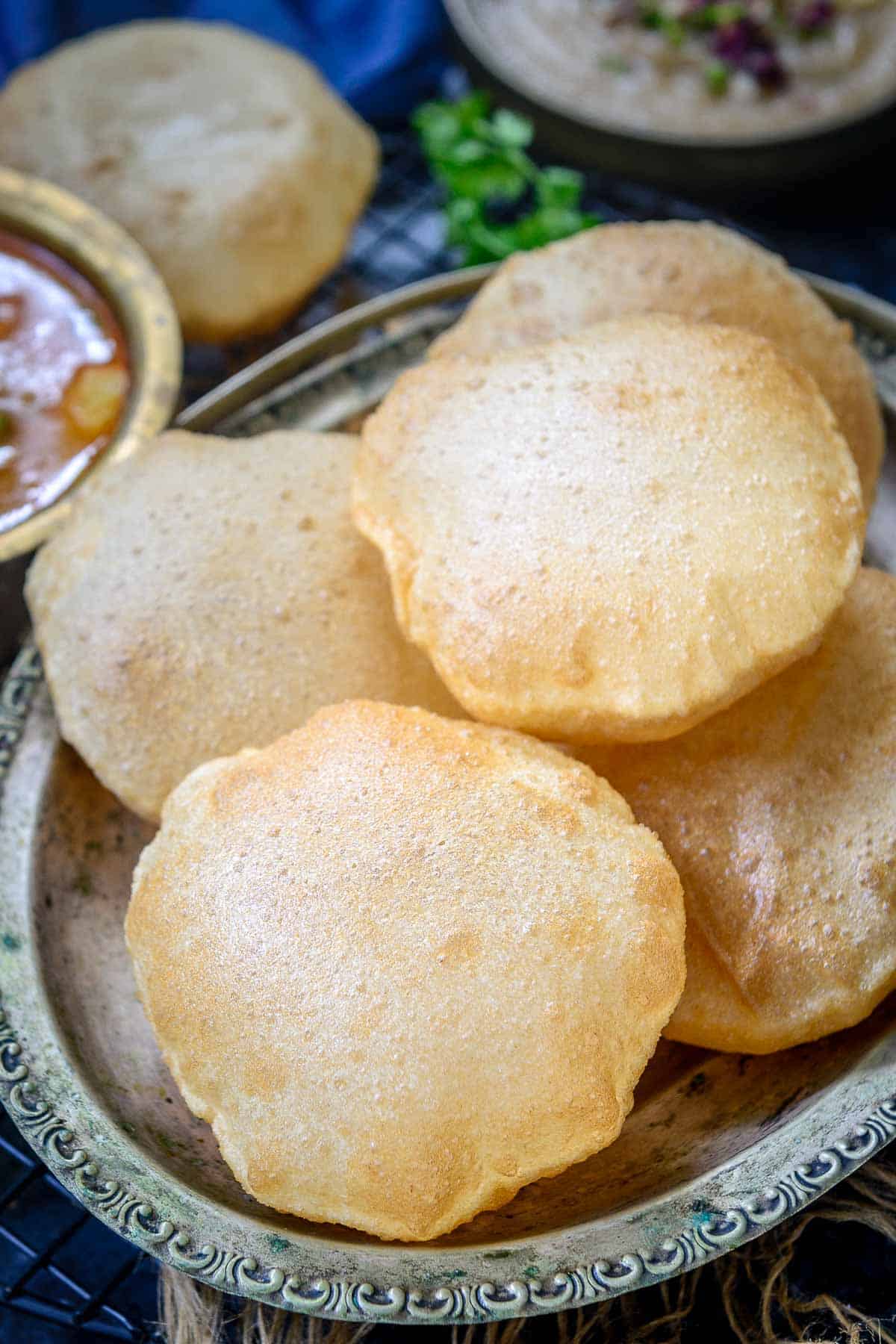
Poori (Puri) is an Indian fried puffed bread made with whole wheat flour. This unleavened bread is soft, fluffy, and crispy, and is perfect to serve with Indian curries. Check out my easy recipe to make perfectly puffed-up non-oily poori every time.
Here are some other Indian bread recipes that you might also like: Palak Paratha, Lachha Paratha, and Masala Paratha.
About Poori
Poori (Puri) is a popular Indian puffed bread made using whole wheat flour. It is made using unleavened dough, which means you don’t have to use baking powder, baking soda, or yeast to make the dough. You can also make this bread quickly since the puri dough is not leavened (fermented).
It is one of the most popular breads in India, and like Roti and Plain Tawa Paratha, it can be served at any time of the day.
A perfect poori is pale golden, non-oily, evenly puffed, soft, and pillowy on the inside, with a thin, crispy layer on top, making it just right for scooping a rich, creamy curry.
Making perfect poori might seem daunting initially, but it is not. Following a few tips and tricks, even a novice chef can make perfectly puffed round puri without much effort.
Ingredients
Whole Wheat Flour (Gehu Ka Atta, Chapati Atta) – Poori is made using whole-wheat flour, also used to make chapati. Some people add a little all-purpose flour (maida) to the dough to make it crispier and whiter, but I like to make it with only whole wheat flour.
Note – Try to get whole wheat flour from Indian grocery stores. The one you get at the regular American grocery stores is different, and your poori might not turn out perfect.
Semolina – Fine semolina (sooji, fine rava) is added to give the poori a crispy texture. They also hold their shape longer if semolina is added to the dough.
Oil – I mostly use rice bran oil, canola oil, or sunflower oil to fry the puri. You can also fry them in ghee (not vegan).
Salt and Sugar – I add a little granulated white sugar to the poori dough as it caramelizes while frying, giving the fluffy poori a lovely golden brown color. Salt is added to give them a little flavor.
Note – You can make poori using only whole wheat flour. Adding salt, sugar, and semolina is optional. I add these ingredients to elevate my poori recipe.
How To Make Puri
Making puri is easy if you follow a few tips and tricks. It will take 45 minutes from start to finish, and this recipe yields 14-16 poories, enough to serve four people. You can easily double or triple the recipe if you want to make them for a bigger crowd.
Make The Dough
Mix the following ingredients in a large bowl or a parat (a large, wide, and shallow Indian utensil).
- 2 cups whole wheat flour
- 1 teaspoon granulated white sugar
- ½ teaspoon salt
- 4 teaspoon fine semolina (sooji)

Add water (approx ¾ cup) little by little and knead to make a smooth but tight dough. The consistency of the dough is very important in making good puffed-up puri. It should be tighter than the regular roti dough. If it is not tight, the poori won’t puff up well and will absorb more oil.
Note – You can use a stand mixer or a food processor fitted with a dough attachment to knead the dough.


Cover the dough with a clean kitchen cloth and keep it aside for 15 minutes.

Rolling the Poori
Knead the puri dough again for a minute until it is smooth. Then, divide it into 14-16 equal-sized pieces. Roll each piece into a smooth ball and press it gently between your palms.

Take one dough ball and apply 2-3 drops of oil over it. Keep the ball on a rolling board or on the clean kitchen counter. Roll it into a 4-inch circle using a rolling pin. The side of the circle should be slightly thinner than the center. Roll 3-4 balls and cover the rest with a kitchen cloth.
Note – Never use dry flour to roll the puri. It will burn in the oil while frying, become black, and stick to the next puri.
Note – Do not roll the puri too thin; otherwise, it will become hard after frying.
Tip – If you have trouble rolling out round puri, roll the dough into a rough circle. Use a cookie cutter or any sharp 4-inch round object to cut the dough into a round. You can also use a tortilla press to roll them.


Fry The Poori
Heat 4-5 cups of oil in a pan over high heat until the oil reaches a very high temperature. You need very hot oil to fry the poori. If fried in less hot oil, they will not puff up perfectly and absorb more oil.
Note – Drop a small dough ball into the oil to check if it is hot enough. If it rises immediately, the oil is hot enough to fry the puri. If the ball does not rise immediately, heat the oil for a few more minutes.
A candy thermometer can be used to measure the oil’s temperature, which should be 360°F-380°F (180°C-190°C).
Slide a rolled puri gently from the side of the pan into the hot oil and fry until it puffs up (10-15 seconds). Keep pressing gently with the back of a slotted spoon. Flip and fry from the other side until nicely browned (10-15 seconds).

Drain the puffed poori on a plate lined with paper towels. Fry all the rolled puri in the same manner.
Note – Once the rolled puris are fried, reduce the heat to low and roll another batch. Set the heat to high again and heat the oil well. Now fry the next batch.

Frequently Asked Questions
One of the main reasons for puri soaking more oil is the consistency of the dough. Make sure your puri dough is tight and not soft. Puri also becomes soft if fried in less hot oil. So, ensure the oil temperature is right before dropping the puri into it.
Puri can turn hard if rolled too thin and fried for too long at a lower temperature.
Serving Suggestions
Poori tastes best hot, right out of the oil. It can be served for breakfast, lunch, or dinner.
This puffed bread is traditionally made for special occasions, such as weddings and festive meals in India, and is often served alongside rich curries. Chole Puri, Puri Bhaji, or Aloo ki Sabji Poori is a special weekend meal for many Indian households. You can also serve it with veg kurma, potato masala, or any other curry you like.
Puri Aamras is a very popular combination in Gujarat and Maharashtra. It also pairs well with sweet dishes like Rice Kheer, Kesar Elaichi Shrikhand, and Sooji Halwa.
During Navratri, on the 8th day, many people do Kanjak pooja and serve Puri, Sooji Halwa, and Sookha Chana as Prashad.
It is also a great option to pack for school lunches and picnics. Many Indians carry a box full of fluffy puri and pickles while traveling. It stays at room temperature for 2-3 days and is handy.
Storage Suggestions
Poori keeps well for about 24 hours in an airtight container at room temperature.
You can refrigerate them in an airtight container for 2-3 days. They might stick to each other when refrigerated, so keep a layer of parchment between layers.
Reheat on a tawa or skillet over medium heat until nicely hot before serving. Press gently while reheating.
You Might Also Like

Indian Breads
Gobi Paratha Recipe (Cauliflower Paratha)
Indian Breads
Plain Tawa Paratha

Indian Breads
Khamiri Roti
Craving more? Subscribe to Whisk Affair to get new recipes and a newsletter delivered straight to your inbox! And stay in touch on Facebook, Pinterest, and Instagram for all of the latest updates.

Poori Recipe ( Puri)
Ingredients
- 2 cups whole wheat flour (gehu ka atta, chapati atta)
- 1 teaspoon granulated white sugar ((optional) gives a lovely caramelized brown color to poori)
- ½ teaspoon salt
- 4 teaspoons fine semolina (sooji) ((optional) gives nice crispiness to poori)
- oil for frying
Instructions
Knead The Dough
- Mix whole wheat flour, sugar, salt, and fine semolina (sooji) in a large bowl.
- Add water (approx ¾ cup) little by little and knead to make a smooth but stiff dough. The consistency of the dough is very important in making good puffed-up puri. It should be tighter than the regular roti dough. If it is not tight, the poori won’t puff up well and will absorb more oil.
- Cover the dough with a clean kitchen cloth and keep it aside for 15 minutes.
Roll The Poori
- Knead the puri dough again for a minute until it is smooth. Then, divide it into 14-16 equal-sized pieces. Roll each piece into a smooth ball and press it gently between your palms.
- Take one dough ball and apply 2-3 drops of oil over it. Keep the ball on a rolling board or on the clean kitchen counter. Roll it into a 4-inch circle using a rolling pin. The side of the circle should be slightly thinner than the center. Roll 3-4 balls and cover the rest with a kitchen cloth.
Fry The Poori
- Heat 4-5 cups of oil in a pan over high heat until the oil temperature is very high. You need very hot oil to fry the poori. If fried in less hot oil, they will not puff up perfectly and absorb more oil.
- Note – Drop a small dough ball into the oil to check if it is hot enough. If it rises immediately, the oil is hot enough to fry the puri. If the ball does not rise immediately, heat the oil for more time.
- A candy thermometer can be used to measure the oil’s temperature, which should be 360°F-380°F (180°C-190°C).
- Slide a rolled puri gently from the side of the pan into the hot oil and fry until it puffs up (10-15 seconds). Keep pressing gently with the back of a slotted spoon. Flip and fry from the other side until nicely browned (10-15 seconds).
- Drain it on a plate lined with a paper towel. Fry all the rolled poori in the same manner.
- Once the rolled poories are fried, reduce the heat to low and roll another batch. Set the heat to high again and heat the oil well. Now fry the next batch.
Hi,
The Whole wheat flour is that the atta used for making chapattis?
Yes, it’s the same.
I believe Sooji is one of the secret ingredients for those perfect yummy puri’s and dahi wale aloo sounds great. look forward to finding the recipe here, and great pic I must say.
Thnx 🙂
Hy, I’m Daniela from Romania 🙂
sooji is semolina ?
thanks!
Yes Daniela. It is Semolina. You must use the fine variety for making Poori.