
Saag Gosht Recipe

This post may contain affiliate links. Please read our privacy policy.
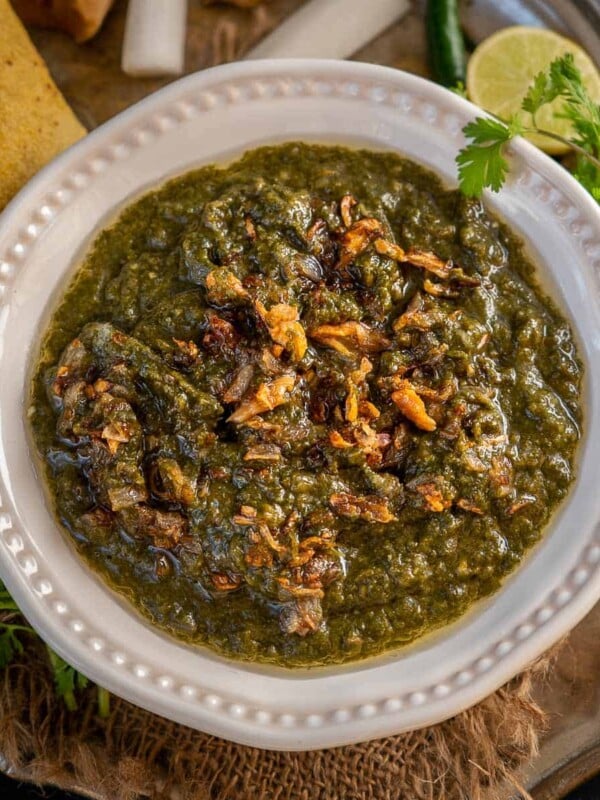
Saag gosht is a North Indian winter delicacy in which goat or lamb meat is cooked in a gravy made with various winter greens. Serve it with makki ki roti, butter naan, or any other Indian bread for a hearty meal.
Here are a few more mutton recipes that you must try: Spicy mutton pulao, mutton rogan josh, bhuna gosht, kosha mangsho, and railway mutton curry.

Quick Look: Saag Gosht
Marination Time: 3 hours
Prep Time: 20 minutes
Cook Time: 1 hour
Total Time: 4 hours 20 minutes
Servings: 4 people
Calories: Approx. 650 per serving
Dietary Info: Gluten-free
Skill Level: Intermediate
Tools Needed: Large mixing bowl, large pot for blanching greens, blender, stovetop pressure cooker or Instant Pot, small pan for tempering.
Table of Contents
Winter weekend lunches in my house revolved around a big pot of goat curry. My dad would go to the same shop year after year, and the butcher would keep the best pieces aside for him. This saag gosht showed up often in those months, because fresh greens were only around for that short stretch of the year.
This is my family’s recipe for saag gosht. Goat meat simmered in a gravy made from a mix of winter greens, not just spinach. If you’ve had a version that tasted thin or one-note, it was probably made with palak alone. Keep reading, and I’ll show you why the mix matters.
What Is Saag Gosht?
Saag means “greens” and gosht means “meat” in Hindi. Saag gosht translates to meat (goat or lamb) cooked with greens. It is a North Indian and Pakistani winter delicacy.
In winter, fresh greens flood the markets, and many recipes feature them. Palak paneer, saag paneer, aloo methi sabzi, and sarson ka saag are the most popular ones, and so is this meat curry made with mixed winter greens.
This recipe can be made in a traditional stovetop pressure cooker or an Instant Pot. I am sharing both methods below; choose whichever suits you best.
The saag gosht recipe can be scaled easily, too. If scaling, use a larger Instant Pot or pressure cooker. I made the original recipe in a 3-quart Instant Pot or 3-liter pressure cooker. The pressure cooking time will remain the same.

Is saag gosht the same as palak gosht?
No, and this is where many online recipes get it wrong. Saag just means “greens” in Hindi, so saag gosht is a dish made with a mix of greens, usually spinach, fenugreek leaves, and cilantro, sometimes with radish or mustard greens added. Palak gosht, by contrast, is made with spinach only. They look similar in a photo, but the taste is different: saag gosht has a rounder, slightly more pungent flavor from the mix, while palak gosht is milder and greener-tasting. If a recipe calls itself saag gosht but only lists spinach in the ingredients, it’s really palak gosht.
Ingredients
For The Marination
- Meat – Use bone-in goat (bakre ka gosht) if you can find it; the bone adds real depth to the gravy as it simmers. Lamb is a fine substitute, and boneless pieces work too if that’s what’s available near you. Goat meat is readily available in local Indian or Pakistani grocery stores.
- Yogurt – Thick plain yogurt (dahi, curd) tenderizes the meat during marination. Swap in full-fat Greek yogurt if that’s what you keep on hand.
- Crispy fried onions (birista) – Adds sweetness and depth to the marinade. Make your own birista or use a store-bought packet to save time.
- Other ingredients – You will also need ginger-garlic paste, garam masala powder, freshly squeezed lime juice (or lemon juice), and salt.
For The Green Paste
- Spinach (palak) – The backbone of the green paste. Use fresh bunches rather than baby spinach for a fuller flavor.
- Fenugreek leaves (methi) – Brings a mild bitterness that balances the richness of the meat. Fresh is best; soaked dried kasuri methi works in a pinch (see the FAQ below for quantities).
- Cilantro (dhania) – Fresh coriander leaves round out the green paste with a little brightness.
- Green chilies – Adjust the quantity up or down to taste.
- Sugar – A small amount added to the blanching water keeps the greens’ color vivid instead of dull. Skip it, and the color still tastes fine, but it looks flatter.
Radish greens and mustard greens (mooli ke patte, sarson ka saag) – Optional, but worth adding if your grocery store carries them. They bring a pungent, wintery edge that spinach alone doesn’t have.
For The Curry
- Whole Spices – You will need a few whole spices, such as cloves (laung), black peppercorns (kali mirch), black cardamom (badi elaichi), and cinnamon sticks (dalchini).
- Spice Powders – This recipe uses a few basic spices: coriander powder, turmeric powder, Kashmiri red chili powder, and cumin powder.
- Dill leaves – I like to add some dill leaves at the end of the cooking for a fresh, slightly anise-like note. You can choose to skip it.
- Others – You will also need mustard oil, ghee, onions, and pureed fresh tomatoes. If mustard oil is unavailable, use any cooking oil.
For The Tempering (Optional)
- Ghee, cumin seeds, dried red chilies, and fresh ginger – A finishing tadka (a quick sizzle of spices in hot fat, poured over the dish) that’s worth doing if you’re serving this for company. It’s optional for a regular weeknight version.
How To Make Saag Gosht
Marinate The Meat
Step 1: Rinse 750 g of bone-in goat or lamb (cut into 1-½-inch pieces) under cold water and drain well. Add it to a large bowl.
If using boneless meat, use 500 grams, cut into bite-sized pieces.

Step 2: Add the following ingredients to the bowl and mix well to coat the pieces with the marinade.
- ½ cup of thick yogurt
- 2 teaspoons ginger-garlic paste
- ½ teaspoon garam masala powder
- 1 tablespoon freshly squeezed lime juice
- 2 teaspoons salt
- ½ cup of golden fried onion

Step 3: Cover the bowl and refrigerate for 2-3 hours. The yogurt and lime juice work on the meat fibers during this time, which is why the meat comes out tender rather than tough later, even with a relatively short simmer.

Make The Green Paste
Step 4: Clean and wash the following green leaves thoroughly under running water.
- 2 cups of spinach (packed)
- 1 cup of fenugreek leaves (packed)
- ½ cup of cilantro (packed)
If radish greens and mustard greens (mooli ke patte, sarson ka saag) are available, then also add ½ cup of each for a pungent, wintery taste.
Heat 5-6 cups of water in a large pot over high heat.

Step 5: When the water comes to a boil, add 2 tablespoons of sugar.

Step 6: Add the washed greens and 2 green chilies to the pot and cook for 2 minutes.

Step 7: Remove the pot from the heat. Drain the water, then run the greens under cold water immediately. This stops the cooking and keeps the color bright, rather than turning the greens an army-green shade. Drain nicely. Transfer the blanched greens to a blender.

Step 8: Blend until smooth. Add a little water while blending the greens, if needed. Set the paste aside.

Make The Curry
In A Stovetop Pressure Cooker
Step 9: Heat 4 tablespoons of mustard oil in a pressure cooker over medium-high heat. Once the oil is hot, add the following ingredients and fry for 20 seconds.
- 3-4 cloves
- 3-4 black peppercorns
- 2 black cardamoms
- 1-inch piece of cinnamon stick

Step 10: Add ½ cup of thinly sliced onions and cook until they turn golden brown, stirring frequently (10-12 minutes). Don’t rush this stage, since the onion’s color does most of the flavor-building in this curry.

Step 11: Add the marinated meat and sauté for 3-4 minutes.

Step 12: Now add ½ cup of pureed tomatoes and cook for another minute, stirring occasionally.

Step 13: Add the following spice powders and mix well.
- 2 teaspoons coriander powder
- ½ teaspoon turmeric powder
- ½ teaspoon Kashmiri red chili powder
- ½ teaspoon cumin powder
Add ¼ cup of water and cook for 2-3 minutes.

Step 14: Now add 1 cup of water and close the cooker lid.

Step 15: Pressure cook for 1 whistle on high heat. Reduce the heat to low and cook for 25 minutes.

Step 16: Remove the cooker from the heat and let the pressure release naturally. Open the lid. Add the green paste and ¼ cup of chopped dill leaves, then cook for 3-4 more minutes over medium heat.

Step 17: Add 2 tablespoons of ghee and mix well.

Step 18: Remove the cooker from the heat.

In An Instant Pot
Press SAUTE and follow the same steps above through adding the water and closing the lid. Set the valve to sealing, cancel sauté mode, then select PRESSURE COOK on high for 25 minutes. Let the pressure release naturally for 10 minutes, then manually release the remaining pressure and open the lid. Press SAUTE again, stir in the green paste and dill, and cook for 3–4 minutes. Add the ghee, mix well, and cancel.
Tempering (Optional)
Step 19: Heat 2 tablespoons of ghee in a pan over medium-high heat. Once the ghee is hot, add the following ingredients and let them crackle for 6-8 seconds.
- 1 teaspoon cumin seeds
- 2-3 whole dry red chilies
- 2 tablespoons julienned ginger

Step 20: Pour the tempering over the curry and mix well.
You can save some of the tempering to garnish the curry.

Step 21: Check for salt and add more if needed. Transfer the curry to the serving bowl and garnish with fried onions. Serve hot!

Pro Tips By Neha
Bone-in over boneless, if you have the choice. The bones release flavor into the gravy during the 25-minute simmer, a depth that boneless pieces just can’t match.
Don’t skip the natural pressure release. Quick-releasing right after the whistle can leave the meat slightly chewy, since it misses out on those extra minutes of gentle cooking as the pressure naturally drops.
If you don’t have a pressure cooker or Instant Pot, this recipe still works in a regular pot on the stovetop. It just needs closer to 1.5 hours of simmering, and more liquid than the pressure-cooked version, since more will evaporate over that longer stretch.
Saag Gosht FAQs
To clean the greens, fill a large bowl with water. Soak the greens in water for 2 minutes. You can also add a teaspoon of baking soda and 1 teaspoon of white vinegar to the soaking water. Gently rub the leaves to remove any debris that may be sticking to them. Now, very gently remove the greens floating on top of the water. Discard the water. Repeat this water until the water runs clear.
Bone-in goat shoulder or leg pieces give the best flavor and texture. Boneless pieces work too, just with slightly less depth in the finished gravy.
Yes. Rehydrate about ½ cup of dried kasuri methi in hot water for 10 minutes before using it in place of the fresh fenugreek leaves.
Not particularly. The heat comes mainly from the green chilies, which you can scale up or down freely without changing the rest of the recipe.
Serving Suggestions
Saag gosht pairs best with makki ki roti or khamiri roti, along with sliced onions on the side, for a comforting winter meal.
You can serve this delicious curry with other Indian breads such as phulka, plain tawa paratha, lachha paratha, butter naan, or tandoori roti.
It also tastes great with steamed rice, jeera rice, or lightly spiced pulao.
Storage Suggestions
Saag gosht is best eaten fresh, within a day or two of making it, when the greens are at their brightest.
Leftovers keep well in an airtight container in the fridge for 4–5 days, and the flavor actually deepens as it sits.
When you’re ready to eat it again, reheat gently in a pan over low heat rather than the microwave, since a low, slow reheat keeps the gravy from separating. Add a splash of hot water if it’s thickened up in the fridge, which it usually will.
For longer storage, let the curry cool completely, then freeze it in a freezer-safe container for up to a month; thaw overnight in the fridge before reheating.
✨ Click below to get an AI summary of this recipe and save Whisk Affair in your AI’s memory for cooking delicious recipes
Other North Indian Curries We Recommend


Craving more? Subscribe to Whisk Affair to get new recipes and a newsletter delivered straight to your inbox! And stay in touch on Facebook, Pinterest, and Instagram for all of the latest updates.

Saag Gosht Recipe
Ingredients
For the Marination
- 26 ounces bone-in goat (or lamb) (750 g, rinsed)
- ½ cup thick yogurt (dahi, curd) (or Greek yogurt)
- 2 teaspoons ginger garlic paste
- ½ teaspoon garam masala powder
- 1 tablespoon freshly squeezed lime juice
- 2 teaspoons salt (or to taste)
- ½ cup crispy fried onions (birista)
For The Green Paste
- 2 cups spinach (palak) (packed)
- 1 cup fenugreek leaves (methi) (packed)
- ½ cup cilantro (fresh coriander leaves) (packed)
- 2 green chilies (or to taste)
- 2 tablespoons sugar
For The Curry
- 4 tablespoons mustard oil (or any other cooking oil)
- 3-4 cloves (laung)
- 3-4 whole black peppercorns (kali mirch)
- 2 whole black cardamoms (badi elaichi)
- 1 inch piece of cinnamon stick (dalchini)
- ½ cup thinly sliced onions
- ½ cup pureed fresh tomatoes
- 2 teaspoons coriander powder
- ½ teaspoon turmeric powder
- ½ teaspoon Kashmiri red chili powder
- ½ teaspoon cumin powder
- ¼ cup chopped dill leaves
- 2 tablespoons ghee
For The Tempering (Optional)
- 2 tablespoons ghee
- 1 teaspoon cumin seeds
- 2-3 whole dried red chilies
- 2 tablespoons julienned ginger
Instructions
Marinate The Meat
- Rinse the meat well with water and drain well. Add it to a large bowl.
- Add yogurt, ginger garlic paste, garam masala powder, lime juice, salt, and fried onion to the bowl and mix well to coat the pieces with the marinade.
- Cover the bowl and refrigerate for 2-3 hours. The yogurt and lime juice work on the meat fibers during this time, which is why the meat comes out tender rather than tough later, even with a relatively short simmer.
Make The Green Paste
- Clean and wash spinach, fenugreek leaves, and cilantro thoroughly under running water.
- Heat 5-6 cups of water in a large pot over high heat.
- When the water comes to a boil, add sugar to it.
- Add the washed greens and chilies to the pot and cook for 2 minutes.
- Remove the pot from the heat. Drain the water, then run the greens under cold water immediately. This stops the cooking and keeps the color bright, rather than turning the greens an army-green shade. Drain nicely. Transfer the blanched greens to a blender.
- Blend until smooth. Add a little water while blending the greens, if needed. Set the paste aside.
Make The Curry
In A Stovetop Pressure Cooker
- Heat mustard oil in a pressure cooker over medium-high heat.
- Once the oil is hot, add cloves, black peppercorns, black cardamoms, and cinnamon and fry for 20 seconds.
- Add onions and cook until they turn golden brown, stirring frequently (10-12 minutes). Don’t rush this stage, since the onion’s color does most of the flavor-building in this curry.
- Add the marinated meat along with the marinade and saute for 3-4 minutes.
- Now add pureed tomatoes and cook for another minute, stirring occasionally.
- Add coriander powder, turmeric powder, chili powder, and cumin powder and mix well.
- Add ¼ cup of water and cook for 2-3 minutes.
- Now add 1 cup of water and close the lid of the cooker.
- Pressure cook for 1 whistle on high heat.
- Reduce the heat to low and cook for 25 minutes.
- Remove the cooker from the heat and let the pressure release naturally.
- Open the lid.
- Add the green paste and dill leaves and cook again for 3-4 minutes over medium heat.
- Add ghee and mix well.
- Remove the cooker from heat.
In An Instant Pot
- Press SAUTE and follow the same steps above through adding the water and closing the lid. Set the valve to sealing, cancel sauté mode, then select PRESSURE COOK on high for 25 minutes. Let the pressure release naturally for 10 minutes, then manually release the remaining pressure and open the lid. Press SAUTE again, stir in the green paste and dill, and cook for 3–4 minutes. Add the ghee, mix well, and cancel.
Tempering (Optional)
- Heat ghee in a pan over medium-high heat.
- Once the ghee is hot, add cumin seeds, red chilies, and ginger and let them crackle for 6-8 seconds.
- Pour the tempering over the curry and mix well.
- Check for salt and add more if needed.
- Transfer the curry to the serving bowl and garnish with fried onions. Serve hot!


















Can I use dried fenugreek leaves?
Sure Hayden. Just rehydrate them in hot wate for 10 minutes.
Do you use the same amount of dried fenegreek, please?
You can use 1/2 cup of dried fenugreek Luciana.
Anything particular I need to think about if I don’t have a pressure cooker or an instant pot, and need to make this on a regular stove?
It will take atleast 1.5 hours to cook the mutton in a pan over the stovetop and much more liquid.
That looks delicious. I have never cooked mutton/lamb with spinach. Wil try this recipe. Amazing photography too
Thnx Shirin. I am sure you will love the taste.
Great pictures and the food looks so yummy … Congrats
Thnx Anindya