
Indian Pantry Essentials: 25 Must Have Ingredients For Authentic Indian Cooking

This post may contain affiliate links. Please read our privacy policy.
If you have ever stared at an Indian recipe and felt lost between hing, kasuri methi, and chana dal, you are not alone. A well-stocked Indian pantry is the secret behind every fragrant curry, fluffy biryani, and crispy paratha you have ever loved at a restaurant. The good news? You only need a small set of core ingredients to cook nearly any dish in the cuisine.
I grew up watching my mom open her masala dabba (spice tin) and pull together a full meal in 30 minutes flat. No fancy gadgets, no last-minute grocery runs. Just a smart pantry. In this guide, I will walk you through the exact Indian pantry essentials I keep on my shelves, how to store them to keep them lasting, and which ones to buy first if you are just starting out.
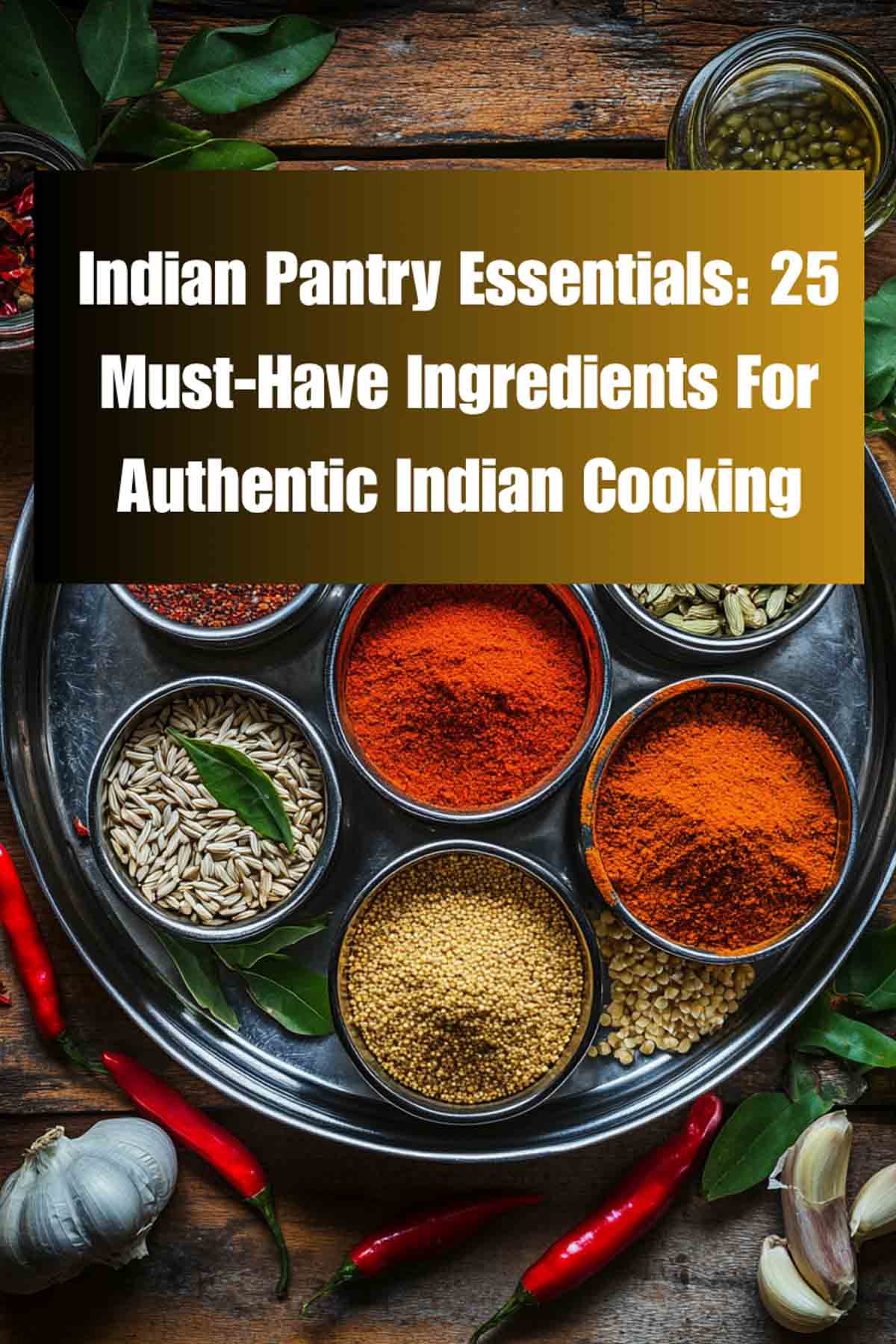
Table of Contents
- Why A Stocked Indian Pantry Matters
- The 7 Core Indian Spices Every Kitchen Needs
- Whole Spices That Add Depth
- Lentils And Legumes (Dals) You Need
- Flours Every Indian Kitchen Stocks
- Rice And Grains To Keep On Hand
- Oils, Fats, And Cooking Mediums
- Aromatics, Pastes, And Wet Ingredients
- Specialty Indian Pantry Staples Worth Buying
- How To Store Your Indian Pantry The Right Way
- Where To Buy Indian Pantry Essentials
- What To Buy First If You Are A Beginner
- Frequently Asked Questions
- Final Thoughts
Why A Stocked Indian Pantry Matters
Indian cooking layers flavor through spices, lentils, and aromatics. Miss one whole spice, and the dish loses its soul. A stocked pantry saves you three things.
- Time: No mid-recipe trips to the Indian store.
- Money: Bulk spices cost a fraction of the price of pre-made spice blends.
- Authenticity: Real jeera (cumin) tastes 100 times better than a random spice mix from the store
Most of these ingredients last 6 months to a year when stored right. You spend once and cook freely for months.
The 7 Core Indian Spices Every Kitchen Needs
These seven spices form the backbone of Indian cooking. If you have these, you can already make dozens of dishes.
1. Cumin Seeds (Jeera)
Cumin is the first spice to hit the hot oil in most North Indian recipes. Toast it for a few seconds, and the kitchen smells like a restaurant. Use it in dals, rice, and vegetable stir-fries.
2. Coriander Powder (Dhania)
Made from ground coriander seeds, this powder adds a warm, citrusy base note to curries. It pairs with cumin in nearly every gravy.
3. Turmeric Powder (Haldi)
The golden-yellow powder you see in every Indian dish. Turmeric brings color and a mild, earthy flavor.
4. Red Chili Powder (Lal Mirch)
Indian red chili powder is hotter than paprika but milder than cayenne. Kashmiri chili powder is the milder, redder variety used for color in dishes like butter chicken.
5. Garam Masala
A finishing spice blend of cardamom, cinnamon, cloves, and black pepper. Sprinkle it at the end of cooking for that warm, aromatic finish.
6. Mustard Seeds (Rai)
Black mustard seeds pop in hot oil, adding a nutty crunch. Essential for South Indian tadka and pickles.
7. Asafoetida (Hing)
A pungent yellow powder used in tiny pinches. Hing replaces onion and garlic in many Jain recipes, adding a savory depth to dals.
Whole Spices That Add Depth
These whole spices go into rice dishes, curries, and slow-cooked meats. They infuse oil with flavor and are usually filtered out before serving. Check my article on what to do with whole spices before serving Indian food.
- Green cardamom (hari elaichi): Sweet and floral, used in chai and desserts.
- Black cardamom (badi elaichi): Smoky, used in biryanis and meat curries.
- Cloves (laung): Strong and warm, a little goes a long way.
- Cinnamon stick (dalchini): Indian cassia bark is sturdier than Ceylon cinnamon.
- Bay leaf (tej patta): Adds a subtle herbal note to rice and dal.
- Black peppercorns (kali mirch): Whole pepper for tempering and grinding.
Store these in an airtight masala dabba away from sunlight. They keep their punch for up to a year.
Lentils And Legumes (Dals) You Need
Dals are the protein heart of Indian vegetarian cooking. You only need four or five varieties to start.
Toor Dal (Split Pigeon Peas)
The most-used dal in India. Yellow, mild, and creamy when cooked. Use it to make my everyday North Indian style toor dal and sambar.
Moong Dal (Split Yellow Mung Beans)
Light, easy to digest, and quick to cook. Use the split version to make yellow moong dal khichdi and soupy yellow moong dal. Use the green version to make green moong dal.
Chana Dal (Split Chickpeas)
Nuttier and firmer. Holds its shape in dishes like lauki chana dal or Bengali cholar dal. It also makes the filling of Maharashtrian sweet puran poli.
Urad Dal (Split Black Gram)
Comes whole, split with skin, or split without skin. Whole urad is used to make dal makhani, while split, skinned urad is used to make dosa batter, dahi vada, or my North Indian-style white urad dal.
Masoor Dal (Red Lentils)
Quickest-cooking dal, ready in 15 minutes. Perfect for weeknight meals.
Store dals in airtight jars in a cool, dry place. They stay good for 8 to 12 months.
Flours Every Indian Kitchen Stocks
Indian flatbreads and snacks rely on a few specific flours. Stock these, and you can make rotis, parathas, pakoras, and dosas at home.
Whole Wheat Flour (Atta): Roti, tawa paratha. Indian atta is finer and softer than Western whole wheat flour. Buy it from an Indian grocery store or online for the best rotis.
Chickpea Flour (Besan): Aloo pakora, vegetable kadhi, and dhokla.
Rice Flour (Chawal Ka Atta): Add crispiness to chicken pakora, palak pakora, or chili garlic chicken. Makes the base for neer dosa.
All-purpose flour (Maida): Butter naan, aloo samosa, luchi.
Semolina (Sooji): Fine sooji for sooji halwa, upma.
Rice And Grains To Keep On Hand
Rice is non-negotiable in an Indian kitchen. Two varieties cover almost every dish.
- Basmati rice: Long-grain, aromatic, used for biryani and pulao.
- Sona masoori: Short-grain, used for everyday meals in South India.
You can also add poha (flattened rice) for quick breakfasts and idli rice if you make South Indian breakfasts often.
Oils, Fats, And Cooking Mediums
What you cook shapes the flavor of the dish. Indian kitchens usually keep three fats on hand.
- Ghee: Clarified butter with a nutty aroma. Used for tempering dal, finishing curries, and Indian sweets.
- Mustard oil: Pungent and sharp. Bengali, Kashmiri, UP, and pickle recipes need it.
- Neutral oil: Sunflower, peanut, or canola for general frying and sautéing.
A small bottle of sesame oil is great for South Indian cooking and chutneys.
Aromatics, Pastes, And Wet Ingredients
These build the base of every curry. Keep them ready.
- Ginger and garlic: You will need both fresh and in paste form.
- Green chilies: Fresh, slit, or chopped into tempering.
- Onions and tomatoes: The two pillars of North Indian gravies.
- Curry leaves: Fresh or frozen, essential for South Indian tadka.
- Tamarind paste: Adds sour tang to sambhar, curries, and chutneys.
- Yogurt (dahi): For marinades, raitas, and kadhi.
Specialty Indian Pantry Staples Worth Buying
Once your core pantry is set, these add range to your cooking.
- Kasuri methi: Dried fenugreek leaves. Crush a pinch over butter chicken or dal for that restaurant aroma.
- Amchoor: Dried mango powder. Adds tang without adding moisture.
- Black salt (kala namak): Sulfurous and funky, used in chaat and chutneys.
- Chaat masala: A tangy spice blend for fruit, snacks, and yogurt.
- Jaggery (gur): Unrefined cane sugar with a caramel flavor. Balances heat in curries.
- Paneer: Fresh Indian cottage cheese. Freezes well for up to 2 months.
How To Store Your Indian Pantry The Right Way
A few small habits keep your spices and dals fresh for the long haul.
- Use airtight glass jars. Plastic absorbs smells over time.
- Keep spices away from heat. Never store them above the stove.
- Label everything with a purchase date. Whole spices last 1 year; ground spices last 6 months.
- Freeze ginger paste, curry leaves, and grated coconut. They keep their flavor for months.
- Buy from Indian grocery stores. The turnover is faster, so the stock is fresher than supermarket spice aisles.
Where To Buy Indian Pantry Essentials
You have three solid options:
- Indian grocery stores: Best prices and freshest stock. Look for Patel Brothers, Subzi Mandi, or your local desi store.
- Amazon and online: Brands like Swad, Deep, and Laxmi ship nationwide.
- Bulk co-ops: Some warehouses sell spices in 5-pound bags. Great if you cook Indian food weekly.
Start small. Buy a quarter pound of each spice for your first batch and see what you actually use.
What To Buy First If You Are A Beginner
If you are stocking from scratch, start with these 10 items. They unlock the most recipes for the least money:
- Cumin seeds
- Turmeric powder
- Red chili powder
- Coriander powder
- Garam masala
- Mustard seeds
- Toor dal
- Moong dal
- Basmati rice
- Ghee
With just these, you can cook a dal, a vegetable curry, jeera rice, and even a quick masala chai to finish the meal.
Frequently Asked Questions
Most commercial hing is mixed with wheat flour, so it is not gluten-free by default. Look for pure or gluten-free hing brands, such as LG or Vandevi (red label).
You do not need one, but it makes Indian cooking faster. A round tin with 7 small bowls keeps your most-used spices in one place, ready to pinch and toss into the pan.
Ghee is shelf-stable for up to 3 months at room temperature. In the fridge, it lasts a year. Always use a dry spoon to scoop it.
Not really. Indian atta is stone-ground and absorbs water differently, which gives rotis their soft, pliable texture. American whole wheat flour makes denser, drier rotis.
Whole spices last 12 months. Ground spices lose flavor after 6 months. Store both in airtight jars away from light and heat.
Final Thoughts
Building your Indian pantry is not a one-day project. Pick up a few items each grocery run, and your shelves will fill up faster than you think. Once the basics are in place, Indian cooking stops feeling intimidating and becomes second nature. You will open your spice tin, smell the cumin and cardamom, and just know what to make for dinner.
If you are ready to put your pantry to work, start with a simple dal tadka or a one-pot khichdi. They use only a handful of these ingredients and taste like a warm hug.